
The Old Us Versus The New Us
 One thing is certain no matter which side of the infidelity you are on - after D-Day, anniversaries take on a whole new meaning. On our first anniversary post D-Day, we just wanted to crawl into a hole and forget it was happening.
A million questions swirl around in your mind. Are we supposed to celebrate our anniversary? What should I do? How do I act? Is this all fake? If you were "getting by" before, there's certainly no room for that with what feels like this giant elephant looming in the background. Everything is out in the open, exposed, raw, vulnerable.
On one of our recent anniversaries, I was prompted to reflect on "what does our marriage mean now?" While most of my friends and family members are sharing those cliche messages on social media like "We've always been so perfect for each other," what can I share that is truly authentic? I decided to write to my husband, from the depths of my heart, something that genuinely conveys the heart of our journey. One thing both of us have developed a keen eye for after D-day is fake, fluffy words. We can smell insincerity from a mile away.
This letter to my husband was written several years after our D-Day. Please know if you are in the beginning stages of your recovery and feel like things will never get better, there is hope.
"18 years ago, two kids got married. Don't tell the 'old' us that I said this, but the 'new' us is so much better. The new us has something that the old us never had. We are free to be authentically, individually ourselves. We are stronger and braver than ever before. We live and love on a deeper level than the old us ever could. The old us had a frilly external image, but inside was hollow.
We have fought like hell for the new us and it is a continual fight. As quoted from The Princess Bride, "Anyone who tells you otherwise, is only trying to sell you something." That something may be an image, a tradition, a system of rules, you name it!
The best marriages come out of the hardest conversations you will ever have. They come out of the ashes - death of old ways, old ideas, old mindsets. They know what it is to survive catastrophe and become something totally new. Both people have to sincerely confront and address the tough, uncomfortable, sometimes gut-wrenching issues and you have to do it over and over and over again. You do it so often that it becomes a solid part of your new foundation. Thank you for staying by my side on this journey for 18+ years. Thank you for being willing to evolve and grow alongside me. I love you!"
One thing is certain no matter which side of the infidelity you are on - after D-Day, anniversaries take on a whole new meaning. On our first anniversary post D-Day, we just wanted to crawl into a hole and forget it was happening.
A million questions swirl around in your mind. Are we supposed to celebrate our anniversary? What should I do? How do I act? Is this all fake? If you were "getting by" before, there's certainly no room for that with what feels like this giant elephant looming in the background. Everything is out in the open, exposed, raw, vulnerable.
On one of our recent anniversaries, I was prompted to reflect on "what does our marriage mean now?" While most of my friends and family members are sharing those cliche messages on social media like "We've always been so perfect for each other," what can I share that is truly authentic? I decided to write to my husband, from the depths of my heart, something that genuinely conveys the heart of our journey. One thing both of us have developed a keen eye for after D-day is fake, fluffy words. We can smell insincerity from a mile away.
This letter to my husband was written several years after our D-Day. Please know if you are in the beginning stages of your recovery and feel like things will never get better, there is hope.
"18 years ago, two kids got married. Don't tell the 'old' us that I said this, but the 'new' us is so much better. The new us has something that the old us never had. We are free to be authentically, individually ourselves. We are stronger and braver than ever before. We live and love on a deeper level than the old us ever could. The old us had a frilly external image, but inside was hollow.
We have fought like hell for the new us and it is a continual fight. As quoted from The Princess Bride, "Anyone who tells you otherwise, is only trying to sell you something." That something may be an image, a tradition, a system of rules, you name it!
The best marriages come out of the hardest conversations you will ever have. They come out of the ashes - death of old ways, old ideas, old mindsets. They know what it is to survive catastrophe and become something totally new. Both people have to sincerely confront and address the tough, uncomfortable, sometimes gut-wrenching issues and you have to do it over and over and over again. You do it so often that it becomes a solid part of your new foundation. Thank you for staying by my side on this journey for 18+ years. Thank you for being willing to evolve and grow alongside me. I love you!"
One thing is certain no matter which side of the infidelity you are on - after D-Day, anniversaries take on a whole new meaning. On our first anniversary post D-Day, we just wanted to crawl into a hole and forget it was happening.
A million questions swirl around in your mind. Are we supposed to celebrate our anniversary? What should I do? How do I act? Is this all fake? If you were "getting by" before, there's certainly no room for that with what feels like this giant elephant looming in the background. Everything is out in the open, exposed, raw, vulnerable.
On one of our recent anniversaries, I was prompted to reflect on "what does our marriage mean now?" While most of my friends and family members are sharing those cliche messages on social media like "We've always been so perfect for each other," what can I share that is truly authentic? I…
Continue reading →
What a Healed Betrayed Spouse Looks Like
If you have been impacted by infidelity, whether it happened recently or even years ago, your emotions can be all over the place. When you decide to commit to heal yourself, no matter what your spouse decides to do, there are some things you'll need to change in order to get to a healthier place mentally. Some betrayed partners feel the overwhelming need to control everything about the unfaithful, including their schedules, email or social media activity, how they dress, and even their spouse's recovery. While these urges are very common and a normal reaction to trauma, as you heal, you will find yourself more able to let go of some of your fear-based behaviors and replace those with the peace that you are longing for. Today, Stephanie, in her twenty plus years of experience, shares how she moved past hurt to healing on her recovery journey, and how you can…
Continue reading →
How You Can Experience Sustainable Transformation After the Discovery of Infidelity or Addiction?
How many times have we experienced ups and downs in trying to save our relationship after infidelity? What about in our own personal repair work? The truth is, we typically will move two steps forward, three steps back as we try to heal from either our own destruction, or our partner's. Today Samuel brings a refreshing approach to accomplishing long-term, sustainable transformation, in both our own healing work, and possibly that of our relationship. We don't have to struggle to gain momentum forever in our own healing, and if we choose to salvage our relationship, we don't have to live in a state of constant turbulence or uncertainty. Today you'll hear crucial but palatable insight that can be applied to your own situation, from Samuel's own journey of sustainable transformation.
Continue reading →
How Do You Know If You’re Healing? Part 1
 For that matter, what is "healed" anyway? What does it mean? What does it actually look like? I will explore this further in a future blog, as this question has perplexed and frustrated me since I learned of my husband's infidelity. More to come on that.
In the meantime, the process of healing is hard to measure. You can't take out a yardstick or step on the scale to track the progress. It's subtle and murky. Healing is slow and often undetectable day by day. It takes some intentional scrutiny to see it, and it looks different for every person. I can only tell you my own experience but maybe it can offer some insight in your situation too.
I think it's easy to dismiss progress when we still feel pain. Pain can be deafening against the quiet of progress. But sometimes we need to really take a closer look to get an accurate measurement. For example, if you think back to the days you first discovered your spouse's betrayal, you were probably knocked off your feet by the overwhelming pain and disorientation. Your world as you knew it was no longer the same, no longer safe, and everything was turned upside down. The pain was blinding and completely enveloping everything around you. If some time has passed since then, and you are still in pain, you may think that means you aren't healing at all. But take a closer look. Even if you are still depressed, or feel pain and disappointment, you might be able to notice a shift. Did you eat today? Did you sleep last night - at all? Did you get out of bed this morning? Those may be improvements, and while four hours of sleep versus two is not wonderful, it is progress. It can be the small, incremental things that feel like nothing, but are actually tiny steps toward forward momentum. If you are reading this blog then you are actively seeking healing and that is progress, too. Even if you don't feel it today.
One of the things about healing is that it can be so frustrating and painful that it doesn't feel like healing at all. At times, it is like seeing Bigfoot. Even if you did see it, you're pretty sure you didn't, and you think it must have been a figment of your imagination. Nonetheless, even if you did see Bigfoot you know you're not likely to see him again. That's what healing feels like at times. A fleeting feeling, just for a moment, and then it's gone. It's so frustrating to almost catch a shift in perspective, a tiny nudge toward understanding, and then it's gone. Poof! Like you never felt it, and now you can't even really remember what it felt like, but you thought you had it for a moment. I have found over time these "glimmers" arrive in more frequency and stick around a little longer. They still come and go, and when I lose them it is so disheartening and sometimes I still get really depressed. But I am finding the glimmers are appearing more often and lasting longer each time, so I feel a little less anxious about them disappearing as I have increasing confidence they'll be back.
Healing is often messy, and might not feel like healing at all. Last year, we finally decided to put new carpeting in our bedroom. The carpet was not new even when we moved in over 20 years ago so it was pretty old. (Don't judge me.) For years, we focused on updating all the other rooms in the house: the kids' bedrooms, the living areas, the kitchen and bathrooms, and just kept putting off our bedroom. Anyway, even last year I was still hesitant to get new carpet when my husband suggested it. Why? The closet. We have terrible closets with deep, impractical, unreachable recesses on both ends that hold stuff we put there all those years ago that had mostly never been touched. To put in new carpeting, we had to pull it all out and actually go through it. I've "organized" the closet over the years, neatening things up and buying organizers or nice storage totes, but it was superficial, and I never really took everything down to the bare floor waaaay back in the hidden and very hard-to-reach corners. The only way to really clean it was to take everything out, spread it all out, and take a good look at it. Only then could we make some hard decisions on what to throw away and what to keep. Before we could have a nice clean closet, we had to make a mess - there was no other way. Anything else would have just been surface organizing and wouldn't have addressed the hidden junk in the back. Even if we avoided it for a while, sooner or later we're going to move and we would have to go through the hidden junk anyway. Looking back, I was definitely not looking forward to doing this work, nor did I enjoy it while it was happening. But now, I fully appreciate knowing there is no disorganized, non-functional, outdated stuff in there and l have a closet that is organized and feels much better than it did before. Despite my initial reservations, I am glad we took the effort.
That's how I think healing works. Sometimes it feels like it gets worse before it gets better. Digging out all the junk we have ignored, suppressed, or didn't even realize was there, is uncomfortable, even downright painful. "Surface organizing" (by one or both of us) has kept the peace at times, but has glossed over the pile of junk that really needed attention but was too hard, or just too much to deal with. The only way to really clean it out is to dump it all out all over the place, see what we have, and start picking through it. What a mess. It's uncomfortable and way too vulnerable to have that stuff hanging out all over. I just want to put it away quickly, close the door, and make things look nice and neat, but that is not how this works.
That doesn't mean I want to "dredge things up" or keep "rehashing" them. It means I have things I haven't been able to process for one reason or another, and they are never going to settle without cleaning it all out and getting to the back of the closet. Do I wish there was an easier way? Of course I do. This is not fun. This is not enjoyable.This was not my choice. I am dealing with something to which I never agreed, in the best way that I can. But shoving all that junk back into the closet without actually cleaning it out will just cover up the problems, not solve them. Like a bandaid over an infected wound, it might hide it in the moment, but it won't heal anything or make it go away, and the wound will continue to seep into everything it touches.
So what was the point of all that? Sometimes it feels like it gets worse in order to get better. Sometimes the messy part is a means to an end. It's not pretty, but it can be productive. The hardest part is staying motivated to hang in there through it. It's not like someone can say - listen, if you make a mess for three weeks it will be all neat and tidy by week four. No, there are no guarantees, and the messy part is going to last a while. The more trauma and deception you have experienced, the messier it may be. Despite the old saying, time does not heal all wounds. Time doesn't really heal anything. What we do with the time is what matters. For that matter, throw out the timelines. They may give some guidance, but can also add pressure to feel a certain way by a determined point in time, and if that doesn't come to pass, (it definitely didn't for me) it can leave you with an added sense of failure and hopelessness.
Next time I'll talk more about how healing feels to me at this point. It is not exactly what I expected, but I think part of the key for me has been to let go of expectations. I wanted a step by step formula, and diligently tried all the things that others had said worked for them, but I did not find success following another person's prescription. We are all different, and things don't look and feel the same for every person. We each have unique stories of betrayal, and individual differences in ourselves, our pasts and our relationships, so there is no one size fits all. In order to move forward I had to cut myself some slack and be open to the possibility that my journey may not look the same as others. Letting go of expectations and cleaning out the junk is really daunting, and I didn't want to do it. I still don't. I would have preferred to shove it all back in the closet and close the door because I didn't want this to be my reality, and I didn't think I had the fortitude to clean it out. But here we are. Join me next time for Part 2, and in the meantime, I want to encourage you to keep going; keep trying. You are not alone.
"One doesn't discover new lands without consenting to lose sight of the shore for a very long time."
- Andre Gide, French novelist
For that matter, what is "healed" anyway? What does it mean? What does it actually look like? I will explore this further in a future blog, as this question has perplexed and frustrated me since I learned of my husband's infidelity. More to come on that.
In the meantime, the process of healing is hard to measure. You can't take out a yardstick or step on the scale to track the progress. It's subtle and murky. Healing is slow and often undetectable day by day. It takes some intentional scrutiny to see it, and it looks different for every person. I can only tell you my own experience but maybe it can offer some insight in your situation too.
I think it's easy to dismiss progress when we still feel pain. Pain can be deafening against the quiet of progress. But sometimes we need to really take a closer look to get an accurate measurement. For example, if you think back to the days you first discovered your spouse's betrayal, you were probably knocked off your feet by the overwhelming pain and disorientation. Your world as you knew it was no longer the same, no longer safe, and everything was turned upside down. The pain was blinding and completely enveloping everything around you. If some time has passed since then, and you are still in pain, you may think that means you aren't healing at all. But take a closer look. Even if you are still depressed, or feel pain and disappointment, you might be able to notice a shift. Did you eat today? Did you sleep last night - at all? Did you get out of bed this morning? Those may be improvements, and while four hours of sleep versus two is not wonderful, it is progress. It can be the small, incremental things that feel like nothing, but are actually tiny steps toward forward momentum. If you are reading this blog then you are actively seeking healing and that is progress, too. Even if you don't feel it today.
One of the things about healing is that it can be so frustrating and painful that it doesn't feel like healing at all. At times, it is like seeing Bigfoot. Even if you did see it, you're pretty sure you didn't, and you think it must have been a figment of your imagination. Nonetheless, even if you did see Bigfoot you know you're not likely to see him again. That's what healing feels like at times. A fleeting feeling, just for a moment, and then it's gone. It's so frustrating to almost catch a shift in perspective, a tiny nudge toward understanding, and then it's gone. Poof! Like you never felt it, and now you can't even really remember what it felt like, but you thought you had it for a moment. I have found over time these "glimmers" arrive in more frequency and stick around a little longer. They still come and go, and when I lose them it is so disheartening and sometimes I still get really depressed. But I am finding the glimmers are appearing more often and lasting longer each time, so I feel a little less anxious about them disappearing as I have increasing confidence they'll be back.
Healing is often messy, and might not feel like healing at all. Last year, we finally decided to put new carpeting in our bedroom. The carpet was not new even when we moved in over 20 years ago so it was pretty old. (Don't judge me.) For years, we focused on updating all the other rooms in the house: the kids' bedrooms, the living areas, the kitchen and bathrooms, and just kept putting off our bedroom. Anyway, even last year I was still hesitant to get new carpet when my husband suggested it. Why? The closet. We have terrible closets with deep, impractical, unreachable recesses on both ends that hold stuff we put there all those years ago that had mostly never been touched. To put in new carpeting, we had to pull it all out and actually go through it. I've "organized" the closet over the years, neatening things up and buying organizers or nice storage totes, but it was superficial, and I never really took everything down to the bare floor waaaay back in the hidden and very hard-to-reach corners. The only way to really clean it was to take everything out, spread it all out, and take a good look at it. Only then could we make some hard decisions on what to throw away and what to keep. Before we could have a nice clean closet, we had to make a mess - there was no other way. Anything else would have just been surface organizing and wouldn't have addressed the hidden junk in the back. Even if we avoided it for a while, sooner or later we're going to move and we would have to go through the hidden junk anyway. Looking back, I was definitely not looking forward to doing this work, nor did I enjoy it while it was happening. But now, I fully appreciate knowing there is no disorganized, non-functional, outdated stuff in there and l have a closet that is organized and feels much better than it did before. Despite my initial reservations, I am glad we took the effort.
That's how I think healing works. Sometimes it feels like it gets worse before it gets better. Digging out all the junk we have ignored, suppressed, or didn't even realize was there, is uncomfortable, even downright painful. "Surface organizing" (by one or both of us) has kept the peace at times, but has glossed over the pile of junk that really needed attention but was too hard, or just too much to deal with. The only way to really clean it out is to dump it all out all over the place, see what we have, and start picking through it. What a mess. It's uncomfortable and way too vulnerable to have that stuff hanging out all over. I just want to put it away quickly, close the door, and make things look nice and neat, but that is not how this works.
That doesn't mean I want to "dredge things up" or keep "rehashing" them. It means I have things I haven't been able to process for one reason or another, and they are never going to settle without cleaning it all out and getting to the back of the closet. Do I wish there was an easier way? Of course I do. This is not fun. This is not enjoyable.This was not my choice. I am dealing with something to which I never agreed, in the best way that I can. But shoving all that junk back into the closet without actually cleaning it out will just cover up the problems, not solve them. Like a bandaid over an infected wound, it might hide it in the moment, but it won't heal anything or make it go away, and the wound will continue to seep into everything it touches.
So what was the point of all that? Sometimes it feels like it gets worse in order to get better. Sometimes the messy part is a means to an end. It's not pretty, but it can be productive. The hardest part is staying motivated to hang in there through it. It's not like someone can say - listen, if you make a mess for three weeks it will be all neat and tidy by week four. No, there are no guarantees, and the messy part is going to last a while. The more trauma and deception you have experienced, the messier it may be. Despite the old saying, time does not heal all wounds. Time doesn't really heal anything. What we do with the time is what matters. For that matter, throw out the timelines. They may give some guidance, but can also add pressure to feel a certain way by a determined point in time, and if that doesn't come to pass, (it definitely didn't for me) it can leave you with an added sense of failure and hopelessness.
Next time I'll talk more about how healing feels to me at this point. It is not exactly what I expected, but I think part of the key for me has been to let go of expectations. I wanted a step by step formula, and diligently tried all the things that others had said worked for them, but I did not find success following another person's prescription. We are all different, and things don't look and feel the same for every person. We each have unique stories of betrayal, and individual differences in ourselves, our pasts and our relationships, so there is no one size fits all. In order to move forward I had to cut myself some slack and be open to the possibility that my journey may not look the same as others. Letting go of expectations and cleaning out the junk is really daunting, and I didn't want to do it. I still don't. I would have preferred to shove it all back in the closet and close the door because I didn't want this to be my reality, and I didn't think I had the fortitude to clean it out. But here we are. Join me next time for Part 2, and in the meantime, I want to encourage you to keep going; keep trying. You are not alone.
"One doesn't discover new lands without consenting to lose sight of the shore for a very long time."
- Andre Gide, French novelist
For that matter, what is "healed" anyway? What does it mean? What does it actually look like? I will explore this further in a future blog, as this question has perplexed and frustrated me since I learned of my husband's infidelity. More to come on that.
In the meantime, the process of healing is hard to measure. You can't take out a yardstick or step on the scale to track the progress. It's subtle and murky. Healing is slow and often undetectable day by day. It takes some intentional scrutiny to see it, and it looks different for every person. I can only tell you my own experience but maybe it can offer some insight in your situation too.
I think it's easy to dismiss progress when we still feel pain. Pain can be deafening against the quiet of progress. But sometimes we need to really take a closer look to get an accurate measurement. For example, if…
Continue reading →
How the Unfaithful Sabotages Healing After an Affair: Shutting Down
Do you or your partner shut down out of self protection in the middle of a discussion? If they do, or you do, there’s probably a reason behind it. It’s not always to punish the other partner, but may be due to a concept called ‘self-protecting.’ Oftentimes, when we’re in a discussion that we feel threatened by the tone, content, or expression of our partner, we can self protect and shut down, seemingly walling off the threat - aka, our partner. The unfaithful typically do this more than the betrayed, and without an understanding into why this shutdown happens, it can appear as though one partner is punishing the other, when it may not be true at all. Today, Samuel lays out a concrete understanding on why this may be happening in your relationship, and how to not only help minimize the shutdown, but create space to connect and heal as a couple.
Continue reading →
How Do I Define Brokenness?
 Preface: In Hope for Healing lesson 5, as a participant, I was asked to examine the difference between a prideful spirit and a broken spirit. At first, I thought maybe I had come up with the "wrong" answer because the other women in my group saw brokenness as a bad thing and a place to be ashamed of. I see brokenness as a catalyst for total transformation. Looking back on my journey through failure, disaster, and gut-wrenching pain, I came up with this definition of brokenness.
How Do I Define Brokenness?
Brokenness is the place where I realize we are all the least of these. In this place of being molded like clay, I accept that I am not defined by a career, position, title, abilities, or productivity. It's a place where I recognize at any moment I may become homeless, a refugee, disabled, or an outcast.
This is a place where I release the need to try to make everything happen the way I think it should happen. On Christ the solid rock I stand, all other ground is sinking sand.
All other ground is sinking sand. The place where I crucify the image of how I thought everything was 'supposed to turn out', and where I recognize that the most influential story in my life is going to come from my deepest pain. Because it is that pain that is the path to those dreams I have held so dear. It is in the pain that I will find the greatest story ever told.
In brokenness, I find that all of the things I have despised about myself, my journey, and my life are the very things that will allow me to connect to others in a way I could never have without them. As surfer Bethany Hamilton said after losing her arm to a shark, "I can reach so many more people with one arm than I ever could with two."
Brokenness is a place of total transformation. When I have gone through the process of being broken, I have been willing to question every belief I have held so dearly and to utter the words, "I can be wrong. It's okay not to have all of the answers."
It is a place where I have recognized that including others with different beliefs does not threaten my beliefs. It is a place where I allow my old system of beliefs and faith to be challenged down to the very core and even burnt to ashes. A new faith is then born from the ashes - a faith not dependent on systems or elders or images or "the way things have always been."
To me, brokenness does not despise the journey but recognizes its beauty. It means I am willing to make the toughest decisions I have ever faced, even if it means sacrificing comfort and relationships. Brokenness means I would rather step into the Red Sea and drown than stay in the place of toxic bondage where everyone pretends to be okay.
Preface: In Hope for Healing lesson 5, as a participant, I was asked to examine the difference between a prideful spirit and a broken spirit. At first, I thought maybe I had come up with the "wrong" answer because the other women in my group saw brokenness as a bad thing and a place to be ashamed of. I see brokenness as a catalyst for total transformation. Looking back on my journey through failure, disaster, and gut-wrenching pain, I came up with this definition of brokenness.
How Do I Define Brokenness?
Brokenness is the place where I realize we are all the least of these. In this place of being molded like clay, I accept that I am not defined by a career, position, title, abilities, or productivity. It's a place where I recognize at any moment I may become homeless, a refugee, disabled, or an outcast.
This is a place where I release the need to try to make everything happen the way I think it should happen. On Christ the solid rock I stand, all other ground is sinking sand.
All other ground is sinking sand. The place where I crucify the image of how I thought everything was 'supposed to turn out', and where I recognize that the most influential story in my life is going to come from my deepest pain. Because it is that pain that is the path to those dreams I have held so dear. It is in the pain that I will find the greatest story ever told.
In brokenness, I find that all of the things I have despised about myself, my journey, and my life are the very things that will allow me to connect to others in a way I could never have without them. As surfer Bethany Hamilton said after losing her arm to a shark, "I can reach so many more people with one arm than I ever could with two."
Brokenness is a place of total transformation. When I have gone through the process of being broken, I have been willing to question every belief I have held so dearly and to utter the words, "I can be wrong. It's okay not to have all of the answers."
It is a place where I have recognized that including others with different beliefs does not threaten my beliefs. It is a place where I allow my old system of beliefs and faith to be challenged down to the very core and even burnt to ashes. A new faith is then born from the ashes - a faith not dependent on systems or elders or images or "the way things have always been."
To me, brokenness does not despise the journey but recognizes its beauty. It means I am willing to make the toughest decisions I have ever faced, even if it means sacrificing comfort and relationships. Brokenness means I would rather step into the Red Sea and drown than stay in the place of toxic bondage where everyone pretends to be okay.
Preface: In Hope for Healing lesson 5, as a participant, I was asked to examine the difference between a prideful spirit and a broken spirit. At first, I thought maybe I had come up with the "wrong" answer because the other women in my group saw brokenness as a bad thing and a place to be ashamed of. I see brokenness as a catalyst for total transformation. Looking back on my journey through failure, disaster, and gut-wrenching pain, I came up with this definition of brokenness.
How Do I Define Brokenness?
Brokenness is the place where I realize we are all the least of these. In this place of being molded like clay, I accept that I am not defined by a career, position, title, abilities, or productivity. It's a place where I recognize at any moment I may become homeless, a refugee, disabled, or an outcast.
This is a place where I release the need to…
Continue reading →
Developing a Support Network to Help You Stay Sober and Make Progress
When you decide to face your addiction and commit to recovery, it is vital that you surround yourself with others who are in a similar position. As Mickey likes to say, "there are no lone rangers in recovery." Even if this is foreign or uncomfortable for you, being humble and asking for support from other people on the same path is going to help you stay accountable and healthy in your relationships. Connection is key, and as you work through your program, your recovery community can actually become some of your closest friendships as you grow together. Today, Mickey talks about some practical ways you can start building your network of support to help you stay sober and make progress on your path to healing.
Continue reading →
Healing Betrayal Trauma: Why 'Let's Just Talk About It Later' Doesn't Work
It's a typical scenario: the betrayed wants or needs to talk, and the unfaithful just doesn't have it in them at the moment. Enter the phrase that appears to diffuse the situation, yet only exacerbates the entire process of healing: 'let's just talk about it later.' I'm sure you know the rest; the truth is, "later" very seldom ever comes. The unfaithful struggles to find their words and hold on to themselves, and not circle the drain in shame. The betrayed is pining away, needing to talk and process their hurt and pain with their mate or partner, but is denied this opportunity to connect and emote. The result is often frustration, disconnection and eventually, rage. Yet, it doesn't have to be this way; both betrayed and unfaithful alike can create safety for each other to share their pain and hurt in a way that is gracious and unaccusing. Today, Samuel…
Continue reading →
A Betrayed Partner in Crisis: How Developmental and Betrayal Trauma Affect Men and Women Differently
Previously, Samuel interviewed Michael Webb to discuss a scenario between an unfaithful male and a betrayed female, and how developmental trauma affects both inner and outward conversations with our spouse. Today, Samuel follows up with Michael with the roles reversed: an unfaithful female with a betrayed male partner. Without an understanding of our wounded inner selves, we end up transmitting our pain, instead of transforming it. This typically ends in disaster, causing more and more disconnection between the couple. Today, you'll hear insightful and experienced insight into how to navigate difficult conversations with our spouse or partner, while also gaining a deeper understanding into the complex world of trauma care.
Continue reading →
Forgiveness: A Letter to My Younger Self
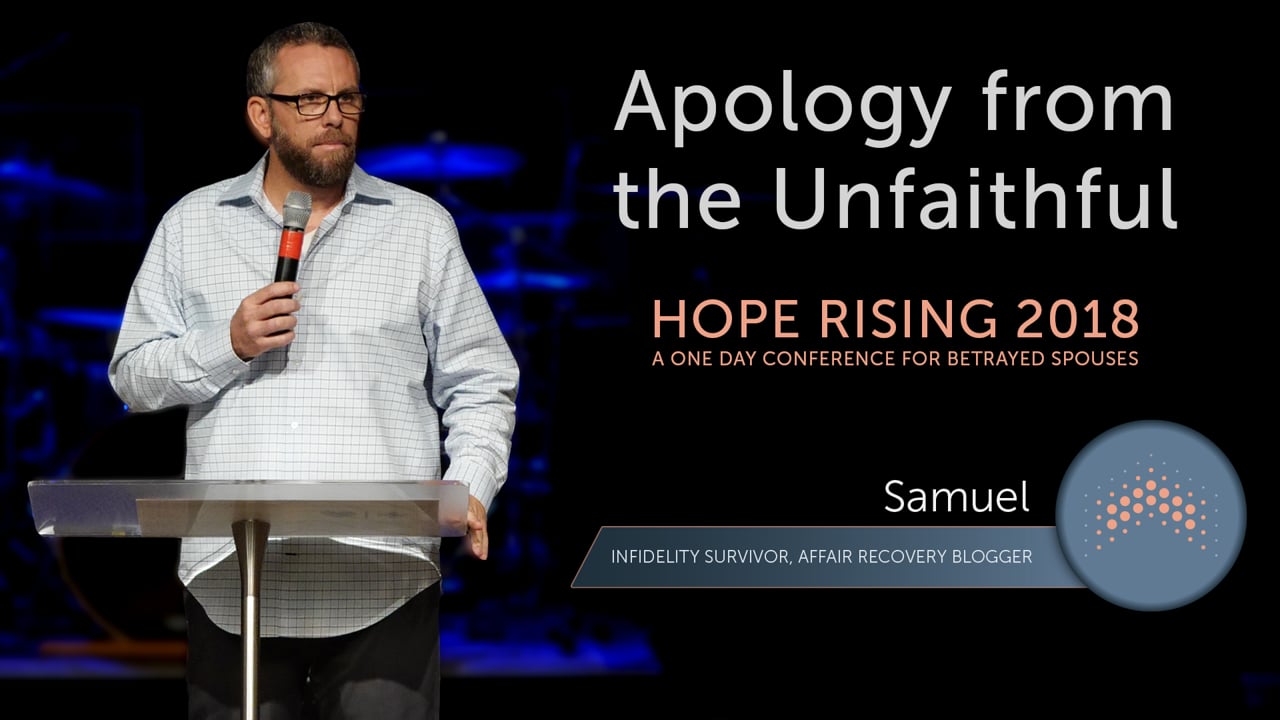
The following video is from 2018 Hope Rising speaker and Affair Recovery Survivors' Blogger, Samuel, reading "Apology from the Unfaithful".
You are not alone. We know healing from infidelity can feel isolating. At Hope Rising, our annual one-day conference for betrayed spouses, you can gain momentum, strength and community on your journey to wholeness. We've walked through this pain ourselves, and we've walked alongside thousands of others on this journey. You may not see it at this very moment, but in this dark chapter hope can rise. Hope Rising will be coming soon and you will not want to miss it!
Get notified FIRST for Hope Rising news!
Join the 2022 Notification List!
The blog below is from from Hope Rising 2019 Keynote Speaker, Shelley Martinkus
Shelley…
Continue reading →
A Conversation About Intimacy & Reconnection
After discovery or disclosure of an affair or sexual addiction, the betrayed partner is often overwhelmed with painful reminders, triggers, and insecurities. Re-engaging emotionally with the former unfaithful is difficult enough, but even the thought of resuming sexual activity with their mate can send hurt spouses into a panic spiral. As healthy as connection is, it is also terrifying to be vulnerable again, and both the betrayed and the unfaithful can be triggered in those intimate moments. When this happens there is a choice - to shut down, or slow down.
If you find yourself desiring connection more than disconnection, then being intentional, having a plan, and talking through complicated feelings with your spouse is key. While it may be difficult to believe, with the right resources, trauma work, and honest communication on both sides, your…
Continue reading →
Surviving Infidelity Series: Why Managing Your Partner’s Repair Work Doesn’t Work
For couples who are attempting to heal after an affair, it's a common struggle that one partner feels the need to manage the other's recovery or repair work. Maybe this sounds familiar: "Are you reading? Did you go to therapy? Did you see that article I sent you? Did you talk to your accountability partner today? Did you watch that new video?" While a normal temptation, the result is typically immense frustration and disconnection by both parties, not to mention a feeling of being mothered or fathered to no end. No matter what side of the infidelity they are on, no one likes to feel controlled. The good news is, there is a better way. Today, Samuel shares insight into why the controlling approach doesn't work, and what to do if you're looking for help in this all too common scenario.
Continue reading →
Addiction Recovery: Living in the Solution
For those recovering from infidelity or sexual addiction, establishing regular routines for self-care is key. Finding ways to eat well, exercise, connect with others, and get enough sleep is crucial for continued success in recovery. When you are healthy and balanced mentally, physically, emotionally, and spiritually, you’re going to feel good and be more likely to stay on track in your program.
One acronym that we use often at Affair Recovery is HALTBS, which stands for hungry, angry, lonely, tired, bored, or stressed. When addicts find themselves in that HALTBS frame of mind, they are more likely to fall back into old unhealthy patterns or act out in negative ways. Utilizing various types of self-care routines can help you get to a healthier space, so that you can continue to show up in life as the truest, best version of yourself. Today, Mickey…
Continue reading →
Surviving Infidelity Series: How Do We Handle Rejection Before, During & After an Affair?
Rejection is an awful thing to deal with, whether it be from adolescence, high school, or years later from our significant other or spouse. Enter infidelity or addiction, and the rejection monster seemingly sprouts seven other heads. If we are going to move beyond the initial devastation of infidelity, it’s vital that we understand our need for a game plan to process through the painful litany of emotions and overall responses we've probably exhibited. The good news is, there is a way through, and there is a healthy approach for survivors of infidelity to utilize and rely on for clarity and healing. Today, Samuel lays out his own game plan that helped him heal and overcome his own devastation of rejection.
Continue reading →
Surviving Infidelity Series: How Developmental Trauma Can Frustrate the Betrayed Spouse
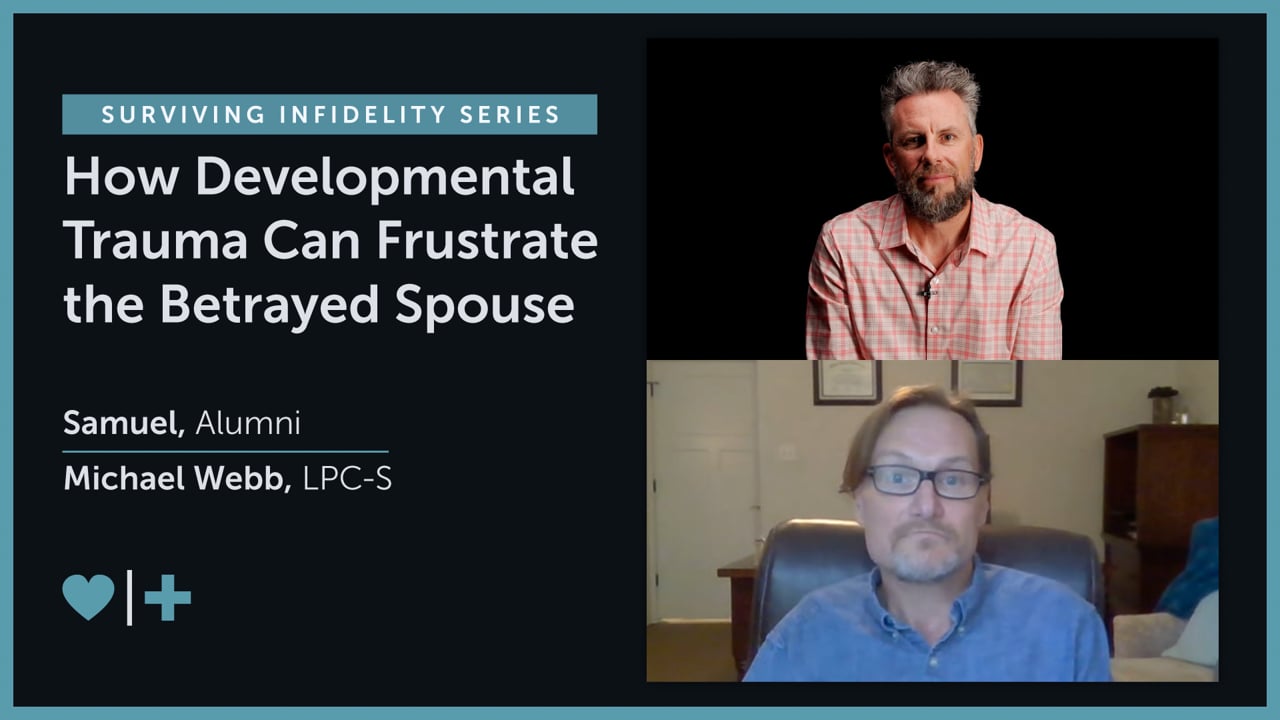
I can't count how many times I've said to myself "If I knew then, what I know now... healing would have been so much easier." If there is a missing link to the process of healing from infidelity or addiction, I'm certain that one of the top candidates is developmental trauma. But how do you discover what is and was developmental trauma versus what was just being a child and going through stuff? We're all in luck today, as you'll meet a therapist, a best friend of Samuel and expert healing guide, Michael Webb. Michael and Sam will take one particularly common scenario and break it down for both parties on both sides of the infidelity, to understand not only what's happening, but how to diffuse it. Today can be a great start to the understanding of your own developmental trauma on the road to healing.
Continue reading →
Why Couples Fail After an Affair | Part 4 - Not Grieving the Loss
Why Couples Fail After an Affair: A Four Part Series
Part 1: Not Knowing What Happened
Part 2: Not Getting It
Part 3: Denying Your Reality
Part 4: Not Grieving the Loss
I hate grief work, as anyone in our office will attest. I think it comes from a one-year season in my life where I lost my mother, grandmother, father-in-law, uncle, and the 10-year-old son of our dear friends. I was devastated by the losses, but each time I tried to move on it felt like another death knocked me down causing a sense of utter helplessness. My response to these events was pure rage. The circumstances were beyond my ability to comprehend. I couldn't fix it. I couldn't control it. I couldn't even understand…
Continue reading →
Cows, Buffaloes, and Minimization
 You may be familiar with the life analogy of the contrast between the way cows and buffaloes face an impending storm. As a storm approaches, cows sense it coming and move in the opposite direction, away from the storm. Unfortunately for the cows, they aren't very fast and as a result of this decision, they actually remain in the storm longer as they run alongside it, prolonging the unpleasantness.
Buffaloes, on the other hand, will turn toward the coming storm and charge directly into it. By doing this, the buffaloes pass through it quickly, reducing the amount of time and discomfort they experience from that storm.
I remember hearing this analogy somewhere along my recovery journey and confirming that I must be a cow. I wanted nothing to do with any of this, and would definitely run in the other direction if avoidance was really an option. But it's not. So I might as well be a buffalo and get through this. From my current vantage point, I can look back and see ways in which I prolonged the storm by trying to avoid it, even unknowingly. One of those ways was through minimization.
On the surface, minimization might sound like a good idea. In the moment it feels healthy and helpful, like downplaying and making all of it less significant might help get me through it faster. Looking back, I realize I greatly minimized the affair after disclosure.
As I mentioned in a previous blog, there was a 10 year gap between the affair and my husband's eventual confession. I had always been uneasy and suspicious, and could never feel settled about it. My direct questions and accusations during (and after) the affair were always met with blatant lies. I knew they had something between them, but for years I tried to convince myself my husband would never have done such a thing, and that I was just being paranoid. I minimized it, trying to believe it was "just" a flirtation or a crush, as though even that would have been ok. My instincts and fear persisted to tell me they were having an affair, which conjured graphic sexual images of them in my head, but my inner denial was equally strong, and this internal war raged on in my mind and heart for years. I could only settle the extreme anxiety by repeatedly telling myself, trying to convince myself, that he would never do that, that it hadn't gone that far, and that he was telling me the truth. I minimized what I knew to be true in order to survive.
Then disclosure happened. It basically blew all those years of denial out of the water in one fell swoop. He told me the "worst" of it first: the part he knew would matter to me the most. He got it out of the way rather than leave me wondering as he went on to tell the whole story. It was devastating. Still is. Always will be.
Anyway, looking back now, I see that after that point I took every opportunity to minimize the affair, rather than face it head on. I really thought I was facing it, but in reality I was trying to convince myself it wasn't that bad. I repeatedly tried to package it as "a long time ago" - as though it shouldn't completely rock my world, since so much time had passed. Or that it just wasn't relevant to my present life. Early on, before either of us really had much of an understanding of the full impact, my husband also echoed this a few times, "It was a long time ago," he would say, and for him it was. But for me it felt like it was happening now. So this statement just reinforced my attempts to minimize it, as I tried to believe it shouldn't matter that much now, and I didn't understand why I couldn't just get over it, concluding that I was at fault for allowing it to continue to hurt me, since it ended a long time ago. For context, my husband's affair was fully sexual, spanned well over a year, and included many occasions that intentionally placed me together with my husband and his affair partner. This included a variety of settings, including spending several holidays together at her home. It was not insignificant and there were many layers to his betrayal.
I often found myself repeating minimizing phrases to myself, as though if I said them enough it would make it hurt less. I said things like: they "only" did (this or that) ___ times, or "at least" he wasn't planning to leave me. "At least" the affair "only" lasted ____, and he "just" felt ____ toward her. And so on. All the "only" "just" and "at least" statements served to soothe my heart in the moment, but kept me from facing the reality of the situation. I spent so much energy trying to convince myself it wasn't really that bad, I was just running away from the storm like the cows.
Unconsciously, I put a lot of effort into these minimizations. In my Harboring Hope group I consistently felt and said out loud that my situation was "not as bad" as the others, since their husbands had cheated for more years than mine did, or had more affair partners than my husband did, or both. These kinds of minimizations made me believe I wasn't justified to feel the pain I did, since my situation was so much "better" than theirs.
But here is the truth. Pain is pain. It's not a competition and there is an unlimited supply. Someone else's tragic situation does not mean there is less pain available for mine. By trying to talk myself out of being justified to feel the pain, I am avoiding the pain and all that is necessary to get through the pain. Skirting the edges by creating explanations and justifications as to why I shouldn't be feeling this way offers no benefit and just prolongs the storm, like the cows do.
I came across a note I sent to my Harboring Hope Group Leader after our first or second meeting. This was 6 months post D-day, and reading it again now really illuminated my frame of mind at the time. These are actual quotes taken from my message:
"I just feel like I will feel better knowing that you really understand what happened to me. In many respects his affair was so minimal compared to everyone else in our group….Sometimes I think it's ridiculous that I can't get past it because it is so minimal compared to everyone else's situation and that maybe I'm defective for feeling as overwhelmed as I do."
But now I see none of that is valid. My pain is my pain and his affair hurt me deeply, regardless of how much "worse" it could have been, or how it compared to other people's experiences. I wasted so much time trying to talk myself out of validating my experience, that I lost the opportunity to face it head on and deal with it. Even with all the gut wrenching work I did with my first few therapists (and on my own), most of my effort was spent trying to figure out how to override my feelings through the perspective of minimization, rather than accept and deal with my feelings and the reality of the situation. I focused on the aspects of my husband's affair that "could have been worse" and tried to dismiss my feelings about what actually did happen, including the lies, deception, and manipulation, not just during the affair, but for years afterward. I tried to ignore all of this but still felt all the pain, so instead of minimization helping my perspective, it just made me feel as though I was a complete failure, a loser who couldn't even get over this correctly. I wouldn't even acknowledge the buzzwords - recovery, safety, trauma, self care, and so on. I felt it was all far too dramatic for me, and I didn't feel I was in a situation that warranted all that. I had not been on the battlefield and I hadn't been physically assaulted. My heart was just broken. I don't think I really felt permission to see this as legitimate trauma until I started working with my current counselor (therapist #4). I had dismissed all of it - the clear emotional trauma and the subconscious physical impact of years and years of continued deception and repressed emotions. I'm not looking for a trauma trophy or anything, but I do think it is important to accept and validate that a break in the marital relationship in such a deceptive and damaging way is in fact traumatic. I continually beat myself up for failing to recover from something I wasn't even willing to fully acknowledge, adding much more pain and frustration to an already painful situation. We can't heal what we aren't willing to name or face.
Paraphrased from @Nate_Postlethwait: After experiencing trauma we often are apologetic for how we show up - needy, sad, unable to "shake" the depression or "live in the present" etc. These are often responses from our nervous system as we grapple to heal from and overcome the trauma, but it's ironic that we often apologize or feel "less than" for the experiences we have in trying to heal from a trauma, despite the fact that no one asked permission before harming us to create the trauma in the first place. Infidelity is huge, with many losses that we don't fully appreciate or understand until later on in this journey. There is nothing minimal about these losses or that pain that they generate.
I don't want to confuse minimization with perspective. There are actual things about my husband's affair that probably could have been "worse" and while it's important to try to have perspective of the whole picture, comparison to others, or how much worse it could have been, is not going to somehow make the pain go away. As someone recently said on the Affair Recovery forum, when language like that is used about someone destroying your marriage, it just feels impossible to take in. The poster went on to say, "It's like saying, 'I only stabbed my victim in the heart with a knife one time.' Once, twice, a dozen times, the fatal blow is the same."
Rick Reynolds shared an article about grieving that illustrates the importance of facing, and embracing, the grief. In the article, Rick says, "Those who go into "GRIEVING" mode may spend months sorting through their grief with tears, pain, and true sorrow, but at the end of their journey they feel refreshed and renewed." He continues, "I have never known of a single person who has thoroughly grieved and had any regrets or felt a need to blame anyone. They are free and at peace. When people fail to move forward after the affair, it's often due to the inability to grieve the loss. Instead of healing from the pain, they try to control and manage the pain which only results in further damage and isolation... A major determining factor between those who go forward with new life and those who remain stuck after an affair is their willingness to grieve the loss."
In another article Rick says, "We mistakenly believe that hiding the reality of our situation will somehow save us from the pain, yet it only serves to enslave us to that very same pain. Hidden pain is then transformed into shame. Our shame then negatively impacts all those we love and serves as the fuel to perpetuate our cycle."
The point of all of those thoughts is that the buffaloes have the right idea. Running into the storm, into the grief, into the loss is what is necessary, yet so contrary to every instinct we have to escape pain. Mona Shriver very accurately stated, "Recognizing the depth of the pain gives us permission to seek healthy ways to mourn instead of wasting so much of our energy trying not to feel the way we do."
Healthy perspective is important, and along the way this will come. In the beginning I thought I was developing perspective, but I really was just trying to talk myself out of my feelings. Looking back I can see how unproductive and harmful that was, and how it just prolonged the pain. Now, I don't minimize anything, but I have developed a better perspective over time and with a lot of conversation and reflection. Facing this stuff is hard, and not for the faint of heart, but I never want to be a cow again. Let's be buffaloes and face the storm - together.
You may be familiar with the life analogy of the contrast between the way cows and buffaloes face an impending storm. As a storm approaches, cows sense it coming and move in the opposite direction, away from the storm. Unfortunately for the cows, they aren't very fast and as a result of this decision, they actually remain in the storm longer as they run alongside it, prolonging the unpleasantness.
Buffaloes, on the other hand, will turn toward the coming storm and charge directly into it. By doing this, the buffaloes pass through it quickly, reducing the amount of time and discomfort they experience from that storm.
I remember hearing this analogy somewhere along my recovery journey and confirming that I must be a cow. I wanted nothing to do with any of this, and would definitely run in the other direction if avoidance was really an option. But it's not. So I might as well be a buffalo and get through this. From my current vantage point, I can look back and see ways in which I prolonged the storm by trying to avoid it, even unknowingly. One of those ways was through minimization.
On the surface, minimization might sound like a good idea. In the moment it feels healthy and helpful, like downplaying and making all of it less significant might help get me through it faster. Looking back, I realize I greatly minimized the affair after disclosure.
As I mentioned in a previous blog, there was a 10 year gap between the affair and my husband's eventual confession. I had always been uneasy and suspicious, and could never feel settled about it. My direct questions and accusations during (and after) the affair were always met with blatant lies. I knew they had something between them, but for years I tried to convince myself my husband would never have done such a thing, and that I was just being paranoid. I minimized it, trying to believe it was "just" a flirtation or a crush, as though even that would have been ok. My instincts and fear persisted to tell me they were having an affair, which conjured graphic sexual images of them in my head, but my inner denial was equally strong, and this internal war raged on in my mind and heart for years. I could only settle the extreme anxiety by repeatedly telling myself, trying to convince myself, that he would never do that, that it hadn't gone that far, and that he was telling me the truth. I minimized what I knew to be true in order to survive.
Then disclosure happened. It basically blew all those years of denial out of the water in one fell swoop. He told me the "worst" of it first: the part he knew would matter to me the most. He got it out of the way rather than leave me wondering as he went on to tell the whole story. It was devastating. Still is. Always will be.
Anyway, looking back now, I see that after that point I took every opportunity to minimize the affair, rather than face it head on. I really thought I was facing it, but in reality I was trying to convince myself it wasn't that bad. I repeatedly tried to package it as "a long time ago" - as though it shouldn't completely rock my world, since so much time had passed. Or that it just wasn't relevant to my present life. Early on, before either of us really had much of an understanding of the full impact, my husband also echoed this a few times, "It was a long time ago," he would say, and for him it was. But for me it felt like it was happening now. So this statement just reinforced my attempts to minimize it, as I tried to believe it shouldn't matter that much now, and I didn't understand why I couldn't just get over it, concluding that I was at fault for allowing it to continue to hurt me, since it ended a long time ago. For context, my husband's affair was fully sexual, spanned well over a year, and included many occasions that intentionally placed me together with my husband and his affair partner. This included a variety of settings, including spending several holidays together at her home. It was not insignificant and there were many layers to his betrayal.
I often found myself repeating minimizing phrases to myself, as though if I said them enough it would make it hurt less. I said things like: they "only" did (this or that) ___ times, or "at least" he wasn't planning to leave me. "At least" the affair "only" lasted ____, and he "just" felt ____ toward her. And so on. All the "only" "just" and "at least" statements served to soothe my heart in the moment, but kept me from facing the reality of the situation. I spent so much energy trying to convince myself it wasn't really that bad, I was just running away from the storm like the cows.
Unconsciously, I put a lot of effort into these minimizations. In my Harboring Hope group I consistently felt and said out loud that my situation was "not as bad" as the others, since their husbands had cheated for more years than mine did, or had more affair partners than my husband did, or both. These kinds of minimizations made me believe I wasn't justified to feel the pain I did, since my situation was so much "better" than theirs.
But here is the truth. Pain is pain. It's not a competition and there is an unlimited supply. Someone else's tragic situation does not mean there is less pain available for mine. By trying to talk myself out of being justified to feel the pain, I am avoiding the pain and all that is necessary to get through the pain. Skirting the edges by creating explanations and justifications as to why I shouldn't be feeling this way offers no benefit and just prolongs the storm, like the cows do.
I came across a note I sent to my Harboring Hope Group Leader after our first or second meeting. This was 6 months post D-day, and reading it again now really illuminated my frame of mind at the time. These are actual quotes taken from my message:
"I just feel like I will feel better knowing that you really understand what happened to me. In many respects his affair was so minimal compared to everyone else in our group….Sometimes I think it's ridiculous that I can't get past it because it is so minimal compared to everyone else's situation and that maybe I'm defective for feeling as overwhelmed as I do."
But now I see none of that is valid. My pain is my pain and his affair hurt me deeply, regardless of how much "worse" it could have been, or how it compared to other people's experiences. I wasted so much time trying to talk myself out of validating my experience, that I lost the opportunity to face it head on and deal with it. Even with all the gut wrenching work I did with my first few therapists (and on my own), most of my effort was spent trying to figure out how to override my feelings through the perspective of minimization, rather than accept and deal with my feelings and the reality of the situation. I focused on the aspects of my husband's affair that "could have been worse" and tried to dismiss my feelings about what actually did happen, including the lies, deception, and manipulation, not just during the affair, but for years afterward. I tried to ignore all of this but still felt all the pain, so instead of minimization helping my perspective, it just made me feel as though I was a complete failure, a loser who couldn't even get over this correctly. I wouldn't even acknowledge the buzzwords - recovery, safety, trauma, self care, and so on. I felt it was all far too dramatic for me, and I didn't feel I was in a situation that warranted all that. I had not been on the battlefield and I hadn't been physically assaulted. My heart was just broken. I don't think I really felt permission to see this as legitimate trauma until I started working with my current counselor (therapist #4). I had dismissed all of it - the clear emotional trauma and the subconscious physical impact of years and years of continued deception and repressed emotions. I'm not looking for a trauma trophy or anything, but I do think it is important to accept and validate that a break in the marital relationship in such a deceptive and damaging way is in fact traumatic. I continually beat myself up for failing to recover from something I wasn't even willing to fully acknowledge, adding much more pain and frustration to an already painful situation. We can't heal what we aren't willing to name or face.
Paraphrased from @Nate_Postlethwait: After experiencing trauma we often are apologetic for how we show up - needy, sad, unable to "shake" the depression or "live in the present" etc. These are often responses from our nervous system as we grapple to heal from and overcome the trauma, but it's ironic that we often apologize or feel "less than" for the experiences we have in trying to heal from a trauma, despite the fact that no one asked permission before harming us to create the trauma in the first place. Infidelity is huge, with many losses that we don't fully appreciate or understand until later on in this journey. There is nothing minimal about these losses or that pain that they generate.
I don't want to confuse minimization with perspective. There are actual things about my husband's affair that probably could have been "worse" and while it's important to try to have perspective of the whole picture, comparison to others, or how much worse it could have been, is not going to somehow make the pain go away. As someone recently said on the Affair Recovery forum, when language like that is used about someone destroying your marriage, it just feels impossible to take in. The poster went on to say, "It's like saying, 'I only stabbed my victim in the heart with a knife one time.' Once, twice, a dozen times, the fatal blow is the same."
Rick Reynolds shared an article about grieving that illustrates the importance of facing, and embracing, the grief. In the article, Rick says, "Those who go into "GRIEVING" mode may spend months sorting through their grief with tears, pain, and true sorrow, but at the end of their journey they feel refreshed and renewed." He continues, "I have never known of a single person who has thoroughly grieved and had any regrets or felt a need to blame anyone. They are free and at peace. When people fail to move forward after the affair, it's often due to the inability to grieve the loss. Instead of healing from the pain, they try to control and manage the pain which only results in further damage and isolation... A major determining factor between those who go forward with new life and those who remain stuck after an affair is their willingness to grieve the loss."
In another article Rick says, "We mistakenly believe that hiding the reality of our situation will somehow save us from the pain, yet it only serves to enslave us to that very same pain. Hidden pain is then transformed into shame. Our shame then negatively impacts all those we love and serves as the fuel to perpetuate our cycle."
The point of all of those thoughts is that the buffaloes have the right idea. Running into the storm, into the grief, into the loss is what is necessary, yet so contrary to every instinct we have to escape pain. Mona Shriver very accurately stated, "Recognizing the depth of the pain gives us permission to seek healthy ways to mourn instead of wasting so much of our energy trying not to feel the way we do."
Healthy perspective is important, and along the way this will come. In the beginning I thought I was developing perspective, but I really was just trying to talk myself out of my feelings. Looking back I can see how unproductive and harmful that was, and how it just prolonged the pain. Now, I don't minimize anything, but I have developed a better perspective over time and with a lot of conversation and reflection. Facing this stuff is hard, and not for the faint of heart, but I never want to be a cow again. Let's be buffaloes and face the storm - together.
You may be familiar with the life analogy of the contrast between the way cows and buffaloes face an impending storm. As a storm approaches, cows sense it coming and move in the opposite direction, away from the storm. Unfortunately for the cows, they aren't very fast and as a result of this decision, they actually remain in the storm longer as they run alongside it, prolonging the unpleasantness.
Buffaloes, on the other hand, will turn toward the coming storm and charge directly into it. By doing this, the buffaloes pass through it quickly, reducing the amount of time and discomfort they experience from that storm.
I remember hearing this analogy somewhere along my recovery journey and confirming that I must be a cow. I wanted nothing to do with any of this, and would definitely run in the other direction if avoidance was really an option. But it's…
Continue reading →
Progress Not Perfection
The famous mantra "Progress Not Perfection" is a well-known but sometimes misunderstood phrase when it comes to recovery from addiction. Perfectionism in recovery is not a positive thing; since no one is perfect, when you fall short of being perfect in your recovery journey, shame and discouragement enter in. This spiral of negative feelings can often make recovering addicts fall right back into their unhealthy patterns again. However, when you shift the mindset to recognizing the progress you have made, this creates a safe environment for the person in recovery to feel supported and encouraged. Encouragement is fuel for progress and leads to positive feelings, hope for the future, and development of even more healthy habits. Much like learning a new sport, a new recovery lifestyle takes time and practice to learn, improve, and make progress. Over time, you…
Continue reading →
Why Aren’t Unfaithful Spouses More Compassionate and Empathetic after an Affair?
It seems like it would be a no-brainer, that after disclosure, the unfaithful spouse would display significant empathy and compassion for the betrayed spouse in their pain. While understandable and reasonable, it's simply not always the case. But why is that? After a spouse has been unfaithful, betrayed their partner, and broken their heart, why would they further traumatize the betrayed partner, with blaming, accusation, anger, and indifference? While it may seem counterintuitive, the truth is, this scenario happens far more often than victims of infidelity realize. Today, Samuel shares insight into the mind of the unfaithful partner, and why compassion and empathy are not always immediate in the mind of the unfaithful.
Continue reading →
Why Couples Fail After an Affair | Part 3 - Hiding in Denial
Why Couples Fail After an Affair: A Four Part Series
Part 1: Not Knowing What Happened
Part 2: Not Getting It
Part 3: Hiding in Denial
Part 4: Failure to Grieve
Have you ever talked till you're blue in the face trying to get someone to see his or her reality, but to no avail?
Is Something Wrong With Me?
Sandy is a strong, attractive 32-year-old mother of two. She and her husband recently reconciled after her husband discovered her involvement in three affairs over the past three years.
She's adamant that she'll never cheat again but refuses to give up her male friends and Facebook account where she made all of her connections. She's…
Continue reading →
Survey Admin - Maintenance
------------(Group Maintenance only approved users here) ---------
Small Group Entry
Small Group Search and Fixes
Group Participant Collection Status
Response Comment Search
Create/Import New Small Groups
------------(Group Maintenance only approved users here) ---------
Small Group Entry
Small Group Search and Fixes
Group Participant Collection Status
Response Comment Search
Create/Import New Small Groups
Continue reading →
How to Move from Transmitting to Transforming Your Pain after an Affair
One of my favorite authors, Richard Rhor, states over and over again in his writings that we can choose to 'transmit our pain... or transform our pain.' I've seen me at my worst, and I can be an expert at transmitting my pain to friends, family, innocent bystanders, umpires, you name it. I've also experienced the rich and lasting feeling when I have been able to see my own inner pain transformed into a vessel to help others heal. When we rage at others, and when we lash out at our significant others or family members, we're transmitting our pain. When we refuse to take ownership of our own inner trauma and project it onto others, we're transmitting our pain. Alternatively, when we can take our pain and learn from it, absorb it, and use it for good in our own lives first, we are transforming our pain. I hope today's video helps you in your own journey of…
Continue reading →
Why Couples Fail After an Affair | Part 2 - Not Getting It
Why Couples Fail After an Affair: A Four Part Series
Part 1: Not Knowing What Happened
Part 2: Not Getting It
Part 3: Denying Your Reality
Part 4: Failure to Grieve
A few years ago, I threw my back out. In my wife Stephanie's defense, this was the first time, and both of us were unaware of the seriousness. Stephanie had helped me get into bed, called the doctor, and made a run to the pharmacy to get some muscle relaxers. Apparently, the longer I lay in bed, the worse my back got, and when I finally decided to go to the bathroom, I found it almost impossible to get out of bed. Fortunately, I was able to use the nightstand, the door, and the…
Continue reading →
Healing After an Affair or Addiction: Helping a Couple Move From Transaction to Transformation
It's quite easy for couples to address life, marriage, and even recovery after infidelity or addiction with a transactional approach - "let's just fix this and move on.” Yet, this transactional approach to repair work never leads to a transformative experience, typically resulting in a 'go along to get along' mentality. When couples hit this point, restoration is extremely difficult, and true healing remains elusive. A rewarding repair work process must transcend the transactional "you do this, I do this, and we make this work, void of joy and excitement.”
When we remain stuck in a transactional approach to recovery, we typically experience a range of frustrating, debilitating emotions, keeping us in basic survival mode, real satisfaction out of reach. However, when we can identify where we are taking a transactional approach to change, we…
Continue reading →
Survey Admin Home
Quick Links to Assist you in Administering Small Group Surveys
If there is data you need or something that you think should be easier to access please post in the Technical Support space.
Meeting Review - GLM - Here you will find all the meeting that still need reviewed.
List Groups - This is a quick display of all groups and can give you a full overview of your groups.
Meetings Below 4.0 - Quick view of all meetings with less than 4.0 leader rating
AR Group Numbers - This will give you a basic overview of current groups
Review All Survey Comments - Full view of all survey comments sorted by course and week number
------------(Contact Chad or Joshua for any Group maintenance) ---------
Quick Links to Assist you in Administering Small Group Surveys
If there is data you need or something that you think should be easier to access please post in the Technical Support space.
Meeting Review - GLM - Here you will find all the meeting that still need reviewed.
List Groups - This is a quick display of all groups and can give you a full overview of your groups.
Meetings Below 4.0 - Quick view of all meetings with less than 4.0 leader rating
AR Group Numbers - This will give you a basic overview of current groups
Review All Survey Comments - Full view of all survey comments sorted by course and week number
------------(Contact Chad or Joshua for any Group maintenance) ---------
Continue reading →
Recovery as a Lifestyle
When first starting out on the road to recovery from an affair or sexual addiction, many people want a quick fix - a book, a video, a weekend retreat to cure them, so their lives can get back to normal as soon as possible. However, the best approach to truly heal is to view recovery as a lifelong process. For true transformation to take place, you need to examine the root causes of behaviors and thoughts, and it is vital to assemble a program to help you stay successful and sober. Putting together a process that works for you could include therapy, small groups, 12 step meetings, and ultimately, connecting with others in recovery to encourage and support you in your journey. While many think they can do this on their own, today Mickey stresses that connection and community are absolutely critical when in recovery. Your new lifestyle and community is…
Continue reading →
Surviving Infidelity Series: Is There Hope for the Unfaithful After an Affair?
Rick Reynolds, the founder and lead therapist at AffairRecovery.com, oftentimes says we learn far more from failure than we can ever learn in success. It's a principle that can be applied in everyday life, and specifically, in recovery from infidelity or addiction. How we handle failure can determine our next phase of life, and our next phase in maturity. After an affair, the last thing we need to do is cause more pain, to our spouse or to ourselves, and as unfaithfuls, finding new life and new hope for our future is paramount. Today, Samuel shares a poignant and much-needed discussion with unfaithfuls about their future, their moral failure, and, if they are willing to do the recovery work, their potential to heal.
Continue reading →
Are You Vulnerable to an Affair? Part III: Individual Vulnerability
Are You Vulnerable to an Affair? A Three Part Series
Part 1: Social Factors
Part 2: Marital Vulnerability
Part 3: Individual Vulnerability
I want to invite all who have been betrayed to our Annual Hope Rising Conferences - on Demand, and gain momentum, strength, and community on your journey to wholeness.
Watch Now!
Are some people more vulnerable to an affair than others? Having explored social factors and marital factors that create vulnerability, this article will look at individual factors that make one vulnerable.
I want to begin by stating that these factors are never an excuse for infidelity, nor does the absence of these factors eliminate the possibility of being unfaithful. With couples that remain monogamous, both parties work hard at…
Continue reading →
Are You Vulnerable to an Affair? Part II: Marital Vulnerability
Are You Vulnerable to an Affair? A Three-Part Series
Part 1: Social Factors
Part 2: Marital Vulnerability
Part 3: Individual Vulnerability
Cover more ground faster with the life-changing experience of EMS Weekend for couples.
This isn't another light-and-fluffy program that only scratches the surface of your pain. The EMS Weekend Experience is a safe space for you and your partner to start putting the pieces of your life back together, transform your trauma and begin healing from infidelity. Skeptical about the effectiveness of this experience? Don't be! Backed by a slew of previous participant testimonials, EMS Weekend delivers results month after month for countless couples.
During EMS Weekend, we won't shame the unfaithful spouse nor…
Continue reading →
Are You Vulnerable to an Affair?
Are You Vulnerable to an Affair? A Three-Part Series
Part 1: Social Factors
Part 2: Marital Vulnerability
Part 3: Individual Vulnerability
Harboring Hope registration opens monthly. Subscribe to be notified.
Harboring Hope is our online course for betrayed spouses to heal after infidelity. It often sells out within a few short hours. Don't miss it!
Subscribe to Registration Notifications!
Are you aware of what made you or your marriage vulnerable to an affair? Contrary to popular belief, it wasn't a bad marriage that caused the infidelity.
As you can imagine, trying to predict infidelity can be a crapshoot, but over the last four decades, I've seen data and information which can help us understand what…
Continue reading →