
4 Myths Surrounding Healing From Infidelity
When trying to heal from infidelity or addiction, it's inevitable we will run into myths surrounding what healing from infidelity requires as well as what recovery 'should' and 'should not' look like. It's unfortunate that many who have been through this tragedy would make their experience everyone's experience by giving advice that's not 100% true or accurate or for everyone. Today Samuel shares a few common and destructive myths that both unfaithful and betrayed partners come in contact with, but don't have to remain imprisoned to.
Continue reading →
Office Hour Live
!function(c,h,i,m,p){m=c.createElement(h),p=c.getElementsByTagName(h)[0],m.async=1,m.src=i,p.parentNode.insertBefore(m,p)}(document,"script","https://chimpstatic.com/mcjs-connected/js/users/ddea1fea11fb4cc4e9031b9e6/fd408293151bcad98f2b33140.js");
Back to Group Leader Resources
OHL will be back on September 14th
Chat Rules: 1) Use your first name or username only. 2) Do not request or disclose private information.
Never miss an OHL!
Sign up for SMS Reminders
Live Stream Details
Group Leaders, you are part of the AR family, a community committed to extraordinary lives of purpose. In this live stream, your Group Leader Managers want to connect with you and show you more about what they do at AR and their experience. Please join us every Monday at 11:00 am CST; ask questions and connect with us.
Submit your question for our next Office Hour:
Loading…
!function(c,h,i,m,p){m=c.createElement(h),p=c.getElementsByTagName(h)[0],m.async=1,m.src=i,p.parentNode.insertBefore(m,p)}(document,"script","https://chimpstatic.com/mcjs-connected/js/users/ddea1fea11fb4cc4e9031b9e6/fd408293151bcad98f2b33140.js");
Back to Group Leader Resources
OHL will be back on September 14th
Chat Rules: 1) Use your first name or username only. 2) Do not request or disclose private information.
Never miss an OHL!
Sign up for SMS Reminders
Live Stream Details
Group Leaders, you are part of the AR family, a community committed to extraordinary lives of purpose. In this live stream, your Group Leader Managers want to connect with you and show you more about what they do at AR and their experience. Please join us every Monday at 11:00 am CST; ask questions and connect with us.
Submit your…
Continue reading →
Is the Unfaithful Partner Repairable?
It's a question the betrayed partner finds themselves asking time and time again: Is my unfaithful partner repairable? What betrayed partner wouldn't ask this question? While every situation is different, the answer can be crucial to the hope of the betrayed and the self-esteem of the unfaithful. Today you'll hear Samuel share pointed but compassionate markers on how to tell if the unfaithful partner is repairable or not. Rest assured, for those who are committed to healing and committed to doing the work necessary to heal themselves, healing and personal transformation are within reach.
Continue reading →
The Proper Use of Boundaries - Creating Space for Healing and Change
Cover more ground faster with the life-changing experience of EMS Weekend for couples.
Learn More | EMS Weekend
How does one "create space" for healing? How can I create an opportunity for change in my own life, let alone in my spouse's life? Well, you didn't ask, but I'm sure it's a question you would ask if we were to sit and have coffee together.
If someone steps on my foot, depending on how hard they stomp on it, I'll either whisper or yell, "Ouch!" If they do it over and over again, I'll tell them they're hurting my foot and they need to stop doing that. The process includes telling them that their actions are hurting me, and they need to stop before they hurt me again. I may even tell them what I'm going to do to avoid being stepped on, or if they don't stop, what further action or what…
Continue reading →
Letting People Off the Bus
 Shortly after our D-Day, Gary and Debbie, another couple who were decades into their recovery told us, "You are going to start to see things that other people don't see. You are going to start living at a new level and notice things in other people around you that you never saw before." I remember thinking, "Hmm... I wonder what they mean by that?" I would soon find out.
I would discover that very few people would be willing to walk alongside us on that long treacherous path required towards healing. Recovery is messy. I would find that most people prefer to cling to their pretend images, pride, and comfort zones, running for cover every time a storm comes. Indeed, D-Day was just the volcano erupting, setting things in motion. It was the hurricane sweeping through, removing everything and everyone except those fiercely committed to love and transformation.
During our darkest days, many of those who we thought of as strong and wise spiritual leaders showed themselves to be nothing more than resounding gongs and clanging cymbals. I'll never forget my in-laws' words: "This is too much. We can't be there for you. You're on your own. Goodbye." The hurricane was sweeping through and they were running for cover because it was too much. These were the parents we had thought were so spiritual and who we had always looked to for guidance.
In denial, my husband and I thought, "We'll just attempt to please everyone and keep a nice fake little relationship with them." The problem was, as Gary and Debbie had told us, we couldn't live in that fake world anymore. We couldn't "unsee" truths. The more we tried to cling to old semblances of relationships, the more toxic it became to our marriage. We couldn't drag people down the recovery path with us who didn't want to go. I wish that I could say we learned this lesson quickly, but we kept trying to take them along with us.
After struggling for a long time, I finally realized that letting go of toxicity is one of the most important things I will ever do. There was something in me whispering, "Trying to go forward while dragging around people who don't want to grow, is like plowing forward with a bag full of bricks in a pit of quicksand." As I began to observe those around me, I felt so strongly in my heart that so many people in their recovery were hurting themselves because they didn't know how to walk away, how to let go, or how to say "no."
Life is a journey. We're constantly making changes, and everything is beautiful in its time. But when it is not in its time anymore, it starts to get ugly. The further forward my husband and I moved in our recovery journey, the more we learned to say "no" and the more we had to face the overwhelming fear of disappointing people who really did not have our backs anyway. It didn't matter what title or position these people had. We walked away from relationships that poisoned our marriage and our souls.
One day, I saw a metaphor for what it looked like to travel this hard, narrow path. I saw a city bus continually picking people up and dropping people off. When you are on the bus of life, every place the bus stops, somebody has to get off. Where you are going they are not equipped to go, nor do they want to go. My husband tends to have an easier time letting people off of the bus than I do. I tend to want to keep everyone on the bus, even to my detriment. I've recognized that you can 100% forgive people and still let go. You can forgive and also recognize when someone has made the choice over and over again about the kind of person they will be. You can forgive and stop playing games with those who use "forgiveness" and "compassion" as excuses not to own up to their ongoing toxic behavior. As heartbreaking and awful as it was, we let them go.
I think the most important thing I learned from this is that when you are committed to living a life of authenticity and vulnerability, there may be relationships that can't go with you. Letting go is not a weakness, but rather a strength. Letting people off at the next bus stop may ultimately be the blessing in disguise that moves you to embrace freedom and become your truly brave and authentic self.
Shortly after our D-Day, Gary and Debbie, another couple who were decades into their recovery told us, "You are going to start to see things that other people don't see. You are going to start living at a new level and notice things in other people around you that you never saw before." I remember thinking, "Hmm... I wonder what they mean by that?" I would soon find out.
I would discover that very few people would be willing to walk alongside us on that long treacherous path required towards healing. Recovery is messy. I would find that most people prefer to cling to their pretend images, pride, and comfort zones, running for cover every time a storm comes. Indeed, D-Day was just the volcano erupting, setting things in motion. It was the hurricane sweeping through, removing everything and everyone except those fiercely committed to love and transformation.
During our darkest days, many of those who we thought of as strong and wise spiritual leaders showed themselves to be nothing more than resounding gongs and clanging cymbals. I'll never forget my in-laws' words: "This is too much. We can't be there for you. You're on your own. Goodbye." The hurricane was sweeping through and they were running for cover because it was too much. These were the parents we had thought were so spiritual and who we had always looked to for guidance.
In denial, my husband and I thought, "We'll just attempt to please everyone and keep a nice fake little relationship with them." The problem was, as Gary and Debbie had told us, we couldn't live in that fake world anymore. We couldn't "unsee" truths. The more we tried to cling to old semblances of relationships, the more toxic it became to our marriage. We couldn't drag people down the recovery path with us who didn't want to go. I wish that I could say we learned this lesson quickly, but we kept trying to take them along with us.
After struggling for a long time, I finally realized that letting go of toxicity is one of the most important things I will ever do. There was something in me whispering, "Trying to go forward while dragging around people who don't want to grow, is like plowing forward with a bag full of bricks in a pit of quicksand." As I began to observe those around me, I felt so strongly in my heart that so many people in their recovery were hurting themselves because they didn't know how to walk away, how to let go, or how to say "no."
Life is a journey. We're constantly making changes, and everything is beautiful in its time. But when it is not in its time anymore, it starts to get ugly. The further forward my husband and I moved in our recovery journey, the more we learned to say "no" and the more we had to face the overwhelming fear of disappointing people who really did not have our backs anyway. It didn't matter what title or position these people had. We walked away from relationships that poisoned our marriage and our souls.
One day, I saw a metaphor for what it looked like to travel this hard, narrow path. I saw a city bus continually picking people up and dropping people off. When you are on the bus of life, every place the bus stops, somebody has to get off. Where you are going they are not equipped to go, nor do they want to go. My husband tends to have an easier time letting people off of the bus than I do. I tend to want to keep everyone on the bus, even to my detriment. I've recognized that you can 100% forgive people and still let go. You can forgive and also recognize when someone has made the choice over and over again about the kind of person they will be. You can forgive and stop playing games with those who use "forgiveness" and "compassion" as excuses not to own up to their ongoing toxic behavior. As heartbreaking and awful as it was, we let them go.
I think the most important thing I learned from this is that when you are committed to living a life of authenticity and vulnerability, there may be relationships that can't go with you. Letting go is not a weakness, but rather a strength. Letting people off at the next bus stop may ultimately be the blessing in disguise that moves you to embrace freedom and become your truly brave and authentic self.
Shortly after our D-Day, Gary and Debbie, another couple who were decades into their recovery told us, "You are going to start to see things that other people don't see. You are going to start living at a new level and notice things in other people around you that you never saw before." I remember thinking, "Hmm... I wonder what they mean by that?" I would soon find out.
I would discover that very few people would be willing to walk alongside us on that long treacherous path required towards healing. Recovery is messy. I would find that most people prefer to cling to their pretend images, pride, and comfort zones, running for cover every time a storm comes. Indeed, D-Day was just the volcano erupting, setting things in motion. It was the hurricane sweeping through, removing everything and everyone except those fiercely committed to love and transformation.
…
Continue reading →
Signs the Unfaithful Partner Is Safe in Affair Recovery Work
Determining when the unfaithful partner is safe in recovery work can be confusing, daunting and just plain overwhelming. The good news is, there are metrics one can use to determine if the unfaithful party is serious about their individual recovery work as well as their primary relationship. The affair recovery process is not only possible but essential if a couple is going to overcome infidelity or addiction. The process requires a skillset that Samuel clearly defines and shares for those wondering if their partner is safe. Without a clear understanding of what a betrayed partner should be looking for, or what the unfaithful should be working towards, it's difficult to see a possibility of healing after an affair. Today you'll hear Samuel in his element sharing what to look for in your unfaithful partner as well as what should be happening in your own…
Continue reading →
Self-Sabotaging the Affair Recovery Process: Help for the Betrayed
Last week, Samuel discussed a few signs that the unfaithful was unsafe in their own recovery process. This week, we look at ways the unfaithful can help the betrayed partner avoid self-sabotaging or undermining the recovery process for the relationship as a whole. While each situation is unique and challenging, Samuel and special guest and expert clinician Amanda Asproni share insight into navigating the tumultuous waters of recovery. Despite the fact that it can feel impossible to overcome communication challenges in repair work, there are helpful strategies that can support both partners, while leaving their self esteem and self image intact. Today, you'll find freeing, expert-driven help for those who are feeling stuck on the road to healing and understanding following infidelity.
Continue reading →
Signs That the Unfaithful Partner Is Unsafe in Affair Recovery Work
Are you a betrayed partner reeling from infidelity, looking for signs to see if your unfaithful mate is taking steps to be safe? Have you ever wondered about what the markers of safety in affair recovery might look like in the first place? There are signs to look for that not only create a sense of safety between partners, but make the painful but necessary recovery process that much easier to wade through. Today you'll hear Samuel speak first to you, the betrayed partner, as he lays out signs that your spouse or partner may be unsafe. Samuel will then offer important insight for the unfaithful to use as a guidepost as they help and support their mate, who is in crisis from betrayal trauma. The good news is, while there is no easy button or silver bullet, there is a better path to healing.
Continue reading →
Tug of War
 It's hard not to think of kids playing, grouped on opposite sides of a thick rope, muscling as hard as they can to overtake the other group and pull them over a line on the ground, when you hear "tug of war." It can sometimes last a little while, or it can end in a split second. I wish betrayal could be that easy. One side wins and it's done, and everyone goes off to play. It's not that easy though, in any situation. Most of the time, there is a winning side and a losing side.
When someone experiences betrayal it is an absolute world-collapsing, heart-exploding, shocking event, even a Richter scale would probably self-destruct. It is an overwhelming, life changing, confusing, emotional roller coaster of nausea and can take your breath away. Why I mention tug of war, is because of all the things we thought we ever knew or couldn't imagine, we come across one of the most damaging, not only our psyche but to our mental capacity and emotional health. So we experienced the betrayal, then the confusion, then the emotions, then the unknown. We struggled with keeping our heads above water, neck high, trying to keep it together while in total shock, almost as if it were all an out of body experience.
But we survived. We are still breathing, functioning somehow, but we are existing yet. I am a Christ follower. He was my only salvation. Some of you have a different belief or source of hope, but we are alike. We have been lied to, destroyed in a sense of trust, belief, became vulnerable and broken, and yet we prevailed. I had moments of "maybe I could've done better" or "maybe I should've or could've been nicer". Then I think to myself, wait! I did everything right! I loved and was loyal and attentive! How about those instances where I looked in the mirror and wondered if I was not beautiful or sexy enough... later arguing, no - I am more attractive than the others or that one person! It's that tug of war within ourselves.
I have never been closer to God until this tragic, ongoing, neverending chaos. I even play tug of war with the Big Guy! He leads the way, comforts me, strengthens me, but when I was not healing fast enough or my partner was not changing the way I wanted him to change, I yelled at God. Oh how gracious was He who loves me unconditionally. Someone shared in one of our meetings about it being ok to yell at Him. I mean I wouldn't recommend it, as I confess, however, that person shared that why would God be upset with us? What better way to put God in the center of it all by yelling out to Him, even in our anger and hurt?
Tug of war can be exhausting. Your arms start to give way, your legs become weaker, it just seems to hurt too much, and you start to think, maybe there is no point any longer. But tug of war can test you to your limits, bring out inner strength you never knew you had. It can give you a drive to succeed you might have forgotten you once had or just learned about, but you are able to see what potential you truly have in the face of adversity. Sometimes, or in my experience, most times, we not only grow in crises, but we thrive, we adjust, and as hard as it can be to accept, we change. We change. I know I have. I know he has.
It was a long, brutal tug of war between him and I, me and myself, me and God. There were many, many times I metaphorically scraped my face into the ground, burned and shredded my hands from the tugs and pulls, lost my footing and literally fell to my knees, but every time, I got up and brushed the ugly dirt off myself, of all of this betrayal stuff, and still stood high. Like rising from the ashes, I kept fighting for me. Through wanting my unfaithful partner to suffer as I suffered, constantly fighting with him or reminding him of his failures, I learned about who I needed to be and who I was in God's eyes. I only had to trust God to help him. I couldn't force him to change. Hence the long-time tug of war with our Heavenly Father. But He is so patient and kind and loving and understanding, that even when I refused to give up fighting, even when I found myself face down on the ground, that same God of mercy was there in the dirt with me, every moment.
So God allowed me to see and learn about and know Him through my hurt and stubbornness and anger and retaliation and darkness. God allowed me to wrestle with the tug of war of life, my life of bitterness and hollowness and despair, feeling lost and desperate. It was there in my struggles that I found Him. He showed me who I was and that no matter what, I could give all my mess to Him, and he would gladly take all the pain and anger and disgust away. All I had to do was trust Him. I still occasionally play tug of war with Him, and I slip and fall, and learn again that He is my only cushion and healer. And though I'm pretty competitive and like to win, I've eaten a bunch of humble pie when it comes to trying to do life all on my own. I don't like to eat dirt or stay in it, but He is patient and loving and always there. I've gotten better, and will never be perfect, but imperfect as I am, I am truly loved by a perfect God.
It's hard not to think of kids playing, grouped on opposite sides of a thick rope, muscling as hard as they can to overtake the other group and pull them over a line on the ground, when you hear "tug of war." It can sometimes last a little while, or it can end in a split second. I wish betrayal could be that easy. One side wins and it's done, and everyone goes off to play. It's not that easy though, in any situation. Most of the time, there is a winning side and a losing side.
When someone experiences betrayal it is an absolute world-collapsing, heart-exploding, shocking event, even a Richter scale would probably self-destruct. It is an overwhelming, life changing, confusing, emotional roller coaster of nausea and can take your breath away. Why I mention tug of war, is because of all the things we thought we ever knew or couldn't imagine, we come across one of the most damaging, not only our psyche but to our mental capacity and emotional health. So we experienced the betrayal, then the confusion, then the emotions, then the unknown. We struggled with keeping our heads above water, neck high, trying to keep it together while in total shock, almost as if it were all an out of body experience.
But we survived. We are still breathing, functioning somehow, but we are existing yet. I am a Christ follower. He was my only salvation. Some of you have a different belief or source of hope, but we are alike. We have been lied to, destroyed in a sense of trust, belief, became vulnerable and broken, and yet we prevailed. I had moments of "maybe I could've done better" or "maybe I should've or could've been nicer". Then I think to myself, wait! I did everything right! I loved and was loyal and attentive! How about those instances where I looked in the mirror and wondered if I was not beautiful or sexy enough... later arguing, no - I am more attractive than the others or that one person! It's that tug of war within ourselves.
I have never been closer to God until this tragic, ongoing, neverending chaos. I even play tug of war with the Big Guy! He leads the way, comforts me, strengthens me, but when I was not healing fast enough or my partner was not changing the way I wanted him to change, I yelled at God. Oh how gracious was He who loves me unconditionally. Someone shared in one of our meetings about it being ok to yell at Him. I mean I wouldn't recommend it, as I confess, however, that person shared that why would God be upset with us? What better way to put God in the center of it all by yelling out to Him, even in our anger and hurt?
Tug of war can be exhausting. Your arms start to give way, your legs become weaker, it just seems to hurt too much, and you start to think, maybe there is no point any longer. But tug of war can test you to your limits, bring out inner strength you never knew you had. It can give you a drive to succeed you might have forgotten you once had or just learned about, but you are able to see what potential you truly have in the face of adversity. Sometimes, or in my experience, most times, we not only grow in crises, but we thrive, we adjust, and as hard as it can be to accept, we change. We change. I know I have. I know he has.
It was a long, brutal tug of war between him and I, me and myself, me and God. There were many, many times I metaphorically scraped my face into the ground, burned and shredded my hands from the tugs and pulls, lost my footing and literally fell to my knees, but every time, I got up and brushed the ugly dirt off myself, of all of this betrayal stuff, and still stood high. Like rising from the ashes, I kept fighting for me. Through wanting my unfaithful partner to suffer as I suffered, constantly fighting with him or reminding him of his failures, I learned about who I needed to be and who I was in God's eyes. I only had to trust God to help him. I couldn't force him to change. Hence the long-time tug of war with our Heavenly Father. But He is so patient and kind and loving and understanding, that even when I refused to give up fighting, even when I found myself face down on the ground, that same God of mercy was there in the dirt with me, every moment.
So God allowed me to see and learn about and know Him through my hurt and stubbornness and anger and retaliation and darkness. God allowed me to wrestle with the tug of war of life, my life of bitterness and hollowness and despair, feeling lost and desperate. It was there in my struggles that I found Him. He showed me who I was and that no matter what, I could give all my mess to Him, and he would gladly take all the pain and anger and disgust away. All I had to do was trust Him. I still occasionally play tug of war with Him, and I slip and fall, and learn again that He is my only cushion and healer. And though I'm pretty competitive and like to win, I've eaten a bunch of humble pie when it comes to trying to do life all on my own. I don't like to eat dirt or stay in it, but He is patient and loving and always there. I've gotten better, and will never be perfect, but imperfect as I am, I am truly loved by a perfect God.
It's hard not to think of kids playing, grouped on opposite sides of a thick rope, muscling as hard as they can to overtake the other group and pull them over a line on the ground, when you hear "tug of war." It can sometimes last a little while, or it can end in a split second. I wish betrayal could be that easy. One side wins and it's done, and everyone goes off to play. It's not that easy though, in any situation. Most of the time, there is a winning side and a losing side.
When someone experiences betrayal it is an absolute world-collapsing, heart-exploding, shocking event, even a Richter scale would probably self-destruct. It is an overwhelming, life changing, confusing, emotional roller coaster of nausea and can take your breath away. Why I mention tug of war, is because of all the things we thought we ever knew or couldn't imagine, we come across one of the most…
Continue reading →
Helping the Unfaithful Find Freedom from Self-preoccupation after Their Affair
Early on after discovery or disclosure of infidelity, it seems normal, and even expected, that the unfaithful is overwhelmed with grief, despair, and even shame. Then, enough time transpires and they are seemingly paralyzed by these emotions and more, leaving them self-absorbed and wallowing in their own pain. The difficulty arrives when the betrayed partner begins to wonder, when will they show remorse for what they've done, and for how their choices have affected their loved ones? To the untrained, inexperienced ear, the unfaithful's words and actions can seem normal, acceptable and even healthy. However, to the expert, it is apparent that the unfaithful is trapped inside their own self-preoccupation, alienating themselves from their betrayed partner, family, and close friends. It's essential that the unfaithful partner learns how to take the focus off…
Continue reading →
One of the Biggest Needs of the Unfaithful Partner after an Affair: Humility
After an affair, the unfaithful party can struggle with a tremendous amount of confusion and disorientation. Of course we know the betrayed can feel this way as well, but today Samuel is going to focus on a discipline that all wayward spouses can learn from: the view from the bottom. Borrowed from a commentary by Richard Rohr, Samuel shares the need for the unfaithful party to adopt and practice humility, both in their approach to life in general, and especially toward their betrayed partner and children. From attitudes of entitlement to self-preoccupation, unfaithfuls make the same mistakes time and time again, and it only sets them, and their relationships, back in spades. Listen today as Samuel shares hope for those who are trying to find a fresh start, both in life and in recovery work.
Continue reading →
Gratitude for Grace
 The gift of grace to a guilty and shame-ridden soul is humbling. Once given, the receiver has the choice to cherish it and henceforth act in a way that expresses gratitude, or take advantage of it through a selfish entitlement that overlooks the sacrifice and kindness with which it was given.
The grace that my husband has given me throughout recovery has been vital to the survival of our marriage. His ability to extend chance after chance for me to get better or do things right has been numerous, and has come at his own expense time and time again. Through each extension of grace, he has offered me trust that I haven't earned, and hope that has no basis in my past actions. He chances disappointment with each offering that is not taken, and then sadness when I waste these gifts in favor of my personal issues that seem so important to me at the time - more important than realizing what his gifts truly mean.
Why do I let my anxiety, shame and pride win out in the face of these pure acts of love? Why can't I take the offerings as a chance that I did not deserve to heal our marriage? Why do I waste these precious gifts that he offers, even while fearing that one day his grace may run out? I believe it is because I feel so unworthy that I cannot not handle such pure acts. I feel deep, deep down that I do not deserve such kind treatment. And by some accounts, I don't. This is what is so incredible about my husband - he holds the line believing that I will continue progressing and that I will be able to tame my demons that are destroying our marriage. He believes in progress, not perfection. But when I give in to my shame and self-hatred, I am telling him that he is wrong about me - that I do not deserve grace from him. Instead of doing the hard work, I try to lower his expectations. Time and time again, my behavior shows it. It is a textbook self-fulfilling prophecy. And yet, amazingly, he still has a reservoir of grace he is willing to draw from.
Grace has different meanings in our society today. It can be used as an adjective which describes someone's movement or poise as a thing of beauty. Used as a noun, which is defined as an unmerited gift given for regeneration and sanctification, it is still beautiful. Biblically, this gift is given to us by God. But humans possess this ability as well. We can give it freely to children or anyone who naively or innocently wrongs us. We can give it to people who have moderately offended us. What is truly miraculous though, is when we can extend grace selflessly to someone who has knowingly hurt us in a truly deep and painful way. This act speaks to our innate ability as humans to believe in love and hope, and is truly in the realm of the divine.
My husband strives to live his life by these principles as much as humanly possible. He is thoughtful, caring, principled, centered, loyal, empathetic and loves deeply. He is wise, mature, and emotionally intelligent. By watching him move through his life and respond to his reality, I see a man who I can trust has my (and anyone he loves) best interests at heart. He knows and lives by the definition of love: putting another before yourself - always. He believes that love is a verb, not a noun, and something to never take for granted. Because of who he is at his core, I should trust that his reasons for giving me grace are pure and true. He truly sees something that is good in me, even when I can't see it.
During our recovery, I have developed immense gratitude towards my husband for staying and fighting for us while enduring the absolute worst pain he has ever experienced. I have seen his mettle firsthand, and he is my hero. My gratitude, however, will not fix our marriage, and he cannot swoop in like Superman and save me and make everything alright. He does not have unconditional love or an endless supply of grace like God. He is not a martyr, and he must eventually do what he feels preserves and nourishes his soul.
I believe that in the universe, all systems must be in balance or they cease to function as they are meant to. I see marriage as a system, and it too, cannot function and thrive when one person gives more than the other. I know that if I don't get out of my own way and start pulling my weight, our marriage cannot survive. The onus is on me to balance the scales. Reconciliation is not a right, nor is it guaranteed. It is a privilege that depends on my efforts and the good graces of my husband. I must not let these acts of grace go ignored. It's not his job to heal me. I am the rebuilder. I must choose him, our marriage, and the truth over my selfish ways, every time. I must return his grace anytime he is hurt, angry or flooding. I must show him that I can be liberated from my prison of self-preoccupation. Together, after the balance is returned, we can continue rebuilding something beautiful.
The gift of grace to a guilty and shame-ridden soul is humbling. Once given, the receiver has the choice to cherish it and henceforth act in a way that expresses gratitude, or take advantage of it through a selfish entitlement that overlooks the sacrifice and kindness with which it was given.
The grace that my husband has given me throughout recovery has been vital to the survival of our marriage. His ability to extend chance after chance for me to get better or do things right has been numerous, and has come at his own expense time and time again. Through each extension of grace, he has offered me trust that I haven't earned, and hope that has no basis in my past actions. He chances disappointment with each offering that is not taken, and then sadness when I waste these gifts in favor of my personal issues that seem so important to me at the time - more important than realizing what his gifts truly mean.
Why do I let my anxiety, shame and pride win out in the face of these pure acts of love? Why can't I take the offerings as a chance that I did not deserve to heal our marriage? Why do I waste these precious gifts that he offers, even while fearing that one day his grace may run out? I believe it is because I feel so unworthy that I cannot not handle such pure acts. I feel deep, deep down that I do not deserve such kind treatment. And by some accounts, I don't. This is what is so incredible about my husband - he holds the line believing that I will continue progressing and that I will be able to tame my demons that are destroying our marriage. He believes in progress, not perfection. But when I give in to my shame and self-hatred, I am telling him that he is wrong about me - that I do not deserve grace from him. Instead of doing the hard work, I try to lower his expectations. Time and time again, my behavior shows it. It is a textbook self-fulfilling prophecy. And yet, amazingly, he still has a reservoir of grace he is willing to draw from.
Grace has different meanings in our society today. It can be used as an adjective which describes someone's movement or poise as a thing of beauty. Used as a noun, which is defined as an unmerited gift given for regeneration and sanctification, it is still beautiful. Biblically, this gift is given to us by God. But humans possess this ability as well. We can give it freely to children or anyone who naively or innocently wrongs us. We can give it to people who have moderately offended us. What is truly miraculous though, is when we can extend grace selflessly to someone who has knowingly hurt us in a truly deep and painful way. This act speaks to our innate ability as humans to believe in love and hope, and is truly in the realm of the divine.
My husband strives to live his life by these principles as much as humanly possible. He is thoughtful, caring, principled, centered, loyal, empathetic and loves deeply. He is wise, mature, and emotionally intelligent. By watching him move through his life and respond to his reality, I see a man who I can trust has my (and anyone he loves) best interests at heart. He knows and lives by the definition of love: putting another before yourself - always. He believes that love is a verb, not a noun, and something to never take for granted. Because of who he is at his core, I should trust that his reasons for giving me grace are pure and true. He truly sees something that is good in me, even when I can't see it.
During our recovery, I have developed immense gratitude towards my husband for staying and fighting for us while enduring the absolute worst pain he has ever experienced. I have seen his mettle firsthand, and he is my hero. My gratitude, however, will not fix our marriage, and he cannot swoop in like Superman and save me and make everything alright. He does not have unconditional love or an endless supply of grace like God. He is not a martyr, and he must eventually do what he feels preserves and nourishes his soul.
I believe that in the universe, all systems must be in balance or they cease to function as they are meant to. I see marriage as a system, and it too, cannot function and thrive when one person gives more than the other. I know that if I don't get out of my own way and start pulling my weight, our marriage cannot survive. The onus is on me to balance the scales. Reconciliation is not a right, nor is it guaranteed. It is a privilege that depends on my efforts and the good graces of my husband. I must not let these acts of grace go ignored. It's not his job to heal me. I am the rebuilder. I must choose him, our marriage, and the truth over my selfish ways, every time. I must return his grace anytime he is hurt, angry or flooding. I must show him that I can be liberated from my prison of self-preoccupation. Together, after the balance is returned, we can continue rebuilding something beautiful.
The gift of grace to a guilty and shame-ridden soul is humbling. Once given, the receiver has the choice to cherish it and henceforth act in a way that expresses gratitude, or take advantage of it through a selfish entitlement that overlooks the sacrifice and kindness with which it was given.
The grace that my husband has given me throughout recovery has been vital to the survival of our marriage. His ability to extend chance after chance for me to get better or do things right has been numerous, and has come at his own expense time and time again. Through each extension of grace, he has offered me trust that I haven't earned, and hope that has no basis in my past actions. He chances disappointment with each offering that is not taken, and then sadness when I waste these gifts in favor of my personal issues that seem so important to me at the time - more…
Continue reading →
How Do We Reconcile with Our Past After an Affair or Addiction?
Making peace with our own past after an affair or addiction can seem impossible. Enter infidelity, and both partners can feel as though they are on an island, with no one to help support them and no one to make sense out of their pain, shame and hopelessness. However, as not only a survivor of infidelity but a healing guide, Samuel discusses an eye-opening experience he had that prompted both the need and the plan to make peace with his own troubled past. Today, Samuel provides direction, perspective and hope for those trying to make sense out of the collateral damage that has enveloped their lives.
Continue reading →
Hidden Grief
 People who have lost a loved one often ask me, "How do you understand so much about grief?" I suppose, before I lost my dad, it looked to the world like I really didn't know much about grief. The truth is, that's because as a society we often only judge a person's grief or ability to understand grief by the losses that fit into our prescribed "big" and "normal" categories. Everything else gets brushed under the rug. There is an overall general understanding and compassion for these big catastrophic losses, like the death of a parent or child, but even these losses are often categorized or minimized.
What about all of the hidden, silent grief that can be just as impactful, just as big, just as life-changing, but gets glossed over in our society? The grief in these instances can be just as crushing and devastating, yet many times we bear this grief alone with little to no understanding from the world around us. There is often no funeral, no closure, and no public tribute or acknowledgment of these types of grief. Broken hearts, losing someone we love, broken relationships, divorce, infidelity, miscarriages, chronic illnesses, traumas, or injuries that change how you function in everyday life, separation, rejection, death of a beloved pet - and this is only a small sample of the various hidden grief happening all around us.
Even when it's one of those "normal" losses, we tend to lose patience quickly for the person's grief. If it's been a couple of months, aren't they over it by now? When will they return to their old "normal" self? The answers to these questions are, "No, they will never 'get over it.' No, they will never return to their old 'normal' self." They will move forward in life and they will find a new normal, but they will never be the same. If it is a loved one lost, they will never stop loving and grieving that person. This doesn't mean they won't be happy again; it simply means that a loved one is irreplaceable. It's impossible for them to return to their old self because they have become something completely new, born out of life-changing grief.
A photo taken with my kids at the zoo shortly after our D-day prompted me to reflect on the complexities of hidden grief. On the outside, I probably look like a mom just enjoying the zoo with her kids. On the inside, I was carrying a heart shattered into a thousand pieces. To those of you who are carrying silent grief or who have had your grief minimized, know that I see you. You are not alone. I know how gut-wrenchingly hard it can be to carry on each day. You try so hard and then people come along and say something ignorant and it feels like your grief is invalid. I'm here to tell you that your grief is valid. Not only is it valid, but it is an important part of your story that no one can take away.
There is no shame in feeling every part of your pain. Let that pain become a tool that enables you to help others in ways that you never could have without that pain. It is a path to becoming your best self. Through my journey of grieving, I have come to appreciate the familiar quote,
"Be kind. For everyone you meet is fighting a battle you know nothing about."
People who have lost a loved one often ask me, "How do you understand so much about grief?" I suppose, before I lost my dad, it looked to the world like I really didn't know much about grief. The truth is, that's because as a society we often only judge a person's grief or ability to understand grief by the losses that fit into our prescribed "big" and "normal" categories. Everything else gets brushed under the rug. There is an overall general understanding and compassion for these big catastrophic losses, like the death of a parent or child, but even these losses are often categorized or minimized.
What about all of the hidden, silent grief that can be just as impactful, just as big, just as life-changing, but gets glossed over in our society? The grief in these instances can be just as crushing and devastating, yet many times we bear this grief alone with little to no understanding from the world around us. There is often no funeral, no closure, and no public tribute or acknowledgment of these types of grief. Broken hearts, losing someone we love, broken relationships, divorce, infidelity, miscarriages, chronic illnesses, traumas, or injuries that change how you function in everyday life, separation, rejection, death of a beloved pet - and this is only a small sample of the various hidden grief happening all around us.
Even when it's one of those "normal" losses, we tend to lose patience quickly for the person's grief. If it's been a couple of months, aren't they over it by now? When will they return to their old "normal" self? The answers to these questions are, "No, they will never 'get over it.' No, they will never return to their old 'normal' self." They will move forward in life and they will find a new normal, but they will never be the same. If it is a loved one lost, they will never stop loving and grieving that person. This doesn't mean they won't be happy again; it simply means that a loved one is irreplaceable. It's impossible for them to return to their old self because they have become something completely new, born out of life-changing grief.
A photo taken with my kids at the zoo shortly after our D-day prompted me to reflect on the complexities of hidden grief. On the outside, I probably look like a mom just enjoying the zoo with her kids. On the inside, I was carrying a heart shattered into a thousand pieces. To those of you who are carrying silent grief or who have had your grief minimized, know that I see you. You are not alone. I know how gut-wrenchingly hard it can be to carry on each day. You try so hard and then people come along and say something ignorant and it feels like your grief is invalid. I'm here to tell you that your grief is valid. Not only is it valid, but it is an important part of your story that no one can take away.
There is no shame in feeling every part of your pain. Let that pain become a tool that enables you to help others in ways that you never could have without that pain. It is a path to becoming your best self. Through my journey of grieving, I have come to appreciate the familiar quote,
"Be kind. For everyone you meet is fighting a battle you know nothing about."
People who have lost a loved one often ask me, "How do you understand so much about grief?" I suppose, before I lost my dad, it looked to the world like I really didn't know much about grief. The truth is, that's because as a society we often only judge a person's grief or ability to understand grief by the losses that fit into our prescribed "big" and "normal" categories. Everything else gets brushed under the rug. There is an overall general understanding and compassion for these big catastrophic losses, like the death of a parent or child, but even these losses are often categorized or minimized.
What about all of the hidden, silent grief that can be just as impactful, just as big, just as life-changing, but gets glossed over in our society? The grief in these instances can be just as crushing and devastating, yet many times we bear this grief alone with…
Continue reading →
What Type of Work Does It Take for the Unfaithful or Betrayed to Heal After an Affair or Addiction?
Trying to save a relationship after an affair or addiction can be confusing, frustrating and downright excruciating. We often hear leaders or experts in the recovery process say that both couples and individuals need to do 'work' in order to heal and give the relationship a fighting chance. We also hear that, regardless of the status of the relationship, both unfaithful and betrayed partners need to do their own work. But, what is this 'work' they seem to be referring to? What does this 'work' look like specifically, on a grassroots level? Today Samuel shares examples of what this type of work looks like, and what is required to heal from life-changing trauma like infidelity and/or addiction.
Continue reading →
Hate is Harsh
 There I was having to answer my own question, why is my jaw hurting again? Not only have I been grinding my teeth like before, but hate has a hold on me, again. It's been some years, but not long enough. A familiar pain revealed itself, as if getting punched dead in the face.
If you've ever been hit or had an accident where your head is involved, it's a startling flash of light, temporary blindness, confusion, and undeniably searing yet numbing pain. You come to, and realize you have just been hit hard! It's confusing at first. A shock. Then when reality kicks in, anger is almost automatic. At least it was for me.
The last D-Day was no exception. The first one was a train wreck and a domino effect of doom in years to come. Essentially, nothing ever got fixed the first time. All I did was hate and deepen my bitterness, lashed out at every opportunity I saw, and I committed to release my fury on him. For all the commitments and sacrifices and devotion and loyalty I've ever shown him, (because that's who I truly am) he knocked me out with betrayal. A familiar rage overcame me. Because of who I am and what I have gone through in life, I refused to stay down, and thus his ensuing actions felt like he was stepping on my neck as I lay shattered on the ground, to prevent me from rising from this nightmare. I could swear he was there laughing at my demise, every moment he was with her, with them. My teeth clench at the recollection. I remember how hurt was transformed into bitter anger and despise and disgust, and with pride mixed in, I thought that all I needed was to see him suffer my wrath. As long as I was feeling anything, he would remember his sins, and I'd make him regret it every chance I got. It was an ugly few years. Talk about him getting beat down, shamed, ridiculed, disrespected and just plain robbed of forgiveness and denied of grace.
Hate is so harsh. I honestly don't know how we stayed together years after our first D-Day, which happened right after we found out I was pregnant. It took time for him to cut ties with his affair partner, even after he cried to her on the phone that they were over, in front of me! He changed his number, and yet the first person he gave it to, was her! Betrayal is ugly. Addiction is ugly. Hate is ugly. This was just so darned disgusting. But hate kept me company. It burned in my bones. Why could I not easily let go? I had to somehow, someway make him feel how I felt. We got a house together and tried to create the illusion of a normal life, but it was like a slow death. Nightmares plagued me, mistrust of his whereabouts and constantly checking in were tiring. But he was crafty. A liar is good at deceit and sneakiness. He also knew how to live a separate life. No matter how hard my pain drove me to control everything and him, he still found his way. You could say he was a professional at lying and manipulation.
Our last D-Day happened several years later, and at that point, I was numb. My old buddy Hate was back, and hate does not forget. Hate can actually mutate. It transforms meticulously, like a kaleidoscope. My hate grew tenfold, so exponentially destructive that it almost scared me. Just remembering that hate, even now, brings up that same nausea, that toxicity that needs to come out. Hate. It's so powerful and damaging and drives and runs quickly through our being. It brings no life. It brings no clarity. It's blinding and brutal and dark and deep and lonely. Hate tears things up and breaks things down. Hate destroys. Hate keeps us in the place we didn't want to be in the first place. It's like trying to bury the pain away, yet burying ourselves without realizing it. Hate made me sick, gave me nightmares, prolonged the hurt, and I began to not recognize who I was anymore. I was so busy hating, I wasn't healing. The last D-Day brought it all crashing down.
From the pit of my hatred, I opened my eyes and looked up, seeing clearly for the first time that God was my only hope, my salvation. There was no other way out of Hell without His help. I opened my Bible to 1 John 2:9 (NLT) which says, "If anyone claims, "I am living in the light," but hates a fellow believer, that person is still living in darkness. 1 John 2:11 (NLT) "But anyone who hates a fellow believer is still living and walking in darkness. Such a person does not know the way to go, having been blinded by the darkness." And blind I had been. Blinded by hurt I refused to accept, blinded by pride that kept me from healing. I walked aimlessly in the dark, moved by nothing but the agony of hate. And I didn't want to live that way anymore.
I read on. 1 John 2: 10 (NLT) says, "Anyone who loves a fellow believer is living in the light and does not cause others to stumble." Meaning, I can be freed from it all and accept that Jesus' blood washes all of this clean. I resolved, my hate can and will be transformed. So I chose God over hate. With His help, I found hope. I received healing. I learned to love again, to forgive, and with His grace, to live again.
There I was having to answer my own question, why is my jaw hurting again? Not only have I been grinding my teeth like before, but hate has a hold on me, again. It's been some years, but not long enough. A familiar pain revealed itself, as if getting punched dead in the face.
If you've ever been hit or had an accident where your head is involved, it's a startling flash of light, temporary blindness, confusion, and undeniably searing yet numbing pain. You come to, and realize you have just been hit hard! It's confusing at first. A shock. Then when reality kicks in, anger is almost automatic. At least it was for me.
The last D-Day was no exception. The first one was a train wreck and a domino effect of doom in years to come. Essentially, nothing ever got fixed the first time. All I did was hate and deepen my bitterness, lashed out at every opportunity I saw, and I committed to release my fury on him. For all the commitments and sacrifices and devotion and loyalty I've ever shown him, (because that's who I truly am) he knocked me out with betrayal. A familiar rage overcame me. Because of who I am and what I have gone through in life, I refused to stay down, and thus his ensuing actions felt like he was stepping on my neck as I lay shattered on the ground, to prevent me from rising from this nightmare. I could swear he was there laughing at my demise, every moment he was with her, with them. My teeth clench at the recollection. I remember how hurt was transformed into bitter anger and despise and disgust, and with pride mixed in, I thought that all I needed was to see him suffer my wrath. As long as I was feeling anything, he would remember his sins, and I'd make him regret it every chance I got. It was an ugly few years. Talk about him getting beat down, shamed, ridiculed, disrespected and just plain robbed of forgiveness and denied of grace.
Hate is so harsh. I honestly don't know how we stayed together years after our first D-Day, which happened right after we found out I was pregnant. It took time for him to cut ties with his affair partner, even after he cried to her on the phone that they were over, in front of me! He changed his number, and yet the first person he gave it to, was her! Betrayal is ugly. Addiction is ugly. Hate is ugly. This was just so darned disgusting. But hate kept me company. It burned in my bones. Why could I not easily let go? I had to somehow, someway make him feel how I felt. We got a house together and tried to create the illusion of a normal life, but it was like a slow death. Nightmares plagued me, mistrust of his whereabouts and constantly checking in were tiring. But he was crafty. A liar is good at deceit and sneakiness. He also knew how to live a separate life. No matter how hard my pain drove me to control everything and him, he still found his way. You could say he was a professional at lying and manipulation.
Our last D-Day happened several years later, and at that point, I was numb. My old buddy Hate was back, and hate does not forget. Hate can actually mutate. It transforms meticulously, like a kaleidoscope. My hate grew tenfold, so exponentially destructive that it almost scared me. Just remembering that hate, even now, brings up that same nausea, that toxicity that needs to come out. Hate. It's so powerful and damaging and drives and runs quickly through our being. It brings no life. It brings no clarity. It's blinding and brutal and dark and deep and lonely. Hate tears things up and breaks things down. Hate destroys. Hate keeps us in the place we didn't want to be in the first place. It's like trying to bury the pain away, yet burying ourselves without realizing it. Hate made me sick, gave me nightmares, prolonged the hurt, and I began to not recognize who I was anymore. I was so busy hating, I wasn't healing. The last D-Day brought it all crashing down.
From the pit of my hatred, I opened my eyes and looked up, seeing clearly for the first time that God was my only hope, my salvation. There was no other way out of Hell without His help. I opened my Bible to 1 John 2:9 (NLT) which says, "If anyone claims, "I am living in the light," but hates a fellow believer, that person is still living in darkness. 1 John 2:11 (NLT) "But anyone who hates a fellow believer is still living and walking in darkness. Such a person does not know the way to go, having been blinded by the darkness." And blind I had been. Blinded by hurt I refused to accept, blinded by pride that kept me from healing. I walked aimlessly in the dark, moved by nothing but the agony of hate. And I didn't want to live that way anymore.
I read on. 1 John 2: 10 (NLT) says, "Anyone who loves a fellow believer is living in the light and does not cause others to stumble." Meaning, I can be freed from it all and accept that Jesus' blood washes all of this clean. I resolved, my hate can and will be transformed. So I chose God over hate. With His help, I found hope. I received healing. I learned to love again, to forgive, and with His grace, to live again.
There I was having to answer my own question, why is my jaw hurting again? Not only have I been grinding my teeth like before, but hate has a hold on me, again. It's been some years, but not long enough. A familiar pain revealed itself, as if getting punched dead in the face.
If you've ever been hit or had an accident where your head is involved, it's a startling flash of light, temporary blindness, confusion, and undeniably searing yet numbing pain. You come to, and realize you have just been hit hard! It's confusing at first. A shock. Then when reality kicks in, anger is almost automatic. At least it was for me.
The last D-Day was no exception. The first one was a train wreck and a domino effect of doom in years to come. Essentially, nothing ever got fixed the first time. All I did was hate and deepen my bitterness, lashed out at every…
Continue reading →
How to Design a Travel Plan to Stay Safe, Connected, and Accountable
After infidelity or addiction is revealed in a relationship, business travel can sometimes be an unavoidable trigger, especially when the one traveling was also the unfaithful. Professionals such as airline pilots, for example, cannot avoid travel as part of their job, leaving the betrayed partner behind to worry and wonder what their mate is doing on the road. If you have been unfaithful but are now committed to recovery, there are some important steps you'll need to take in order to stay safe, accountable, and connected while away from home.
For addicts in particular, it is imperative to develop your travel plan before you leave for your trip, and go over your plan with others who are in recovery to double-check for any weaknesses or opportunities to act out or relapse. Building in routines such as exercise, check-ins with your recovery network,…
Continue reading →
Samuel Interviews Dr. Rob Weiss About Sex Addiction, Betrayal Trauma and “Prodependence”
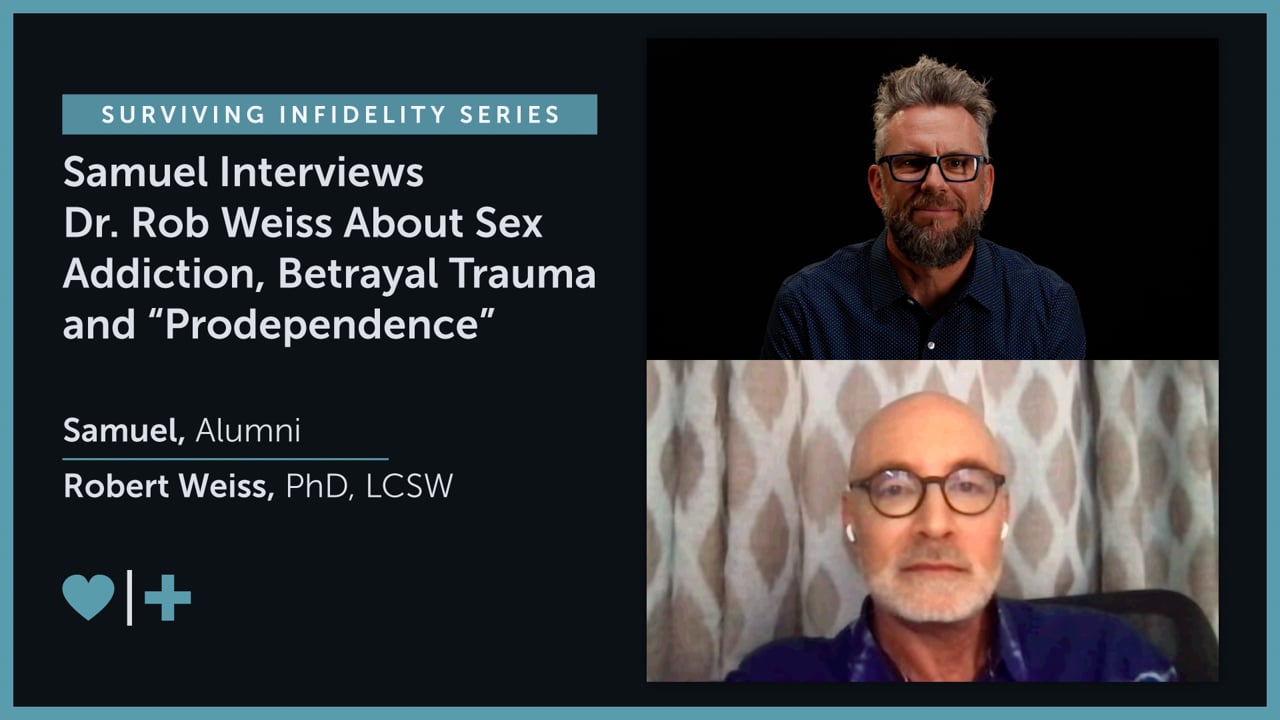
Today, we at AffairRecovery.com are excited to share with you an interview with the esteemed Dr. Robert Weiss PhD, LCSW. Dr. Weiss is the Chief Clinical Officer of Seeking Integrity LLC, offering clinical programs that provide online education and residential treatment for sex, porn, and substance/sex-addicted men and their families. A psychotherapist and addiction specialist, he has created six intimacy and addiction treatment programs in the US, Southeast Asia and for the US military. Dr. Weiss is also an online host for Digital Addiction on A&E, and has served as a subject-matter expert for major media outlets including CNN, NPR, and The New York Times. He is the author of eleven books, including Prodependence, Sex Addiction 101, and Out of the Doghouse. His Psychology Today blog, "Love and Sex in the Digital Age," has had over 21 million readers, while…
Continue reading →
Hope Rising 2022 Live Stream Feed
Times are in Central Time (GMT-5:00)
1-888-527-2367 | [email protected] | #hoperising2022
Streaming Tips
Here are a few important instructions:
The day-of stream will begin promptly at 9:00 am.
We strongly recommend testing your internet speed before the event to make sure that you have enough bandwidth to watch the Live Stream Event without frequent buffering (pauses). You can use https://testmy.net/download to get a general estimate of the speeds you're receiving from your Internet Provider. Then, compare that to the table of speeds below. If you expect higher bandwidth than what's being reported, we recommend getting in touch with your Internet Provider for more information.
Our Live Stream Event will use Vimeo Live and Zoom for breakouts and your video quality will be automatically adjusted based on your internet speed. The quality of playback is largely dependent on how your ISP (Internet Service Provider) or mobile provider connects to Vimeo's playback servers.
The following table shows the minimum speeds required for each playback quality:
Quality Required Minimum Bandwidth
360p 1 Mbps
720p 3 Mbps
Here is a link to Vimeo's playbook issue troubleshooting suggestions: https://help.vimeo.com/hc/en-us/articles/115015759328-Troubleshoot-video-playback-issues-
BREAKOUT DETAILS
Women & Men + Lunch Small Groups
11:15am - 1:15pm CT
No spouses please. The Women's Breakout & Lunch Small Groups are for women only and vice versa for the Men's. Lunch small groups will begin immediately following breakout groups.
WOMEN'S BREAKOUT & LUNCH GROUPS
MEN'S BREAKOUT & LUNCH GROUPS
Lunch Discussion Questions
We recommend that someone volunteer to be the group facilitator and lead the discussion.
Your group may decide to have the facilitator call on individuals to share. You could also go in
alphabetical order. Your group might also choose to spend more or less time on any given
question. This group is for YOU, so make it your own!
Share your first name and how long since discovery/disclosure.
In two minutes or less tell us why you are joining the Hope Rising conference this year?
What is something from the morning sessions that inspires you or gives you hope?
Have you done anything that helped you get through an annual reminder of a d-day?
What is something you want to start doing that you aren't currently doing?
What is something that you want to stop doing that you are currently doing?
How will you continue to find support and seek healing after this conference?
Note: We can't share contact information of participants. If you'd like to share yours do so before lunch ends.
PROGRAM
Presentation Notes, Speaker Bios, and Agenda can all be found here!
View Program
(printable)
AGENDA
9:00am Session One
Cindy Beall - When I Was In Your Shoes
Rusty Atkinson - Finding Freedom Through Forgiveness: My Journey to Becoming Free
Wayne Baker - Grounding Meditation
Break
10:40am Session Two
Rick Reynolds - What in the World Happened? How to Understand What Really Happened and What Didn't
11:15am Breakout - Presentations and Lunch Groups
Break
1:15pm Session Three
Tracey Brock - Life after Death
Jenny Barrios - "Peaches" My Crazy to an Authentic Healing Journey
Samuel - Event Co Host
Break
2:45pm Session Four
Lynn Marie Cherry - You Can Dream Again
Dr. John Haney - I Want to Live in a Hallmark Movie
Harboring Hope Online Course
Join The Notification List
Learn About Harboring Hope
This course is a lifeline for betrayed spouses. Authored by Leslie Hardie LCSW and Dr. John Haney PhD LPC-s, it sells out very quickly each month so join the email notification list, so you don't miss out when registration opens!
Join The Notification List
Learn About Harboring Hope
`
Donate To The Scholarship Program
Help us raise funds for those who can't afford to get help!
Donate Here
SPEAKERS
 Cindy Beall
Keynote Speaker, Author, and Pastor
When I Was In Your Shoes
Cindy Beall is the author of Healing Your Marriage When Trust is Broken: Finding Forgiveness and Restoration and Rebuilding a Marriage Better Than New. Cindy and her husband, Chris, walked through infidelity, found healing through Christ and have inspired thousands of couples. Together, they serve in full-time ministry, where they are both pastors at Life.Church. The Bealls have three sons, one daughter-in-love, and a beautiful granddaughter named Ivy Sloane.
Cindy Beall
Keynote Speaker, Author, and Pastor
When I Was In Your Shoes
Cindy Beall is the author of Healing Your Marriage When Trust is Broken: Finding Forgiveness and Restoration and Rebuilding a Marriage Better Than New. Cindy and her husband, Chris, walked through infidelity, found healing through Christ and have inspired thousands of couples. Together, they serve in full-time ministry, where they are both pastors at Life.Church. The Bealls have three sons, one daughter-in-love, and a beautiful granddaughter named Ivy Sloane.
 Rusty Atkinson
Infidelity Survivor
Finding Freedom Through Forgiveness: My Journey to Becoming Free
After experiencing betrayal, Rusty felt absolutely devastated and crushed. He thought that his life was over and nothing that he knew to be true seemed real. A friend that had been in his same shoes a few years before pointed him to Leslie Hardie and Affair Recovery. Through this difficult season, he began to see that there was light at the end of the tunnel. Using the tools that he found in the Harboring Hope class, he was able to work through the process of forgiveness. Not wanting to become a bitter old man, he embarked on a journey of Grieving, Forgiveness and Letting Go, which are individual lessons in Harboring Hope. There is freedom in forgiveness, and Rusty will share his journey to that freedom and provide encouragement that you can find that same freedom through the process of forgiveness.
Rusty Atkinson
Infidelity Survivor
Finding Freedom Through Forgiveness: My Journey to Becoming Free
After experiencing betrayal, Rusty felt absolutely devastated and crushed. He thought that his life was over and nothing that he knew to be true seemed real. A friend that had been in his same shoes a few years before pointed him to Leslie Hardie and Affair Recovery. Through this difficult season, he began to see that there was light at the end of the tunnel. Using the tools that he found in the Harboring Hope class, he was able to work through the process of forgiveness. Not wanting to become a bitter old man, he embarked on a journey of Grieving, Forgiveness and Letting Go, which are individual lessons in Harboring Hope. There is freedom in forgiveness, and Rusty will share his journey to that freedom and provide encouragement that you can find that same freedom through the process of forgiveness.
 Wayne Baker
M.A., LPC, and EMS Weekend Retreat Team
Grounding Meditation
Wayne Baker is a Licensed Professional Counselor who works with high-conflict couples and adults impacted by traumatic events, including infidelity. He is passionate about providing hope for individuals, families and couples as they heal from betrayal. Wayne is the co-author of a chapter for the graduate school textbook Positive Couple Relationships: The Evidence for Long-Lasting Relationship Satisfaction and Happiness.
Wayne Baker
M.A., LPC, and EMS Weekend Retreat Team
Grounding Meditation
Wayne Baker is a Licensed Professional Counselor who works with high-conflict couples and adults impacted by traumatic events, including infidelity. He is passionate about providing hope for individuals, families and couples as they heal from betrayal. Wayne is the co-author of a chapter for the graduate school textbook Positive Couple Relationships: The Evidence for Long-Lasting Relationship Satisfaction and Happiness.
 Rick Reynolds
LCSW, President and Founder of Affair Recovery
What in the World Happened? – How to Understand What Really Happened and What Didn't
As one of America's foremost authorities helping individuals and couples struggling with affairs and compulsive sexual behaviors, Rick brings over 30 years of experience and insight to his role as president and founder of Affair Recovery. He has authored numerous recovery guides, curricula and papers detailing reasons why people cheat, how couples can overcome the pain, heartache and distrust, and ways to move forward both individually and as a couple. Rick utilizes his personal recovery experience, gift of humility and non-judgmental nature to help restore lives impacted by infidelity.
Rick Reynolds
LCSW, President and Founder of Affair Recovery
What in the World Happened? – How to Understand What Really Happened and What Didn't
As one of America's foremost authorities helping individuals and couples struggling with affairs and compulsive sexual behaviors, Rick brings over 30 years of experience and insight to his role as president and founder of Affair Recovery. He has authored numerous recovery guides, curricula and papers detailing reasons why people cheat, how couples can overcome the pain, heartache and distrust, and ways to move forward both individually and as a couple. Rick utilizes his personal recovery experience, gift of humility and non-judgmental nature to help restore lives impacted by infidelity.
 Jessica McDaniel
LPC, EMS Weekend Retreat Team
Women's Breakout
Jessica McDaniel is a wife, the mother of three amazing daughters and a Licensed Professional Counselor. She is passionate about working with clients who have experienced betrayal trauma, identity and sexual brokenness, pregnancy grief/loss and postpartum depression. Jessica enjoys helping women and couples work toward deeper authenticity and invite the healing love of Christ into all parts of their story. As someone who has personally walked through betrayal, Jessica has seen firsthand how hope and healing are possible for anyone willing to work through the pain.
Jessica McDaniel
LPC, EMS Weekend Retreat Team
Women's Breakout
Jessica McDaniel is a wife, the mother of three amazing daughters and a Licensed Professional Counselor. She is passionate about working with clients who have experienced betrayal trauma, identity and sexual brokenness, pregnancy grief/loss and postpartum depression. Jessica enjoys helping women and couples work toward deeper authenticity and invite the healing love of Christ into all parts of their story. As someone who has personally walked through betrayal, Jessica has seen firsthand how hope and healing are possible for anyone willing to work through the pain.
 Ryan McDaniel
LPC, EMS Weekend Retreat Team
Men's Breakout
Ryan McDaniel is a Licensed Professional Counselor and a graduate of UT Austin. After completing his undergrad in Psychology, he went on to receive an MA in Counseling at Denver Seminary. Since 2012, he has pursued his passion of helping others with sexual addiction, infidelity, postpartum mood disorders and loss, depression, anxiety, and trauma.
Ryan McDaniel
LPC, EMS Weekend Retreat Team
Men's Breakout
Ryan McDaniel is a Licensed Professional Counselor and a graduate of UT Austin. After completing his undergrad in Psychology, he went on to receive an MA in Counseling at Denver Seminary. Since 2012, he has pursued his passion of helping others with sexual addiction, infidelity, postpartum mood disorders and loss, depression, anxiety, and trauma.
 Tracey Brock
LPC, and EMS Weekend Retreat Team
Life after Death
Tracey has been a therapist for almost 30 years after leaving a career as a CPA because of her own personal journey of betrayal, healing and growth. She specializes in all types of trauma, including betrayal trauma, as well as unresolved issues from childhood, women's issues, anxiety and depression, and couples experiencing conflict and distress who are stuck in a destructive cycle. She is a sought-after speaker at conferences and retreats. Tracey and her husband, Mike, have been married for over 30 years and together they lead marriage retreats and intensives. After being trained in ETT (Emotional Transformation Therapy), she started her own practice in the Austin area, Brock Transformational Therapy.
Tracey Brock
LPC, and EMS Weekend Retreat Team
Life after Death
Tracey has been a therapist for almost 30 years after leaving a career as a CPA because of her own personal journey of betrayal, healing and growth. She specializes in all types of trauma, including betrayal trauma, as well as unresolved issues from childhood, women's issues, anxiety and depression, and couples experiencing conflict and distress who are stuck in a destructive cycle. She is a sought-after speaker at conferences and retreats. Tracey and her husband, Mike, have been married for over 30 years and together they lead marriage retreats and intensives. After being trained in ETT (Emotional Transformation Therapy), she started her own practice in the Austin area, Brock Transformational Therapy.
 Jenny Barrios
Infidelity Survivor, MAEd
"Peaches" My Crazy to an Authentic Healing Journey
Following her spouse's infidelities, Jenny felt broken and devastated; she found support and her voice in the betrayed community forums at Affair Recovery. EMS Online and Harboring Hope paved the road to finding peace and healing. As a high school science teacher, mother of three boys, and avid handicraft enthusiast, she found a community of professional and authentic individuals by leading Harboring Hope groups. Continuing to share her journey and desire for genuine relationships keeps her on the path to her best self.
Jenny Barrios
Infidelity Survivor, MAEd
"Peaches" My Crazy to an Authentic Healing Journey
Following her spouse's infidelities, Jenny felt broken and devastated; she found support and her voice in the betrayed community forums at Affair Recovery. EMS Online and Harboring Hope paved the road to finding peace and healing. As a high school science teacher, mother of three boys, and avid handicraft enthusiast, she found a community of professional and authentic individuals by leading Harboring Hope groups. Continuing to share her journey and desire for genuine relationships keeps her on the path to her best self.
 Samuel
Infidelity Survivor, Hope Rising MC
Event Co Host
Samuel is a video blogger for Affair Recovery and survivor of his own infidelity, more than 17 years ago, providing hope, encouragement and infidelity-specific insight to anyone in recovery from betrayal.
Samuel
Infidelity Survivor, Hope Rising MC
Event Co Host
Samuel is a video blogger for Affair Recovery and survivor of his own infidelity, more than 17 years ago, providing hope, encouragement and infidelity-specific insight to anyone in recovery from betrayal.
 Lynn Marie Cherry
Author, Pastor, and Hope Rising Program Chair
You Can Dream Again
Lynn is an engaging speaker and the author of Keep Walking, 40 Days to Hope and Freedom after Betrayal, an award-winning devotional helping betrayed spouses find a way through the pain and trauma. In 2005 Lynn and her husband David worked through a precursor to EMS Online and Lynn did an early version of Harboring Hope. Affair Recovery is a vital part of their recovery journey. Lynn has been honored to be an MC and program chair for Hope Rising Conference for 5 years. David and Lynn co-pastor Restoration Covenant Church in Round Rock, TX.
Lynn Marie Cherry
Author, Pastor, and Hope Rising Program Chair
You Can Dream Again
Lynn is an engaging speaker and the author of Keep Walking, 40 Days to Hope and Freedom after Betrayal, an award-winning devotional helping betrayed spouses find a way through the pain and trauma. In 2005 Lynn and her husband David worked through a precursor to EMS Online and Lynn did an early version of Harboring Hope. Affair Recovery is a vital part of their recovery journey. Lynn has been honored to be an MC and program chair for Hope Rising Conference for 5 years. David and Lynn co-pastor Restoration Covenant Church in Round Rock, TX.
 Dr. John Mark Haney
Ph.D., LPC, Co-Author of Harboring Hope, and EMS Weekend Retreat Team
I Want to Live in a Hallmark Movie
John is a wise and compassionate psychotherapist with more than 15 years of experience in private practice. He earned his PhD from the University of Texas at Austin. While experienced in multiple issues and modalities, John is best-known for his work in recovery from the pain of infidelity, as well as related work in recovery from sexual shame and trauma. John and his wife Leslie co-wrote Harboring Hope, an online program for betrayed spouses. They serve together on the Affair Recovery specialist panel. John brings an eclectic and existential approach to counseling, believing his goal is not just to help clients cope with current or past pain, but to find new life and meaning beyond their suffering and confusion. John has been trained and certified in sex therapy, Eye Movement Desensitization and Reprocessing (EMDR) and Emotional Transformation Therapy (ETT).
Follow Us!
Twitter
Instagram
YouTube
Facebook
Dr. John Mark Haney
Ph.D., LPC, Co-Author of Harboring Hope, and EMS Weekend Retreat Team
I Want to Live in a Hallmark Movie
John is a wise and compassionate psychotherapist with more than 15 years of experience in private practice. He earned his PhD from the University of Texas at Austin. While experienced in multiple issues and modalities, John is best-known for his work in recovery from the pain of infidelity, as well as related work in recovery from sexual shame and trauma. John and his wife Leslie co-wrote Harboring Hope, an online program for betrayed spouses. They serve together on the Affair Recovery specialist panel. John brings an eclectic and existential approach to counseling, believing his goal is not just to help clients cope with current or past pain, but to find new life and meaning beyond their suffering and confusion. John has been trained and certified in sex therapy, Eye Movement Desensitization and Reprocessing (EMDR) and Emotional Transformation Therapy (ETT).
Follow Us!
Twitter
Instagram
YouTube
Facebook
Cindy Beall
Keynote Speaker, Author, and Pastor
When I Was In Your Shoes
Cindy Beall is the author of Healing Your Marriage When Trust is Broken: Finding Forgiveness and Restoration and Rebuilding a Marriage Better Than New. Cindy and her husband, Chris, walked through infidelity, found healing through Christ and have inspired thousands of couples. Together, they serve in full-time ministry, where they are both pastors at Life.Church. The Bealls have three sons, one daughter-in-love, and a beautiful granddaughter named Ivy Sloane.
Rusty Atkinson
Infidelity Survivor
Finding Freedom Through Forgiveness: My Journey to Becoming Free
After experiencing betrayal, Rusty felt absolutely devastated and crushed. He thought that his life was over and nothing that he knew to be true seemed real. A friend that had been in his same shoes a few years before pointed him to Leslie Hardie and Affair Recovery. Through this difficult season, he began to see that there was light at the end of the tunnel. Using the tools that he found in the Harboring Hope class, he was able to work through the process of forgiveness. Not wanting to become a bitter old man, he embarked on a journey of Grieving, Forgiveness and Letting Go, which are individual lessons in Harboring Hope. There is freedom in forgiveness, and Rusty will share his journey to that freedom and provide encouragement that you can find that same freedom through the process of forgiveness.
Wayne Baker
M.A., LPC, and EMS Weekend Retreat Team
Grounding Meditation
Wayne Baker is a Licensed Professional Counselor who works with high-conflict couples and adults impacted by traumatic events, including infidelity. He is passionate about providing hope for individuals, families and couples as they heal from betrayal. Wayne is the co-author of a chapter for the graduate school textbook Positive Couple Relationships: The Evidence for Long-Lasting Relationship Satisfaction and Happiness.
Rick Reynolds
LCSW, President and Founder of Affair Recovery
What in the World Happened? – How to Understand What Really Happened and What Didn't
As one of America's foremost authorities helping individuals and couples struggling with affairs and compulsive sexual behaviors, Rick brings over 30 years of experience and insight to his role as president and founder of Affair Recovery. He has authored numerous recovery guides, curricula and papers detailing reasons why people cheat, how couples can overcome the pain, heartache and distrust, and ways to move forward both individually and as a couple. Rick utilizes his personal recovery experience, gift of humility and non-judgmental nature to help restore lives impacted by infidelity.
Jessica McDaniel
LPC, EMS Weekend Retreat Team
Women's Breakout
Jessica McDaniel is a wife, the mother of three amazing daughters and a Licensed Professional Counselor. She is passionate about working with clients who have experienced betrayal trauma, identity and sexual brokenness, pregnancy grief/loss and postpartum depression. Jessica enjoys helping women and couples work toward deeper authenticity and invite the healing love of Christ into all parts of their story. As someone who has personally walked through betrayal, Jessica has seen firsthand how hope and healing are possible for anyone willing to work through the pain.
Ryan McDaniel
LPC, EMS Weekend Retreat Team
Men's Breakout
Ryan McDaniel is a Licensed Professional Counselor and a graduate of UT Austin. After completing his undergrad in Psychology, he went on to receive an MA in Counseling at Denver Seminary. Since 2012, he has pursued his passion of helping others with sexual addiction, infidelity, postpartum mood disorders and loss, depression, anxiety, and trauma.
Tracey Brock
LPC, and EMS Weekend Retreat Team
Life after Death
Tracey has been a therapist for almost 30 years after leaving a career as a CPA because of her own personal journey of betrayal, healing and growth. She specializes in all types of trauma, including betrayal trauma, as well as unresolved issues from childhood, women's issues, anxiety and depression, and couples experiencing conflict and distress who are stuck in a destructive cycle. She is a sought-after speaker at conferences and retreats. Tracey and her husband, Mike, have been married for over 30 years and together they lead marriage retreats and intensives. After being trained in ETT (Emotional Transformation Therapy), she started her own practice in the Austin area, Brock Transformational Therapy.
Jenny Barrios
Infidelity Survivor, MAEd
"Peaches" My Crazy to an Authentic Healing Journey
Following her spouse's infidelities, Jenny felt broken and devastated; she found support and her voice in the betrayed community forums at Affair Recovery. EMS Online and Harboring Hope paved the road to finding peace and healing. As a high school science teacher, mother of three boys, and avid handicraft enthusiast, she found a community of professional and authentic individuals by leading Harboring Hope groups. Continuing to share her journey and desire for genuine relationships keeps her on the path to her best self.
Samuel
Infidelity Survivor, Hope Rising MC
Event Co Host
Samuel is a video blogger for Affair Recovery and survivor of his own infidelity, more than 17 years ago, providing hope, encouragement and infidelity-specific insight to anyone in recovery from betrayal.
Lynn Marie Cherry
Author, Pastor, and Hope Rising Program Chair
You Can Dream Again
Lynn is an engaging speaker and the author of Keep Walking, 40 Days to Hope and Freedom after Betrayal, an award-winning devotional helping betrayed spouses find a way through the pain and trauma. In 2005 Lynn and her husband David worked through a precursor to EMS Online and Lynn did an early version of Harboring Hope. Affair Recovery is a vital part of their recovery journey. Lynn has been honored to be an MC and program chair for Hope Rising Conference for 5 years. David and Lynn co-pastor Restoration Covenant Church in Round Rock, TX.
Dr. John Mark Haney
Ph.D., LPC, Co-Author of Harboring Hope, and EMS Weekend Retreat Team
I Want to Live in a Hallmark Movie
John is a wise and compassionate psychotherapist with more than 15 years of experience in private practice. He earned his PhD from the University of Texas at Austin. While experienced in multiple issues and modalities, John is best-known for his work in recovery from the pain of infidelity, as well as related work in recovery from sexual shame and trauma. John and his wife Leslie co-wrote Harboring Hope, an online program for betrayed spouses. They serve together on the Affair Recovery specialist panel. John brings an eclectic and existential approach to counseling, believing his goal is not just to help clients cope with current or past pain, but to find new life and meaning beyond their suffering and confusion. John has been trained and certified in sex therapy, Eye Movement Desensitization and Reprocessing (EMDR) and Emotional Transformation Therapy (ETT).
Follow Us!
Twitter
Instagram
YouTube
Facebook
Times are in Central Time (GMT-5:00)
1-888-527-2367 | [email protected] | #hoperising2022
Streaming Tips
Here are a few important instructions:
The day-of stream will begin promptly at 9:00 am.
We strongly recommend testing your internet speed before the event to make sure that you have enough bandwidth to watch the Live Stream Event without frequent buffering (pauses). You can use https://testmy.net/download to get a general estimate of the speeds you're receiving from your Internet Provider. Then, compare that to the table of speeds below. If you expect higher bandwidth than what's being reported, we recommend getting in touch with your Internet Provider for more information.
Our Live Stream Event will use Vimeo Live and Zoom for breakouts and your video quality will be automatically adjusted based on your internet…
Continue reading →
Surviving Infidelity: What Do We Tell the Kids?
Find guidance to healing after infidelity with EMS Online. This course is comprised of expert methodology honed from decades of experience exclusively in the field of infidelity to better serve couples as they address the betrayal, reconnect as partners and restore their lives.
Learn More | EMS Online
A common fear expressed by my clients is how the infidelity may impact their children. In 2008, Ana Nogales published the book, Parents Who Cheat: How Children and Adults Are Affected When Their Parents are Unfaithful1. In it, Nogales breaks down the findings of 822 responses to a survey she conducted:
Seventy-five percent of those who responded to our "Parents Who Cheat" survey reported that they felt betrayed by the parent who cheated. Sixty-two percent felt ashamed. Eighty percent felt that…
Continue reading →
How Do You Know If You’re Healing? Part 2
 How Do You Know if You're Healing? Part 1
How Do You Know if You're Healing? Part 2
"Now faith is the substance of things hoped for, the evidence of things not seen."
—Hebrews 11:1
I guess when I first heard someone talking about the process of "healing" I envisioned a feeling of relief, like a balm to a wound. For me, I have found that sometimes healing actually feels… really uncomfortable. Sometimes it feels more like a state of suspension, between where I was and where I want to be. It's unknown, unpredictable, and uncomfortable. As awful as depression feels, depression is safe. There are no expectations. No surprises. No vulnerability required. Hope is scary because it can lead to disappointment, and then more pain. It's so exhausting that sometimes it's easier to not hope at all, rather than risk being hurt again. But I try again anyway. The line between acceptance and resignation is murky. One is empowering, and the other is sustained powerlessness. Sometimes it can be hard to tell which one I am feeling on a given day, but it is getting easier to discern as time goes on.
Before I continue talking about healing, I want to take a moment to recognize the difference between triggers and reminders. I think it's important to distinguish between these because it can be a helpful barometer of progress and healing over time. In my "un" expert, but very seasoned experience as a betrayed spouse, the main difference is that a trigger is something that brings up an automatic physical reaction, sometimes even before I am consciously aware of the connection. Whereas a reminder is a cognitive thought that relates something to the infidelity or the pain. A trigger is an automatic response and beyond my control. A reminder does not necessarily bring with it an emotional response. It reminds me of sadness, disappointment, or pain, but may or may not elicit those actual feelings in that moment. It depends on what it is, where we are in the process, and how I'm doing on a particular day. For example, if I am experiencing a trigger, I might feel a sudden onset of physical symptoms (rapid heartbeat, tightness in my chest, a knot in my stomach, sweaty palms etc.) combined with a sense of panic or feeling unsafe. If I am experiencing a reminder, it is primarily taking place in my thoughts, as opposed to my body. I might feel sad or disappointed with a reminder, but it lacks the sense of panic and immediacy that a trigger presents.
I think it is important to note the difference because it's easy to get discouraged when so many things still remind me of his affair, and makes me feel like I am not making any progress. In the beginning everything was a trigger, and it was all intense, and it just was what it was. But over time, and once I started doing the right work, the responses started to vary. Now, some previous triggers are more like reminders. That's not to minimize having to endure the ongoing reminders of something that caused so much destruction and never should have happened, but in the realm of recovery, the distinction is important.
It's been interesting to see what still generates an automatic reaction in me after all this time, and what doesn't. It can be inconsistent and sometimes it really takes me by surprise - in either direction. Such as when something that I wouldn't consciously think would even bother me at this point unexpectedly creates an intense physical response. Recently, I overheard a benign phone conversation between my work-at-home husband and a female coworker, and it sent me spiraling. It took me completely by surprise, and I found myself suddenly shaking uncontrollably from head to toe, and struggling to catch my breath. In contrast, on another day I came across an object that would normally generate a 10 out of 10 response, and I marveled at the lack of reaction that I had - like I was observing someone else. It would have previously sent me through the roof, but in that given moment, it just registered as being there, and not much else.
So how do you know you are actually healing even in the midst of all the mess? Today, I drove by three different places that have significance in relation to my husband's affair. These three places all happen to be on a route I have to travel frequently. As much as I still hate the thought of all of it and I still feel degrees of resentment, pain, and disappointment, my heart no longer races as I drive by. I no longer feel a sense of panic. I don't get nauseous or physically shake anymore. I don't (usually) break down and sob in the car as I drive by. All of these used to be my consistent automatic responses to these same exact places, but they haven't in a while. Just because I still feel pain doesn't discount that some healing has taken place. Am I done healing? I certainly hope not. This is not a place I want to stay. It all still deeply hurts my heart. The reduction in intensity is progress, but I would like to think someday I could truly experience peace.
My counselor often reminds me that healing comes in layers. Sometimes I am fearful to describe progress in a specific area, as I worry my husband or counselor will check the box and say - "good - you're all done!" And then I will be stuck here forever; still unhappy and hurting, just maybe less so. "Manageable" and "tolerable" are not where I want to stay, but are admittedly better than where I was. Two steps forward and one step back. This is the persistent dance of recovery. It is not linear and so frustratingly exhausting. Glimpses of progress and hope jumbled in with setbacks and despair. Fear of feeling too confident about finding "success" in a particular area, while looking over my shoulder for it to come back to bite me again, and leave me wondering if I really made any progress at all.
Sometimes I feel like I'm making steady progress, and then something will hit me and I take 10,000 steps backwards. It feels like I have lost ALL of my progress and am back at the beginning, starting over. But am I really? It sure feels that way, but if I try to be more objective, I can say the time "in the pit" is a little shorter every time I fall back into it, and the times in between falls to the bottom of the "pit" get a tiny bit longer. In the beginning, it was hard to discern, and really didn't matter because it all felt so terrible. A little later on, it became more evident, and while I still hate revisiting the pit, now I feel more confident that I will only stay for a brief visit, rather than a full-blown, miserable vacation. Setbacks do not mean you're not healing. It certainly feels that way and it's easy to convince ourselves that it does, but this journey is complicated and setbacks are just a part of it.
As hard as this all is, failure is not as scary to me anymore. After experiencing the worst thing ever to happen to me, fear about anything else pales in comparison, which is weirdly liberating. I can't undo my reality, so having already checked the box on the biggest devastation in my life, leaves me less fearful of pretty much everything else.
Healing feels like different things at different times to different people. Sometimes it feels like an unexpected laugh. Like hearing laughter, real genuine laughter, and then realizing it's coming from you, and then realizing you can't even remember the last time you actually laughed. Or maybe it's a moment of peace and contentment. Just for a second. It feels foreign after being depressed for so long.
I recently saw this depiction of healing from writer and artist Topher Kearby and thought it was beautifully accurate:
Healing is not a gentle journey. It takes strength and courage because it's not a straight line from pain to joy. It's a cycle. And one that must be repeated time and time again in order to truly grow. As we shed our skin of the past we become exposed to the light of the future. We are raw and the fire burns. Because everything is new. Those parts of ourselves have never been seen by the sun before and now that they have nothing will ever be the same.
And that's beautiful
And that's terrifying
And that's healing
Healing can be as simple as getting out of bed. Taking a shower. Eating something. Sitting quietly. Being able to think clearly for just a moment. Wiping your tears and trying again. You are doing the best you can with the cards you have been dealt, and you will find your way. Just make sure to look around once in a while to acknowledge your progress. It may be so faint that it's hard to see, especially in the beginning. But if you are here reading this today, you are already doing something toward healing. It will get better.
Hebrews 12:1 Let us run with endurance the race God has set before us.
How Do You Know if You're Healing? Part 1
How Do You Know if You're Healing? Part 2
"Now faith is the substance of things hoped for, the evidence of things not seen."
—Hebrews 11:1
I guess when I first heard someone talking about the process of "healing" I envisioned a feeling of relief, like a balm to a wound. For me, I have found that sometimes healing actually feels… really uncomfortable. Sometimes it feels more like a state of suspension, between where I was and where I want to be. It's unknown, unpredictable, and uncomfortable. As awful as depression feels, depression is safe. There are no expectations. No surprises. No vulnerability required. Hope is scary because it can lead to disappointment, and then more pain. It's so exhausting that sometimes it's easier to not hope at all, rather than risk being hurt again. But I try again anyway. The line between acceptance and resignation is murky. One is empowering, and the other is sustained powerlessness. Sometimes it can be hard to tell which one I am feeling on a given day, but it is getting easier to discern as time goes on.
Before I continue talking about healing, I want to take a moment to recognize the difference between triggers and reminders. I think it's important to distinguish between these because it can be a helpful barometer of progress and healing over time. In my "un" expert, but very seasoned experience as a betrayed spouse, the main difference is that a trigger is something that brings up an automatic physical reaction, sometimes even before I am consciously aware of the connection. Whereas a reminder is a cognitive thought that relates something to the infidelity or the pain. A trigger is an automatic response and beyond my control. A reminder does not necessarily bring with it an emotional response. It reminds me of sadness, disappointment, or pain, but may or may not elicit those actual feelings in that moment. It depends on what it is, where we are in the process, and how I'm doing on a particular day. For example, if I am experiencing a trigger, I might feel a sudden onset of physical symptoms (rapid heartbeat, tightness in my chest, a knot in my stomach, sweaty palms etc.) combined with a sense of panic or feeling unsafe. If I am experiencing a reminder, it is primarily taking place in my thoughts, as opposed to my body. I might feel sad or disappointed with a reminder, but it lacks the sense of panic and immediacy that a trigger presents.
I think it is important to note the difference because it's easy to get discouraged when so many things still remind me of his affair, and makes me feel like I am not making any progress. In the beginning everything was a trigger, and it was all intense, and it just was what it was. But over time, and once I started doing the right work, the responses started to vary. Now, some previous triggers are more like reminders. That's not to minimize having to endure the ongoing reminders of something that caused so much destruction and never should have happened, but in the realm of recovery, the distinction is important.
It's been interesting to see what still generates an automatic reaction in me after all this time, and what doesn't. It can be inconsistent and sometimes it really takes me by surprise - in either direction. Such as when something that I wouldn't consciously think would even bother me at this point unexpectedly creates an intense physical response. Recently, I overheard a benign phone conversation between my work-at-home husband and a female coworker, and it sent me spiraling. It took me completely by surprise, and I found myself suddenly shaking uncontrollably from head to toe, and struggling to catch my breath. In contrast, on another day I came across an object that would normally generate a 10 out of 10 response, and I marveled at the lack of reaction that I had - like I was observing someone else. It would have previously sent me through the roof, but in that given moment, it just registered as being there, and not much else.
So how do you know you are actually healing even in the midst of all the mess? Today, I drove by three different places that have significance in relation to my husband's affair. These three places all happen to be on a route I have to travel frequently. As much as I still hate the thought of all of it and I still feel degrees of resentment, pain, and disappointment, my heart no longer races as I drive by. I no longer feel a sense of panic. I don't get nauseous or physically shake anymore. I don't (usually) break down and sob in the car as I drive by. All of these used to be my consistent automatic responses to these same exact places, but they haven't in a while. Just because I still feel pain doesn't discount that some healing has taken place. Am I done healing? I certainly hope not. This is not a place I want to stay. It all still deeply hurts my heart. The reduction in intensity is progress, but I would like to think someday I could truly experience peace.
My counselor often reminds me that healing comes in layers. Sometimes I am fearful to describe progress in a specific area, as I worry my husband or counselor will check the box and say - "good - you're all done!" And then I will be stuck here forever; still unhappy and hurting, just maybe less so. "Manageable" and "tolerable" are not where I want to stay, but are admittedly better than where I was. Two steps forward and one step back. This is the persistent dance of recovery. It is not linear and so frustratingly exhausting. Glimpses of progress and hope jumbled in with setbacks and despair. Fear of feeling too confident about finding "success" in a particular area, while looking over my shoulder for it to come back to bite me again, and leave me wondering if I really made any progress at all.
Sometimes I feel like I'm making steady progress, and then something will hit me and I take 10,000 steps backwards. It feels like I have lost ALL of my progress and am back at the beginning, starting over. But am I really? It sure feels that way, but if I try to be more objective, I can say the time "in the pit" is a little shorter every time I fall back into it, and the times in between falls to the bottom of the "pit" get a tiny bit longer. In the beginning, it was hard to discern, and really didn't matter because it all felt so terrible. A little later on, it became more evident, and while I still hate revisiting the pit, now I feel more confident that I will only stay for a brief visit, rather than a full-blown, miserable vacation. Setbacks do not mean you're not healing. It certainly feels that way and it's easy to convince ourselves that it does, but this journey is complicated and setbacks are just a part of it.
As hard as this all is, failure is not as scary to me anymore. After experiencing the worst thing ever to happen to me, fear about anything else pales in comparison, which is weirdly liberating. I can't undo my reality, so having already checked the box on the biggest devastation in my life, leaves me less fearful of pretty much everything else.
Healing feels like different things at different times to different people. Sometimes it feels like an unexpected laugh. Like hearing laughter, real genuine laughter, and then realizing it's coming from you, and then realizing you can't even remember the last time you actually laughed. Or maybe it's a moment of peace and contentment. Just for a second. It feels foreign after being depressed for so long.
I recently saw this depiction of healing from writer and artist Topher Kearby and thought it was beautifully accurate:
Healing is not a gentle journey. It takes strength and courage because it's not a straight line from pain to joy. It's a cycle. And one that must be repeated time and time again in order to truly grow. As we shed our skin of the past we become exposed to the light of the future. We are raw and the fire burns. Because everything is new. Those parts of ourselves have never been seen by the sun before and now that they have nothing will ever be the same.
And that's beautiful
And that's terrifying
And that's healing
Healing can be as simple as getting out of bed. Taking a shower. Eating something. Sitting quietly. Being able to think clearly for just a moment. Wiping your tears and trying again. You are doing the best you can with the cards you have been dealt, and you will find your way. Just make sure to look around once in a while to acknowledge your progress. It may be so faint that it's hard to see, especially in the beginning. But if you are here reading this today, you are already doing something toward healing. It will get better.
Hebrews 12:1 Let us run with endurance the race God has set before us.
How Do You Know if You're Healing? Part 1
How Do You Know if You're Healing? Part 2
"Now faith is the substance of things hoped for, the evidence of things not seen."
—Hebrews 11:1
I guess when I first heard someone talking about the process of "healing" I envisioned a feeling of relief, like a balm to a wound. For me, I have found that sometimes healing actually feels… really uncomfortable. Sometimes it feels more like a state of suspension, between where I was and where I want to be. It's unknown, unpredictable, and uncomfortable. As awful as depression feels, depression is safe. There are no expectations. No surprises. No vulnerability required. Hope is scary because it can lead to disappointment, and then more pain. It's so exhausting that sometimes it's easier to not hope at all, rather than risk being hurt again. But I try again…
Continue reading →
Plateaus: When Your Relationship Isn’t Where You Want It to Be After an Affair or Addiction
Have you ever reached a point in your own recovery, or in your relationship, where you thought to yourself: is this really as good as it's going to get? Maybe you've found yourself reasonably happy, but just not fulfilled with the repair work you've done? Like many, you may have also felt like you or your relationship were making great strides, showing ongoing momentum and promise, and now you feel stuck. You may find yourself on a plateau. Often, a plateau can be misinterpreted as an ominous sign that something is seriously wrong, when in fact, it may just be time for a minor tune up to your own repair work or your relationship's. In today's video, you may be relieved to hear that plateaus in recovery are 100% normal, and even to be expected. Today, Samuel shares down-to-earth suggestions on how to recognize plateaus in recovery work, as well as how to…
Continue reading →
Life After Divorce: How the Unfaithful Sees It
I once heard it said, "Love is blind, but marriage is a real eye-opener." As a professional, I've always believed people to be profoundly naïve about marriage. However, that naïveté may be even more pronounced when it comes to life after divorce. After our previous article on infidelity and divorce and the challenges faced by the betrayed spouse, it seemed only appropriate to address the challenges after divorce for those who have been unfaithful.
Post Divorce Challenges From Those Who Were Unfaithful
"Divorce didn't solve our problems—it only delayed the resolution."
Frequently, bitterness after the betrayal fuels the betrayed spouse's anger for months and sometimes years after the divorce, making divorce recovery more difficult. "Issues…
Continue reading →
The Old Us Versus The New Us
 One thing is certain no matter which side of the infidelity you are on - after D-Day, anniversaries take on a whole new meaning. On our first anniversary post D-Day, we just wanted to crawl into a hole and forget it was happening.
A million questions swirl around in your mind. Are we supposed to celebrate our anniversary? What should I do? How do I act? Is this all fake? If you were "getting by" before, there's certainly no room for that with what feels like this giant elephant looming in the background. Everything is out in the open, exposed, raw, vulnerable.
On one of our recent anniversaries, I was prompted to reflect on "what does our marriage mean now?" While most of my friends and family members are sharing those cliche messages on social media like "We've always been so perfect for each other," what can I share that is truly authentic? I decided to write to my husband, from the depths of my heart, something that genuinely conveys the heart of our journey. One thing both of us have developed a keen eye for after D-day is fake, fluffy words. We can smell insincerity from a mile away.
This letter to my husband was written several years after our D-Day. Please know if you are in the beginning stages of your recovery and feel like things will never get better, there is hope.
"18 years ago, two kids got married. Don't tell the 'old' us that I said this, but the 'new' us is so much better. The new us has something that the old us never had. We are free to be authentically, individually ourselves. We are stronger and braver than ever before. We live and love on a deeper level than the old us ever could. The old us had a frilly external image, but inside was hollow.
We have fought like hell for the new us and it is a continual fight. As quoted from The Princess Bride, "Anyone who tells you otherwise, is only trying to sell you something." That something may be an image, a tradition, a system of rules, you name it!
The best marriages come out of the hardest conversations you will ever have. They come out of the ashes - death of old ways, old ideas, old mindsets. They know what it is to survive catastrophe and become something totally new. Both people have to sincerely confront and address the tough, uncomfortable, sometimes gut-wrenching issues and you have to do it over and over and over again. You do it so often that it becomes a solid part of your new foundation. Thank you for staying by my side on this journey for 18+ years. Thank you for being willing to evolve and grow alongside me. I love you!"
One thing is certain no matter which side of the infidelity you are on - after D-Day, anniversaries take on a whole new meaning. On our first anniversary post D-Day, we just wanted to crawl into a hole and forget it was happening.
A million questions swirl around in your mind. Are we supposed to celebrate our anniversary? What should I do? How do I act? Is this all fake? If you were "getting by" before, there's certainly no room for that with what feels like this giant elephant looming in the background. Everything is out in the open, exposed, raw, vulnerable.
On one of our recent anniversaries, I was prompted to reflect on "what does our marriage mean now?" While most of my friends and family members are sharing those cliche messages on social media like "We've always been so perfect for each other," what can I share that is truly authentic? I decided to write to my husband, from the depths of my heart, something that genuinely conveys the heart of our journey. One thing both of us have developed a keen eye for after D-day is fake, fluffy words. We can smell insincerity from a mile away.
This letter to my husband was written several years after our D-Day. Please know if you are in the beginning stages of your recovery and feel like things will never get better, there is hope.
"18 years ago, two kids got married. Don't tell the 'old' us that I said this, but the 'new' us is so much better. The new us has something that the old us never had. We are free to be authentically, individually ourselves. We are stronger and braver than ever before. We live and love on a deeper level than the old us ever could. The old us had a frilly external image, but inside was hollow.
We have fought like hell for the new us and it is a continual fight. As quoted from The Princess Bride, "Anyone who tells you otherwise, is only trying to sell you something." That something may be an image, a tradition, a system of rules, you name it!
The best marriages come out of the hardest conversations you will ever have. They come out of the ashes - death of old ways, old ideas, old mindsets. They know what it is to survive catastrophe and become something totally new. Both people have to sincerely confront and address the tough, uncomfortable, sometimes gut-wrenching issues and you have to do it over and over and over again. You do it so often that it becomes a solid part of your new foundation. Thank you for staying by my side on this journey for 18+ years. Thank you for being willing to evolve and grow alongside me. I love you!"
One thing is certain no matter which side of the infidelity you are on - after D-Day, anniversaries take on a whole new meaning. On our first anniversary post D-Day, we just wanted to crawl into a hole and forget it was happening.
A million questions swirl around in your mind. Are we supposed to celebrate our anniversary? What should I do? How do I act? Is this all fake? If you were "getting by" before, there's certainly no room for that with what feels like this giant elephant looming in the background. Everything is out in the open, exposed, raw, vulnerable.
On one of our recent anniversaries, I was prompted to reflect on "what does our marriage mean now?" While most of my friends and family members are sharing those cliche messages on social media like "We've always been so perfect for each other," what can I share that is truly authentic? I…
Continue reading →
What a Healed Betrayed Spouse Looks Like
If you have been impacted by infidelity, whether it happened recently or even years ago, your emotions can be all over the place. When you decide to commit to heal yourself, no matter what your spouse decides to do, there are some things you'll need to change in order to get to a healthier place mentally. Some betrayed partners feel the overwhelming need to control everything about the unfaithful, including their schedules, email or social media activity, how they dress, and even their spouse's recovery. While these urges are very common and a normal reaction to trauma, as you heal, you will find yourself more able to let go of some of your fear-based behaviors and replace those with the peace that you are longing for. Today, Stephanie, in her twenty plus years of experience, shares how she moved past hurt to healing on her recovery journey, and how you can…
Continue reading →
How You Can Experience Sustainable Transformation After the Discovery of Infidelity or Addiction?
How many times have we experienced ups and downs in trying to save our relationship after infidelity? What about in our own personal repair work? The truth is, we typically will move two steps forward, three steps back as we try to heal from either our own destruction, or our partner's. Today Samuel brings a refreshing approach to accomplishing long-term, sustainable transformation, in both our own healing work, and possibly that of our relationship. We don't have to struggle to gain momentum forever in our own healing, and if we choose to salvage our relationship, we don't have to live in a state of constant turbulence or uncertainty. Today you'll hear crucial but palatable insight that can be applied to your own situation, from Samuel's own journey of sustainable transformation.
Continue reading →
How Do You Know If You’re Healing? Part 1
 For that matter, what is "healed" anyway? What does it mean? What does it actually look like? I will explore this further in a future blog, as this question has perplexed and frustrated me since I learned of my husband's infidelity. More to come on that.
In the meantime, the process of healing is hard to measure. You can't take out a yardstick or step on the scale to track the progress. It's subtle and murky. Healing is slow and often undetectable day by day. It takes some intentional scrutiny to see it, and it looks different for every person. I can only tell you my own experience but maybe it can offer some insight in your situation too.
I think it's easy to dismiss progress when we still feel pain. Pain can be deafening against the quiet of progress. But sometimes we need to really take a closer look to get an accurate measurement. For example, if you think back to the days you first discovered your spouse's betrayal, you were probably knocked off your feet by the overwhelming pain and disorientation. Your world as you knew it was no longer the same, no longer safe, and everything was turned upside down. The pain was blinding and completely enveloping everything around you. If some time has passed since then, and you are still in pain, you may think that means you aren't healing at all. But take a closer look. Even if you are still depressed, or feel pain and disappointment, you might be able to notice a shift. Did you eat today? Did you sleep last night - at all? Did you get out of bed this morning? Those may be improvements, and while four hours of sleep versus two is not wonderful, it is progress. It can be the small, incremental things that feel like nothing, but are actually tiny steps toward forward momentum. If you are reading this blog then you are actively seeking healing and that is progress, too. Even if you don't feel it today.
One of the things about healing is that it can be so frustrating and painful that it doesn't feel like healing at all. At times, it is like seeing Bigfoot. Even if you did see it, you're pretty sure you didn't, and you think it must have been a figment of your imagination. Nonetheless, even if you did see Bigfoot you know you're not likely to see him again. That's what healing feels like at times. A fleeting feeling, just for a moment, and then it's gone. It's so frustrating to almost catch a shift in perspective, a tiny nudge toward understanding, and then it's gone. Poof! Like you never felt it, and now you can't even really remember what it felt like, but you thought you had it for a moment. I have found over time these "glimmers" arrive in more frequency and stick around a little longer. They still come and go, and when I lose them it is so disheartening and sometimes I still get really depressed. But I am finding the glimmers are appearing more often and lasting longer each time, so I feel a little less anxious about them disappearing as I have increasing confidence they'll be back.
Healing is often messy, and might not feel like healing at all. Last year, we finally decided to put new carpeting in our bedroom. The carpet was not new even when we moved in over 20 years ago so it was pretty old. (Don't judge me.) For years, we focused on updating all the other rooms in the house: the kids' bedrooms, the living areas, the kitchen and bathrooms, and just kept putting off our bedroom. Anyway, even last year I was still hesitant to get new carpet when my husband suggested it. Why? The closet. We have terrible closets with deep, impractical, unreachable recesses on both ends that hold stuff we put there all those years ago that had mostly never been touched. To put in new carpeting, we had to pull it all out and actually go through it. I've "organized" the closet over the years, neatening things up and buying organizers or nice storage totes, but it was superficial, and I never really took everything down to the bare floor waaaay back in the hidden and very hard-to-reach corners. The only way to really clean it was to take everything out, spread it all out, and take a good look at it. Only then could we make some hard decisions on what to throw away and what to keep. Before we could have a nice clean closet, we had to make a mess - there was no other way. Anything else would have just been surface organizing and wouldn't have addressed the hidden junk in the back. Even if we avoided it for a while, sooner or later we're going to move and we would have to go through the hidden junk anyway. Looking back, I was definitely not looking forward to doing this work, nor did I enjoy it while it was happening. But now, I fully appreciate knowing there is no disorganized, non-functional, outdated stuff in there and l have a closet that is organized and feels much better than it did before. Despite my initial reservations, I am glad we took the effort.
That's how I think healing works. Sometimes it feels like it gets worse before it gets better. Digging out all the junk we have ignored, suppressed, or didn't even realize was there, is uncomfortable, even downright painful. "Surface organizing" (by one or both of us) has kept the peace at times, but has glossed over the pile of junk that really needed attention but was too hard, or just too much to deal with. The only way to really clean it out is to dump it all out all over the place, see what we have, and start picking through it. What a mess. It's uncomfortable and way too vulnerable to have that stuff hanging out all over. I just want to put it away quickly, close the door, and make things look nice and neat, but that is not how this works.
That doesn't mean I want to "dredge things up" or keep "rehashing" them. It means I have things I haven't been able to process for one reason or another, and they are never going to settle without cleaning it all out and getting to the back of the closet. Do I wish there was an easier way? Of course I do. This is not fun. This is not enjoyable.This was not my choice. I am dealing with something to which I never agreed, in the best way that I can. But shoving all that junk back into the closet without actually cleaning it out will just cover up the problems, not solve them. Like a bandaid over an infected wound, it might hide it in the moment, but it won't heal anything or make it go away, and the wound will continue to seep into everything it touches.
So what was the point of all that? Sometimes it feels like it gets worse in order to get better. Sometimes the messy part is a means to an end. It's not pretty, but it can be productive. The hardest part is staying motivated to hang in there through it. It's not like someone can say - listen, if you make a mess for three weeks it will be all neat and tidy by week four. No, there are no guarantees, and the messy part is going to last a while. The more trauma and deception you have experienced, the messier it may be. Despite the old saying, time does not heal all wounds. Time doesn't really heal anything. What we do with the time is what matters. For that matter, throw out the timelines. They may give some guidance, but can also add pressure to feel a certain way by a determined point in time, and if that doesn't come to pass, (it definitely didn't for me) it can leave you with an added sense of failure and hopelessness.
Next time I'll talk more about how healing feels to me at this point. It is not exactly what I expected, but I think part of the key for me has been to let go of expectations. I wanted a step by step formula, and diligently tried all the things that others had said worked for them, but I did not find success following another person's prescription. We are all different, and things don't look and feel the same for every person. We each have unique stories of betrayal, and individual differences in ourselves, our pasts and our relationships, so there is no one size fits all. In order to move forward I had to cut myself some slack and be open to the possibility that my journey may not look the same as others. Letting go of expectations and cleaning out the junk is really daunting, and I didn't want to do it. I still don't. I would have preferred to shove it all back in the closet and close the door because I didn't want this to be my reality, and I didn't think I had the fortitude to clean it out. But here we are. Join me next time for Part 2, and in the meantime, I want to encourage you to keep going; keep trying. You are not alone.
"One doesn't discover new lands without consenting to lose sight of the shore for a very long time."
- Andre Gide, French novelist
For that matter, what is "healed" anyway? What does it mean? What does it actually look like? I will explore this further in a future blog, as this question has perplexed and frustrated me since I learned of my husband's infidelity. More to come on that.
In the meantime, the process of healing is hard to measure. You can't take out a yardstick or step on the scale to track the progress. It's subtle and murky. Healing is slow and often undetectable day by day. It takes some intentional scrutiny to see it, and it looks different for every person. I can only tell you my own experience but maybe it can offer some insight in your situation too.
I think it's easy to dismiss progress when we still feel pain. Pain can be deafening against the quiet of progress. But sometimes we need to really take a closer look to get an accurate measurement. For example, if you think back to the days you first discovered your spouse's betrayal, you were probably knocked off your feet by the overwhelming pain and disorientation. Your world as you knew it was no longer the same, no longer safe, and everything was turned upside down. The pain was blinding and completely enveloping everything around you. If some time has passed since then, and you are still in pain, you may think that means you aren't healing at all. But take a closer look. Even if you are still depressed, or feel pain and disappointment, you might be able to notice a shift. Did you eat today? Did you sleep last night - at all? Did you get out of bed this morning? Those may be improvements, and while four hours of sleep versus two is not wonderful, it is progress. It can be the small, incremental things that feel like nothing, but are actually tiny steps toward forward momentum. If you are reading this blog then you are actively seeking healing and that is progress, too. Even if you don't feel it today.
One of the things about healing is that it can be so frustrating and painful that it doesn't feel like healing at all. At times, it is like seeing Bigfoot. Even if you did see it, you're pretty sure you didn't, and you think it must have been a figment of your imagination. Nonetheless, even if you did see Bigfoot you know you're not likely to see him again. That's what healing feels like at times. A fleeting feeling, just for a moment, and then it's gone. It's so frustrating to almost catch a shift in perspective, a tiny nudge toward understanding, and then it's gone. Poof! Like you never felt it, and now you can't even really remember what it felt like, but you thought you had it for a moment. I have found over time these "glimmers" arrive in more frequency and stick around a little longer. They still come and go, and when I lose them it is so disheartening and sometimes I still get really depressed. But I am finding the glimmers are appearing more often and lasting longer each time, so I feel a little less anxious about them disappearing as I have increasing confidence they'll be back.
Healing is often messy, and might not feel like healing at all. Last year, we finally decided to put new carpeting in our bedroom. The carpet was not new even when we moved in over 20 years ago so it was pretty old. (Don't judge me.) For years, we focused on updating all the other rooms in the house: the kids' bedrooms, the living areas, the kitchen and bathrooms, and just kept putting off our bedroom. Anyway, even last year I was still hesitant to get new carpet when my husband suggested it. Why? The closet. We have terrible closets with deep, impractical, unreachable recesses on both ends that hold stuff we put there all those years ago that had mostly never been touched. To put in new carpeting, we had to pull it all out and actually go through it. I've "organized" the closet over the years, neatening things up and buying organizers or nice storage totes, but it was superficial, and I never really took everything down to the bare floor waaaay back in the hidden and very hard-to-reach corners. The only way to really clean it was to take everything out, spread it all out, and take a good look at it. Only then could we make some hard decisions on what to throw away and what to keep. Before we could have a nice clean closet, we had to make a mess - there was no other way. Anything else would have just been surface organizing and wouldn't have addressed the hidden junk in the back. Even if we avoided it for a while, sooner or later we're going to move and we would have to go through the hidden junk anyway. Looking back, I was definitely not looking forward to doing this work, nor did I enjoy it while it was happening. But now, I fully appreciate knowing there is no disorganized, non-functional, outdated stuff in there and l have a closet that is organized and feels much better than it did before. Despite my initial reservations, I am glad we took the effort.
That's how I think healing works. Sometimes it feels like it gets worse before it gets better. Digging out all the junk we have ignored, suppressed, or didn't even realize was there, is uncomfortable, even downright painful. "Surface organizing" (by one or both of us) has kept the peace at times, but has glossed over the pile of junk that really needed attention but was too hard, or just too much to deal with. The only way to really clean it out is to dump it all out all over the place, see what we have, and start picking through it. What a mess. It's uncomfortable and way too vulnerable to have that stuff hanging out all over. I just want to put it away quickly, close the door, and make things look nice and neat, but that is not how this works.
That doesn't mean I want to "dredge things up" or keep "rehashing" them. It means I have things I haven't been able to process for one reason or another, and they are never going to settle without cleaning it all out and getting to the back of the closet. Do I wish there was an easier way? Of course I do. This is not fun. This is not enjoyable.This was not my choice. I am dealing with something to which I never agreed, in the best way that I can. But shoving all that junk back into the closet without actually cleaning it out will just cover up the problems, not solve them. Like a bandaid over an infected wound, it might hide it in the moment, but it won't heal anything or make it go away, and the wound will continue to seep into everything it touches.
So what was the point of all that? Sometimes it feels like it gets worse in order to get better. Sometimes the messy part is a means to an end. It's not pretty, but it can be productive. The hardest part is staying motivated to hang in there through it. It's not like someone can say - listen, if you make a mess for three weeks it will be all neat and tidy by week four. No, there are no guarantees, and the messy part is going to last a while. The more trauma and deception you have experienced, the messier it may be. Despite the old saying, time does not heal all wounds. Time doesn't really heal anything. What we do with the time is what matters. For that matter, throw out the timelines. They may give some guidance, but can also add pressure to feel a certain way by a determined point in time, and if that doesn't come to pass, (it definitely didn't for me) it can leave you with an added sense of failure and hopelessness.
Next time I'll talk more about how healing feels to me at this point. It is not exactly what I expected, but I think part of the key for me has been to let go of expectations. I wanted a step by step formula, and diligently tried all the things that others had said worked for them, but I did not find success following another person's prescription. We are all different, and things don't look and feel the same for every person. We each have unique stories of betrayal, and individual differences in ourselves, our pasts and our relationships, so there is no one size fits all. In order to move forward I had to cut myself some slack and be open to the possibility that my journey may not look the same as others. Letting go of expectations and cleaning out the junk is really daunting, and I didn't want to do it. I still don't. I would have preferred to shove it all back in the closet and close the door because I didn't want this to be my reality, and I didn't think I had the fortitude to clean it out. But here we are. Join me next time for Part 2, and in the meantime, I want to encourage you to keep going; keep trying. You are not alone.
"One doesn't discover new lands without consenting to lose sight of the shore for a very long time."
- Andre Gide, French novelist
For that matter, what is "healed" anyway? What does it mean? What does it actually look like? I will explore this further in a future blog, as this question has perplexed and frustrated me since I learned of my husband's infidelity. More to come on that.
In the meantime, the process of healing is hard to measure. You can't take out a yardstick or step on the scale to track the progress. It's subtle and murky. Healing is slow and often undetectable day by day. It takes some intentional scrutiny to see it, and it looks different for every person. I can only tell you my own experience but maybe it can offer some insight in your situation too.
I think it's easy to dismiss progress when we still feel pain. Pain can be deafening against the quiet of progress. But sometimes we need to really take a closer look to get an accurate measurement. For example, if…
Continue reading →
How the Unfaithful Sabotages Healing After an Affair: Shutting Down
Do you or your partner shut down out of self protection in the middle of a discussion? If they do, or you do, there’s probably a reason behind it. It’s not always to punish the other partner, but may be due to a concept called ‘self-protecting.’ Oftentimes, when we’re in a discussion that we feel threatened by the tone, content, or expression of our partner, we can self protect and shut down, seemingly walling off the threat - aka, our partner. The unfaithful typically do this more than the betrayed, and without an understanding into why this shutdown happens, it can appear as though one partner is punishing the other, when it may not be true at all. Today, Samuel lays out a concrete understanding on why this may be happening in your relationship, and how to not only help minimize the shutdown, but create space to connect and heal as a couple.
Continue reading →
How Do I Define Brokenness?
 Preface: In Hope for Healing lesson 5, as a participant, I was asked to examine the difference between a prideful spirit and a broken spirit. At first, I thought maybe I had come up with the "wrong" answer because the other women in my group saw brokenness as a bad thing and a place to be ashamed of. I see brokenness as a catalyst for total transformation. Looking back on my journey through failure, disaster, and gut-wrenching pain, I came up with this definition of brokenness.
How Do I Define Brokenness?
Brokenness is the place where I realize we are all the least of these. In this place of being molded like clay, I accept that I am not defined by a career, position, title, abilities, or productivity. It's a place where I recognize at any moment I may become homeless, a refugee, disabled, or an outcast.
This is a place where I release the need to try to make everything happen the way I think it should happen. On Christ the solid rock I stand, all other ground is sinking sand.
All other ground is sinking sand. The place where I crucify the image of how I thought everything was 'supposed to turn out', and where I recognize that the most influential story in my life is going to come from my deepest pain. Because it is that pain that is the path to those dreams I have held so dear. It is in the pain that I will find the greatest story ever told.
In brokenness, I find that all of the things I have despised about myself, my journey, and my life are the very things that will allow me to connect to others in a way I could never have without them. As surfer Bethany Hamilton said after losing her arm to a shark, "I can reach so many more people with one arm than I ever could with two."
Brokenness is a place of total transformation. When I have gone through the process of being broken, I have been willing to question every belief I have held so dearly and to utter the words, "I can be wrong. It's okay not to have all of the answers."
It is a place where I have recognized that including others with different beliefs does not threaten my beliefs. It is a place where I allow my old system of beliefs and faith to be challenged down to the very core and even burnt to ashes. A new faith is then born from the ashes - a faith not dependent on systems or elders or images or "the way things have always been."
To me, brokenness does not despise the journey but recognizes its beauty. It means I am willing to make the toughest decisions I have ever faced, even if it means sacrificing comfort and relationships. Brokenness means I would rather step into the Red Sea and drown than stay in the place of toxic bondage where everyone pretends to be okay.
Preface: In Hope for Healing lesson 5, as a participant, I was asked to examine the difference between a prideful spirit and a broken spirit. At first, I thought maybe I had come up with the "wrong" answer because the other women in my group saw brokenness as a bad thing and a place to be ashamed of. I see brokenness as a catalyst for total transformation. Looking back on my journey through failure, disaster, and gut-wrenching pain, I came up with this definition of brokenness.
How Do I Define Brokenness?
Brokenness is the place where I realize we are all the least of these. In this place of being molded like clay, I accept that I am not defined by a career, position, title, abilities, or productivity. It's a place where I recognize at any moment I may become homeless, a refugee, disabled, or an outcast.
This is a place where I release the need to try to make everything happen the way I think it should happen. On Christ the solid rock I stand, all other ground is sinking sand.
All other ground is sinking sand. The place where I crucify the image of how I thought everything was 'supposed to turn out', and where I recognize that the most influential story in my life is going to come from my deepest pain. Because it is that pain that is the path to those dreams I have held so dear. It is in the pain that I will find the greatest story ever told.
In brokenness, I find that all of the things I have despised about myself, my journey, and my life are the very things that will allow me to connect to others in a way I could never have without them. As surfer Bethany Hamilton said after losing her arm to a shark, "I can reach so many more people with one arm than I ever could with two."
Brokenness is a place of total transformation. When I have gone through the process of being broken, I have been willing to question every belief I have held so dearly and to utter the words, "I can be wrong. It's okay not to have all of the answers."
It is a place where I have recognized that including others with different beliefs does not threaten my beliefs. It is a place where I allow my old system of beliefs and faith to be challenged down to the very core and even burnt to ashes. A new faith is then born from the ashes - a faith not dependent on systems or elders or images or "the way things have always been."
To me, brokenness does not despise the journey but recognizes its beauty. It means I am willing to make the toughest decisions I have ever faced, even if it means sacrificing comfort and relationships. Brokenness means I would rather step into the Red Sea and drown than stay in the place of toxic bondage where everyone pretends to be okay.
Preface: In Hope for Healing lesson 5, as a participant, I was asked to examine the difference between a prideful spirit and a broken spirit. At first, I thought maybe I had come up with the "wrong" answer because the other women in my group saw brokenness as a bad thing and a place to be ashamed of. I see brokenness as a catalyst for total transformation. Looking back on my journey through failure, disaster, and gut-wrenching pain, I came up with this definition of brokenness.
How Do I Define Brokenness?
Brokenness is the place where I realize we are all the least of these. In this place of being molded like clay, I accept that I am not defined by a career, position, title, abilities, or productivity. It's a place where I recognize at any moment I may become homeless, a refugee, disabled, or an outcast.
This is a place where I release the need to…
Continue reading →
Developing a Support Network to Help You Stay Sober and Make Progress
When you decide to face your addiction and commit to recovery, it is vital that you surround yourself with others who are in a similar position. As Mickey likes to say, "there are no lone rangers in recovery." Even if this is foreign or uncomfortable for you, being humble and asking for support from other people on the same path is going to help you stay accountable and healthy in your relationships. Connection is key, and as you work through your program, your recovery community can actually become some of your closest friendships as you grow together. Today, Mickey talks about some practical ways you can start building your network of support to help you stay sober and make progress on your path to healing.
Continue reading →
