
How Could You? Part IV - Doublespeak and Distorted Comparisons
How Could You? A Six Part Series on Why We Commit Betrayal with Infidelity
Part 1: Why We Commit Betrayal With Infidelity
Part 2: The Thought Processes That Lead to Betrayal
Part 3: Moral Justifications
Part 4: Doublespeak and Distorted Comparisons
Part 5: The Secrecy Factor
Part 6: Dehumanization and Blame
Continue Your Healing With EMS Online! Registration Opens Soon.
Our Emergency Marital Seminar Online, better known as EMSO, isn't a one-size-fits-all program for couples. Over decades of experience exclusively in the field of infidelity, our methodology has been honed to better serve couples as they address the betrayal, reconnect as partners and restore their lives.
"I would like to say thank you, from the bottom of my heart, for your ministry and the materials you have…
Continue reading →
How Could You? Part VI - Dehumanization and Blame
How Could You? A Six Part Series on Why We Commit Betrayal with Infidelity
Part 1: Why We Commit Betrayal With Infidelity
Part 2: The Thought Processes That Lead to Betrayal
Part 3: Moral Justifications
Part 4: Doublespeak and Distorted Comparisons
Part 5: The Secrecy Factor
Part 6: Dehumanization and Blame
Consider joining Hope for Healing where you'll find community for isolation and healing for shame —and that's just the beginning.
Learn More | Hope For Healing!
Ever done something you're really ashamed of?
Not just a mistake but also something that, when you look back on it, you can't believe you did it? I certainly have. If you're reading this newsletter, I'm confident you've probably either done something you're…
Continue reading →
How Could You? Part III: Moral Justification
How Could You? A Six Part Series on Why We Commit Betrayal with Infidelity
Part 1: Why We Commit Betrayal With Infidelity
Part 2: The Thought Processes That Lead to Betrayal
Part 3: Moral Justifications
Part 4: Doublespeak and Distorted Comparisons
Part 5: The Secrecy Factor
Part 6: Dehumanization and Blame
When it comes to infidelity, the mental gymnastics that must first be employed before the actual betrayal happens is significant.
This week, we'll explore the first of these cognitive distortions: Moral Justification.
Redefining the Behavior
One approach to violating one's beliefs of right and wrong is to redefine the behavior itself. Most people won't intentionally act…
Continue reading →
“Name It to Tame It” A Tool for Self Soothing in Affair Recovery
Dr. Dan Siegel introduced a phrase to help trauma survivors self-soothe entitled "Name it to tame it." It's vital we honestly name our emotions if we're going to find clarity, healing and ultimately self-compassion. The phrase isn't limited to self-soothing but also to helping our betrayed and unfaithful partners when they flood or are feeling immense triggers. While our own mental health is our responsibility, we can also use 'trauma-informed' keys to help others find healing. Survivors of infidelity and/or addiction are frequently bombarded by emotional upheaval, so finding a tool to help those in crisis is essential. "Name It to Tame It" is just that tool with life changing implications.
Continue reading →
Red Flags in the Life of the Unfaithful during the Affair Recovery Process
Understanding red flags in the life of the unfaithful spouse or partner serves two purposes. One, it can help the unfaithful understand how they are being perceived by their partner (and professionals) and assist them in understanding how their behavior is impacting their betrayed partner. Two, it can help the betrayed understand that what may seem like normal, usual behavior in both the marriage as well as the unfaithful partner is not normal at all. In fact, it can be alarming and indicative of significant issues in the life of the unfaithful which must be addressed in order for the relationship to find new life. Today, Samuel outlines a few key red flags in an attempt to help both sides of the affair find healing, compassion and new life.
Continue reading →
How Could You? Part II: The Thought Processes That Lead to Betrayal
How Could You? A Six Part Series on Why We Commit Betrayal with Infidelity
Part 1: Why We Commit Betrayal With Infidelity
Part 2: The Thought Processes That Lead to Betrayal
Part 3: Moral Justifications
Part 4: Doublespeak and Distorted Comparisons
Part 5: The Secrecy Factor
Part 6: Dehumanization and Blame
Hope for Healing Registration Soon! Space Is Limited!
Designed specifically for wayward spouses, Hope for Healing is a supportive, nonjudgmental environment for you to heal and develop empathy. Over the years, this 17-week, small group course has helped thousands of people find hope, set healthy boundaries and move toward extraordinary lives.
"I just finished Hope for Healing and am proud of…
Continue reading →
“I Don’t Even Know Who I Am Anymore!” Help for Those in Affair Recovery Crisis
"I don't even know who I am anymore" is one of the most common statements shared in therapeutic sessions after a spouse endeavors to heal from infidelity. They feel like they're losing themselves, or worse, have already lost themselves giving way to bouts of almost uncontrollable rage, anger and life changing trauma. The truth is, they just may be losing a version of themselves that needs to be grieved, buried and moved on from. Today Samuel shares a gritty yet compassionate discussion on how to find hope and healing again after infidelity, while discovering a new version of ourselves that just may be one of the biggest surprises of our lives.
Continue reading →
How Do You Find New Life after an Affair?
After an affair, the lives of both the unfaithful and the betrayed are seldom ever the same. It can feel as though that version of themselves is gone forever and they're left without any hope of returning to who they were before the affair. Attempting to go back to one's old life after disclosure can feel impossible while trying to accept this new identity can also feel unreachable. Without a guide and without a plan, those in crisis can feel disoriented and lost, oftentimes succumbing to the temptation to lie down and give up. However, new life is always possible and new joy is attainable. Listen in as Samuel shares pivotal insight into finding new life as an unfaithful or betrayed.
Continue reading →
How Could You? Part I: Why We Commit Betrayal With Infidelity
How Could You? A Six Part Series on Why We Commit Betrayal with Infidelity
Part 1: Why We Commit Betrayal With Infidelity
Part 2: The Thought Processes That Lead to Betrayal
Part 3: Moral Justifications
Part 4: Doublespeak and Distorted Comparisons
Part 5: The Secrecy Factor
Part 6: Dehumanization and Blame
Two weeks ago, a woman screamed at her mate, "How could you?" She went on to scream more of the same questions we're probably all pretty familiar with by now: "How could you do this to our family? How could you jeopardize all that we've built together and worked for? How could you put the family at risk? How could you do this to not only me, but to yourself?"
I remember, as the tears…
Continue reading →
Help for Those Drowning in Despair After an Affair
After the disclosure of an affair or addiction, it's normal to feel like you're drowning in hopelessness, despair and outright chaos. Today Samuel not only provides validation to that trauma but a compelling direction for those who are trying to find a pathway to healing and new life. While providing a picture of courage and tenacity, today's video moves the viewer from drowning in hopelessness to a personal revival of self-worth, self-love and unflinching hope.
Continue reading →
What the Betrayed Really Needs from the Unfaithful in Affair Recovery: Empathy
If a betrayed partner doesn't experience or see authentic empathy from their unfaithful partner, the recovery efforts of that unfaithful become suspect. "Maybe they are just trying to not lose me and/or the family?" "Maybe they don't want to change and heal, they just want to not talk about it and move on?" Those are just some of the questions the betrayed ask themselves. Today Samuel shares first hand perspective into what are 'empathy builders' and what are 'empathy blockers' in the life of the unfaithful and how to cultivate not only an empathetic heart but an empathetic life as an unfaithful spouse. Filled with insight for both betrayed and unfaithful, today's video is sure to encourage you on your journey towards personal and relational healing.
Continue reading →
Sharing Perspectives: How Can My Spouse Feel What I Feel?
Continue Your Healing With EMS Online! Registration Opens Soon.
Our Emergency Marital Seminar Online, better known as EMSO, isn't a one-size-fits-all program for couples. Over decades of experience exclusively in the field of infidelity, our methodology has been honed to better serve couples as they address the betrayal, reconnect as partners and restore their lives.
"I would like to say thank you, from the bottom of my heart, for your ministry and the materials you have provided as part of EMSO and Married for Life. We, all five couples that started EMSO, have just completed the Married for Life 52-week course. We are now deciding what to study next as a group, as we so value the relationship we have together as couples. With God, with your materials and with each other, we have saved our marriages." - B. Minnesota |…
Continue reading →
Signs the Unfaithful Isn’t Growing in Repair Work after an Affair
Betrayed partners are constantly looking for safety from the unfaithful partner. But how do you know they are safe and what are a few signs or markers one can look for to determine if they appear serious about their own recovery work? Today Samuel shares a few examples of safety both from his own story as well as almost two decades worth of experience helping those in crisis. While safety is a necessity in post infidelity recovery work it's not always easy to know who is exhibiting safe behavior and who is exhibiting unsafe behavior. Filled with humor, passion and grit, today's video reveals signs the unfaithful isn't quite serious about repair work.
Continue reading →
Life Does Not Stop Spinning For Infidelity
 The hard and sometimes messy choices you made in response to fear or from a place of trauma do not define you, nor make you a bad person. You did the best you could with the knowledge you had.
- Dr. Caroline Leaf
Any ordinary life contains regrets, but betrayal generates a whole new level. I'm sure most of us could easily rattle off a lengthy list, but today I'm focusing on a specific set of regrets created by the aftermath of infidelity.
Life does not stop spinning for infidelity, and I think an additional cruelty is the regrets created in the life that continued to play out while trying to wrap our heads around the betrayal. I know for me, I have many regrets regarding the quality and depth of parenting and emotional availability I could offer my kids, friends, family, and even my husband.
I told my first counselor how guilty I felt for not having the energy or mental focus to attend to my kids like I normally would, and she compared the experience to someone with cancer. She asked me, “Would you judge someone with cancer who didn't have enough energy to parent her kids the way she wanted to?” And of course I would not. She explained that my mind and body were in a state of emergency, not all that different from the cancer patient. But I was unable to offer myself the same grace, piling the guilt on top of the pain I was already experiencing and feeling like a complete failure as a wife, mother and person.
It would be nice, if after the revelation of infidelity in our marriage, we could press pause on life for a while, and devote ourselves to survival. As though the world would say, “Just take the time you need, and when you're ready to resume life, just press “play.” Until then you won't miss anything or screw anything up.”
But unfortunately, that's not how it works. Life goes on in the midst of betrayal and recovery. It doesn’t stop for you to heal. Kids need you. Bills have to be paid. The laundry needs to be done. The lawn needs to be mowed. Birthdays and holidays will still rear their painful heads on the calendar, with no consideration of your feelings.
And while all that is happening, children grow up. Jobs change. Opportunities are lost. We age. People die. Pandemics happen. And so on.
With socially acceptable losses like natural disaster or death, grief is met with understanding and space to mourn. Help is offered, funerals are held, time for grieving is allotted, time off from work is normal and expected. Friends gather and offer love and understanding, and maybe even bring chocolate. But betrayal is often dealt with in secret and in isolation, as has been the case for me. Hiding in plain sight while the rest of the world keeps spinning; no one knowing the silent despair hidden behind the facade.
Six months went by, then a year, maybe two, or even more. Looking back, I see those missed opportunities. Missed connections. The school events where I was nothing more than a shell, sitting on bleachers or in the auditorium seats, and using every molecule of energy in my body just to stop myself from dissolving into a puddle of tears. I didn't see his big win, or really hear his solo. I didn't feel the energy of the crowd. I don't remember the conversation on the ride home as he explained the behind the scenes of it all. I didn't ask many questions. I didn't suggest we go out for ice cream. I just wanted to go to bed. Did he notice? I don't know, but I did. And now that season is gone, and several others like it, and I missed it. I regret not being there. I was physically present, but my mind was a million miles away. I was so overwhelmed, I could not focus on anything in front of me. I could only pretend, with a fake smile plastered on my face. In my darkest moments, I wanted to die to escape the pain. It's all I could think about. And now I feel so guilty for missing those moments, and have so much regret. What kind of mother have I been? What else did they need from me that I didn't have the capacity to give? Have I damaged them? Made them feel unloved or unappreciated? Will I ever be able to make it up to them now that they are moving into adulthood? Is it too late?
Because there was such a long gap in between the affair and the disclosure, I feel like I failed my kids when they were little, and then again as young adults. It feels like I didn’t do any of it right, and that I deeply regret. There are no do-overs. I missed the joy of being mentally and emotionally present with my kids, and now will never have the chance to do it again. I regret losing my old adventurous self. The mom they saw was not the person I used to be. During the affair, I was wrapped up in my fear and anxiety of what was happening to my life. I felt powerless to stop what was going on right in front of me. I can easily play Monday morning quarterback now, to see how I could have handled things differently, but I was so lost, confused, and scared that I felt helpless as I watched my life spiral out of control.
Our family experienced meaningful and memorable events after D-Day, but some I barely remember as I was not fully present. And now some of those opportunities are lost and will never happen again. Kids have moved out, and those special times we were a family all under one roof will never happen again. And I missed the final moments of that. I know I have lost connections with other people, some of which I will probably never get back. A longtime friend said recently they thought they had offended me as I essentially ghosted them for a few years. They have no idea what we have been through, and only saw the lack of effort on my part in our relationship.
It isn't fair that the aftermath of infidelity happens on top of the life that we had planned on living. That life gets derailed for a time, and that time can vary widely from person to person. But life doesn't stop for trauma or illness or death. It just keeps spinning, and eventually we catch up. But when we do, it can be a real gut punch to look back and see what we missed. But as my first therapist told me, it isn't fair, and it really isn't any more in our control than the person fighting cancer.
I have many regrets, but I can't change that now. Now that I am in a better place, all I can do is try not to miss any more moments, forgive myself for what was beyond my control, and love the people in my life to the best of my ability. So if you have these regrets too, don't beat yourself up. You are only human and can only manage so much at one time. I tell this to myself as well, and as I heal, I am arriving at a more positive perspective on this. I did the best I could, and so did you.
You became who you needed to be in order to survive. But now it's time to become who you need to be so you can thrive in life. Change is coming. It's time to embrace it.
- Topher Kearby
The hard and sometimes messy choices you made in response to fear or from a place of trauma do not define you, nor make you a bad person. You did the best you could with the knowledge you had.
- Dr. Caroline Leaf
Any ordinary life contains regrets, but betrayal generates a whole new level. I'm sure most of us could easily rattle off a lengthy list, but today I'm focusing on a specific set of regrets created by the aftermath of infidelity.
Life does not stop spinning for infidelity, and I think an additional cruelty is the regrets created in the life that continued to play out while trying to wrap our heads around the betrayal. I know for me, I have many regrets regarding the quality and depth of parenting and emotional availability I could offer my kids, friends, family, and even my husband.
I told my first counselor how guilty I felt for not having the energy or mental focus to attend to my kids like I normally would, and she compared the experience to someone with cancer. She asked me, “Would you judge someone with cancer who didn't have enough energy to parent her kids the way she wanted to?” And of course I would not. She explained that my mind and body were in a state of emergency, not all that different from the cancer patient. But I was unable to offer myself the same grace, piling the guilt on top of the pain I was already experiencing and feeling like a complete failure as a wife, mother and person.
It would be nice, if after the revelation of infidelity in our marriage, we could press pause on life for a while, and devote ourselves to survival. As though the world would say, “Just take the time you need, and when you're ready to resume life, just press “play.” Until then you won't miss anything or screw anything up.”
But unfortunately, that's not how it works. Life goes on in the midst of betrayal and recovery. It doesn’t stop for you to heal. Kids need you. Bills have to be paid. The laundry needs to be done. The lawn needs to be mowed. Birthdays and holidays will still rear their painful heads on the calendar, with no consideration of your feelings.
And while all that is happening, children grow up. Jobs change. Opportunities are lost. We age. People die. Pandemics happen. And so on.
With socially acceptable losses like natural disaster or death, grief is met with understanding and space to mourn. Help is offered, funerals are held, time for grieving is allotted, time off from work is normal and expected. Friends gather and offer love and understanding, and maybe even bring chocolate. But betrayal is often dealt with in secret and in isolation, as has been the case for me. Hiding in plain sight while the rest of the world keeps spinning; no one knowing the silent despair hidden behind the facade.
Six months went by, then a year, maybe two, or even more. Looking back, I see those missed opportunities. Missed connections. The school events where I was nothing more than a shell, sitting on bleachers or in the auditorium seats, and using every molecule of energy in my body just to stop myself from dissolving into a puddle of tears. I didn't see his big win, or really hear his solo. I didn't feel the energy of the crowd. I don't remember the conversation on the ride home as he explained the behind the scenes of it all. I didn't ask many questions. I didn't suggest we go out for ice cream. I just wanted to go to bed. Did he notice? I don't know, but I did. And now that season is gone, and several others like it, and I missed it. I regret not being there. I was physically present, but my mind was a million miles away. I was so overwhelmed, I could not focus on anything in front of me. I could only pretend, with a fake smile plastered on my face. In my darkest moments, I wanted to die to escape the pain. It's all I could think about. And now I feel so guilty for missing those moments, and have so much regret. What kind of mother have I been? What else did they need from me that I didn't have the capacity to give? Have I damaged them? Made them feel unloved or unappreciated? Will I ever be able to make it up to them now that they are moving into adulthood? Is it too late?
Because there was such a long gap in between the affair and the disclosure, I feel like I failed my kids when they were little, and then again as young adults. It feels like I didn’t do any of it right, and that I deeply regret. There are no do-overs. I missed the joy of being mentally and emotionally present with my kids, and now will never have the chance to do it again. I regret losing my old adventurous self. The mom they saw was not the person I used to be. During the affair, I was wrapped up in my fear and anxiety of what was happening to my life. I felt powerless to stop what was going on right in front of me. I can easily play Monday morning quarterback now, to see how I could have handled things differently, but I was so lost, confused, and scared that I felt helpless as I watched my life spiral out of control.
Our family experienced meaningful and memorable events after D-Day, but some I barely remember as I was not fully present. And now some of those opportunities are lost and will never happen again. Kids have moved out, and those special times we were a family all under one roof will never happen again. And I missed the final moments of that. I know I have lost connections with other people, some of which I will probably never get back. A longtime friend said recently they thought they had offended me as I essentially ghosted them for a few years. They have no idea what we have been through, and only saw the lack of effort on my part in our relationship.
It isn't fair that the aftermath of infidelity happens on top of the life that we had planned on living. That life gets derailed for a time, and that time can vary widely from person to person. But life doesn't stop for trauma or illness or death. It just keeps spinning, and eventually we catch up. But when we do, it can be a real gut punch to look back and see what we missed. But as my first therapist told me, it isn't fair, and it really isn't any more in our control than the person fighting cancer.
I have many regrets, but I can't change that now. Now that I am in a better place, all I can do is try not to miss any more moments, forgive myself for what was beyond my control, and love the people in my life to the best of my ability. So if you have these regrets too, don't beat yourself up. You are only human and can only manage so much at one time. I tell this to myself as well, and as I heal, I am arriving at a more positive perspective on this. I did the best I could, and so did you.
You became who you needed to be in order to survive. But now it's time to become who you need to be so you can thrive in life. Change is coming. It's time to embrace it.
- Topher Kearby
The hard and sometimes messy choices you made in response to fear or from a place of trauma do not define you, nor make you a bad person. You did the best you could with the knowledge you had.
- Dr. Caroline Leaf
Any ordinary life contains regrets, but betrayal generates a whole new level. I'm sure most of us could easily rattle off a lengthy list, but today I'm focusing on a specific set of regrets created by the aftermath of infidelity.
Life does not stop spinning for infidelity, and I think an additional cruelty is the regrets created in the life that continued to play out while trying to wrap our heads around the betrayal. I know for me, I have many regrets regarding the quality and depth of parenting and emotional availability I could offer my kids, friends, family, and even my husband.
I told my…
Continue reading →
Signs the Unfaithful Is Growing, Healing & Doing Affair Recovery Work
When a spouse or partner is serious about repairing the damage of their affair or addiction on their loved ones, the simple truth is, you can see it. You can feel it in their voice, you see it in their demeanor and you notice it in their overall approach to recovery work. But what are those indicating signs and where can you find them? Today Samuel shares just a few but palatable signs that the unfaithful is growing, healing and actually doing work to heal the damage their choices have caused in everyone around them. While not an exhaustive list, it's a list from the foxhole of recovery that I'm sure you'll walk away from feeling encouraged, informed and comforted by a fellow survivor of infidelity.
Continue reading →
Ever Wonder Why Men Cheat and Why Women Cheat?
Hope for Healing Registration Soon! Space Is Limited!
Designed specifically for wayward spouses, Hope for Healing is a supportive, nonjudgmental environment for you to heal and develop empathy. Over the years, this 17-week, small group course has helped thousands of people find hope, set healthy boundaries and move toward extraordinary lives.
"I just finished Hope for Healing and am proud of the changes that I already feel in myself and my marriage. I found Affair Recovery when I was at the darkest point in my life, and this course has helped me to get myself on a true path to recovery." - S., Alabama | November 2020 Hope for Healing participant.
Spaces fill up quickly for this course. To learn when registration opens back up, click the button below.
Subscribe to Registration Notifications!
…
Continue reading →
4 Toxic Responses of Unfaithful and Betrayed Partners in Affair Recovery Work
The last thing any partner needs when trying to heal from infidelity is more wounding. The road to recovery is hard enough without any added complications and land mines to navigate. But how do you tell the difference between what is toxic and what is normal? How do you properly and compassionately understand your partner's response even though it may be harsh? Is it justified or is it just out of entitlement or rage? Today Samuel discusses four of the most prevalent toxic responses on the road to healing for both the unfaithful and betrayed
Continue reading →
Untransformed Pain will be Transmitted
"We get what we need by walking through what we never wanted."
-Ann Voskamp
I'm not one of those guys who has it all together, but I'm sure you can relate. Sometimes, it feels like there's no way to survive the pain being generated by circumstances in our life. Betrayal is a pain like no other, but there are many other painful situations that can knock the stuffing out of you too.
Join other betrayed mates on the path to healing with our life-changing Harboring Hope online course and start a better, brighter chapter.
Learn More | Harboring Hope
A Family Tragedy
When I was a young boy, my dad was the strongest man around. He taught me about being a man. He took me fishing, hunting, camping, and tried, as best he knew how, to teach me how to live life. He was…
Continue reading →
Why Do I Blog, Anyway?
 I was having a conversation with my Affair Recovery editor recently, and we talked about the motivation behind my decision to blog about infidelity. It can be emotionally heavy, and logistically difficult amidst work, home, and family responsibilities, particularly as I continue to devote time and energy to therapy and recovery work. So what made me want to do this?
Infidelity creates an isolation like nothing else.
In the many years during and after my husband's affair he would not admit to anything. Just flat out denial of my legitimate suspicions, like I was just crazy for asking. I lived in limbo, knowing I did not have the truth, but also not having any foreseeable way to obtain it without his cooperation, which he was very unwilling to provide. I never looked for outside help. I never told anyone. I only asked him again and again, and he continually denied it. In turn, I tried to deny it to myself. I did not allow for any space to consider that there even was “help” for this. He had done whatever he had done with his affair partner, refused to tell me the truth about exactly what that entailed, and now this was just my life. His decisions made me feel as though I was imprisoned in this reality he had created, and I saw no way to change that.
Years later, after my husband finally confessed, I started searching for help. As I've mentioned before, finding the right help while simultaneously being overwhelmed by trauma and confusion is next to impossible. I sought resources to help me understand infidelity and what I was experiencing, and most importantly, I sought hope. I felt so hopeless, so I searched intently for reassurance that there was any hope for real recovery, where I might feel like life would be worth living again someday, because it definitely did not feel that way at that time.
I found I often couldn't relate to the blogs and testimonies I read. It typically felt like there were two options available. The first was from hurting people who just wanted to talk about how terrible cheaters are, which was not especially helpful or illuminating to me. The second was from the perspective of those who classified themselves as “healed” and spoke of their victory over betrayal, while seemingly glossing over the ugliness that they endured, and carefully omitting the reality of post-betrayal life. While option #2 sounded better, it seemed to portray a life “restored” and whole, with no remnants of sadness or loss, which I couldn't even wrap my head around, much less believe was real. It sounded like a sanitized version that left out the “real” in an effort to gain followers or sell a program. There was no mention of lingering sadness or reminders. There was no room for ongoing resentment and feelings of loss and disappointment. Could those people really exist? Sure, I guess. I just couldn't relate to it, so it offered me no real hope. I did not ever see myself fitting into that category, so it left me feeling more hopeless, like I was doing it all wrong or just didn't have what it took to reach the healing they described.
What I needed was to know what I was feeling was normal. I wanted to know I wasn't alone. I wanted to know it was ok to hate everything right now, but that there was still hope to feel differently at some point. I wanted someone to just be real with me. After having been deceived about so much and for so long, I was unwilling and unable to ignore my skepticism and viewed these resources with great suspicion.
As I read accounts from people who had tried this or that, and reported success, it just made me feel worse. I tried all of those things and the needle didn't move for me. Most talked about their amazing groups of friends or people from church. Mentor couples and a support network. I didn't have any of that. I was alone, and no one knew what had happened. My devastation was hidden from everyone in my life. So the end result was that I felt more like a failure and less hopeful that I could ever achieve any of the peace they were describing. I assumed the problem was me.
It was just too far of a leap to get from where I was to where they said they were. I really wanted to hear from someone who was in the messy middle, taking the baby steps, clawing their way inch by inch. So that is the place from which I write. Maybe someday I will be one of those people, telling you how I have made it to the other side. But for now, I share my journey of the real and raw places in between, to offer validation and hope for others that are like me and are still here in the valley.
So I write from the place I wish I had available to me when I first started down this path. I want to offer a balance of reality and hope, but mostly I want to offer validation and community. I know my experience may not necessarily mirror yours, as our journeys are all unique, but if I have made one person feel less alone, it is worth the effort. If, through my writings, I can put words to another person's confusing feelings, and help them to feel seen and understood, I am truly grateful. So I thank you for being here to read this. I am hopeful that you find some solace in being part of this community and joining me from time to time on my own journey. I wish you strength, peace, and hope.
Behind every strong person there is a story that gave them no choice.
~ author unknown
I was having a conversation with my Affair Recovery editor recently, and we talked about the motivation behind my decision to blog about infidelity. It can be emotionally heavy, and logistically difficult amidst work, home, and family responsibilities, particularly as I continue to devote time and energy to therapy and recovery work. So what made me want to do this?
Infidelity creates an isolation like nothing else.
In the many years during and after my husband's affair he would not admit to anything. Just flat out denial of my legitimate suspicions, like I was just crazy for asking. I lived in limbo, knowing I did not have the truth, but also not having any foreseeable way to obtain it without his cooperation, which he was very unwilling to provide. I never looked for outside help. I never told anyone. I only asked him again and again, and he continually denied it. In turn, I tried to deny it to myself. I did not allow for any space to consider that there even was “help” for this. He had done whatever he had done with his affair partner, refused to tell me the truth about exactly what that entailed, and now this was just my life. His decisions made me feel as though I was imprisoned in this reality he had created, and I saw no way to change that.
Years later, after my husband finally confessed, I started searching for help. As I've mentioned before, finding the right help while simultaneously being overwhelmed by trauma and confusion is next to impossible. I sought resources to help me understand infidelity and what I was experiencing, and most importantly, I sought hope. I felt so hopeless, so I searched intently for reassurance that there was any hope for real recovery, where I might feel like life would be worth living again someday, because it definitely did not feel that way at that time.
I found I often couldn't relate to the blogs and testimonies I read. It typically felt like there were two options available. The first was from hurting people who just wanted to talk about how terrible cheaters are, which was not especially helpful or illuminating to me. The second was from the perspective of those who classified themselves as “healed” and spoke of their victory over betrayal, while seemingly glossing over the ugliness that they endured, and carefully omitting the reality of post-betrayal life. While option #2 sounded better, it seemed to portray a life “restored” and whole, with no remnants of sadness or loss, which I couldn't even wrap my head around, much less believe was real. It sounded like a sanitized version that left out the “real” in an effort to gain followers or sell a program. There was no mention of lingering sadness or reminders. There was no room for ongoing resentment and feelings of loss and disappointment. Could those people really exist? Sure, I guess. I just couldn't relate to it, so it offered me no real hope. I did not ever see myself fitting into that category, so it left me feeling more hopeless, like I was doing it all wrong or just didn't have what it took to reach the healing they described.
What I needed was to know what I was feeling was normal. I wanted to know I wasn't alone. I wanted to know it was ok to hate everything right now, but that there was still hope to feel differently at some point. I wanted someone to just be real with me. After having been deceived about so much and for so long, I was unwilling and unable to ignore my skepticism and viewed these resources with great suspicion.
As I read accounts from people who had tried this or that, and reported success, it just made me feel worse. I tried all of those things and the needle didn't move for me. Most talked about their amazing groups of friends or people from church. Mentor couples and a support network. I didn't have any of that. I was alone, and no one knew what had happened. My devastation was hidden from everyone in my life. So the end result was that I felt more like a failure and less hopeful that I could ever achieve any of the peace they were describing. I assumed the problem was me.
It was just too far of a leap to get from where I was to where they said they were. I really wanted to hear from someone who was in the messy middle, taking the baby steps, clawing their way inch by inch. So that is the place from which I write. Maybe someday I will be one of those people, telling you how I have made it to the other side. But for now, I share my journey of the real and raw places in between, to offer validation and hope for others that are like me and are still here in the valley.
So I write from the place I wish I had available to me when I first started down this path. I want to offer a balance of reality and hope, but mostly I want to offer validation and community. I know my experience may not necessarily mirror yours, as our journeys are all unique, but if I have made one person feel less alone, it is worth the effort. If, through my writings, I can put words to another person's confusing feelings, and help them to feel seen and understood, I am truly grateful. So I thank you for being here to read this. I am hopeful that you find some solace in being part of this community and joining me from time to time on my own journey. I wish you strength, peace, and hope.
Behind every strong person there is a story that gave them no choice.
~ author unknown
I was having a conversation with my Affair Recovery editor recently, and we talked about the motivation behind my decision to blog about infidelity. It can be emotionally heavy, and logistically difficult amidst work, home, and family responsibilities, particularly as I continue to devote time and energy to therapy and recovery work. So what made me want to do this?
Infidelity creates an isolation like nothing else.
In the many years during and after my husband's affair he would not admit to anything. Just flat out denial of my legitimate suspicions, like I was just crazy for asking. I lived in limbo, knowing I did not have the truth, but also not having any foreseeable way to obtain it without his cooperation, which he was very unwilling to provide. I never looked for outside help. I never told anyone. I only asked him again and again, and he…
Continue reading →
What Is 'Narcissistic Supply' in Affair Recovery? "Make Me Feel Ok Even Though I Cheated"
For decades betrayed partners have shared vehemently how they feel they are the ones having to console or care for their unfaithful partners after the disclosure of an affair. It's a thorn in the side of a generation of betrayed partners who feel like they are the true victims in this equation, yet they are paralyzed by an unfaithful partner who continues to make the situation more about them than the betrayed. Furthermore, any time the betrayed feels like they are not OK and show emotion, the unfaithful (in this particular situation) become distressed as well and oftentimes show their distress with defensiveness, anger, rage and deflection. Today Samuel pinpoints why unproductive and sometimes harmful reactions like this happen in the unfaithful and keys to help both parties resolve this toxic dilemma after the disclosure of affairs.
Continue reading →
Pleasing Versus Loving
About a decade ago, my daughter decided she'd like to get hitched. There were a couple of serious contenders along the way that I'd like to tell you about.
Boy #1
I remember when she brought her first serious boyfriend home to meet the family. As her father, I felt it my duty to vet this young man. I wanted to know what type of metal he was made of. Was he good enough for my girl? I loaded my pickup with axes and chainsaws and took him out to the back of our property to do a little land clearing. Much to my chagrin, he hurt his back in the first hour and spent the rest of the weekend in bed.
After depositing him at the airport for his trip home, my daughter came in and asked what I thought. Her mom and I were standing in the kitchen, and I can still remember the look on our…
Continue reading →
Healing After the Affair: Whether or Not to Get Help
Cover more ground faster with the life-changing experience of EMS Weekend for couples.
During EMS Weekend, we won't shame the unfaithful spouse nor blame the betrayed spouse. What we will do is pair you with a small community of other couples and an expert therapist - all of whom have experienced infidelity firsthand - as well as provide comprehensive resources to help you kick-start your healing journey.
Sign Up Now!
Be sure to check out the brand new video at the bottom of this article!
Have you decided to make the life you currently have better? Or do you, like many others, feel paralyzed and unable to take the next step? If you feel as though you're stuck, due to being unsure of what direction you should take or who you should seek help from, we…
Continue reading →
Rebuilding Your Relationship after an Affair: Defense Mechanisms of the Betrayed
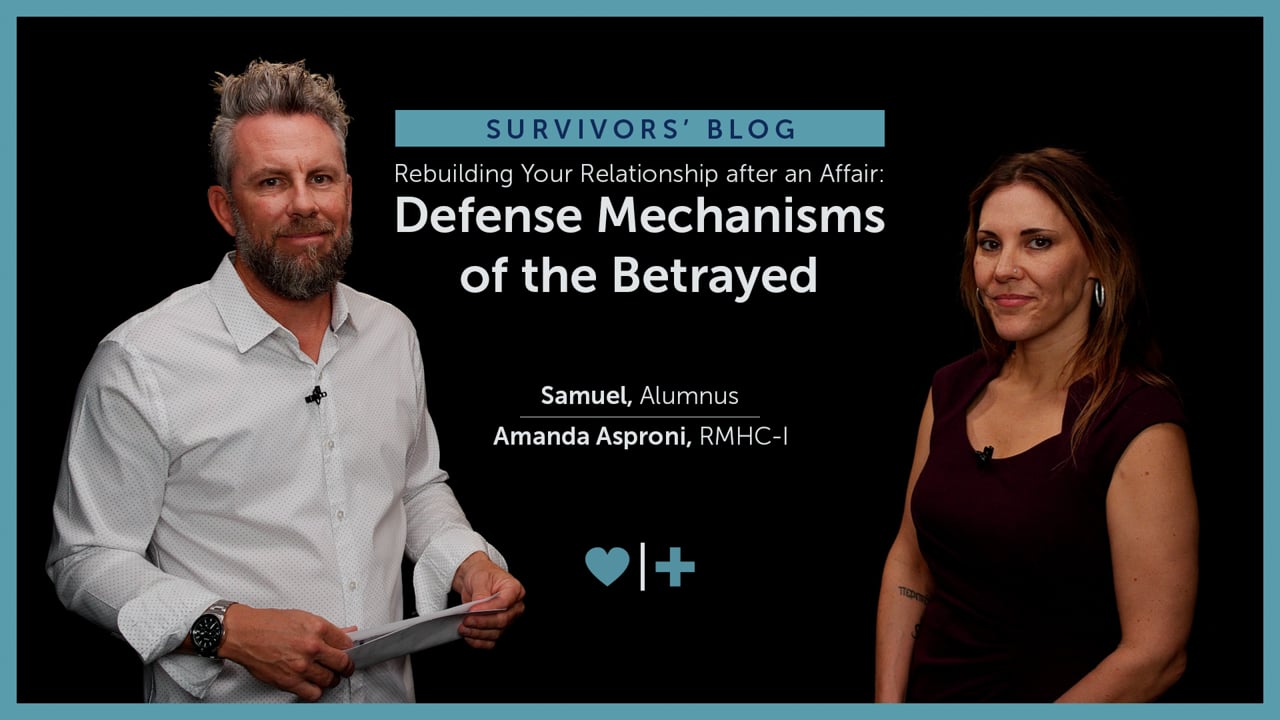
Last time in the studio, Samuel interviewed expert therapist and infidelity survivor, Amanda Asproni, on the defense mechanisms of the unfaithful spouses. Today they continue their interview but shift to defense mechanisms of the betrayed spouse. While the unfaithful are quick to utilize these deflections in an effort to reduce blame, shift focus and take the attention off themselves, the betrayed also utilize their own defense mechanisms. How they utilize them is a bit different and may come from a different mindset than the unfaithful, yet they are still defense mechanisms which must be addressed and helped if the couple has a chance at healing. Join Samuel and Amanda today as they have a pivotal discussion in the healing of couples in crisis due to infidelity or addiction.
Continue reading →
Rebuilding Your Relationship after an Affair: Defense Mechanisms of the Unfaithful
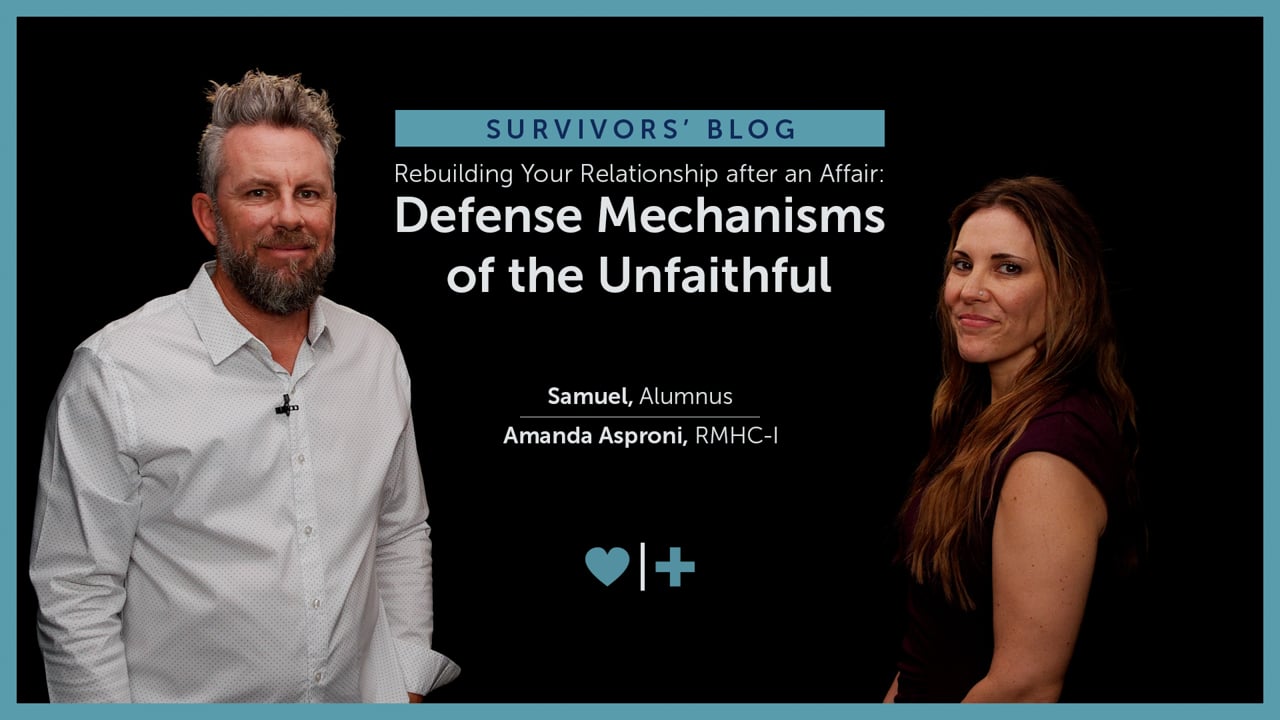
For those of us who have been unfaithful, if we are honest with ourselves, we can admit we sometimes lack motivation to pursue help and do the hard work necessary after an affair. We struggle in being honest with others, our partner or spouse, and even ourselves. To avoid owning all of the blame for our affair(s) we will employ 'defense mechanisms'. These defense mechanisms not only delay our individual and relational healing, they cause more damage to the betrayed party and undermine the entire repair effort. Today you'll hear Samuel interview frequent guest therapist, Amanda Asproni, and discuss how these defense mechanisms undermine the entire affair recovery process.
Continue reading →
Wedding Anniversaries After Infidelity - What Do We Do With Them Now?
 After the revelation of infidelity, memories and milestones become a very tricky landscape. Reminiscence that used to instill joy, nostalgia, and peace, can now elicit a very different set of emotions. Reflection on the past can be truly debilitating in the face of betrayal. As a whole, anniversaries, dates, seasons, etc. now carry a sting. But there is a particularly cruel mockery that enshrouds a wedding anniversary following marital infidelity.
Some experts guide a couple in recovery to consider the "old" marriage to be dead, grieve its loss, and then embark on creating a "new" marriage in truth, light, and healing. I understand the sentiment behind this, and maybe it is interpretation on my part, but I just don't like it. It doesn't work for me. Betrayal can encompass a significant period of our lives for many of us - whether it is the actual affair(s) / betrayal behavior, the duration of the deception, or a combination of both. In my case, my husband's affair and subsequent years of deception lasted a very long time. Am I supposed to just close the door on a huge chunk of my adult life and never look back? I'm not saying this is exactly what the experts are suggesting, but that is how it feels to me.
My kids were little and those were very special years for me. I don't want to close the door on that. I showed up in those years. I did the best I could to reach over that divide, but he would not open the door. Could I have done things differently, in the years before, during, and after the affair? Yes, of course. I missed opportunities that I would address differently in hindsight, but I acted in good faith, based on the knowledge I had (or lack thereof) and the emotional skillset and maturity I had at that time. Now I am older and wiser (let's hope) and have learned a lot about myself and my husband so I can do things differently and with eyes wide open.
So, now to my point. Since D-day, several wedding anniversaries have passed. I'm sure I don't have to tell you how I felt about the first one. I didn't even want to acknowledge the day, much less celebrate it. I ignored it and just wanted it to go away. This was about 6 months after D-day and it just felt like a sick joke. Added to the insult was the solemness my husband expressed about the importance of the day. He seemed very earnest and resolute in his expression of the day's meaning to him. I did not understand why we would ever want to celebrate it again. What was there to celebrate? Why would a person who took marriage so lightly and went to such extensive and repeated measures to destroy everything it was about, want to celebrate the anniversary of our wedding day and the vows that ultimately meant nothing? I remember thinking that now it was just insulting that this day even exists. He got me a very heartfelt card; I could not acknowledge the day at all. The painful irony is my husband found it so meaningful and important, when it truly meant the absolute least to me it possibly could. If I had been agreeable we would have done something special, but I wanted nothing to do with it. I just wanted the day to be over and behind me. Looking back, I know my husband was hurt by my reaction, but it seemed like such a farce to me, and I really couldn't muster up the empathy to care how he felt about it, since he was the one who cared so little about our marriage that it had been rendered totally meaningless. It seemed pretty cut and dried to me at that time, and I really did not think I would ever feel any differently about this. I counted our anniversary among the many things I lost in the aftermath of betrayal. To his credit, he was able to "hold" the meaning for both of us, while I began to work through it to try to move closer to where he was.
I have seen many of the Affair Recovery General Forum conversations about wedding anniversaries (and rings) and most of the comments include the words "never" and "always" in terms of the betrayed spouse's feelings, with no hope or expectation for change. Obviously I understand this, as I have been right there with you. However... I continued to struggle with it, which means that I knew somewhere in my heart, I did not want to let it go. Bear with me on this, as I explain how things have shifted for me.
I already told you how wedding anniversary #1 post D-day went. I pretty much ignored anniversary #2 as well, just wanting it to pass quickly, move on, and leave me alone. No card, no commemoration.
By the third one, though, I felt differently. Not initially, but my frame of mind shifted following a specific conversation I had with my Harboring Hope group leader. I was facing another wedding anniversary and wanted to feel differently about it, but didn't know how, or even if I ever really could. My group leader endured her husband's numerous affairs across the span of many years of their marriage, but they had been reconciled and happy for a number of years at that point. I told her my dilemma and asked her how she felt about their wedding anniversary. This is what she said:
"Since the (last) affair was over, we have anticipated the day and celebrate it for many reasons. It's the day "we" began and that is still cause for celebration. We are now celebrating not just the beginning of our marriage, but the history of our marriage. It's one that went from what seemed broken beyond repair to beautiful. We celebrate God's grace and the power of forgiveness. Our anniversary now is even sweeter than it was before infidelity. We made it! We went through the darkest nights and the hottest fires and we are still married! We love each other more deeply now than we ever thought about the day we first said those vows. One of those vows is 'for better or for worse' and the years he was cheating were definitely "worse", but it is part of us, part of our story... We reclaimed the day by renewal. When God rebuilds from broken pieces, from dust, into something whole and beautiful, I think that's a cause to celebrate!
I suppose one way would be to look at our marriage as a big picture. The day we got married is part of that picture. It is how the picture began, the first mark on the canvas so to speak. We are still married. We still love each other, in fact, we love each other even more now than we did then. So the beginning is something to celebrate. Without the beginning, we wouldn't be in the present. And the present is something to cherish. Yes, promises were broken. He wasn't faithful... Our beginning is still our beginning. And I still see that as something to celebrate."
She went on to say that they chose to renew their vows on their wedding anniversary as part of reclaiming. This was intentional, to not allow the affairs to take her memories of their wedding day - the day that marked their beginning. She explained that for her, both dates hold special memories and that the vow renewal didn't negate the original wedding day, but reaffirmed it. For her and her husband, they remember both events as special in their own way.
I thought about what she had said and let it sit with me for a while, not knowing how to feel. I appreciated the analogy of the strokes on the canvas, and considered that in my own life. My feelings change all over the place in this recovery space, as I'd bet many of yours do too. But even then, I could see how thinking back to my wedding could be a good memory woven into the larger picture, rather than just a disappointment that needed to be dismissed and thrown away, never to be mentioned or thought about again.
So as we approached our wedding anniversary last year, I actively used this analogy to filter my perspective about it. It didn't suddenly change everything, but it did allow me to consider that I might feel differently someday, which offered hope. As we approached the day, my husband allowed me to lead the way at the pace at which I was comfortable, and I asked him to take the day off from work with me. I did buy a card that year, although even that experience is like wading through a minefield; anniversary cards are generally comprised of a few standard sentiments: faithfulness, loyalty, teamwork, and protection/safety. It's complicated to intertwine sentiment with reality when you're looking through the Hallmark lens at a post-infidelity marriage. I made some plans for us that didn't pan out, partially due to circumstance and partially because I wasn't emotionally ready, but it still was a noticeable step. We ended up going out to lunch with our son, and while not a traditional "anniversary" commemoration, it was still much more than I could have tolerated or envisioned in the first two years, and it felt right. It was a small victory for me, and it offered me optimism for future anniversaries. It was, and still is, important to me that my husband understand how difficult and confusing it is for me to wrestle with the feelings about this occasion, which he does. I want to eventually be able to celebrate it and make it special, but I didn't want him to falsely assume this is easy or that I am "all good" and at peace about it. I'm not. It hurts. But I want to make it better, and it is worth the effort to me to make this special with him.
Fast forward, this year held a milestone wedding anniversary for us. While I still experienced a mixture of painful and hopeful feelings about it, I also recognized it is a miracle we are still here together. There have been so many opportunities over the years for either of us to walk away, and I am amazed we didn't give up. So this year, we made reservations and went away for the night. It was... nice. And hard. And beautiful. And painful. And wonderful. And connective. And ironic. And special. And confusing. Sometimes it's hard to know how to feel about it. Isn't that weird? Trying to decide how to feel about something? I'm sure you get it, but it's so strange not to know how to feel. This year was the best wedding anniversary so far since D-Day. "Celebrate" still might not be quite the right word at this point, as it still feels like I - and our marriage - held no value to my husband for a season, but it felt right to honor the day in this season. And the most valuable part to me is that now, we are both able to share honest feelings and tears with each other, and not feel like we have to pretend.
The healing process is a series of small steps. The bad times don't negate the good ones, and the good ones don't erase the bad. They are all part of our story.
As for the idea of declaring the old marriage dead? I don't exactly agree that happiness in celebrating future anniversaries involves letting go of the past and moving ahead into the future. For me, I am finding it is necessary to incorporate the past to move ahead into the future. It may be semantics, but the thought of "letting go" makes me bristle, and feels inauthentic to me and how I view life. The distinction may not be clear to anyone else as I am expressing it, but it has made a difference in my ability to make shifts when I can. "Letting go" feels forced, but incorporating is more natural as I grow to understand more about what happened, why it happened, who he was, who I was, who "we" were, and what she was (and was not) to him at that time. It's still a work in progress. I don't know if that helps anyone else, but I thought I'd throw it out there.
I realize with longing that I will never be able to look back in my old age and say we had a faithful marriage. The facts of the past cannot be altered, and there is such grief in knowing that will never be our story. When I talked to my husband about my struggle with our anniversary, I told him I am not trying to make him feel badly that this day is painful for me. Actually it is the opposite - I want him to see and understand how important it is that I make this special despite the pain. If it was easy, it wouldn't mean that much, so the struggle and effort is actually a positive thing, and demonstrates the value I place on our relationship.
We are different people now. We know what our marriage is worth, and we both value it more than we did before. Pain is an effective teacher in that regard. I see us now as a cushion for each other, absorbing one another's failings with kindness and grace that neither of us deserve.
I will end with my hope for all of us by sharing the words of my former group leader, "I hope you will someday be able to genuinely celebrate your beginning... and your new beginning."
After the revelation of infidelity, memories and milestones become a very tricky landscape. Reminiscence that used to instill joy, nostalgia, and peace, can now elicit a very different set of emotions. Reflection on the past can be truly debilitating in the face of betrayal. As a whole, anniversaries, dates, seasons, etc. now carry a sting. But there is a particularly cruel mockery that enshrouds a wedding anniversary following marital infidelity.
Some experts guide a couple in recovery to consider the "old" marriage to be dead, grieve its loss, and then embark on creating a "new" marriage in truth, light, and healing. I understand the sentiment behind this, and maybe it is interpretation on my part, but I just don't like it. It doesn't work for me. Betrayal can encompass a significant period of our lives for many of us - whether it is the actual affair(s) / betrayal behavior, the duration of the deception, or a combination of both. In my case, my husband's affair and subsequent years of deception lasted a very long time. Am I supposed to just close the door on a huge chunk of my adult life and never look back? I'm not saying this is exactly what the experts are suggesting, but that is how it feels to me.
My kids were little and those were very special years for me. I don't want to close the door on that. I showed up in those years. I did the best I could to reach over that divide, but he would not open the door. Could I have done things differently, in the years before, during, and after the affair? Yes, of course. I missed opportunities that I would address differently in hindsight, but I acted in good faith, based on the knowledge I had (or lack thereof) and the emotional skillset and maturity I had at that time. Now I am older and wiser (let's hope) and have learned a lot about myself and my husband so I can do things differently and with eyes wide open.
So, now to my point. Since D-day, several wedding anniversaries have passed. I'm sure I don't have to tell you how I felt about the first one. I didn't even want to acknowledge the day, much less celebrate it. I ignored it and just wanted it to go away. This was about 6 months after D-day and it just felt like a sick joke. Added to the insult was the solemness my husband expressed about the importance of the day. He seemed very earnest and resolute in his expression of the day's meaning to him. I did not understand why we would ever want to celebrate it again. What was there to celebrate? Why would a person who took marriage so lightly and went to such extensive and repeated measures to destroy everything it was about, want to celebrate the anniversary of our wedding day and the vows that ultimately meant nothing? I remember thinking that now it was just insulting that this day even exists. He got me a very heartfelt card; I could not acknowledge the day at all. The painful irony is my husband found it so meaningful and important, when it truly meant the absolute least to me it possibly could. If I had been agreeable we would have done something special, but I wanted nothing to do with it. I just wanted the day to be over and behind me. Looking back, I know my husband was hurt by my reaction, but it seemed like such a farce to me, and I really couldn't muster up the empathy to care how he felt about it, since he was the one who cared so little about our marriage that it had been rendered totally meaningless. It seemed pretty cut and dried to me at that time, and I really did not think I would ever feel any differently about this. I counted our anniversary among the many things I lost in the aftermath of betrayal. To his credit, he was able to "hold" the meaning for both of us, while I began to work through it to try to move closer to where he was.
I have seen many of the Affair Recovery General Forum conversations about wedding anniversaries (and rings) and most of the comments include the words "never" and "always" in terms of the betrayed spouse's feelings, with no hope or expectation for change. Obviously I understand this, as I have been right there with you. However... I continued to struggle with it, which means that I knew somewhere in my heart, I did not want to let it go. Bear with me on this, as I explain how things have shifted for me.
I already told you how wedding anniversary #1 post D-day went. I pretty much ignored anniversary #2 as well, just wanting it to pass quickly, move on, and leave me alone. No card, no commemoration.
By the third one, though, I felt differently. Not initially, but my frame of mind shifted following a specific conversation I had with my Harboring Hope group leader. I was facing another wedding anniversary and wanted to feel differently about it, but didn't know how, or even if I ever really could. My group leader endured her husband's numerous affairs across the span of many years of their marriage, but they had been reconciled and happy for a number of years at that point. I told her my dilemma and asked her how she felt about their wedding anniversary. This is what she said:
"Since the (last) affair was over, we have anticipated the day and celebrate it for many reasons. It's the day "we" began and that is still cause for celebration. We are now celebrating not just the beginning of our marriage, but the history of our marriage. It's one that went from what seemed broken beyond repair to beautiful. We celebrate God's grace and the power of forgiveness. Our anniversary now is even sweeter than it was before infidelity. We made it! We went through the darkest nights and the hottest fires and we are still married! We love each other more deeply now than we ever thought about the day we first said those vows. One of those vows is 'for better or for worse' and the years he was cheating were definitely "worse", but it is part of us, part of our story... We reclaimed the day by renewal. When God rebuilds from broken pieces, from dust, into something whole and beautiful, I think that's a cause to celebrate!
I suppose one way would be to look at our marriage as a big picture. The day we got married is part of that picture. It is how the picture began, the first mark on the canvas so to speak. We are still married. We still love each other, in fact, we love each other even more now than we did then. So the beginning is something to celebrate. Without the beginning, we wouldn't be in the present. And the present is something to cherish. Yes, promises were broken. He wasn't faithful... Our beginning is still our beginning. And I still see that as something to celebrate."
She went on to say that they chose to renew their vows on their wedding anniversary as part of reclaiming. This was intentional, to not allow the affairs to take her memories of their wedding day - the day that marked their beginning. She explained that for her, both dates hold special memories and that the vow renewal didn't negate the original wedding day, but reaffirmed it. For her and her husband, they remember both events as special in their own way.
I thought about what she had said and let it sit with me for a while, not knowing how to feel. I appreciated the analogy of the strokes on the canvas, and considered that in my own life. My feelings change all over the place in this recovery space, as I'd bet many of yours do too. But even then, I could see how thinking back to my wedding could be a good memory woven into the larger picture, rather than just a disappointment that needed to be dismissed and thrown away, never to be mentioned or thought about again.
So as we approached our wedding anniversary last year, I actively used this analogy to filter my perspective about it. It didn't suddenly change everything, but it did allow me to consider that I might feel differently someday, which offered hope. As we approached the day, my husband allowed me to lead the way at the pace at which I was comfortable, and I asked him to take the day off from work with me. I did buy a card that year, although even that experience is like wading through a minefield; anniversary cards are generally comprised of a few standard sentiments: faithfulness, loyalty, teamwork, and protection/safety. It's complicated to intertwine sentiment with reality when you're looking through the Hallmark lens at a post-infidelity marriage. I made some plans for us that didn't pan out, partially due to circumstance and partially because I wasn't emotionally ready, but it still was a noticeable step. We ended up going out to lunch with our son, and while not a traditional "anniversary" commemoration, it was still much more than I could have tolerated or envisioned in the first two years, and it felt right. It was a small victory for me, and it offered me optimism for future anniversaries. It was, and still is, important to me that my husband understand how difficult and confusing it is for me to wrestle with the feelings about this occasion, which he does. I want to eventually be able to celebrate it and make it special, but I didn't want him to falsely assume this is easy or that I am "all good" and at peace about it. I'm not. It hurts. But I want to make it better, and it is worth the effort to me to make this special with him.
Fast forward, this year held a milestone wedding anniversary for us. While I still experienced a mixture of painful and hopeful feelings about it, I also recognized it is a miracle we are still here together. There have been so many opportunities over the years for either of us to walk away, and I am amazed we didn't give up. So this year, we made reservations and went away for the night. It was... nice. And hard. And beautiful. And painful. And wonderful. And connective. And ironic. And special. And confusing. Sometimes it's hard to know how to feel about it. Isn't that weird? Trying to decide how to feel about something? I'm sure you get it, but it's so strange not to know how to feel. This year was the best wedding anniversary so far since D-Day. "Celebrate" still might not be quite the right word at this point, as it still feels like I - and our marriage - held no value to my husband for a season, but it felt right to honor the day in this season. And the most valuable part to me is that now, we are both able to share honest feelings and tears with each other, and not feel like we have to pretend.
The healing process is a series of small steps. The bad times don't negate the good ones, and the good ones don't erase the bad. They are all part of our story.
As for the idea of declaring the old marriage dead? I don't exactly agree that happiness in celebrating future anniversaries involves letting go of the past and moving ahead into the future. For me, I am finding it is necessary to incorporate the past to move ahead into the future. It may be semantics, but the thought of "letting go" makes me bristle, and feels inauthentic to me and how I view life. The distinction may not be clear to anyone else as I am expressing it, but it has made a difference in my ability to make shifts when I can. "Letting go" feels forced, but incorporating is more natural as I grow to understand more about what happened, why it happened, who he was, who I was, who "we" were, and what she was (and was not) to him at that time. It's still a work in progress. I don't know if that helps anyone else, but I thought I'd throw it out there.
I realize with longing that I will never be able to look back in my old age and say we had a faithful marriage. The facts of the past cannot be altered, and there is such grief in knowing that will never be our story. When I talked to my husband about my struggle with our anniversary, I told him I am not trying to make him feel badly that this day is painful for me. Actually it is the opposite - I want him to see and understand how important it is that I make this special despite the pain. If it was easy, it wouldn't mean that much, so the struggle and effort is actually a positive thing, and demonstrates the value I place on our relationship.
We are different people now. We know what our marriage is worth, and we both value it more than we did before. Pain is an effective teacher in that regard. I see us now as a cushion for each other, absorbing one another's failings with kindness and grace that neither of us deserve.
I will end with my hope for all of us by sharing the words of my former group leader, "I hope you will someday be able to genuinely celebrate your beginning... and your new beginning."
After the revelation of infidelity, memories and milestones become a very tricky landscape. Reminiscence that used to instill joy, nostalgia, and peace, can now elicit a very different set of emotions. Reflection on the past can be truly debilitating in the face of betrayal. As a whole, anniversaries, dates, seasons, etc. now carry a sting. But there is a particularly cruel mockery that enshrouds a wedding anniversary following marital infidelity.
Some experts guide a couple in recovery to consider the "old" marriage to be dead, grieve its loss, and then embark on creating a "new" marriage in truth, light, and healing. I understand the sentiment behind this, and maybe it is interpretation on my part, but I just don't like it. It doesn't work for me. Betrayal can encompass a significant period of our lives for many of us - whether it is the actual affair(s) / betrayal…
Continue reading →
How Do You Heal and Handle the Losses Associated with Infidelity?
When couples attempt to heal from infidelity or addiction, they're faced with many staggering truths that can make or break both their own recovery and the relationship. Today Samuel points a way through the smoke and malaise of denial and loss to clarity, courage and hope for the future.
Continue reading →
The Mystery of Change
Our mission at Affair Recovery is to help those impacted by infidelity find extraordinary lives of meaning and purpose. For us, the end goal isn't just to recover from betrayal but to use betrayal as a catalyst for transformation and change. To that end, I hope to provide a bit of a road map as to how transformation can actually occur.
I want to acknowledge upfront that many of these concepts of transition are taken from William Bridges' book, Transitions: Making Sense of Life's Changes.1* If you resonate with these concepts, you may wish to read his book as well.
I'm sure most of you have heard this ancient riddle: What animal walks on four feet in the morning, two feet at noon, and three feet in the evening, yet has only one voice? —The answer is the human being because we crawl as babies, walk on our own…
Continue reading →
A Tool for the Betrayed Partner Who Feels Powerless after an Affair
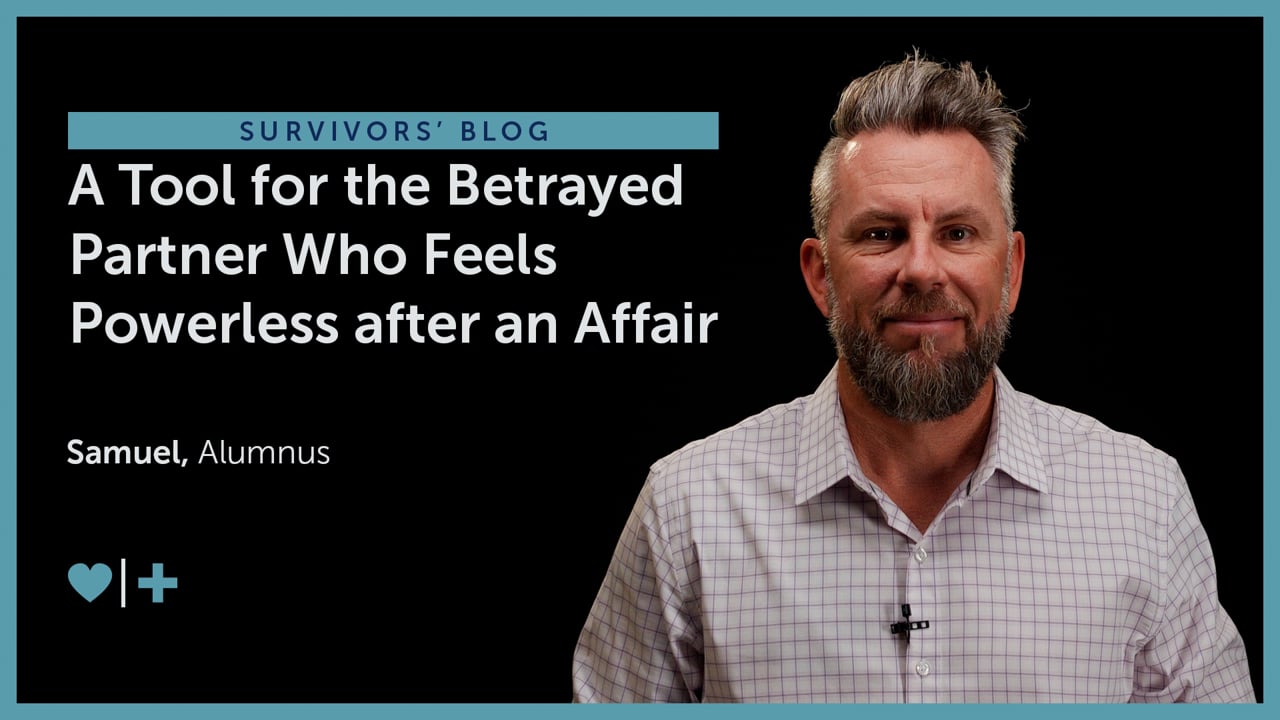
After the disclosure of an affair, the betrayed partner can feel paralyzed. Especially if the unfaithful refuses to get help of any significant type and resorts to being elusive, ambivalent or resistant. Today Samuel shares an effective tool for the betrayed partner to consider utilizing in a situation where they feel as if they have little to no influence at all. While we can't control our unfaithful partner, we can use effective, time tested tools which can at the very least, get our unfaithful partner to take action or find themselves experiencing painful consequences that can make their reality less than ideal. While tools of this sort are no guarantee of healing or movement, we are not without help and hope while suffering the effects of betrayal trauma and addiction.
Continue reading →
Hope Rising 2022 On Demand
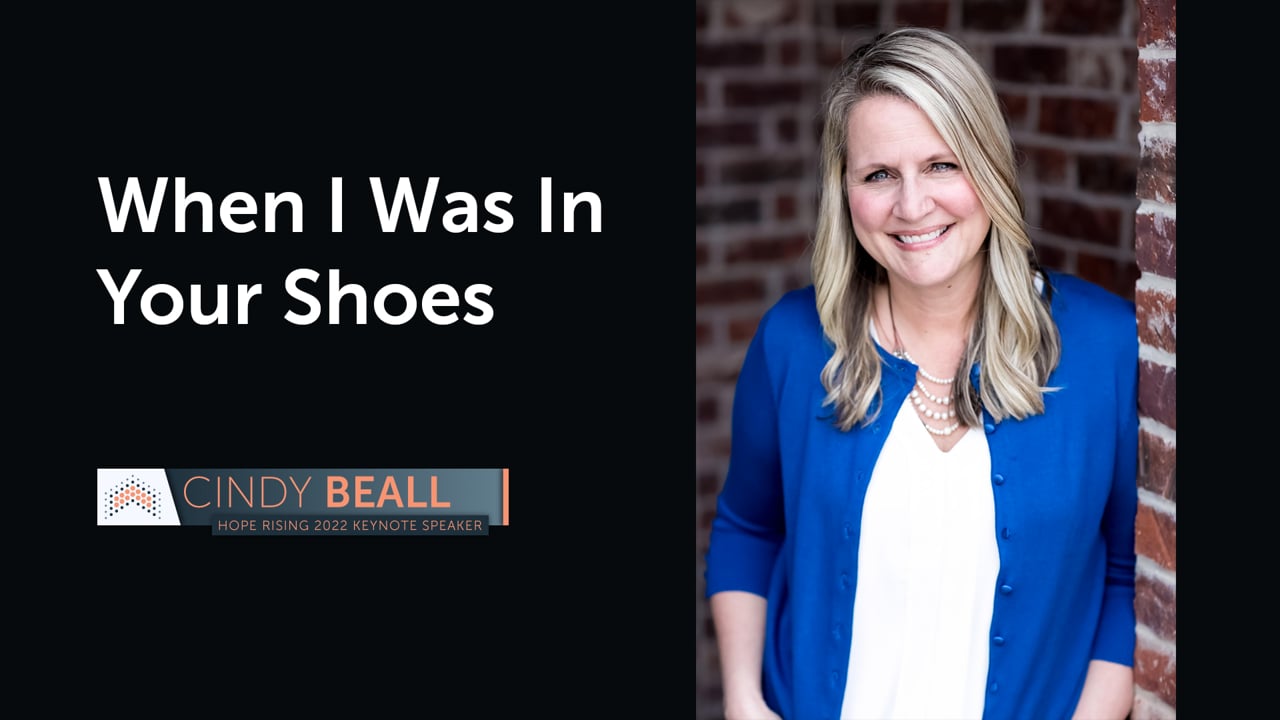
The following videos are from the Fifth Annual Hope Rising Conference
for betrayed spouses from Oct. 1st 2022. If you are interested in attending the next annual Hope Rising Conference, either in person
or live streamed, learn more here: www.affairrecovery.com/hope-rising
Download Speaker Notes
Session 1
Session 2
Breakout Session
Session 3
Session 4
…
Continue reading →
Hope Rising 2022 On Demand
The following videos are from the Fifth Annual Hope Rising Conference
for betrayed spouses from Oct. 1st 2022. If you are interested in attending the next annual Hope Rising Conference, either in person
or live streamed, learn more here: www.affairrecovery.com/hope-rising
Download Speaker Notes
Session 1
Session 2
Breakout Session
Session 3
Session 4
…
Continue reading →
