
Survivors Blog: Kansas
Kansas
Alumna wayward. Still learning and still growing. Honored to share what has and hasn’t worked on her path of recovery and reconciliation. Believes strongly in the importance of identity and awareness when making the transition from being alive to intentionally living through every moment.
Before I Betrayed Him, I Betrayed Myself
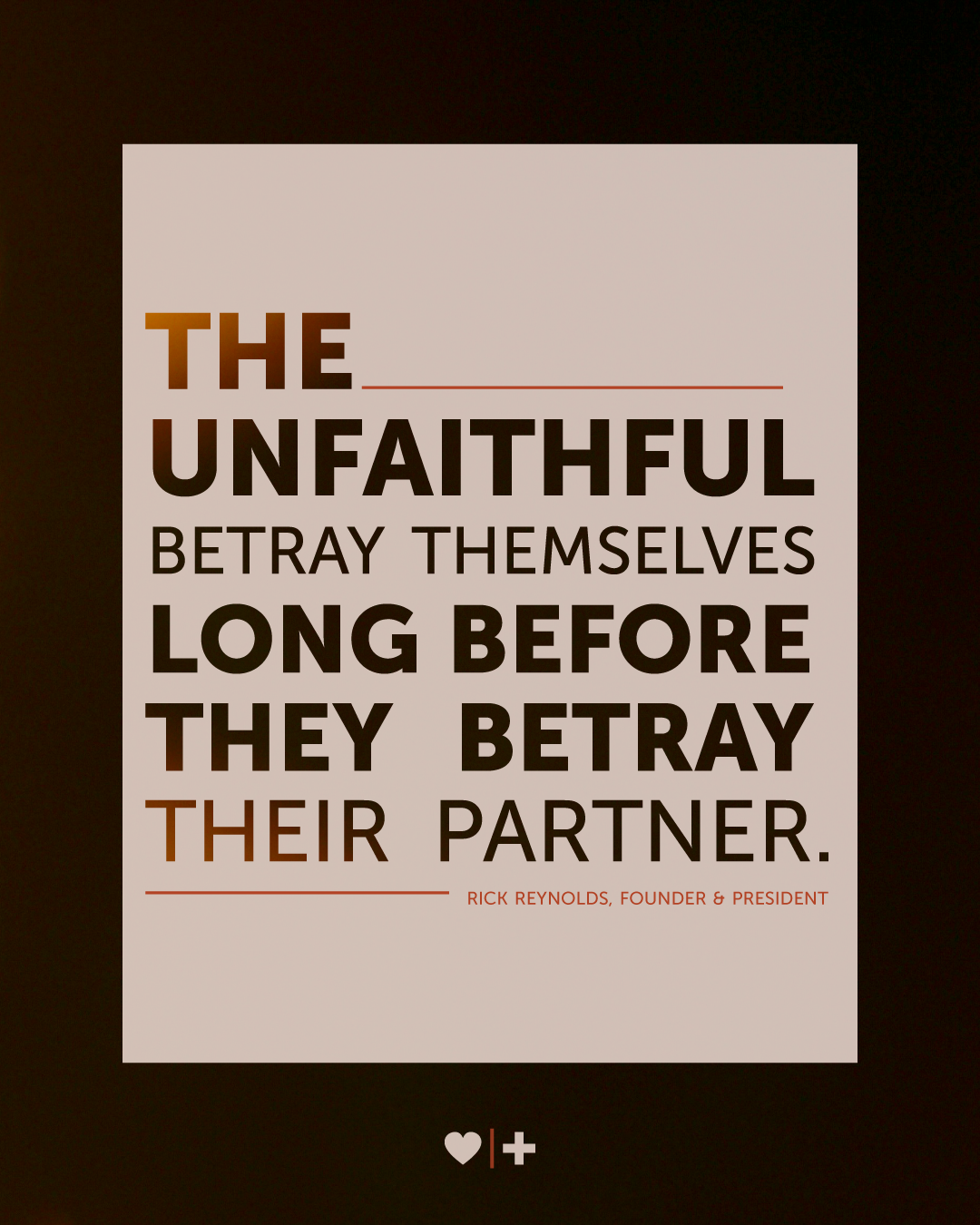 “The unfaithful betrays themselves long before they betray their partner.” – Rick Reynolds
This statement took me far too long to fully understand. How could I betray myself when I didn’t even know who “myself” was?
Growing up, I lived in a house where love was granted or denied based on how well I could read my mother. If I could anticipate her every need, thought, and wish—and fulfill them—I had her love. When I couldn't figure it out, I was met with anger, stonewalling, and silence. I learned quickly how to read people and morph into whichever version was most acceptable to those around me. I also learned to hide the parts of myself I thought wouldn't be accepted. Throughout my entire childhood and young adulthood, I played out this same pattern. I was perfect for everyone—exactly who they wanted me to be—until things started falling apart and I began to slip up.
Then, I would rebel, abandoning that image of perfection for the exact opposite.
When I got married, I—like most unfaithful spouses—thought I could leave all that behind, even though I couldn’t have articulated what I was leaving behind. I’d already had a few "secret rebellion" moments during our engagement, but I assumed I was just getting it out of my system before fully committing to being the ideal wife and mother. In hindsight, that urge never went away. I flirted. I searched for "better." I was never fully in, and I had no idea. Instead, I blamed my husband and his own struggles, never allowing myself to look deeper.
As life progressed and the stress of family life and maintaining "perfection" started breaking me, I snapped. My husband was away working to provide a better life for us, leaving me in charge of everything at home. In my overwhelm, I ran—from my husband, my family, and my "perfect" self. I abandoned not only my husband and kids, but also everything I had ever wanted to be. I put my children in situations that hurt them because I was too busy rebelling. I turned my anger and resentment toward my husband, making him the fall guy for everything. I was spiteful, completely unaware that I was rebelling against expectations I had placed on myself—not ones he had ever put on me.
After he discovered one affair and I confessed to the rest, I was completely appalled by the person I had become. I finally began to look deeper at who I was and the choices I had made. Still, I didn't recognize the pattern yet. I dove straight into "recovery perfection." I hated who I had become and couldn't trust myself. In those early months, instead of working toward becoming the person I wanted to be, I became the person I thought my husband needed me to be. Granted, this time I actually asked him what he needed instead of assuming with zero accuracy, but it still wasn't me. I still didn't know who "me" was—I just knew I couldn't trust her.
I was terrified that the broken, rotten shell of a human hiding behind a porcelain mask was who I truly was. I was just really good at switching masks. In early recovery, I threw myself back into my roles: wife, mother, recovering addict, Christian. I took my cues from my husband and never wanted to be far from him. I trusted his vision of who I should be far more than my own sense of self.
I am so grateful for his grace during that time. He could have said or done anything, and I would have gone along with it. He could have been abusive, and I would have felt I deserved it. He could have told me I was a waste of space, and I would have believed him. He was in so much pain—pain I caused—yet instead of taking it out on me, he worked on himself. He took steps to ensure he was healed enough to walk alongside me so we could build a safe space together. He built me up as authentically as he could.
During this time—as I began working on myself through Hope for Healing, EMS Online, and infidelity-specific individual and couples therapy—I started seeing the pattern. It would take years before I could fully articulate it, but I was beginning to learn who and what I wanted to be. Heck, I was even learning that I actually had wants and needs of my own. It was another adjustment for both of us as I stepped out of his shadow, figured myself out, and gave my inner self a voice—one that had been silenced for far too long. Bit by bit, I realized my true inner self could be trusted. I learned how to distinguish between God, myself, and the enemy. I learned to identify my motivations and share them. Most importantly, I learned who I was so I could finally share that true self with my husband.
I don’t have it all figured out. There are still times I want to run—times I forget that I don’t have to be perfect or have it all together. Times when the choices of others affect me, my marriage, and my kids in ways I can’t control. Stress, finances, parenting, addiction, and LIFE—they all still happen, and I still fail. I drop the balls I'm juggling. I open my closet of masks and try to hide. But I am blessed: blessed with a husband who loves me for the woman he only recently got to know, and blessed with a support system of friends whom I trust to call me out when I start to hide or run. I trust them to help me keep learning who I am and to speak to me authentically and honestly.
It is a long road. Recovery doesn’t have an end date; it’s a lifelong journey of continued growth and learning. But I can honestly say that today, I know who I am, who I want to be, and I am fully here for it.
“The unfaithful betrays themselves long before they betray their partner.” – Rick Reynolds
This statement took me far too long to fully understand. How could I betray myself when I didn’t even know who “myself” was?
Growing up, I lived in a house where love was granted or denied based on how well I could read my mother. If I could anticipate her every need, thought, and wish—and fulfill them—I had her love. When I couldn't figure it out, I was met with anger, stonewalling, and silence. I learned quickly how to read people and morph into whichever version was most acceptable to those around me. I also learned to hide the parts of myself I thought wouldn't be accepted. Throughout my entire childhood and young adulthood, I played out this same pattern. I was perfect for everyone—exactly who they wanted me to be—until things started falling apart and I began to slip up.
Then, I would rebel, abandoning that image of perfection for the exact opposite.
When I got married, I—like most unfaithful spouses—thought I could leave all that behind, even though I couldn’t have articulated what I was leaving behind. I’d already had a few "secret rebellion" moments during our engagement, but I assumed I was just getting it out of my system before fully committing to being the ideal wife and mother. In hindsight, that urge never went away. I flirted. I searched for "better." I was never fully in, and I had no idea. Instead, I blamed my husband and his own struggles, never allowing myself to look deeper.
As life progressed and the stress of family life and maintaining "perfection" started breaking me, I snapped. My husband was away working to provide a better life for us, leaving me in charge of everything at home. In my overwhelm, I ran—from my husband, my family, and my "perfect" self. I abandoned not only my husband and kids, but also everything I had ever wanted to be. I put my children in situations that hurt them because I was too busy rebelling. I turned my anger and resentment toward my husband, making him the fall guy for everything. I was spiteful, completely unaware that I was rebelling against expectations I had placed on myself—not ones he had ever put on me.
After he discovered one affair and I confessed to the rest, I was completely appalled by the person I had become. I finally began to look deeper at who I was and the choices I had made. Still, I didn't recognize the pattern yet. I dove straight into "recovery perfection." I hated who I had become and couldn't trust myself. In those early months, instead of working toward becoming the person I wanted to be, I became the person I thought my husband needed me to be. Granted, this time I actually asked him what he needed instead of assuming with zero accuracy, but it still wasn't me. I still didn't know who "me" was—I just knew I couldn't trust her.
I was terrified that the broken, rotten shell of a human hiding behind a porcelain mask was who I truly was. I was just really good at switching masks. In early recovery, I threw myself back into my roles: wife, mother, recovering addict, Christian. I took my cues from my husband and never wanted to be far from him. I trusted his vision of who I should be far more than my own sense of self.
I am so grateful for his grace during that time. He could have said or done anything, and I would have gone along with it. He could have been abusive, and I would have felt I deserved it. He could have told me I was a waste of space, and I would have believed him. He was in so much pain—pain I caused—yet instead of taking it out on me, he worked on himself. He took steps to ensure he was healed enough to walk alongside me so we could build a safe space together. He built me up as authentically as he could.
During this time—as I began working on myself through Hope for Healing, EMS Online, and infidelity-specific individual and couples therapy—I started seeing the pattern. It would take years before I could fully articulate it, but I was beginning to learn who and what I wanted to be. Heck, I was even learning that I actually had wants and needs of my own. It was another adjustment for both of us as I stepped out of his shadow, figured myself out, and gave my inner self a voice—one that had been silenced for far too long. Bit by bit, I realized my true inner self could be trusted. I learned how to distinguish between God, myself, and the enemy. I learned to identify my motivations and share them. Most importantly, I learned who I was so I could finally share that true self with my husband.
I don’t have it all figured out. There are still times I want to run—times I forget that I don’t have to be perfect or have it all together. Times when the choices of others affect me, my marriage, and my kids in ways I can’t control. Stress, finances, parenting, addiction, and LIFE—they all still happen, and I still fail. I drop the balls I'm juggling. I open my closet of masks and try to hide. But I am blessed: blessed with a husband who loves me for the woman he only recently got to know, and blessed with a support system of friends whom I trust to call me out when I start to hide or run. I trust them to help me keep learning who I am and to speak to me authentically and honestly.
It is a long road. Recovery doesn’t have an end date; it’s a lifelong journey of continued growth and learning. But I can honestly say that today, I know who I am, who I want to be, and I am fully here for it.
“The unfaithful betrays themselves long before they betray their partner.” – Rick Reynolds
This statement took me far too long to fully understand. How could I betray myself when I didn’t even know who “myself” was?
Growing up, I lived in a house where love was granted or denied based on how well I could read my mother. If I could anticipate her every need, thought, and wish—and fulfill them—I had her love. When I couldn't figure it out, I was met with anger, stonewalling, and silence. I learned quickly how to read people and morph into whichever version was most acceptable to those around me. I also learned to hide the parts of myself I thought wouldn't be accepted. Throughout my entire childhood and young adulthood, I played out this same pattern. I was perfect for everyone—exactly who they wanted me to be—until things started falling apart and I began…
Continue reading →
Silencing the Imposter: Finding True Validation in Recovery
 Healing from infidelity often leaves us questioning our fundamental worth and identity. Recently, I was meeting with a group of believers as we discussed our most recent book study. One of the members was talking about being “made in the image of God” and even though I have heard that phrase 500,000 times in my life, this time was different.
While sitting in my office chair on a video call, my inner self was whisked away to that place deep in my soul where big concepts begin. In that quiet place, the phrase 'made in His image' reverberated like a gong. Words began pinging against invisible walls: Wonderfully made. His character. Through me. For such a time as this.
All the bits and pieces of concepts and ideas and thoughts, and acquired knowledge from my entire lifetime and from a source outside myself were clanging and vibrating and moving until with a flash like lightning they all came together into the image of a new concept. One I actually had words for.
I “came to” in the meeting, totally lost as to what had been said, but buzzing with a brand new, life-altering concept. I waited for the words to finish forming, and for a space to speak, then shaking with nerves, I shared what I had learned.
We are created in the image of God. God is bigger and more infinite than any one human could ever fathom or be. There has never been a copy of any human in the entire history of the Earth. I am literally the only “me” that has ever existed or will ever exist. God made me. I am fearfully and wonderfully made. He created every part of me. Not only my physical appearance but also my character, my personality, everything about me. I am made in His image. SO…I am intentionally and specifically made in the image of specific and intentional characteristics and traits of God. I walk around with my own personal piece of Jesus living in my soul and I am the only person in all of history that can present it in the very “me” way.
What an incredible gift.
God has created each and every person in the history of all time past, present and future, to be a particular example of Him, if we will only recognize it and let Him show through. This also means that every person we come into contact with, also has a specific piece of Jesus living in them, even if they don’t know it yet, or choose not to show it, or have let the enemy cast a shadow over it.
It is there. In every person.
What if that is part of what it is to love like Jesus? To look at a person and see the piece of Him that exists within them? To look for the characteristics and traits of God that only they can portray to the world in the way He created them to. What if we looked for that in others?
In the wake of infidelity, looking at our spouse and trying to see the image of God in them can feel impossible. But what if we looked for the characteristics of God that they can portray, beneath the brokenness and the betrayal?
I will pray for help in getting there, not only with others, but with myself. As someone whose story has been deeply impacted by an addiction to validation, the approval of others, and an unhealthy need to be liked and wanted, this concept completely changes my perception of my recovery.
God gave me everything; God made me who I am. People don’t approve of the real “me”—they approve of the reflection of God that He placed in me. The character He gave me, the personality He placed there. No one can validate that except for Him. When the enemy whispers and tries to skew my worth—tempting me to seek validation in the world, or in the attention of others—I realize that it is just the world in them being drawn to the world in me. I don’t want that anymore.
My desperate need for outside attention and validation is exactly what Brennan Manning so aptly named “the imposter.” Because any part of me that craves those worldly things isn’t the real me at all. The real me is fearfully, wonderfully, and uniquely made in His image—and that is enough."
Healing from infidelity often leaves us questioning our fundamental worth and identity. Recently, I was meeting with a group of believers as we discussed our most recent book study. One of the members was talking about being “made in the image of God” and even though I have heard that phrase 500,000 times in my life, this time was different.
While sitting in my office chair on a video call, my inner self was whisked away to that place deep in my soul where big concepts begin. In that quiet place, the phrase 'made in His image' reverberated like a gong. Words began pinging against invisible walls: Wonderfully made. His character. Through me. For such a time as this.
All the bits and pieces of concepts and ideas and thoughts, and acquired knowledge from my entire lifetime and from a source outside myself were clanging and vibrating and moving until with a flash like lightning they all came together into the image of a new concept. One I actually had words for.
I “came to” in the meeting, totally lost as to what had been said, but buzzing with a brand new, life-altering concept. I waited for the words to finish forming, and for a space to speak, then shaking with nerves, I shared what I had learned.
We are created in the image of God. God is bigger and more infinite than any one human could ever fathom or be. There has never been a copy of any human in the entire history of the Earth. I am literally the only “me” that has ever existed or will ever exist. God made me. I am fearfully and wonderfully made. He created every part of me. Not only my physical appearance but also my character, my personality, everything about me. I am made in His image. SO…I am intentionally and specifically made in the image of specific and intentional characteristics and traits of God. I walk around with my own personal piece of Jesus living in my soul and I am the only person in all of history that can present it in the very “me” way.
What an incredible gift.
God has created each and every person in the history of all time past, present and future, to be a particular example of Him, if we will only recognize it and let Him show through. This also means that every person we come into contact with, also has a specific piece of Jesus living in them, even if they don’t know it yet, or choose not to show it, or have let the enemy cast a shadow over it.
It is there. In every person.
What if that is part of what it is to love like Jesus? To look at a person and see the piece of Him that exists within them? To look for the characteristics and traits of God that only they can portray to the world in the way He created them to. What if we looked for that in others?
In the wake of infidelity, looking at our spouse and trying to see the image of God in them can feel impossible. But what if we looked for the characteristics of God that they can portray, beneath the brokenness and the betrayal?
I will pray for help in getting there, not only with others, but with myself. As someone whose story has been deeply impacted by an addiction to validation, the approval of others, and an unhealthy need to be liked and wanted, this concept completely changes my perception of my recovery.
God gave me everything; God made me who I am. People don’t approve of the real “me”—they approve of the reflection of God that He placed in me. The character He gave me, the personality He placed there. No one can validate that except for Him. When the enemy whispers and tries to skew my worth—tempting me to seek validation in the world, or in the attention of others—I realize that it is just the world in them being drawn to the world in me. I don’t want that anymore.
My desperate need for outside attention and validation is exactly what Brennan Manning so aptly named “the imposter.” Because any part of me that craves those worldly things isn’t the real me at all. The real me is fearfully, wonderfully, and uniquely made in His image—and that is enough."
Healing from infidelity often leaves us questioning our fundamental worth and identity. Recently, I was meeting with a group of believers as we discussed our most recent book study. One of the members was talking about being “made in the image of God” and even though I have heard that phrase 500,000 times in my life, this time was different.
While sitting in my office chair on a video call, my inner self was whisked away to that place deep in my soul where big concepts begin. In that quiet place, the phrase 'made in His image' reverberated like a gong. Words began pinging against invisible walls: Wonderfully made. His character. Through me. For such a time as this.
All the bits and pieces of concepts and ideas and thoughts, and acquired knowledge from my entire lifetime and from a source outside myself were clanging and vibrating and moving until with a…
Continue reading →
Fully Known, Fully Loved: How Ripping the Doors Off My Secrets Saved Me
 I am a Christian. It wasn’t until my husband discovered my infidelity that I started to truly understand what that means.
“Christian” was a persona I would take on Sunday mornings and around certain people then shove back in the "Christian" closet in my soul the rest of the time.
At one time, depending on who you were and what I thought you expected of me, you would have thought I was the most amazing Christian woman. Generous, kind, pious, thoughtful. I had morals of gold. I was still human, but willing to admit my failures and bring them to God. The kicker is, around you, I would have thought the same thing. When living out of my “Christian” closet, that is who I was.
When my husband discovered that I had been unfaithful, the ticking time bomb in one of my closets, marked “Do Not Enter”, went off and blew debris of the hidden me all over my inner hallway.
As I panicked and tried to sweep the rubble into a dark corner, I noticed the cracks and missing doors of my other closets. I didn’t know where things belonged, or where they came from. I didn’t know which closet was me. Who was I?
That question was answered for me in a song.
I was—and always will be—a Child of God.
I knew I had to empty out my closets. I fought God hard on this one, but He won. Two months after my husband's discovery, I ripped the door off more “Do Not Enter” closets. As I unpacked them, I started to share bits and pieces of their contents with him. I was afraid to share it all. What would happen then? With every new box, he realized more and more that I wasn’t the only one who didn’t know who I was.
He had no idea who he had married.
After some time, and prayer, he decided that he would stay to see who that person might be. So we began a long journey of figuring that out.
The more closets I opened and pulled into the hallway, the better, and more confused, I felt. I was ashamed of all the stage make-up, costumes, and masks I was surrounded by. What was I supposed to do with all of it? What would be left when all the closets were empty and demolished?
I needed help. I prayed, I went to counseling, then my husband found a video on YouTube. We watched video after video, talking, unpacking, devouring videos and the glimmer of hope we felt contained within them. We signed up for classes. I had one, he had one,
and we had one together. I finally had an answer. Those groups were like a troop of the most amazing angels, coming in and helping me clean and sort through the rubble. The content helped me decide what got tossed and what could stay. All the work and the support also helped me find one last closet. The groups couldn’t help me with this one though. The content couldn’t either. What they were able to do was point me to a therapist who could.
We found infidelity specific therapists. I saw someone, my husband saw someone, and we saw someone together. We didn’t have the money for any of it, but God provided in a way I had never given Him the chance to before. This last closet was opened slowly, lock by lock, until, finally, we were able to open the door and find…me. Me at 6 holding a box with my eyes closed and back turned hoping no one saw me. Me at 8 holding tight to a box that I was trying so hard to pretend was supposed to be there. Me at 13 hiding in a corner as far away from my box as I could get, crying and wishing I was anyone else. Me at 16 standing in front of a mirror holding too many boxes with tears streaming down my face. All the pieces of me that I had locked in that room.
This was why I didn’t know who I was. I didn’t want to know. I had spent my whole life adding parts of myself to that closet and adding locks to the door. After all my groups, all my work, all my lessons, I knew it was time to let them out. I had to. Not only did my husband need it, and my relationship need it, but I needed it.
It took me a week. I pulled each girl out, one by one, and together, in that hallway, with God holding us, we unpacked the boxes together and I wrote down what was inside. After all of the girls were out and all their boxes lying empty, we turned toward what had been in the other closets and took inventory of all that was there as well. Then came the hardest part.
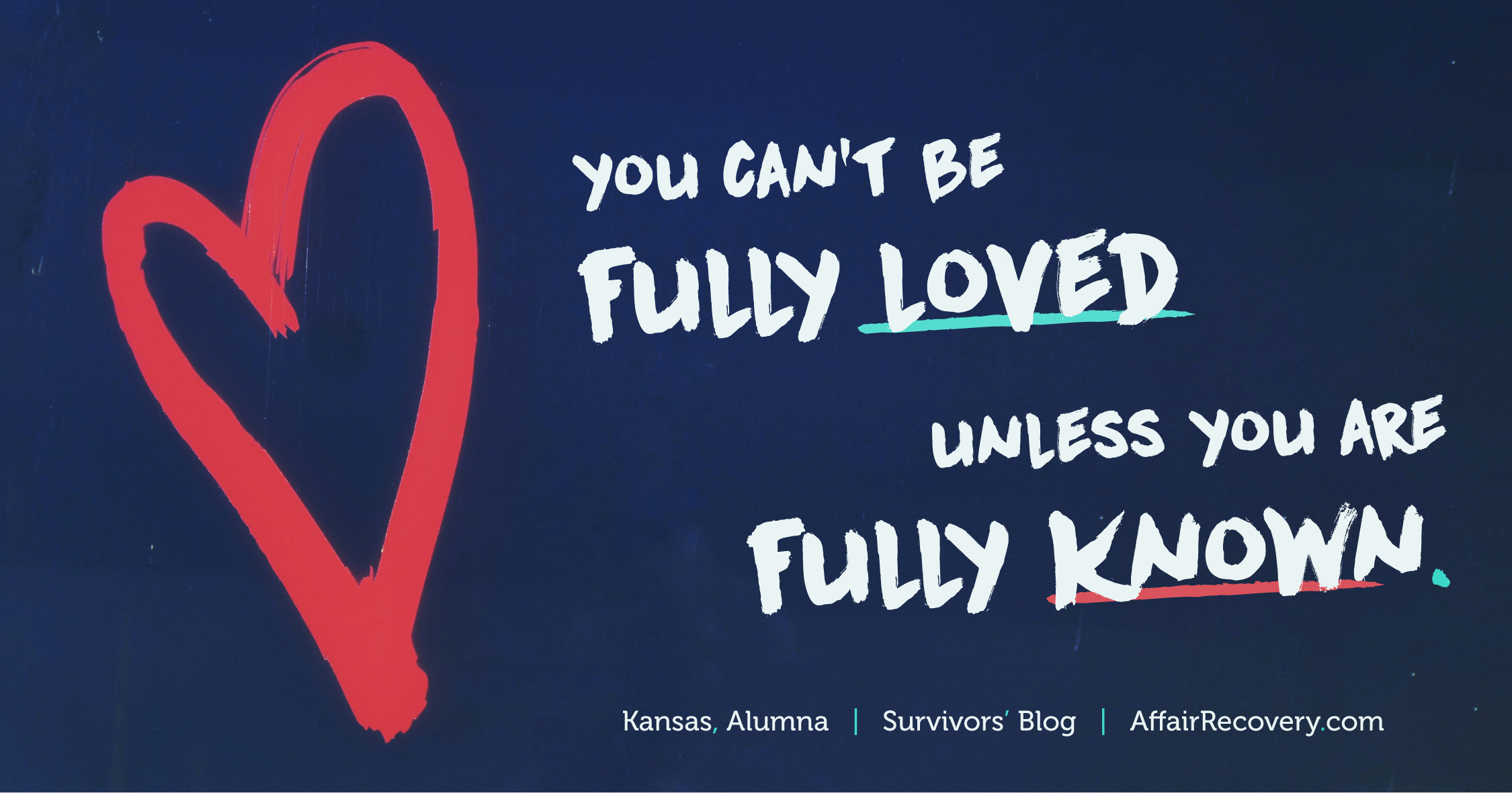
On my journey, I had been taught, “you can’t be fully loved, unless you are fully known”. God had helped me know myself, and start to love myself as He loves me. Now it was my husband's turn. I gave him the pages of inventory from my closets. Then, I sat quietly, arm-in-arm, with every piece of me that I had forced into hiding, as we let the most important person in our life see us for the first time.
We hugged as he cried. We stood together in peace in the face of his understandable anger.
Then, we took a polygraph so he would be able to believe us when we told him there was no more.
We all sat silently in the parking lot after passing—me and every one of those girls I’d hidden away—and waited for his reaction. This was it. He leaned in, hugged me, and asked me where we were going for our date day. As we drove to our destination, each one of me smiled and entered my heart all together in the light of acceptance. I finally knew who I was, and so did he, and he embraced me.
I am a Child of God. Crafted lovingly by the Creator of the Universe and, like all priceless works of art, I am flawed; but as any art collector will tell you, the flaws, the unique aspects, the bumps and imperfections, are exactly what makes it valuable and wanted.
I am a Christian. It wasn’t until my husband discovered my infidelity that I started to truly understand what that means.
“Christian” was a persona I would take on Sunday mornings and around certain people then shove back in the "Christian" closet in my soul the rest of the time.
At one time, depending on who you were and what I thought you expected of me, you would have thought I was the most amazing Christian woman. Generous, kind, pious, thoughtful. I had morals of gold. I was still human, but willing to admit my failures and bring them to God. The kicker is, around you, I would have thought the same thing. When living out of my “Christian” closet, that is who I was.
When my husband discovered that I had been unfaithful, the ticking time bomb in one of my closets, marked “Do Not Enter”, went off and blew debris of the hidden me all over my inner hallway.
As I panicked and tried to sweep the rubble into a dark corner, I noticed the cracks and missing doors of my other closets. I didn’t know where things belonged, or where they came from. I didn’t know which closet was me. Who was I?
That question was answered for me in a song.
I was—and always will be—a Child of God.
I knew I had to empty out my closets. I fought God hard on this one, but He won. Two months after my husband's discovery, I ripped the door off more “Do Not Enter” closets. As I unpacked them, I started to share bits and pieces of their contents with him. I was afraid to share it all. What would happen then? With every new box, he realized more and more that I wasn’t the only one who didn’t know who I was.
He had no idea who he had married.
After some time, and prayer, he decided that he would stay to see who that person might be. So we began a long journey of figuring that out.
The more closets I opened and pulled into the hallway, the better, and more confused, I felt. I was ashamed of all the stage make-up, costumes, and masks I was surrounded by. What was I supposed to do with all of it? What would be left when all the closets were empty and demolished?
I needed help. I prayed, I went to counseling, then my husband found a video on YouTube. We watched video after video, talking, unpacking, devouring videos and the glimmer of hope we felt contained within them. We signed up for classes. I had one, he had one,
and we had one together. I finally had an answer. Those groups were like a troop of the most amazing angels, coming in and helping me clean and sort through the rubble. The content helped me decide what got tossed and what could stay. All the work and the support also helped me find one last closet. The groups couldn’t help me with this one though. The content couldn’t either. What they were able to do was point me to a therapist who could.
We found infidelity specific therapists. I saw someone, my husband saw someone, and we saw someone together. We didn’t have the money for any of it, but God provided in a way I had never given Him the chance to before. This last closet was opened slowly, lock by lock, until, finally, we were able to open the door and find…me. Me at 6 holding a box with my eyes closed and back turned hoping no one saw me. Me at 8 holding tight to a box that I was trying so hard to pretend was supposed to be there. Me at 13 hiding in a corner as far away from my box as I could get, crying and wishing I was anyone else. Me at 16 standing in front of a mirror holding too many boxes with tears streaming down my face. All the pieces of me that I had locked in that room.
This was why I didn’t know who I was. I didn’t want to know. I had spent my whole life adding parts of myself to that closet and adding locks to the door. After all my groups, all my work, all my lessons, I knew it was time to let them out. I had to. Not only did my husband need it, and my relationship need it, but I needed it.
It took me a week. I pulled each girl out, one by one, and together, in that hallway, with God holding us, we unpacked the boxes together and I wrote down what was inside. After all of the girls were out and all their boxes lying empty, we turned toward what had been in the other closets and took inventory of all that was there as well. Then came the hardest part.
On my journey, I had been taught, “you can’t be fully loved, unless you are fully known”. God had helped me know myself, and start to love myself as He loves me. Now it was my husband's turn. I gave him the pages of inventory from my closets. Then, I sat quietly, arm-in-arm, with every piece of me that I had forced into hiding, as we let the most important person in our life see us for the first time.
We hugged as he cried. We stood together in peace in the face of his understandable anger.
Then, we took a polygraph so he would be able to believe us when we told him there was no more.
We all sat silently in the parking lot after passing—me and every one of those girls I’d hidden away—and waited for his reaction. This was it. He leaned in, hugged me, and asked me where we were going for our date day. As we drove to our destination, each one of me smiled and entered my heart all together in the light of acceptance. I finally knew who I was, and so did he, and he embraced me.
I am a Child of God. Crafted lovingly by the Creator of the Universe and, like all priceless works of art, I am flawed; but as any art collector will tell you, the flaws, the unique aspects, the bumps and imperfections, are exactly what makes it valuable and wanted.
I am a Christian. It wasn’t until my husband discovered my infidelity that I started to truly understand what that means.
“Christian” was a persona I would take on Sunday mornings and around certain people then shove back in the "Christian" closet in my soul the rest of the time.
At one time, depending on who you were and what I thought you expected of me, you would have thought I was the most amazing Christian woman. Generous, kind, pious, thoughtful. I had morals of gold. I was still human, but willing to admit my failures and bring them to God. The kicker is, around you, I would have thought the same thing. When living out of my “Christian” closet, that is who I was.
When my husband discovered that I had been unfaithful, the ticking time bomb in one of my closets, marked “Do Not Enter”, went off and blew debris of the hidden me all over my inner hallway.
…
Continue reading →
Getting Outside my Comfort Zone: The Awkward, Beautiful Work of Finding Authentic Friends
 After finding some semblance of stabilization and recovery following the revelation of my infidelity, we realized very quickly that we were going to have to leave the bubble we had created to protect ourselves while we healed. We were going to have to enter back into the real world – do tasks, talk to people, maybe even make friends.
Facing the "Yes" Friends and Popping the Bubble
That last one was a doozy for me. First of all, I was never good at making friends to begin with. Second, after D-day, I realized that every single friend I had was what I came to call a “yes” friend. In my pursuit of validation and rationalization (among other things), I had spent my whole teen and adult life surrounding myself with people who thought like I did, saw my problems the way I did, and told me everything I wanted to hear. Immediately after entering into recovery work, I cut ties with all of the friends I had made as an adult, especially all those who knew about my affairs. At the time, I did it because I was desperate to do everything I could to make my husband trust me again, but after a lot of work on myself, I kept those ties severed because I knew by then that they were not the kind of friendships I needed, or even wanted, anymore.
Ending my longest friendship was incredibly difficult, and it took a long time to finally tell her we were going our separate ways. It wasn’t that she was a "yes" friend; rather, I couldn't find a way to become the person I wanted to be while remaining in her life. I had spent years tailoring my identity to be whatever she needed me to be. Developing the sense of self required to break that pattern meant accepting that our connection was no longer healthy for me.
Looking in the Mirror: Who Am I?
As I prepared to step out of my bubble and reenter the world, my mind swirled with questions. Who was this new self? What made a good friend, and how would I find them? More importantly, was I actually showing up as the kind of friend I was looking for? In the past, I wasn’t.
To become a good friend, I had to start with myself. I needed to know who I was so I could be authentic in interactions that went deeper than the weather. Early in recovery, driven to overcome the shame of who I felt I had become, I wrote a list on my bathroom mirror of who God says I am. Looking at it daily, I finally realized that was my true identity. While I might still make choices that deviated from that core, awareness of my motivations would always bring me back to God’s intentional design.
But self-awareness could only take me so far on my own. I had practiced being my true self with my family, but now I had to do it with others. I knew not everyone would be safe, but I needed people who were authentic and brave enough to call me out if they saw me slipping. I didn’t want a lopsided relationship based solely on keeping me in line, though—I wanted an equal partnership of mutual accountability. I wanted to be a friend who could lovingly challenge wrong thinking without judgment, and I needed friends who would reciprocate. They didn't necessarily have to be Christian, but they did need to understand my values so they could tell me when I was falling away from the person I wanted to be.
The Three Dimensions of Community
I once read that a healthy community requires three types of people: those ahead to lift you up, those behind you can lift up, and those beside you to walk the path. I wanted that exact dynamic in my friendships. I looked for someone I admired who could speak into my life from a broader perspective, as well as someone a few steps behind who needed a safe space while they figured things out. Most of all, I craved a peer right beside me—someone to share the trials and victories of deep personal growth as we learned and evolved together. But I knew that equal partner would be the hardest one to find.
Flexing the Relational Muscle
The first place I looked was the environment that felt safest to me: Affair Recovery. Having been through both Hope for Healing and EMS Online, I was deeply familiar with the community. Since few people from my previous groups stayed connected after their courses ended, I figured the best way to anchor myself was to dive into becoming a group leader. I knew it wouldn’t automatically hand me friends, but it tapped perfectly into that "lifting others up" piece. It was a way to continue my own growth and practice authenticity, though I constantly had to remind myself that I wasn’t a savior or a hero. I had to maintain humility and relate to people on a peer level.
And boy, was that the best choice I could have made. It led me to my first real friend—another leader whom I deeply respected and who was further along in her recovery journey. I wanted so badly to be her friend, but I had no idea how to bridge the gap. Asking "Will you be my friend?" like a kindergartener felt way too scary.
Fortunately, I had my list of what a healthy friendship required, and top of the list was mutuality. Instead of unloading all my baggage and forcing her into a permanent mentor role, I started intentionally checking in on her. I’d ask how she was doing and if there was anything she wanted to share. I was genuinely interested, but I was also hyper-aware of my own tendencies. Before every interaction, I’d run through my internal checklist of blind spots. My communication was slow, overthought, awkward, and sometimes downright ugly. Yet, she never pushed. I never asked, but I think she knew exactly what I was doing. She had been there; she had the patience to let me figure myself out mid-conversation because she possessed a checklist of her own.
Over time, that relational muscle grew. The internal checks became second nature, and the friendship naturally deepened. Today, she is still my "ahead of me" friend, but we are truly there for each other. Looking back, this was the most pivotal connection of my recovery. It gave me a real-life blueprint for healthy community—teaching me what authenticity looks like, how to call someone out in love, and how to have the bravery to speak up when something feels off. Because of what I learned with her, I finally gained the confidence to reach out to others, build new friendships, and actually keep them healthy.
The Next Frontier: In-Person Friendships
I’d love to tell you I’m a pro now and surrounded by more friends than I can count. That’s not the case. While I now have a few deeply valued friends—women I can truly relate to without fear—the next step is finding local, in-person community. And that is much harder. Learning to navigate friendships with people who aren’t in recovery is a challenge; so many people out there are still hiding behind images and walls, with little desire to be authentic. Ironically, the church is where I want community the most, but it’s also been the hardest place to find it. People are trying so hard to be “good” that they forget to be real. However, I am hopeful. It is a work in progress.
The World Outside the Bubble
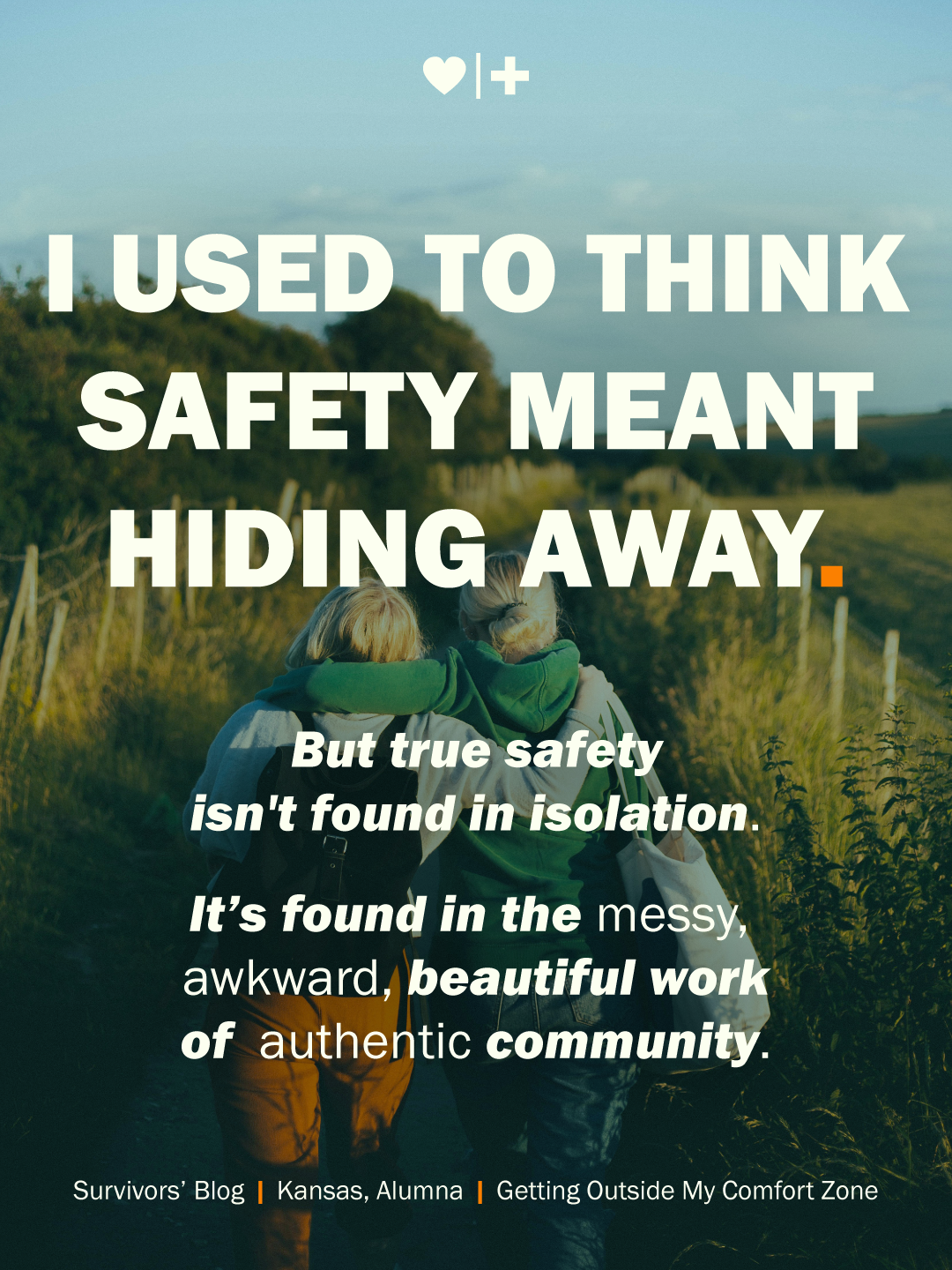
Stepping out of the protective bubble we built after D-day was easily one of the most terrifying things I’ve ever done. I used to think safety meant hiding away, surrounded only by "yes" friends who would never challenge the choices I made. But true safety, I’ve learned, isn't found in isolation—it’s found in the messy, awkward, beautiful work of authentic community.
I am still building my circle, and I am still looking for those peers to walk right beside me in everyday life. But today, I am no longer hiding. I am out in the real world, finally showing up as the friend God intentionally designed me to be, ready for whoever He puts in my path next.
“Sorry to see this [group] ending, but hopefully it is a
new beginning and we can continue in the next phase.
The support of a sisterhood is so valuable.
Thank you for your time and talents, for your
empathy and wisdom, and for your big hearts
for leading this group of women who
want to change for the better.”
- Hope for Healing Participant
After finding some semblance of stabilization and recovery following the revelation of my infidelity, we realized very quickly that we were going to have to leave the bubble we had created to protect ourselves while we healed. We were going to have to enter back into the real world – do tasks, talk to people, maybe even make friends.
Facing the "Yes" Friends and Popping the Bubble
That last one was a doozy for me. First of all, I was never good at making friends to begin with. Second, after D-day, I realized that every single friend I had was what I came to call a “yes” friend. In my pursuit of validation and rationalization (among other things), I had spent my whole teen and adult life surrounding myself with people who thought like I did, saw my problems the way I did, and told me everything I wanted to hear. Immediately after entering into recovery work, I cut ties with all of the friends I had made as an adult, especially all those who knew about my affairs. At the time, I did it because I was desperate to do everything I could to make my husband trust me again, but after a lot of work on myself, I kept those ties severed because I knew by then that they were not the kind of friendships I needed, or even wanted, anymore.
Ending my longest friendship was incredibly difficult, and it took a long time to finally tell her we were going our separate ways. It wasn’t that she was a "yes" friend; rather, I couldn't find a way to become the person I wanted to be while remaining in her life. I had spent years tailoring my identity to be whatever she needed me to be. Developing the sense of self required to break that pattern meant accepting that our connection was no longer healthy for me.
Looking in the Mirror: Who Am I?
As I prepared to step out of my bubble and reenter the world, my mind swirled with questions. Who was this new self? What made a good friend, and how would I find them? More importantly, was I actually showing up as the kind of friend I was looking for? In the past, I wasn’t.
To become a good friend, I had to start with myself. I needed to know who I was so I could be authentic in interactions that went deeper than the weather. Early in recovery, driven to overcome the shame of who I felt I had become, I wrote a list on my bathroom mirror of who God says I am. Looking at it daily, I finally realized that was my true identity. While I might still make choices that deviated from that core, awareness of my motivations would always bring me back to God’s intentional design.
But self-awareness could only take me so far on my own. I had practiced being my true self with my family, but now I had to do it with others. I knew not everyone would be safe, but I needed people who were authentic and brave enough to call me out if they saw me slipping. I didn’t want a lopsided relationship based solely on keeping me in line, though—I wanted an equal partnership of mutual accountability. I wanted to be a friend who could lovingly challenge wrong thinking without judgment, and I needed friends who would reciprocate. They didn't necessarily have to be Christian, but they did need to understand my values so they could tell me when I was falling away from the person I wanted to be.
The Three Dimensions of Community
I once read that a healthy community requires three types of people: those ahead to lift you up, those behind you can lift up, and those beside you to walk the path. I wanted that exact dynamic in my friendships. I looked for someone I admired who could speak into my life from a broader perspective, as well as someone a few steps behind who needed a safe space while they figured things out. Most of all, I craved a peer right beside me—someone to share the trials and victories of deep personal growth as we learned and evolved together. But I knew that equal partner would be the hardest one to find.
Flexing the Relational Muscle
The first place I looked was the environment that felt safest to me: Affair Recovery. Having been through both Hope for Healing and EMS Online, I was deeply familiar with the community. Since few people from my previous groups stayed connected after their courses ended, I figured the best way to anchor myself was to dive into becoming a group leader. I knew it wouldn’t automatically hand me friends, but it tapped perfectly into that "lifting others up" piece. It was a way to continue my own growth and practice authenticity, though I constantly had to remind myself that I wasn’t a savior or a hero. I had to maintain humility and relate to people on a peer level.
And boy, was that the best choice I could have made. It led me to my first real friend—another leader whom I deeply respected and who was further along in her recovery journey. I wanted so badly to be her friend, but I had no idea how to bridge the gap. Asking "Will you be my friend?" like a kindergartener felt way too scary.
Fortunately, I had my list of what a healthy friendship required, and top of the list was mutuality. Instead of unloading all my baggage and forcing her into a permanent mentor role, I started intentionally checking in on her. I’d ask how she was doing and if there was anything she wanted to share. I was genuinely interested, but I was also hyper-aware of my own tendencies. Before every interaction, I’d run through my internal checklist of blind spots. My communication was slow, overthought, awkward, and sometimes downright ugly. Yet, she never pushed. I never asked, but I think she knew exactly what I was doing. She had been there; she had the patience to let me figure myself out mid-conversation because she possessed a checklist of her own.
Over time, that relational muscle grew. The internal checks became second nature, and the friendship naturally deepened. Today, she is still my "ahead of me" friend, but we are truly there for each other. Looking back, this was the most pivotal connection of my recovery. It gave me a real-life blueprint for healthy community—teaching me what authenticity looks like, how to call someone out in love, and how to have the bravery to speak up when something feels off. Because of what I learned with her, I finally gained the confidence to reach out to others, build new friendships, and actually keep them healthy.
The Next Frontier: In-Person Friendships
I’d love to tell you I’m a pro now and surrounded by more friends than I can count. That’s not the case. While I now have a few deeply valued friends—women I can truly relate to without fear—the next step is finding local, in-person community. And that is much harder. Learning to navigate friendships with people who aren’t in recovery is a challenge; so many people out there are still hiding behind images and walls, with little desire to be authentic. Ironically, the church is where I want community the most, but it’s also been the hardest place to find it. People are trying so hard to be “good” that they forget to be real. However, I am hopeful. It is a work in progress.
The World Outside the Bubble
Stepping out of the protective bubble we built after D-day was easily one of the most terrifying things I’ve ever done. I used to think safety meant hiding away, surrounded only by "yes" friends who would never challenge the choices I made. But true safety, I’ve learned, isn't found in isolation—it’s found in the messy, awkward, beautiful work of authentic community.
I am still building my circle, and I am still looking for those peers to walk right beside me in everyday life. But today, I am no longer hiding. I am out in the real world, finally showing up as the friend God intentionally designed me to be, ready for whoever He puts in my path next.
“Sorry to see this [group] ending, but hopefully it is a
new beginning and we can continue in the next phase.
The support of a sisterhood is so valuable.
Thank you for your time and talents, for your
empathy and wisdom, and for your big hearts
for leading this group of women who
want to change for the better.”
- Hope for Healing Participant
After finding some semblance of stabilization and recovery following the revelation of my infidelity, we realized very quickly that we were going to have to leave the bubble we had created to protect ourselves while we healed. We were going to have to enter back into the real world – do tasks, talk to people, maybe even make friends.
Facing the "Yes" Friends and Popping the Bubble
That last one was a doozy for me. First of all, I was never good at making friends to begin with. Second, after D-day, I realized that every single friend I had was what I came to call a “yes” friend. In my pursuit of validation and rationalization (among other things), I had spent my whole teen and adult life surrounding myself with people who thought like I did, saw my problems the way I did, and told me everything I wanted to hear. Immediately after entering into recovery work, I cut…
Continue reading →