
Survivors Blog: Rachel
Rachel
Alumna, Betrayed. A compassionate traveling companion who walks alongside those seeking hope, health, and harmony through betrayal trauma.
Finding Safety in Numbers: Why an Affair Recovery Group is Vital for Healing
 The first time I remember knowing I didn’t belong to the group was in fifth grade.
Alyssa Packson was on the twirling team and head of the student council. Teachers doted on her because she made straight A’s, and the other girls worshiped her—she already had a boyfriend, which, at eleven automatically made her the coolest girl in class.
Two of my close friends were part of her inner circle, so I heard plenty of Alyssa-stories through them. I listened intently when they mentioned she’d be passing out invitations for her end-of-year party.
The next day, Alyssa and her posse strode out the metal doors to the recess yard. Her followers had doubled in size, and they moved across the field like an amoeba—one shifting organism—as she handed out pink folded invitations.
My friend mouthed, “Come here!” and motioned for me to join the group that had begun forming a circle. But as I stepped closer, Alyssa turned toward me. Her lips curved into her gorgeous smile as she said in a sing-song voice,
“Uh-uh, no, Rachel…you’re not in the group. Sorry.”
She turned her back and pulled the circle inward, leaving me motionless on the outside.
What We Carry Into the Circle
I hadn’t thought about that childhood memory in decades, but it came back with surprising force when I considered joining a partner group.
It wasn’t just the image of eleven-year-old Rachel awkwardly shuffling her feet in the dirt behind that circle of girls.
It was also the feeling that came back.
The hollowed-out space in my stomach.
The racing heartbeat.
The words that wouldn’t budge from my mouth.
That old fear of not belonging was still alive in my body.
Part of me felt ridiculous tracing my hesitation back to a pink invitation on a playground. That moment certainly wasn’t the sharpest rejection of my life.
And yet, I had joined countless circles since then–church groups, mom groups, sports teams, book clubs, study groups, even other recovery spaces. I knew how groups worked and how to find my seat.
But this group–this one with women who knew the sound of their world cracking–terrified me.
I was emotionally raw, my skin thin from everything that had happened in my marriage.
I couldn’t risk watching another circle close in front of me.
Not this time.
My husband carried a different fear, though.
His years in the military had given him a kind of belonging I couldn’t fully understand. For him, it wasn’t a fear of being rejected—it was a fear of being exposed.
“You know I don’t like my business being blasted out to a room full of strangers,” he told me, “Plus, I already feel enough shame as it is. I don’t need any more thrown at me.”
When it came to stepping into a group, there was a lot at stake for both of us.
For me—another potential closed circle.
For him—vulnerability that could cost him.
The Search for Safety
As we looked for places to heal, my husband and I quickly realized that not every group is a safe place to land.
There were groups that, quite frankly, did more harm than good. I remember sitting in a space where I left feeling smaller than when I walked in–where stories were compared like a scorecard and advice rushed in before any connection had been built. In those rooms, “fixing” replaced listening, and I felt that old fifth-grade part of me standing on the outside.
But then, we found the spaces that were different.
When my husband’s therapist encouraged him to join a specific men’s infidelity group, he reluctantly said yes. Week after week, he sat in a circle of men who told the raw truth about their lives. Some wept, some sat expressionless, but the collective honesty disarmed him. He discovered that the more he listened, the less the room felt like a firing squad and more like a mirror. He was finally allowing himself to be known, and in being known, the shame began to lose its grip.
For me, belonging grew quietly during my Harboring Hope group, beginning with the way our facilitator invited us to connect on the online wall before the weekly calls started. We shared a little about ourselves–our hobbies, our children, and the parts of our lives that existed outside the betrayal.
During our first meeting, we were each invited to give a five-minute overview of our story and what had brought us there. At the start of every call, we also revisited the group agreements: no interrupting, no fixing, and no cross-talk. Those commitments helped create safety and shaped the tone of the group.
When it was my turn to share my story, my voice shook as I spoke. But as the words came out, no one rushed to correct my story or offer advice. The group simply listened. I shouldn’t have been surprised–we had all agreed to offer that kind of space to one another–but when it was extended to me, it meant more than I expected.
Something in me settled.
The circle wasn’t closing on me.
It was widening.
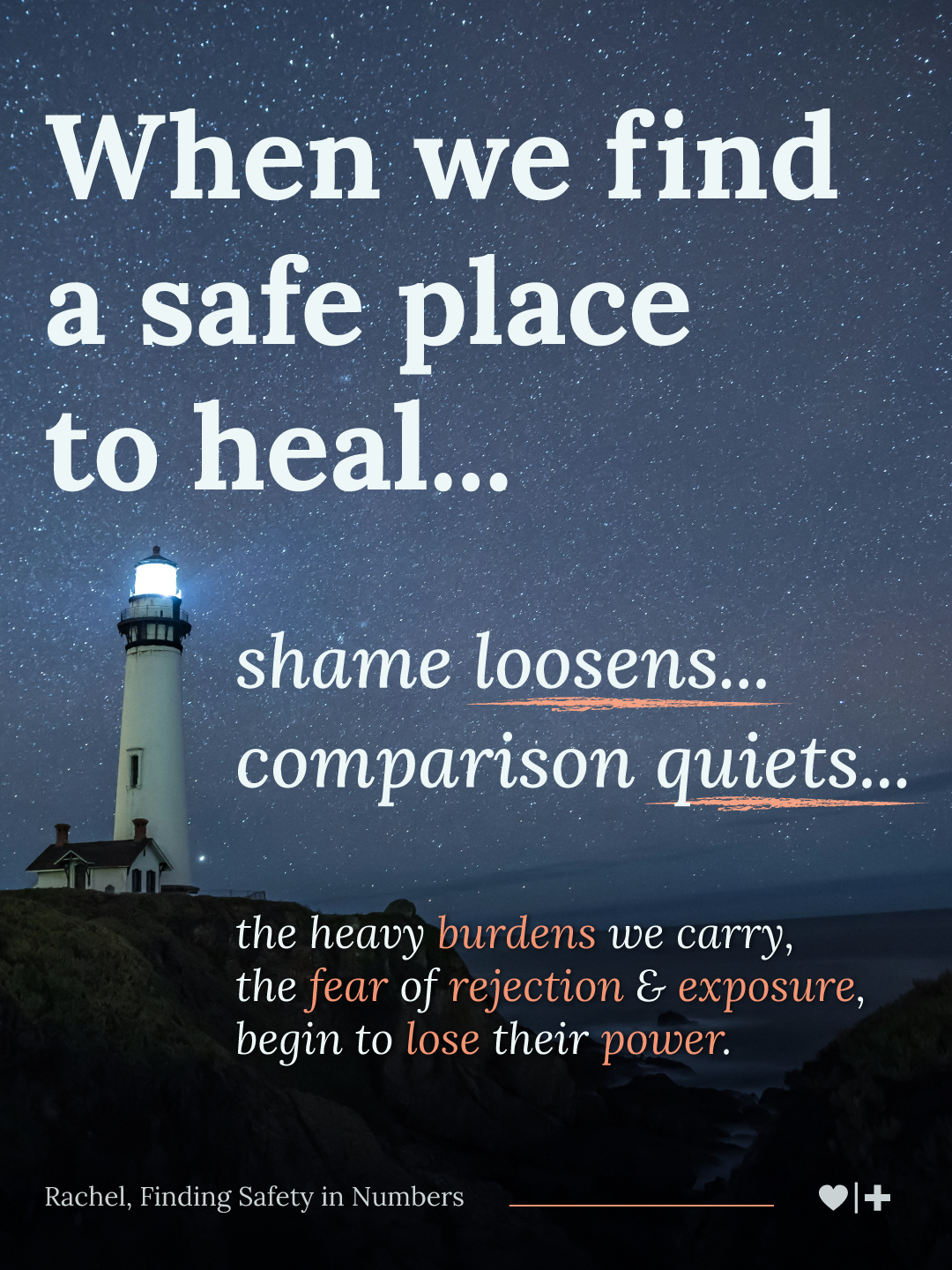
And when the circle stays open, the heavy burdens we carry–like the fear of rejection and exposure–begin to lose their power.
Shame loosens. Comparison quiets.
We remember we aren’t walking this path alone.
And sometimes, that’s where the real healing happens.
If you’ve been navigating recovery on your own–or if previous group experiences haven't felt safe–consider programs like Harboring Hope, Hope for Healing, and EMS Online. These are designed to create the kind of trauma-informed spaces where circles widen instead of close.
The first time I remember knowing I didn’t belong to the group was in fifth grade.
Alyssa Packson was on the twirling team and head of the student council. Teachers doted on her because she made straight A’s, and the other girls worshiped her—she already had a boyfriend, which, at eleven automatically made her the coolest girl in class.
Two of my close friends were part of her inner circle, so I heard plenty of Alyssa-stories through them. I listened intently when they mentioned she’d be passing out invitations for her end-of-year party.
The next day, Alyssa and her posse strode out the metal doors to the recess yard. Her followers had doubled in size, and they moved across the field like an amoeba—one shifting organism—as she handed out pink folded invitations.
My friend mouthed, “Come here!” and motioned for me to join the group that had begun forming a circle. But as I stepped closer, Alyssa turned toward me. Her lips curved into her gorgeous smile as she said in a sing-song voice,
“Uh-uh, no, Rachel…you’re not in the group. Sorry.”
She turned her back and pulled the circle inward, leaving me motionless on the outside.
What We Carry Into the Circle
I hadn’t thought about that childhood memory in decades, but it came back with surprising force when I considered joining a partner group.
It wasn’t just the image of eleven-year-old Rachel awkwardly shuffling her feet in the dirt behind that circle of girls.
It was also the feeling that came back.
The hollowed-out space in my stomach.
The racing heartbeat.
The words that wouldn’t budge from my mouth.
That old fear of not belonging was still alive in my body.
Part of me felt ridiculous tracing my hesitation back to a pink invitation on a playground. That moment certainly wasn’t the sharpest rejection of my life.
And yet, I had joined countless circles since then–church groups, mom groups, sports teams, book clubs, study groups, even other recovery spaces. I knew how groups worked and how to find my seat.
But this group–this one with women who knew the sound of their world cracking–terrified me.
I was emotionally raw, my skin thin from everything that had happened in my marriage.
I couldn’t risk watching another circle close in front of me.
Not this time.
My husband carried a different fear, though.
His years in the military had given him a kind of belonging I couldn’t fully understand. For him, it wasn’t a fear of being rejected—it was a fear of being exposed.
“You know I don’t like my business being blasted out to a room full of strangers,” he told me, “Plus, I already feel enough shame as it is. I don’t need any more thrown at me.”
When it came to stepping into a group, there was a lot at stake for both of us.
For me—another potential closed circle.
For him—vulnerability that could cost him.
The Search for Safety
As we looked for places to heal, my husband and I quickly realized that not every group is a safe place to land.
There were groups that, quite frankly, did more harm than good. I remember sitting in a space where I left feeling smaller than when I walked in–where stories were compared like a scorecard and advice rushed in before any connection had been built. In those rooms, “fixing” replaced listening, and I felt that old fifth-grade part of me standing on the outside.
But then, we found the spaces that were different.
When my husband’s therapist encouraged him to join a specific men’s infidelity group, he reluctantly said yes. Week after week, he sat in a circle of men who told the raw truth about their lives. Some wept, some sat expressionless, but the collective honesty disarmed him. He discovered that the more he listened, the less the room felt like a firing squad and more like a mirror. He was finally allowing himself to be known, and in being known, the shame began to lose its grip.
For me, belonging grew quietly during my Harboring Hope group, beginning with the way our facilitator invited us to connect on the online wall before the weekly calls started. We shared a little about ourselves–our hobbies, our children, and the parts of our lives that existed outside the betrayal.
During our first meeting, we were each invited to give a five-minute overview of our story and what had brought us there. At the start of every call, we also revisited the group agreements: no interrupting, no fixing, and no cross-talk. Those commitments helped create safety and shaped the tone of the group.
When it was my turn to share my story, my voice shook as I spoke. But as the words came out, no one rushed to correct my story or offer advice. The group simply listened. I shouldn’t have been surprised–we had all agreed to offer that kind of space to one another–but when it was extended to me, it meant more than I expected.
Something in me settled.
The circle wasn’t closing on me.
It was widening.
And when the circle stays open, the heavy burdens we carry–like the fear of rejection and exposure–begin to lose their power.
Shame loosens. Comparison quiets.
We remember we aren’t walking this path alone.
And sometimes, that’s where the real healing happens.
If you’ve been navigating recovery on your own–or if previous group experiences haven't felt safe–consider programs like Harboring Hope, Hope for Healing, and EMS Online. These are designed to create the kind of trauma-informed spaces where circles widen instead of close.
The first time I remember knowing I didn’t belong to the group was in fifth grade.
Alyssa Packson was on the twirling team and head of the student council. Teachers doted on her because she made straight A’s, and the other girls worshiped her—she already had a boyfriend, which, at eleven automatically made her the coolest girl in class.
Two of my close friends were part of her inner circle, so I heard plenty of Alyssa-stories through them. I listened intently when they mentioned she’d be passing out invitations for her end-of-year party.
The next day, Alyssa and her posse strode out the metal doors to the recess yard. Her followers had doubled in size, and they moved across the field like an amoeba—one shifting organism—as she handed out pink folded invitations.
My friend mouthed, “Come here!” and motioned for me to join the group that had begun forming…
Continue reading →
Healing Begins: Naming the Loss After Betrayal
 “Mom…where are you going? Hello? Mom!”
My nine-year-old’s voice jolted me out of a trance. I blinked at the road ahead and realized I’d taken two wrong turns and found myself on the other side of the lake. Again. It was the third time that week I’d driven somewhere other than my intended destination.
I tried to laugh it off. “Just exploring our new neighborhood!” I said, my voice pitched higher than usual. In the rearview mirror, her worried eyes met mine. She knew I was lying.
Tears pooled behind the oversized sunglasses I’d started wearing everywhere. They had become my mask—shielding my daughters from mascara-streaked cheeks and the deep, dark circles that came from too many sleepless nights.
I was trying so hard to hold it together for them. But even my ability to drive without losing my way had vanished overnight. My hands clung to the steering wheel, knuckles white, but my mind was nowhere in the car. Scene by scene, word by word, I replayed the weeks leading up to the night my husband sat across from me on the sofa and said, “Okay, you really want to know? Here it is…”
I knew things would never be the same. In the days and weeks that followed, a hard truth settled in: I had lost more than my marriage.
Simple routines I once did without thinking—reading, cooking, driving—now felt impossible. My thoughts scattered. Sleep disappeared. My stomach churned in constant revolt. Parenting became something I performed on autopilot, terrified my pain might spill onto my girls.
My world had gone dim. Laughter no longer came easily. Even my connection with God, once my lifeline, felt distant, muffled beneath resentment and confusion.
Betrayal hadn’t just fractured my marriage. It was as if it had walked through my life and emptied every room, leaving echoes of what once was.
This was betrayal trauma — but it was also more.
It was grief.
The Practice of Naming
One quiet Saturday morning, a few months later, I sat at the kitchen table with a mug of coffee and a candle flickering beside me. The house was still, the sun just beginning to edge through the curtains. I’d recently heard someone say, “Healing begins in the naming”, and I’d been thinking about it ever since.
Part of me wanted to keep the losses buried. I was afraid that if I named them, they’d grow stronger—that the grief would pull me under and I’d never find my way out.
But the silence was heavy, and I was too tired to keep carrying it.
So I opened my journal and wrote a single question at the top of the page:
What have I lost?
At first, my losses centered on my marriage. I wrote,
My best friend.
The laughter that once filled our kitchen.
Conversations I thought were honest.
Feeling safe with him.
Then the losses shifted inward:
Feeling safe in my own skin.
Believing I was enough.
Trusting my instincts.
And then more surprising griefs came:
A full night’s sleep.
The energy to play and be silly with my girls.
Taco Tuesdays and movie nights.
The sound of my own laugh.
The more I wrote, the more losses spilled out of me. With each line, I was surprised by how far they reached—and yet, something inside me loosened. My breath came easier, as if naming them made more space within me.
Naming the losses wasn’t intensifying the pain as I had feared. It was giving the pain a place to go. The words settled safely onto the page, and somehow I sensed that they were being held—not just by the paper and ink, but by something greater than me.
Held, Not Fixed
As I kept noticing and naming the losses in the weeks ahead, I discovered something I hadn’t expected: healing wasn’t happening because everything was fixed or repaired. The losses weren’t being reversed.
Healing was happening each time I allowed myself to be fully honest about all that I had lost—and realistic that there were still losses waiting to surface.
Nothing about my circumstances changed right away. I still felt the deep ache of everything that was gone. But like unclenching a fist I hadn’t realized was tight, something in me released.
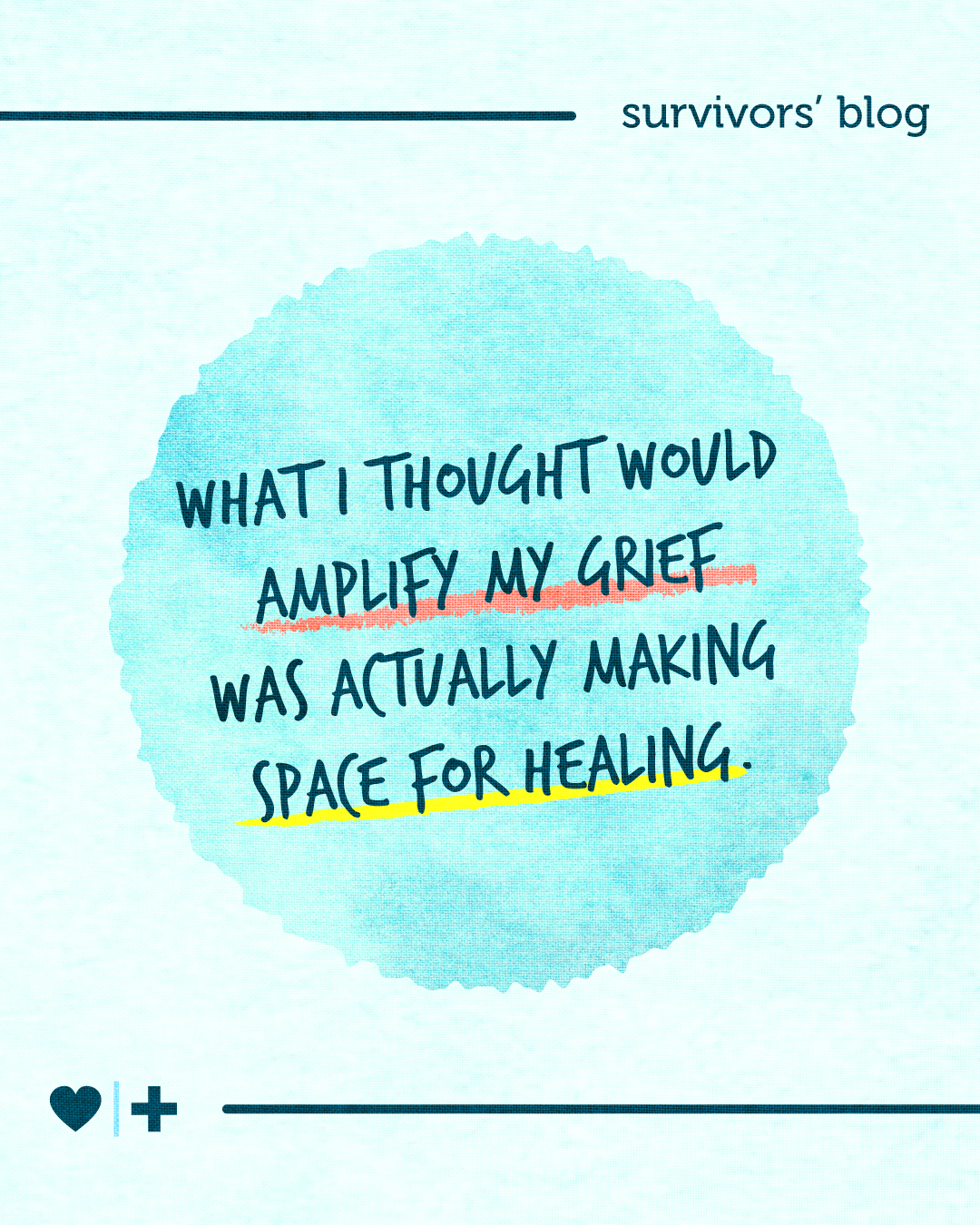
What I thought would amplify my grief was actually making space for healing. What I feared would drown me became the very act that allowed me to surface for air.
Naming my losses became a kind of prayer for me—a way of saying, Here it is. This is what hurts.
And whether you imagine that release being met by God, by a Higher Power, or simply by your own compassion, the point is the same:
You don’t have to hold it all alone.
An Invitation
If you’re feeling overwhelmed by the sheer number of losses, can I offer you a small step?
Name one thing you’ve lost. Just one.
Not to dwell there. Not to fix it.
But to bring it into the light.
You don’t have to hold it alone.
You are already being held.
“Mom…where are you going? Hello? Mom!”
My nine-year-old’s voice jolted me out of a trance. I blinked at the road ahead and realized I’d taken two wrong turns and found myself on the other side of the lake. Again. It was the third time that week I’d driven somewhere other than my intended destination.
I tried to laugh it off. “Just exploring our new neighborhood!” I said, my voice pitched higher than usual. In the rearview mirror, her worried eyes met mine. She knew I was lying.
Tears pooled behind the oversized sunglasses I’d started wearing everywhere. They had become my mask—shielding my daughters from mascara-streaked cheeks and the deep, dark circles that came from too many sleepless nights.
I was trying so hard to hold it together for them. But even my ability to drive without losing my way had vanished overnight. My hands clung to the steering wheel, knuckles white, but my mind was nowhere in the car. Scene by scene, word by word, I replayed the weeks leading up to the night my husband sat across from me on the sofa and said, “Okay, you really want to know? Here it is…”
I knew things would never be the same. In the days and weeks that followed, a hard truth settled in: I had lost more than my marriage.
Simple routines I once did without thinking—reading, cooking, driving—now felt impossible. My thoughts scattered. Sleep disappeared. My stomach churned in constant revolt. Parenting became something I performed on autopilot, terrified my pain might spill onto my girls.
My world had gone dim. Laughter no longer came easily. Even my connection with God, once my lifeline, felt distant, muffled beneath resentment and confusion.
Betrayal hadn’t just fractured my marriage. It was as if it had walked through my life and emptied every room, leaving echoes of what once was.
This was betrayal trauma — but it was also more.
It was grief.
The Practice of Naming
One quiet Saturday morning, a few months later, I sat at the kitchen table with a mug of coffee and a candle flickering beside me. The house was still, the sun just beginning to edge through the curtains. I’d recently heard someone say, “Healing begins in the naming”, and I’d been thinking about it ever since.
Part of me wanted to keep the losses buried. I was afraid that if I named them, they’d grow stronger—that the grief would pull me under and I’d never find my way out.
But the silence was heavy, and I was too tired to keep carrying it.
So I opened my journal and wrote a single question at the top of the page:
What have I lost?
At first, my losses centered on my marriage. I wrote,
My best friend.
The laughter that once filled our kitchen.
Conversations I thought were honest.
Feeling safe with him.
Then the losses shifted inward:
Feeling safe in my own skin.
Believing I was enough.
Trusting my instincts.
And then more surprising griefs came:
A full night’s sleep.
The energy to play and be silly with my girls.
Taco Tuesdays and movie nights.
The sound of my own laugh.
The more I wrote, the more losses spilled out of me. With each line, I was surprised by how far they reached—and yet, something inside me loosened. My breath came easier, as if naming them made more space within me.
Naming the losses wasn’t intensifying the pain as I had feared. It was giving the pain a place to go. The words settled safely onto the page, and somehow I sensed that they were being held—not just by the paper and ink, but by something greater than me.
Held, Not Fixed
As I kept noticing and naming the losses in the weeks ahead, I discovered something I hadn’t expected: healing wasn’t happening because everything was fixed or repaired. The losses weren’t being reversed.
Healing was happening each time I allowed myself to be fully honest about all that I had lost—and realistic that there were still losses waiting to surface.
Nothing about my circumstances changed right away. I still felt the deep ache of everything that was gone. But like unclenching a fist I hadn’t realized was tight, something in me released.
What I thought would amplify my grief was actually making space for healing. What I feared would drown me became the very act that allowed me to surface for air.
Naming my losses became a kind of prayer for me—a way of saying, Here it is. This is what hurts.
And whether you imagine that release being met by God, by a Higher Power, or simply by your own compassion, the point is the same:
You don’t have to hold it all alone.
An Invitation
If you’re feeling overwhelmed by the sheer number of losses, can I offer you a small step?
Name one thing you’ve lost. Just one.
Not to dwell there. Not to fix it.
But to bring it into the light.
You don’t have to hold it alone.
You are already being held.
“Mom…where are you going? Hello? Mom!”
My nine-year-old’s voice jolted me out of a trance. I blinked at the road ahead and realized I’d taken two wrong turns and found myself on the other side of the lake. Again. It was the third time that week I’d driven somewhere other than my intended destination.
I tried to laugh it off. “Just exploring our new neighborhood!” I said, my voice pitched higher than usual. In the rearview mirror, her worried eyes met mine. She knew I was lying.
Tears pooled behind the oversized sunglasses I’d started wearing everywhere. They had become my mask—shielding my daughters from mascara-streaked cheeks and the deep, dark circles that came from too many sleepless nights.
I was trying so hard to hold it together for them. But even my ability to drive without losing my way had vanished overnight. My hands clung to the…
Continue reading →
Finding Hope After Betrayal: Why Hope Must Be an Inside Job
 After Birdee Pruitt is publicly betrayed by her husband on national television, she takes her daughter and moves back to her small hometown. Traumatized and humiliated, she slowly begins the work of rebuilding a life she once believed was secure, all while confronting her past and the scrutiny of small-town eyes. Hope Floats portrays a woman whose hopeful outlook–not only in her marriage, but in herself—vanishes in a single moment.
I can relate. After my own discovery of betrayal, hope wasn’t at the forefront of my mind–nor was it for my husband. Those early months were disorienting and tumultuous. If someone had told us to look for hope, I don’t think either one of us would have known what to look for. The world had flipped on its axis, and hope, at that point, was nowhere to be found.
What Keeps Us From Hope After Betrayal
Looking back, I can see what kept us from hope then.
For one, hope felt fragile. It seemed risky—even a little dangerous—to hope for a future that might never happen, whether that meant our marriage recovering or eventually going our separate ways. It was hard to let myself hope when my body and nervous system had catapulted me into a state of survival. Like many betrayed partners, I reached for whatever semblance of safety I could find instead. Sometimes that looked like numbing or distraction–binge-watching shows late into the night, staying busy, or trying to control small corners of my life that still felt manageable. At other times, safety meant slowing down–taking walks, journaling, and reaching out for support. Both kinds of safety-seeking made sense at the time; they were my body’s way of trying to find solid ground.
For my husband, hope was overtaken by shame. It didn’t initially come out as regret, but as defensiveness, intensity, and moments when he seemed swallowed by the reality of what had happened. As the truth settled in and the weight of his choices became undeniable, he doubted whether healing—or redemption—could ever be possible.
We were both too busy treading water to notice that hope might still be there beneath the surface. All we could see was the deeper reality–that nothing about our lives could return to what it had been. We were facing a long season of uncertainty and grief, and a scope of work we couldn’t rush.
But as the shock of all of this softened, small traces of hope began to appear.
Once it did, hope wavered between extremes. One hour, we could see the faint possibility that something in our future might be restored, only to sink into darkness and despair an hour later. In our own ways, we both wondered:
Is it foolish to hope?
Is hope even possible anymore?
Would there ever be a safe time to hope?
There were days when it felt like we might drown under the years of pain and dysfunctional patterns between us. And yet, there was a quiet wondering if anything new–anything redeemable–could still rise from all of this.
So yes, hope felt risky—and eventually we began to understand why: we were placing our hope in each other. We were letting it be defined by the other person’s words, actions, and reactions—and it was too fragile to survive there.
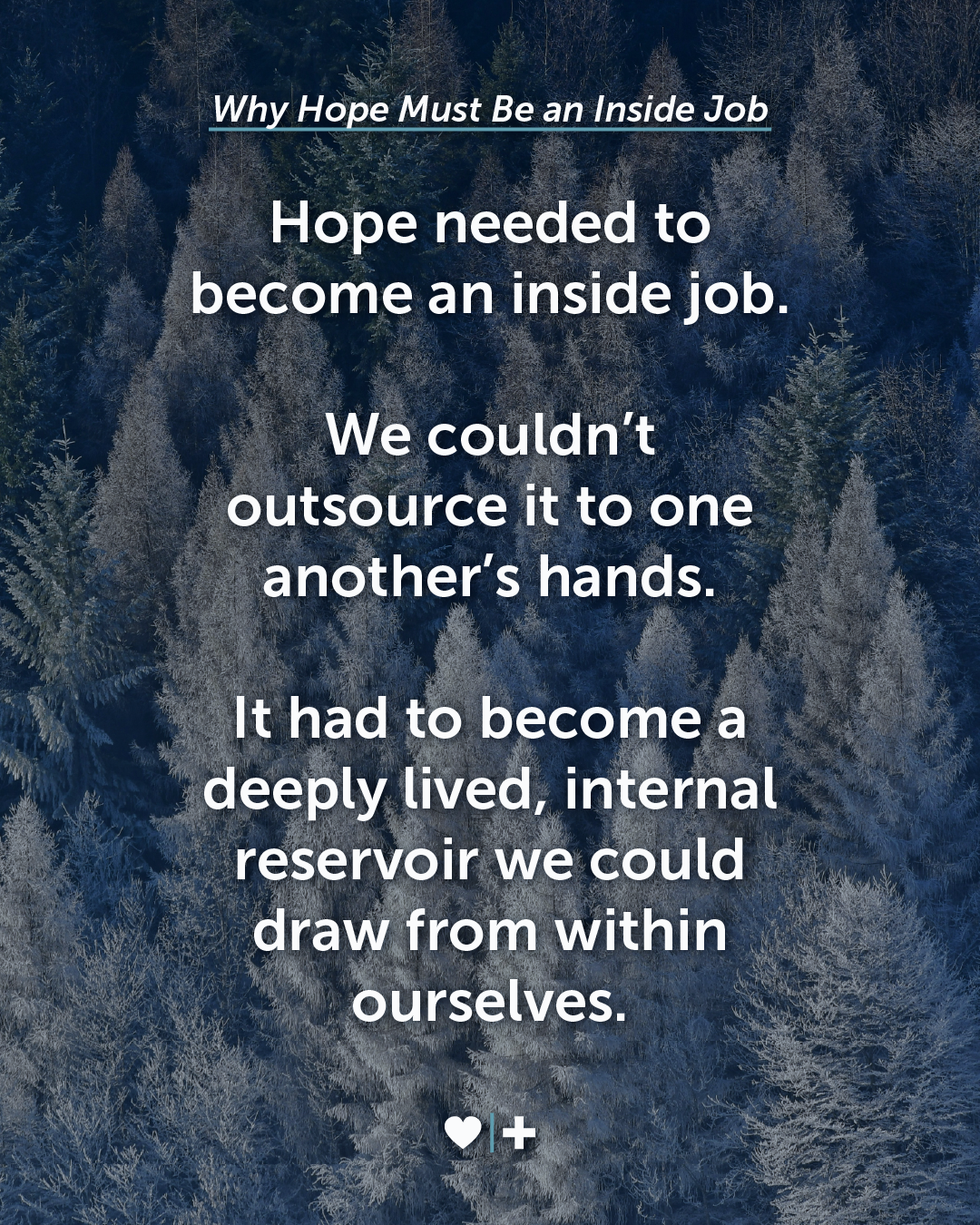
Hope needed to become an inside job. We couldn’t outsource it to one another’s hands. It had to become a deeply lived, internal reservoir we could draw from within ourselves.
Even when hope felt faint—sinking under the weight of our circumstances—we began to hold onto the belief that it might still be present, even if we couldn’t feel it yet. Hope only began to rise to the surface when we tethered ourselves to this truth:
No matter what happened—whether our marriage was transformed, re-shaped, or eventually released—hope could still carry us through this journey.
That was one of the harder parts of recovery for each of us. We had to learn to live without a guaranteed outcome. We had to loosen our grip on certainty and stay present in the painful, unresolved middle—trusting that hope could sustain us even when the future was unknown.
What Helps Us Turn Toward Hope Again
So how did hope begin to feel less risky, and more like something we allowed ourselves to grasp again?
Hope first began to rise as we became more honest with ourselves—about our pain, our patterns, and what was broken. It was only then that disclosure and truth-telling could move between us.
Hope emerged when we each chose to seek support. Getting help was, in itself, a hopeful act—a declaration that neither of us wanted to stay where we were.
For me, hope deepened as I invested in healing my betrayal trauma and began to notice changes in my body, my rhythms, and my inner world. Not all at once, but over time.
For him, hope surfaced as he confronted the pain he had buried for years and committed to doing the hard work of healing and repair.
And because hope had once been woven into our faith, we began to look for it in the ordinary and sacred moments of our lives. In nature, in our daughters’ laughter, in prayer, and in the times when we felt like we could finally breathe again.
Hope didn’t return loudly.
It returned quietly.
It floated.
By the end of Hope Floats, Birdee recalls something her mother used to say:
“Beginnings are scary, endings are usually sad, but it’s the middle that counts the most. You need to remember that when you find yourself at the beginning. Just give hope a chance to float up.”
Recovery often feels like living in that middle space—somewhere between grief and rebuilding, fear and courage, loss and the possibility of new life. Hope doesn’t always arrive easily, and it rarely floats smoothly to the surface.
But when we give it room—gently, slowly, honestly—hope has a way of rising again.
After Birdee Pruitt is publicly betrayed by her husband on national television, she takes her daughter and moves back to her small hometown. Traumatized and humiliated, she slowly begins the work of rebuilding a life she once believed was secure, all while confronting her past and the scrutiny of small-town eyes. Hope Floats portrays a woman whose hopeful outlook–not only in her marriage, but in herself—vanishes in a single moment.
I can relate. After my own discovery of betrayal, hope wasn’t at the forefront of my mind–nor was it for my husband. Those early months were disorienting and tumultuous. If someone had told us to look for hope, I don’t think either one of us would have known what to look for. The world had flipped on its axis, and hope, at that point, was nowhere to be found.
What Keeps Us From Hope After Betrayal
Looking back, I can see what kept us from hope then.
For one, hope felt fragile. It seemed risky—even a little dangerous—to hope for a future that might never happen, whether that meant our marriage recovering or eventually going our separate ways. It was hard to let myself hope when my body and nervous system had catapulted me into a state of survival. Like many betrayed partners, I reached for whatever semblance of safety I could find instead. Sometimes that looked like numbing or distraction–binge-watching shows late into the night, staying busy, or trying to control small corners of my life that still felt manageable. At other times, safety meant slowing down–taking walks, journaling, and reaching out for support. Both kinds of safety-seeking made sense at the time; they were my body’s way of trying to find solid ground.
For my husband, hope was overtaken by shame. It didn’t initially come out as regret, but as defensiveness, intensity, and moments when he seemed swallowed by the reality of what had happened. As the truth settled in and the weight of his choices became undeniable, he doubted whether healing—or redemption—could ever be possible.
We were both too busy treading water to notice that hope might still be there beneath the surface. All we could see was the deeper reality–that nothing about our lives could return to what it had been. We were facing a long season of uncertainty and grief, and a scope of work we couldn’t rush.
But as the shock of all of this softened, small traces of hope began to appear.
Once it did, hope wavered between extremes. One hour, we could see the faint possibility that something in our future might be restored, only to sink into darkness and despair an hour later. In our own ways, we both wondered:
Is it foolish to hope?
Is hope even possible anymore?
Would there ever be a safe time to hope?
There were days when it felt like we might drown under the years of pain and dysfunctional patterns between us. And yet, there was a quiet wondering if anything new–anything redeemable–could still rise from all of this.
So yes, hope felt risky—and eventually we began to understand why: we were placing our hope in each other. We were letting it be defined by the other person’s words, actions, and reactions—and it was too fragile to survive there.
Hope needed to become an inside job. We couldn’t outsource it to one another’s hands. It had to become a deeply lived, internal reservoir we could draw from within ourselves.
Even when hope felt faint—sinking under the weight of our circumstances—we began to hold onto the belief that it might still be present, even if we couldn’t feel it yet. Hope only began to rise to the surface when we tethered ourselves to this truth:
No matter what happened—whether our marriage was transformed, re-shaped, or eventually released—hope could still carry us through this journey.
That was one of the harder parts of recovery for each of us. We had to learn to live without a guaranteed outcome. We had to loosen our grip on certainty and stay present in the painful, unresolved middle—trusting that hope could sustain us even when the future was unknown.
What Helps Us Turn Toward Hope Again
So how did hope begin to feel less risky, and more like something we allowed ourselves to grasp again?
Hope first began to rise as we became more honest with ourselves—about our pain, our patterns, and what was broken. It was only then that disclosure and truth-telling could move between us.
Hope emerged when we each chose to seek support. Getting help was, in itself, a hopeful act—a declaration that neither of us wanted to stay where we were.
For me, hope deepened as I invested in healing my betrayal trauma and began to notice changes in my body, my rhythms, and my inner world. Not all at once, but over time.
For him, hope surfaced as he confronted the pain he had buried for years and committed to doing the hard work of healing and repair.
And because hope had once been woven into our faith, we began to look for it in the ordinary and sacred moments of our lives. In nature, in our daughters’ laughter, in prayer, and in the times when we felt like we could finally breathe again.
Hope didn’t return loudly.
It returned quietly.
It floated.
By the end of Hope Floats, Birdee recalls something her mother used to say:
“Beginnings are scary, endings are usually sad, but it’s the middle that counts the most. You need to remember that when you find yourself at the beginning. Just give hope a chance to float up.”
Recovery often feels like living in that middle space—somewhere between grief and rebuilding, fear and courage, loss and the possibility of new life. Hope doesn’t always arrive easily, and it rarely floats smoothly to the surface.
But when we give it room—gently, slowly, honestly—hope has a way of rising again.
After Birdee Pruitt is publicly betrayed by her husband on national television, she takes her daughter and moves back to her small hometown. Traumatized and humiliated, she slowly begins the work of rebuilding a life she once believed was secure, all while confronting her past and the scrutiny of small-town eyes. Hope Floats portrays a woman whose hopeful outlook–not only in her marriage, but in herself—vanishes in a single moment.
I can relate. After my own discovery of betrayal, hope wasn’t at the forefront of my mind–nor was it for my husband. Those early months were disorienting and tumultuous. If someone had told us to look for hope, I don’t think either one of us would have known what to look for. The world had flipped on its axis, and hope, at that point, was nowhere to be found.
What Keeps Us From Hope After Betrayal
Looking back, I can see what kept us…
Continue reading →
Six Truths I Would Tell Myself Looking Back
 The night I found out the truth about my marriage is one I’ll never forget. Our new living room was cluttered with moving boxes and packing paper. I had just come from the pool with my daughters, and the cool water hadn’t been enough to clear the fog I felt. Revelations had been trickling forth for days. My husband and I had planned to talk after the girls went to sleep. Deep within, I knew something big was coming as the truth was uncovered.
Each summer, as the anniversary of that night nears, I reflect on what life was like before and all that has transpired since. This past year was year six. Coincidentally, we were traveling to a city he had visited with his affair partner, and old memories stirred. I began to think about what I needed to hear back then—what might have carried me through those first painful steps.
If I could go back to that summer night and speak to the woman whose heart split wide open, I’d whisper these six truths I’ve come to believe in the six years since.
His choices weren’t a reflection of me.
After D-Day, I first blamed my husband, which was warranted and natural. But soon, that blame turned inward.
"This wouldn't have happened if I were enough. If I were smarter. Younger. More desirable. Had my life together. If only..."
This thinking blurred the lines of responsibility. My body felt betrayal trauma full force, and my mind spiraled, replaying old conversations and studying myself like a crime scene. I picked apart flaws, convinced they were the cause of it all.
But the truth was simple: My imperfections didn’t cause his betrayal. His choices were about him, not me.
Betrayal is a different kind of grief.
This grief felt unlike any I had known. Four years before D-Day, I lost a loved one. When that happened, an army of friends showed up, offering space to talk. Death produces a grief most people understand.
But betrayal grief is different.
It’s disenfranchised, and the kind society doesn’t fully acknowledge. There are no rituals, no casseroles from a neighbor in black, no bereavement leave. I had people in my corner, but those who hadn’t experienced this kind of grief could only offer so much. It was messy, tangled with shame and blame, and often left others unsure how to respond.
It lived differently in my body, too. It didn't sit heavy on my chest like death grief. It simmered beneath my skin, surfacing without warning. I kept trying to grieve it the same way—through talking and tears—but it wouldn't move.
Only when I accepted that betrayal grief required its own terrain could I begin to move forward. Until then, it felt like an invisible choke collar.
Taking care of myself was worth it.
Before the rupture, I was well-versed in caring for others: my kids, my husband, family, and friends. But caring for myself felt foreign. I was used to placing my own needs behind everyone else's.
Betrayal jolted me awake. I could no longer ignore how overextending myself—back-bending and contorting to keep others comfortable—was depleting my energy, well-being, and sanity.
At first, tending to myself felt selfish. I had so deeply identified as a caregiver that I didn't know where to begin. But slowly, I learned what my spirit and body needed. It began with small, non-negotiable acts: resting for 15 minutes, nourishing myself with foods that love me back, walking outdoors. I also sought communities that valued honest conversation.
Learning to care for myself became a cornerstone of my recovery.
Expect healing to be nonlinear.
Every book, article, and podcast I turned to echoed the same truth: healing is a long and non-linear journey.
For someone who prefers a clear path through discomfort, this was disorienting news. I wanted steps, markers, and a timeline—assurance that with each passing day, the pain would lessen.
But I also knew something about myself that’s been true since childhood: I’ve always been drawn to overcomers. Some days, I felt sure I’d be one of them. Then, two hours later, I’d be curled in a corner, sobbing, wondering how my life included infidelity.
The emotional whiplash was real. The pendulum of hope and despair left me exhausted. I often questioned whether I was actually healing or just circling the same drain.
But once I stopped rushing the process and accepted that healing comes in waves–not straight lines—I began to meet myself with more grace and compassion.
The words of Robert Frost proved true: “The only way out is through.”
I have agency in my recovery.
In my Harboring Hope group, we talked about how recovery was a full-time job—and that we had agency in how we chose to pursue it. When so much felt out of my hands, I clung to this truth.
Even as my husband made his own recovery choices, I began choosing what was best for me. An older friend reminded me: when I change, everyone around me changes. As my responses shifted, so did his.
I began to see the value of my own healing. My growth and resilience weren’t tied to his timeline. The most important change was within me. And I realized I had a choice: this experience could either diminish me or slowly become a catalyst for growth.
Owning my recovery gave me back my footing. I could reclaim my sense of self, move forward, and keep healing—regardless of what he chose to do.
I can hold joy and sorrow at the same time.
I once heard it’s essential to surround ourselves with as much beauty as possible during trauma recovery. I found myself craving it—the way trees bend with the wind, the warmth of sun on my skin, sunrises sprawling across the sky, and the sound of my daughters' laughter. These small moments offered calm and grounding.
Therapist and author Deb Dana calls them glimmers—small moments of safety that help bring the nervous system into balance. As I began to notice and chase these glimmers, I discovered something surprising: I could hold both joy and sorrow at once.
Beauty didn’t erase the grief I carried, but it widened my view. There was more to my life than the pain of betrayal. Learning this didn’t mean the sorrow vanished. It meant I no longer let it define my story.
Six years later, these truths are no longer distant lessons. They’ve become companions, guiding me in ways both subtle and profound. And if you’re standing where I once stood, heartbroken and uncertain, know that healing may not come as quickly or clearly as you’d like, but it does come. One truth at a time.
The night I found out the truth about my marriage is one I’ll never forget. Our new living room was cluttered with moving boxes and packing paper. I had just come from the pool with my daughters, and the cool water hadn’t been enough to clear the fog I felt. Revelations had been trickling forth for days. My husband and I had planned to talk after the girls went to sleep. Deep within, I knew something big was coming as the truth was uncovered.
Each summer, as the anniversary of that night nears, I reflect on what life was like before and all that has transpired since. This past year was year six. Coincidentally, we were traveling to a city he had visited with his affair partner, and old memories stirred. I began to think about what I needed to hear back then—what might have carried me through those first painful steps.
If I could go back to that summer night and speak to the woman whose heart split wide open, I’d whisper these six truths I’ve come to believe in the six years since.
His choices weren’t a reflection of me.
After D-Day, I first blamed my husband, which was warranted and natural. But soon, that blame turned inward.
"This wouldn't have happened if I were enough. If I were smarter. Younger. More desirable. Had my life together. If only..."
This thinking blurred the lines of responsibility. My body felt betrayal trauma full force, and my mind spiraled, replaying old conversations and studying myself like a crime scene. I picked apart flaws, convinced they were the cause of it all.
But the truth was simple: My imperfections didn’t cause his betrayal. His choices were about him, not me.
Betrayal is a different kind of grief.
This grief felt unlike any I had known. Four years before D-Day, I lost a loved one. When that happened, an army of friends showed up, offering space to talk. Death produces a grief most people understand.
But betrayal grief is different.
It’s disenfranchised, and the kind society doesn’t fully acknowledge. There are no rituals, no casseroles from a neighbor in black, no bereavement leave. I had people in my corner, but those who hadn’t experienced this kind of grief could only offer so much. It was messy, tangled with shame and blame, and often left others unsure how to respond.
It lived differently in my body, too. It didn't sit heavy on my chest like death grief. It simmered beneath my skin, surfacing without warning. I kept trying to grieve it the same way—through talking and tears—but it wouldn't move.
Only when I accepted that betrayal grief required its own terrain could I begin to move forward. Until then, it felt like an invisible choke collar.
Taking care of myself was worth it.
Before the rupture, I was well-versed in caring for others: my kids, my husband, family, and friends. But caring for myself felt foreign. I was used to placing my own needs behind everyone else's.
Betrayal jolted me awake. I could no longer ignore how overextending myself—back-bending and contorting to keep others comfortable—was depleting my energy, well-being, and sanity.
At first, tending to myself felt selfish. I had so deeply identified as a caregiver that I didn't know where to begin. But slowly, I learned what my spirit and body needed. It began with small, non-negotiable acts: resting for 15 minutes, nourishing myself with foods that love me back, walking outdoors. I also sought communities that valued honest conversation.
Learning to care for myself became a cornerstone of my recovery.
Expect healing to be nonlinear.
Every book, article, and podcast I turned to echoed the same truth: healing is a long and non-linear journey.
For someone who prefers a clear path through discomfort, this was disorienting news. I wanted steps, markers, and a timeline—assurance that with each passing day, the pain would lessen.
But I also knew something about myself that’s been true since childhood: I’ve always been drawn to overcomers. Some days, I felt sure I’d be one of them. Then, two hours later, I’d be curled in a corner, sobbing, wondering how my life included infidelity.
The emotional whiplash was real. The pendulum of hope and despair left me exhausted. I often questioned whether I was actually healing or just circling the same drain.
But once I stopped rushing the process and accepted that healing comes in waves–not straight lines—I began to meet myself with more grace and compassion.
The words of Robert Frost proved true: “The only way out is through.”
I have agency in my recovery.
In my Harboring Hope group, we talked about how recovery was a full-time job—and that we had agency in how we chose to pursue it. When so much felt out of my hands, I clung to this truth.
Even as my husband made his own recovery choices, I began choosing what was best for me. An older friend reminded me: when I change, everyone around me changes. As my responses shifted, so did his.
I began to see the value of my own healing. My growth and resilience weren’t tied to his timeline. The most important change was within me. And I realized I had a choice: this experience could either diminish me or slowly become a catalyst for growth.
Owning my recovery gave me back my footing. I could reclaim my sense of self, move forward, and keep healing—regardless of what he chose to do.
I can hold joy and sorrow at the same time.
I once heard it’s essential to surround ourselves with as much beauty as possible during trauma recovery. I found myself craving it—the way trees bend with the wind, the warmth of sun on my skin, sunrises sprawling across the sky, and the sound of my daughters' laughter. These small moments offered calm and grounding.
Therapist and author Deb Dana calls them glimmers—small moments of safety that help bring the nervous system into balance. As I began to notice and chase these glimmers, I discovered something surprising: I could hold both joy and sorrow at once.
Beauty didn’t erase the grief I carried, but it widened my view. There was more to my life than the pain of betrayal. Learning this didn’t mean the sorrow vanished. It meant I no longer let it define my story.
Six years later, these truths are no longer distant lessons. They’ve become companions, guiding me in ways both subtle and profound. And if you’re standing where I once stood, heartbroken and uncertain, know that healing may not come as quickly or clearly as you’d like, but it does come. One truth at a time.
The night I found out the truth about my marriage is one I’ll never forget. Our new living room was cluttered with moving boxes and packing paper. I had just come from the pool with my daughters, and the cool water hadn’t been enough to clear the fog I felt. Revelations had been trickling forth for days. My husband and I had planned to talk after the girls went to sleep. Deep within, I knew something big was coming as the truth was uncovered.
Each summer, as the anniversary of that night nears, I reflect on what life was like before and all that has transpired since. This past year was year six. Coincidentally, we were traveling to a city he had visited with his affair partner, and old memories stirred. I began to think about what I needed to hear back then—what might have carried me through those first painful steps.
If I could go back to that summer night and speak to the…
Continue reading →
What You Say to Yourself and About Yourself Matters
Hi. My name is Rachel. Infidelity not only impacts our relationship with our partners, but it also affects the relationship we have with ourselves, as we're grappling with a new reality that we didn't expect or ask for.
We may also notice some negative messages, words, thoughts, and beliefs about ourselves. This inner bullying voice only seems to add more pain to the stress, emotions, and trauma that we're already navigating. This voice may tell us things and remind us of all of the ways that we've failed, missed warning signs, or red flags. It may even tell us that we weren't enough to keep our partners satisfied, or that we're never going to heal through this.
The way we talk to ourselves matters. Our inner voice can keep us stuck in patterns of self-loathing and fuel feelings of low self-worth. Our ability to recover and heal can be influenced by the words that…
Continue reading →
For the Betrayed: It Is OK to Disappoint Others - Healing from Infidelity
Hi, my name is Rachel, and I want to talk about why letting others down and disappointing others is a necessary part of your recovery. Now, listen, I know that this seems like a silly topic, and it's not going to be relevant to all of you, but I really wanted to reach out to my sisters and my brothers who do struggle with the idea of letting other people down who hate the idea of disappointing another human who may tend to say yes often. And who have some people pleasing tendencies, but in recovery is a time in which your mental, physical, emotional, spiritual well-being is just kind of in upheaval, right?
I mean, there's just so much going on. Your world has been flipped on its axis, the rug pulled out from under your feet. And so it may seem ludicrous to think that something like people pleasing or avoiding disappointment will even be a thing during your recovery. But…
Continue reading →
Caring for Your Body After Betrayal Is Essential - Part 2
View Part 1 here.
Hi, I'm Rachel, and this is part two of my series around caring for your body during your recovery from infidelity/cheating, which is an essential but often overlooked part of this journey. In the last video, I talked about the impact of stress and trauma on our bodies and how it can throw everything from our appetite to our sleep patterns to our immune systems off the rails.
Today in part two of this video series, I want to share specific ways and easy tips for caring for yourself and supporting your body during this difficult time.
I can remember in the days, weeks, and months after my D-Day just how badly the intrusive thoughts would slam into my mind at random times during the day and I would not be able to catch my breath.
I can remember sharing this with my therapist and having her…
Continue reading →
Caring for Your Body after Betrayal Is Essential - Part 1
Because the body is (at least in part) the location of our trauma—the body must also be a location of healing.
~Aundi Kolber
About a year after discovering my husband's affair, my body started to capsize under relentless waves of sickness. An illness would hit. I'd recover and feel decent for a few months. Then, another surge of sickness would seek to drown me again.
My husband had betrayed me, but now my body seemed to be doing the same.
I began to understand firsthand that infidelity's impact on a person could be more nuanced and complex than I had initially realized. The thing was, I had done many things "right" when I started my recovery.
Prayer and journaling became my lifelines. Finding outside support also saved me early on in my journey. My Harboring Hope group provided me the…
Continue reading →
