
Before I Betrayed Him, I Betrayed Myself


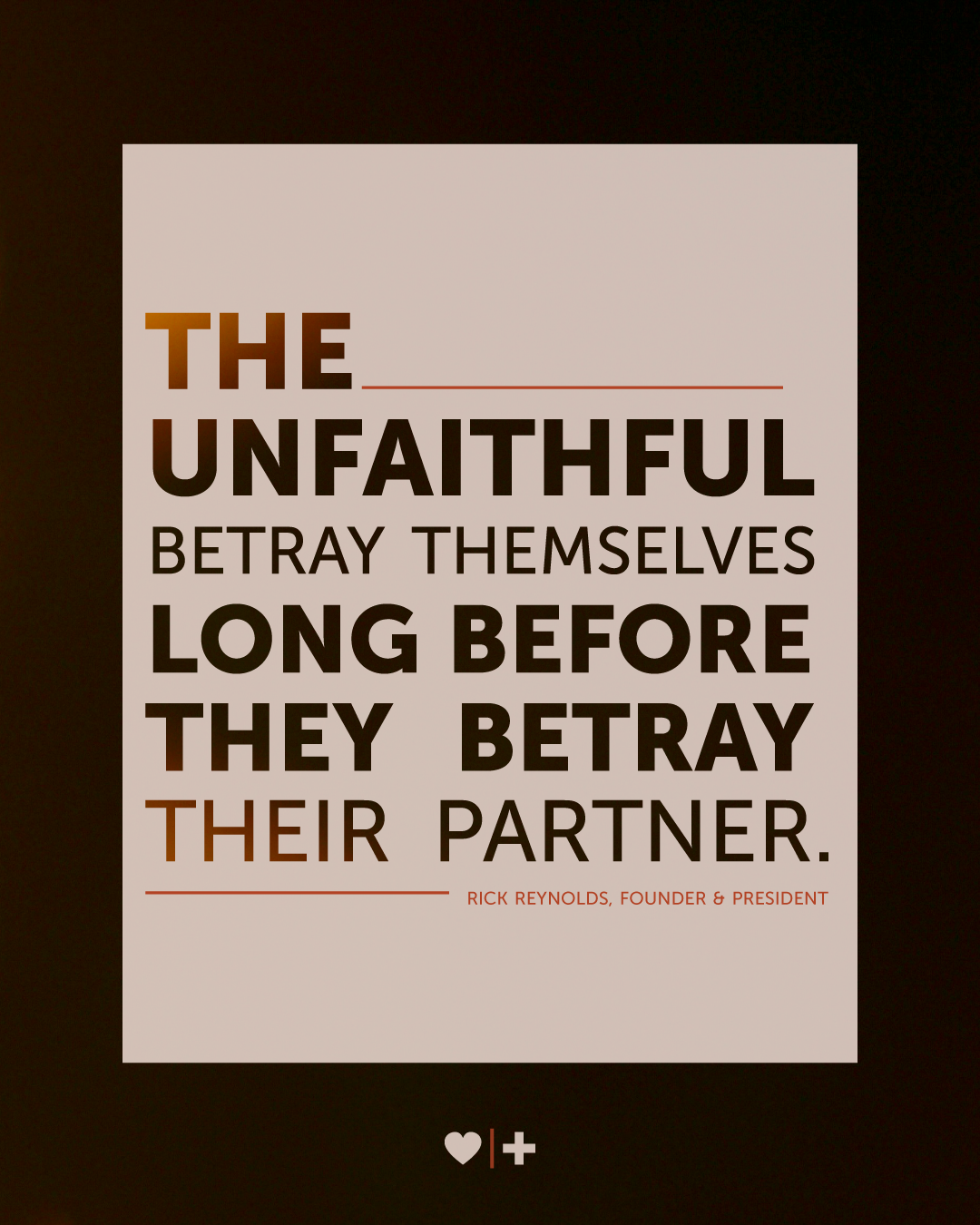
“The unfaithful betrays themselves long before they betray their partner.” – Rick Reynolds
This statement took me far too long to fully understand. How could I betray myself when I didn’t even know who “myself” was?
Growing up, I lived in a house where love was granted or denied based on how well I could read my mother. If I could anticipate her every need, thought, and wish—and fulfill them—I had her love. When I couldn't figure it out, I was met with anger, stonewalling, and silence. I learned quickly how to read people and morph into whichever version was most acceptable to those around me. I also learned to hide the parts of myself I thought wouldn't be accepted. Throughout my entire childhood and young adulthood, I played out this same pattern. I was perfect for everyone—exactly who they wanted me to be—until things started falling apart and I began to slip up.
Then, I would rebel, abandoning that image of perfection for the exact opposite.
When I got married, I—like most unfaithful spouses—thought I could leave all that behind, even though I couldn’t have articulated what I was leaving behind. I’d already had a few "secret rebellion" moments during our engagement, but I assumed I was just getting it out of my system before fully committing to being the ideal wife and mother. In hindsight, that urge never went away. I flirted. I searched for "better." I was never fully in, and I had no idea. Instead, I blamed my husband and his own struggles, never allowing myself to look deeper.
As life progressed and the stress of family life and maintaining "perfection" started breaking me, I snapped. My husband was away working to provide a better life for us, leaving me in charge of everything at home. In my overwhelm, I ran—from my husband, my family, and my "perfect" self. I abandoned not only my husband and kids, but also everything I had ever wanted to be. I put my children in situations that hurt them because I was too busy rebelling. I turned my anger and resentment toward my husband, making him the fall guy for everything. I was spiteful, completely unaware that I was rebelling against expectations I had placed on myself—not ones he had ever put on me.
After he discovered one affair and I confessed to the rest, I was completely appalled by the person I had become. I finally began to look deeper at who I was and the choices I had made. Still, I didn't recognize the pattern yet. I dove straight into "recovery perfection." I hated who I had become and couldn't trust myself. In those early months, instead of working toward becoming the person I wanted to be, I became the person I thought my husband needed me to be. Granted, this time I actually asked him what he needed instead of assuming with zero accuracy, but it still wasn't me. I still didn't know who "me" was—I just knew I couldn't trust her. I was terrified that the broken, rotten shell of a human hiding behind a porcelain mask was who I truly was. I was just really good at switching masks. In early recovery, I threw myself back into my roles: wife, mother, recovering addict, Christian. I took my cues from my husband and never wanted to be far from him. I trusted his vision of who I should be far more than my own sense of self.
I am so grateful for his grace during that time. He could have said or done anything, and I would have gone along with it. He could have been abusive, and I would have felt I deserved it. He could have told me I was a waste of space, and I would have believed him. He was in so much pain—pain I caused—yet instead of taking it out on me, he worked on himself. He took steps to ensure he was healed enough to walk alongside me so we could build a safe space together. He built me up as authentically as he could.
During this time—as I began working on myself through Hope for Healing, EMS Online, and infidelity-specific individual and couples therapy—I started seeing the pattern. It would take years before I could fully articulate it, but I was beginning to learn who and what I wanted to be. Heck, I was even learning that I actually had wants and needs of my own. It was another adjustment for both of us as I stepped out of his shadow, figured myself out, and gave my inner self a voice—one that had been silenced for far too long. Bit by bit, I realized my true inner self could be trusted. I learned how to distinguish between God, myself, and the enemy. I learned to identify my motivations and share them. Most importantly, I learned who I was so I could finally share that true self with my husband.
I don’t have it all figured out. There are still times I want to run—times I forget that I don’t have to be perfect or have it all together. Times when the choices of others affect me, my marriage, and my kids in ways I can’t control. Stress, finances, parenting, addiction, and LIFE—they all still happen, and I still fail. I drop the balls I'm juggling. I open my closet of masks and try to hide. But I am blessed: blessed with a husband who loves me for the woman he only recently got to know, and blessed with a support system of friends whom I trust to call me out when I start to hide or run. I trust them to help me keep learning who I am and to speak to me authentically and honestly.
It is a long road. Recovery doesn’t have an end date; it’s a lifelong journey of continued growth and learning. But I can honestly say that today, I know who I am, who I want to be, and I am fully here for it.
What type of affair was it?
Free Surviving Infidelity Bootcamp

Add new comment