Are You or Your Spouse 'Sleepwalking' in Recovery?
Samuel discusses a struggle all spouses seem to fall into during recovery work.
Continue reading →
Why Doesn't the Unfaithful See What They Are in Danger of Losing?
Samuel answers viewers comments on why the unfaithful isn't aware of the consequence of their choices.
Continue reading →
What to Expect in Recovery from Infidelity When There Is No Honesty
Samuel shares part two of why humility and honesty must be present in recovery.
Continue reading →
What to Expect in Recovery from Infidelity When There Is No Humility
Samuel shares part one of why humility and honesty must be present in recovery.
Continue reading →
Couples That Do These Things Take the Longest to Heal
Samuel shares examples of some of the worst things to do in the recovery process.
Continue reading →
Recovery from Addiction or Infidelity Can't Be Done Alone
Samuel shares why spouses absolutely need the right support to heal.
Continue reading →
Communication Killers: How to Remedy Stonewalling
 Frequently in marital conflict, it’s not the topic of our conversations that cause the problem; it’s the contempt or disrespect that’s communicated through stonewalling. When trying to survive infidelity, emotions run high, neither party feels cared for or valued by their partner and the chaos seems insurmountable.
After 35 years of helping couples in crisis due to infidelity, I have found that shutting each other down by refusing to communicate only makes things worse.
If you’re the one courageous enough to bring up the topic, begin by taking an honest look at yourself and how your approach to communicating with your mate has possibly lacked respect. Are you willing to admit that maybe how you’ve spoken to your mate hasn’t always been the most beneficial? If so, bring up the topic of communication by first asking if they’d be willing to have a conversation about making things better.
You may try something like this to get the conversation going:
“I don’t want to make things worse and I’m pretty sure you don’t either, but we’ve had trouble communicating in a way where both of us can feel respected and understood. I know this is as much my responsibility as yours, and I’m willing to work on how the two of us communicate in hopes of improving things between us.”
If you’re the one who stonewalls or even if you’re the one who has mere stonewalling tendencies, identify it as a problem and something you’d like to work on. You might begin by saying something like, “I know when I stop talking, especially when you want to talk, it frustrates you and we stay stuck. If you’re interested I’ve got some ideas of how we could improve our conversations so we could at least keep talking and make some progress.”
If your mate is the one who stonewalls, identify at least TWO possibilities for why they might use this technique. It’s important to come up with two reasons because regardless of how well you think you know your spouse, another person can never know for sure the inner workings of any individual.
You might say something like:
“I know when I flood emotionally I began attacking you and won’t listen to anything you say. I imagine you begin to flood and stop talking or answering my questions in hopes of getting me to just stop it.”
Or maybe something like:
“I may be wrong, but I suspect when you feel attacked and I start name calling you start feeling so much shame that you shut down and quit talking. Am I right?”
Once you have their attention, it’s possible to bring up some of these tips to help with what many of you identified as the number one barrier to communication after the disclosure of infidelity.
1. Timeouts:
If you feel the stonewalling might be the result of emotional flooding, defensiveness, or shame then it is a reflexive response and it will be important to step back from the content of what’s being said to allow all involved to calm down. Both of you need to look for signs the conversation is becoming unsafe. Begin by listing out the signs that either or both of you are beginning to flood or shut down and call a timeout at that point.
Research shows it’s impossible to carry on a rational conversation when either party is emotionally flooded, nor is it possible to be in a state of genuine compassion or concern for your mate. Until you’re both able to calm down you will only wound one another. I realize if you’re the type of person who needs to resolve arguments quickly to reduce your anxiety, taking timeouts to help with your mate’s emotional flooding will be difficult.
To avoid stonewalling, utilize the following timeout guidelines:
When
Either partner can call a time-out if a discussion/argument is starting to feel out of control. Most people cannot think clearly when angry, so postponing the discussion until both parties have moved back into the rational mind is necessary if you’re to have any kind of productive discussion.
How ** VERY IMPORTANT **
To utilize time-outs, you must first develop your time-out procedure. This has to be developed when you’re both calm. Failure to prepare beforehand is a guarantee for disaster.
Here are the points to consider while developing your plan:
1. A mutually agreed-upon signal for the use of time-out. (THIS is essential.)
It is best to have both a verbal and nonverbal (hand signal) way of communicating the need to take a time-out. Use the phrase, “I’m taking a time-out. I’ll be back in thirty minutes.” This makes it official. If you do not use the phrase “time-out,” then your mate won’t know that a previously arranged agreement is being called into action. The person who takes the time-out is the one who leaves the room.
Saying, “Time-out” is a statement, not a question. It is a “no matter what” agreement. If your partner says, “Time-out,” you must let him or her leave the room without further questions, statements, comments, shaming, or blaming. If you cannot reasonably follow your agreement, then you are out of your own control. No amount of saying, “If he didn't do that, then I wouldn’t follow him or call him,” will justify that you broke your agreement. If one person calls for a proper time-out and the partner does not respect it, then that partner is out of control. You can’t blame your way to saying, “It’s okay that I broke my agreement because (fill in the blank).
Both people wearing a pulse watch, with the alarm set at 100 beats a minute, is another way to signal the need for a time-out. If the alarm goes off, then the time-out is triggered and there’s no argument as to the validity of the need for the time-out.
2. Both parties have to agree to disengage after a time-out is called. There is to be no following the partner who called the time-out. Admittedly this is difficult. For some, the only way they self-soothe is by withdrawing and processing the information in order to discuss the topic. Others need to keep talking to get resolution to reduce their stress. When this happens you’re at cross purposes, but recognize that it’s still necessary to use time-outs if you want to protect your marriage.
3. The conversation ends when the time-out is called. Never try to get in the last word. You’ll have an opportunity later to complete your discussion.
4. When calling a time-out, the following needs to be communicated:
That you agree to follow the time-out protocol.
That you agree to begin again in thirty minutes.
5. What to do during the thirty minutes:
Try to find something else to focus on such as reading a book, taking a walk or simply getting fresh air.
Try NOT to think or rehearse what you’re going to say when you come back together.
Don’t obsess about how angry you feel at the other person during this time. It’s a time to cool down so the discussion later can be more productive.
6. Upon returning to the discussion:
Begin by stating two things you appreciate about your mate.
Each person presents his or her solution to the problem, and the other person listens without interrupting or belittling.
Both people focus on what aspects of the solution will work (rather than focusing on what won’t work).
Together, choose parts of both solutions that will make both parties satisfied.
Use “I” statements. Be flexible and look to compromise. Listen to see if you can understand how your mate is feeling and communicate your understanding.
Don't:
- focus on “all or none” solutions.
- be rigid in only being open to your solution (e.g., “my way or the highway”).
- criticize the other person for his or her idea.
2. Mutual Goals:
If you feel the stonewalling stems from keeping the peace, aggression or frustration then it’s a chosen response and it’s necessary to find mutual goals to provide the motivation to change the response patterns. By appealing to what you can both agree upon it’s possible to begin working toward a new approach.
It’s absolutely vital to identify how stonewalling inhibits your ability to achieve what you truly want.
Here are three, critical observations about the toxicity of stonewalling and why it becomes our go to response in these areas:
A. Peace at all Costs
Stonewalling is an attempt to keep the peace. It’s also a form of avoidance and leaves the person who’s stonewalling vulnerable to resentment and bitterness. If you continually stonewall and just go along to get along, eventually you’ll feel as if you’ve lost yourself and are at risk of becoming more withdrawn. In the long run keeping the peace leads to the death of a relationship. To survive relationships require mutuality. Love is a process of giving and compromise. Robbing the relationship of your voice limits you both. If you feel it impossible to speak up because your mate won’t listen, or if you feel you’re mate has an anger problem, see if they will use the timeout protocol mentioned above. Love always acts in the best interest of another and at some point if you honestly care about your mate you need to allow yourself to be heard. Peace at all cost is usually not a good thing.
B. Aggression
Stonewalling out of aggression is nothing more than the other person trying to transmit pain. While initially you may feel the other person deserves it, in the long run the person transmitting the pain is the one who pays the greatest price. Whether or not the relationship works out, our goal at Affair Recovery is for you to find an extraordinary life of meaning and purpose and stonewalling will never help you get there. As difficult as it may seem, the only way to deal with stonewalling out of aggression is forgiveness. You have to let go of the need to punish your mate for what they’ve done when surviving infidelity. To do anything else leaves you captive to what they’ve done and forever bitter.
C. Frustration
Stonewalling out of frustration stems from a problem with objectification. Dealing with emotions generated by infidelity is difficult, but maintaining an attitude of compassion allows you to respond in ways that allow you self-respect. Typically frustration is a sign of your lack of regard for another. Instead of seeing them as someone of equal value to yourself, contempt takes over and you lose sight of the others humanity and can only see them as an object that needs to be controlled or manipulated. Often times shifting the focus to your own weaknesses or failures helps develop compassion and opens the way to new conversations.
Stonewalling kills relationships. If your communication suffers the least bit from stonewalling, you’ll absolutely need help and a plan to overcome its effects. The good news is, when you’re able to find a way through the agony of this pitfall, life on the other side can not only be fulfilling, but passionate and even one day joyful.
I hope you’ll consider signing up for our EMS Online course, it’s a 13 week course, geared towards helping both of you find clarity, expert insight and healing. You’ll find the curriculum not only creates safety but also provides a compassionate and gracious way out of toxic communication patterns like defensiveness, blame shifting and yes, even stonewalling.
Frequently in marital conflict, it’s not the topic of our conversations that cause the problem; it’s the contempt or disrespect that’s communicated through stonewalling. When trying to survive infidelity, emotions run high, neither party feels cared for or valued by their partner and the chaos seems insurmountable.
After 35 years of helping couples in crisis due to infidelity, I have found that shutting each other down by refusing to communicate only makes things worse.
If you’re the one courageous enough to bring up the topic, begin by taking an honest look at yourself and how your approach to communicating with your mate has possibly lacked respect. Are you willing to admit that maybe how you’ve spoken to your mate hasn’t always been the most beneficial? If so, bring up the topic of communication by first asking if they’d be willing to have a conversation about making things better.
You may try something like this to get the conversation going:
“I don’t want to make things worse and I’m pretty sure you don’t either, but we’ve had trouble communicating in a way where both of us can feel respected and understood. I know this is as much my responsibility as yours, and I’m willing to work on how the two of us communicate in hopes of improving things between us.”
If you’re the one who stonewalls or even if you’re the one who has mere stonewalling tendencies, identify it as a problem and something you’d like to work on. You might begin by saying something like, “I know when I stop talking, especially when you want to talk, it frustrates you and we stay stuck. If you’re interested I’ve got some ideas of how we could improve our conversations so we could at least keep talking and make some progress.”
If your mate is the one who stonewalls, identify at least TWO possibilities for why they might use this technique. It’s important to come up with two reasons because regardless of how well you think you know your spouse, another person can never know for sure the inner workings of any individual.
You might say something like:
“I know when I flood emotionally I began attacking you and won’t listen to anything you say. I imagine you begin to flood and stop talking or answering my questions in hopes of getting me to just stop it.”
Or maybe something like:
“I may be wrong, but I suspect when you feel attacked and I start name calling you start feeling so much shame that you shut down and quit talking. Am I right?”
Once you have their attention, it’s possible to bring up some of these tips to help with what many of you identified as the number one barrier to communication after the disclosure of infidelity.
1. Timeouts:
If you feel the stonewalling might be the result of emotional flooding, defensiveness, or shame then it is a reflexive response and it will be important to step back from the content of what’s being said to allow all involved to calm down. Both of you need to look for signs the conversation is becoming unsafe. Begin by listing out the signs that either or both of you are beginning to flood or shut down and call a timeout at that point.
Research shows it’s impossible to carry on a rational conversation when either party is emotionally flooded, nor is it possible to be in a state of genuine compassion or concern for your mate. Until you’re both able to calm down you will only wound one another. I realize if you’re the type of person who needs to resolve arguments quickly to reduce your anxiety, taking timeouts to help with your mate’s emotional flooding will be difficult.
To avoid stonewalling, utilize the following timeout guidelines:
When
Either partner can call a time-out if a discussion/argument is starting to feel out of control. Most people cannot think clearly when angry, so postponing the discussion until both parties have moved back into the rational mind is necessary if you’re to have any kind of productive discussion.
How ** VERY IMPORTANT **
To utilize time-outs, you must first develop your time-out procedure. This has to be developed when you’re both calm. Failure to prepare beforehand is a guarantee for disaster.
Here are the points to consider while developing your plan:
1. A mutually agreed-upon signal for the use of time-out. (THIS is essential.)
It is best to have both a verbal and nonverbal (hand signal) way of communicating the need to take a time-out. Use the phrase, “I’m taking a time-out. I’ll be back in thirty minutes.” This makes it official. If you do not use the phrase “time-out,” then your mate won’t know that a previously arranged agreement is being called into action. The person who takes the time-out is the one who leaves the room.
Saying, “Time-out” is a statement, not a question. It is a “no matter what” agreement. If your partner says, “Time-out,” you must let him or her leave the room without further questions, statements, comments, shaming, or blaming. If you cannot reasonably follow your agreement, then you are out of your own control. No amount of saying, “If he didn't do that, then I wouldn’t follow him or call him,” will justify that you broke your agreement. If one person calls for a proper time-out and the partner does not respect it, then that partner is out of control. You can’t blame your way to saying, “It’s okay that I broke my agreement because (fill in the blank).
Both people wearing a pulse watch, with the alarm set at 100 beats a minute, is another way to signal the need for a time-out. If the alarm goes off, then the time-out is triggered and there’s no argument as to the validity of the need for the time-out.
2. Both parties have to agree to disengage after a time-out is called. There is to be no following the partner who called the time-out. Admittedly this is difficult. For some, the only way they self-soothe is by withdrawing and processing the information in order to discuss the topic. Others need to keep talking to get resolution to reduce their stress. When this happens you’re at cross purposes, but recognize that it’s still necessary to use time-outs if you want to protect your marriage.
3. The conversation ends when the time-out is called. Never try to get in the last word. You’ll have an opportunity later to complete your discussion.
4. When calling a time-out, the following needs to be communicated:
That you agree to follow the time-out protocol.
That you agree to begin again in thirty minutes.
5. What to do during the thirty minutes:
Try to find something else to focus on such as reading a book, taking a walk or simply getting fresh air.
Try NOT to think or rehearse what you’re going to say when you come back together.
Don’t obsess about how angry you feel at the other person during this time. It’s a time to cool down so the discussion later can be more productive.
6. Upon returning to the discussion:
Begin by stating two things you appreciate about your mate.
Each person presents his or her solution to the problem, and the other person listens without interrupting or belittling.
Both people focus on what aspects of the solution will work (rather than focusing on what won’t work).
Together, choose parts of both solutions that will make both parties satisfied.
Use “I” statements. Be flexible and look to compromise. Listen to see if you can understand how your mate is feeling and communicate your understanding.
Don't:
- focus on “all or none” solutions.
- be rigid in only being open to your solution (e.g., “my way or the highway”).
- criticize the other person for his or her idea.
2. Mutual Goals:
If you feel the stonewalling stems from keeping the peace, aggression or frustration then it’s a chosen response and it’s necessary to find mutual goals to provide the motivation to change the response patterns. By appealing to what you can both agree upon it’s possible to begin working toward a new approach.
It’s absolutely vital to identify how stonewalling inhibits your ability to achieve what you truly want.
Here are three, critical observations about the toxicity of stonewalling and why it becomes our go to response in these areas:
A. Peace at all Costs
Stonewalling is an attempt to keep the peace. It’s also a form of avoidance and leaves the person who’s stonewalling vulnerable to resentment and bitterness. If you continually stonewall and just go along to get along, eventually you’ll feel as if you’ve lost yourself and are at risk of becoming more withdrawn. In the long run keeping the peace leads to the death of a relationship. To survive relationships require mutuality. Love is a process of giving and compromise. Robbing the relationship of your voice limits you both. If you feel it impossible to speak up because your mate won’t listen, or if you feel you’re mate has an anger problem, see if they will use the timeout protocol mentioned above. Love always acts in the best interest of another and at some point if you honestly care about your mate you need to allow yourself to be heard. Peace at all cost is usually not a good thing.
B. Aggression
Stonewalling out of aggression is nothing more than the other person trying to transmit pain. While initially you may feel the other person deserves it, in the long run the person transmitting the pain is the one who pays the greatest price. Whether or not the relationship works out, our goal at Affair Recovery is for you to find an extraordinary life of meaning and purpose and stonewalling will never help you get there. As difficult as it may seem, the only way to deal with stonewalling out of aggression is forgiveness. You have to let go of the need to punish your mate for what they’ve done when surviving infidelity. To do anything else leaves you captive to what they’ve done and forever bitter.
C. Frustration
Stonewalling out of frustration stems from a problem with objectification. Dealing with emotions generated by infidelity is difficult, but maintaining an attitude of compassion allows you to respond in ways that allow you self-respect. Typically frustration is a sign of your lack of regard for another. Instead of seeing them as someone of equal value to yourself, contempt takes over and you lose sight of the others humanity and can only see them as an object that needs to be controlled or manipulated. Often times shifting the focus to your own weaknesses or failures helps develop compassion and opens the way to new conversations.
Stonewalling kills relationships. If your communication suffers the least bit from stonewalling, you’ll absolutely need help and a plan to overcome its effects. The good news is, when you’re able to find a way through the agony of this pitfall, life on the other side can not only be fulfilling, but passionate and even one day joyful.
I hope you’ll consider signing up for our EMS Online course, it’s a 13 week course, geared towards helping both of you find clarity, expert insight and healing. You’ll find the curriculum not only creates safety but also provides a compassionate and gracious way out of toxic communication patterns like defensiveness, blame shifting and yes, even stonewalling.
Frequently in marital conflict, it’s not the topic of our conversations that cause the problem; it’s the contempt or disrespect that’s communicated through stonewalling. When trying to survive infidelity, emotions run high, neither party feels cared for or valued by their partner and the chaos seems insurmountable.
After 35 years of helping couples in crisis due to infidelity, I have found that shutting each other down by refusing to communicate only makes things worse.
If you’re the one courageous enough to bring up the topic, begin by taking an honest look at yourself and how your approach to communicating with your mate has possibly lacked respect. Are you willing to admit that maybe how you’ve spoken to your mate hasn’t always been the most beneficial? If so, bring up the topic of communication by first asking if they’d be willing to have a conversation about making…
Continue reading →
If You're Doing This, You're Abandoning Your Betrayed Spouse
Samuel discusses a sensitive pitfall for couples seeking recovery.
Continue reading →
When Will My Betrayed Spouse Have Feelings for Me Again?
Samuel tackles the pivotal question unfaithful spouses struggle with.
Continue reading →
How to Not Make Things Worse: Stonewalling
A few years ago, we did a “Barriers to Communication” Survey. We were overwhelmed by the response, leaving us with scads of information for future articles and program development. The #1 barrier to communication identified by couples impacted by infidelity was stonewalling, followed by anger.
 While anger comes as no surprise given the devastation created by betrayal, I didn’t expect stonewalling to come in first (and by quite a majority too).
Stonewalling is a total refusal to listen to, respond to or accept influence from your mate. If ever there was a time communication is critical, it’s during the crisis of infidelity.
Stonewalling doesn’t necessarily end at refusal to speak or listen to your mate; it can also be listening with contempt or total distain.
If you’re dealing with a ‘Stonewaller,’ you’ve probably heard statements like the following:
“Leave me alone”
“I don’t want to hear it”
“I don’t want to hear what you think/feel anymore”
“Go talk to someone who cares”
“Do whatever you want”
“We’ve talked about this enough already, I’m done talking”
At Affair Recovery we stress the need to have rational conversations verses flooded conversations. For that to occur, safety in communication is essential. The subjective realities and opinions of both parties are necessary if shared meaning is ever to be developed. As humans we all want to feel we matter to our mate, that they care about us and that they are going to be there for us.
Stonewalling shuts off the critical conversations necessary to reestablish the foundations of relationship.
As I write this I can only imagine how some might say that they don’t care about their mate’s perspective, but that attitude only shows contempt. According to Gottman’s research1, contempt is the number one indicator of couples heading toward divorce. Gottman talks about this in the video at the end of the article. For couples to reconnect they have to feel they matter to their mate. Good decisions require both parties contribute to the collective pool of meaning. Failure to do so smothers recovery. That being said, it’s easy to see why stonewalling generates such a barrier to communication.
If stonewalling is a problem in your relationship, see if you can identify the root of your response from the following list:
1. Emotional flooding:
When conversations become unsafe our fight or flight response is triggered. For those who tend to flee, stonewalling is the response of choice. In these situations stonewalling becomes a method of self-soothing as the person floods. It’s almost as if they stick their fingers in their ears, shutting the other person out in hopes of calming down. These individuals tend to be like turtles who withdraw into their shells. If however they’re married to a partner who also floods but whose natural response is to fight, then the couple become a bit like a turtle and a shark. The turtle withdraws into its shell while the shark is on the outside screaming “come out of there!” Both are deprived of what they need to heal.
2. Keeping the peace:
Sometimes people stonewall because they feel it’s just not worth the conflict if they speak up. It’s easier to remain silent than to speak up and add their perspective to the pool of knowledge. While this approach might promote short-term peace, it is a death knell in the coffin of marriage. Intimacy is the ability to be naked and not ashamed. It’s a willingness to speak up and share your perspective. Without your contribution to the conversation the best decision can never be reached. Two thirds of the time intimacy in marriage creates short-term instability rather than peace, but in the long run it creates a powerful bond. You can never be loved unconditionally as long as you only conditionally allow your mate to know you.
3. Aggression:
Pain that is not transformed will be transmitted and at times stonewalling is the vehicle for transmitting that pain. Either spouse can use stonewalling as a way to deny their mate another chance. This is especially effective if their mate is remorseful for what they’ve done and is asking for a second chance. The most effective way to inflict pain in this situation is to deny their attempts at reconciliation. Aggression can also be played out through stonewalling by refusing to even respond to your spouse’s anger or pain. It’s a destructive approach to attempt to rush restoration efforts through aggressive tactics or by attempting to hurry a spouse into forgiveness or trusting them again. Sadly, this is where many a bridge is burned through aggressive comments like “you just need to get over it.”
4. Defensiveness:
At times the conflict seems so overwhelming that the only solution seems to be responding with anger or shutting it out through stonewalling. They fail to see that there are other responses such as assertiveness or emotional regulation. It’s absolutely vital to have some diffusing mechanisms in place to help prevent each potentially fragile discussion from turning into a slug fest of rage.
5. Shame/humiliation:
The pain generated by shame or humiliation can also be a catalyst for stonewalling. Talking about the subject is far too painful so they respond with silence in hopes of shutting down the conversation. For the unfaithful, shame not only grows, but flourishes in dark places and its only medicine is to bring it to the light in a redemptive way. When shame is discussed in a way that is restorative, it paves the way to disarm its momentum which can then foster not only open communication, but also healing for both spouses.
6. Frustration:
Frequently frustration drives stonewalling. While it may block their goal of resolution it seems preferable to speaking without being heard or believed. Feeling misunderstood and unheard leaves people feeling unloved with little motivation for speaking up and sharing their reality. This situation is frequently created when the hurt spouse continually asks the same questions over and over. The unfaithful spouse must understand that the reason their mate continually asks the same questions is because they want to believe you, but it just doesn’t make sense. They keep asking the same question in hopes that they can understand.
For the hurt spouse, stonewalling creates fear. If our survey repealed anything, it was that stonewalling on the part of the unfaithful spouse continues to generate suspicion in the hurt spouse that there’s more going on that they still don’t know everything. Stonewalling in the betrayed spouse creates hopelessness and a belief that things can never be worked out, so why try anyway.
If stonewalling is a problem in your communication, begin by first identifying why you or your mate stonewall. Next week we’ll discuss ways to remove the barrier of stonewalling. At our EMS Weekend, we start the entire weekend with a session entitled “Barriers to Recovery.” Stonewalling doesn’t have to be the end of your communication, marriage or restoration process. It’s not as hopeless as it seems my friends.
1Gottman PhD, John. Why Marriages Succeed or Fail…and How You Can Make Yours Last. New York: First Fireside Edition registered trademark of Simon & Schuster Inc., 1995. Print.
While anger comes as no surprise given the devastation created by betrayal, I didn’t expect stonewalling to come in first (and by quite a majority too).
Stonewalling is a total refusal to listen to, respond to or accept influence from your mate. If ever there was a time communication is critical, it’s during the crisis of infidelity.
Stonewalling doesn’t necessarily end at refusal to speak or listen to your mate; it can also be listening with contempt or total distain.
If you’re dealing with a ‘Stonewaller,’ you’ve probably heard statements like the following:
“Leave me alone”
“I don’t want to hear it”
“I don’t want to hear what you think/feel anymore”
“Go talk to someone who cares”
“Do whatever you want”
“We’ve talked about this enough already, I’m done talking”
At Affair Recovery we stress the need to have rational conversations verses flooded conversations. For that to occur, safety in communication is essential. The subjective realities and opinions of both parties are necessary if shared meaning is ever to be developed. As humans we all want to feel we matter to our mate, that they care about us and that they are going to be there for us.
Stonewalling shuts off the critical conversations necessary to reestablish the foundations of relationship.
As I write this I can only imagine how some might say that they don’t care about their mate’s perspective, but that attitude only shows contempt. According to Gottman’s research1, contempt is the number one indicator of couples heading toward divorce. Gottman talks about this in the video at the end of the article. For couples to reconnect they have to feel they matter to their mate. Good decisions require both parties contribute to the collective pool of meaning. Failure to do so smothers recovery. That being said, it’s easy to see why stonewalling generates such a barrier to communication.
If stonewalling is a problem in your relationship, see if you can identify the root of your response from the following list:
1. Emotional flooding:
When conversations become unsafe our fight or flight response is triggered. For those who tend to flee, stonewalling is the response of choice. In these situations stonewalling becomes a method of self-soothing as the person floods. It’s almost as if they stick their fingers in their ears, shutting the other person out in hopes of calming down. These individuals tend to be like turtles who withdraw into their shells. If however they’re married to a partner who also floods but whose natural response is to fight, then the couple become a bit like a turtle and a shark. The turtle withdraws into its shell while the shark is on the outside screaming “come out of there!” Both are deprived of what they need to heal.
2. Keeping the peace:
Sometimes people stonewall because they feel it’s just not worth the conflict if they speak up. It’s easier to remain silent than to speak up and add their perspective to the pool of knowledge. While this approach might promote short-term peace, it is a death knell in the coffin of marriage. Intimacy is the ability to be naked and not ashamed. It’s a willingness to speak up and share your perspective. Without your contribution to the conversation the best decision can never be reached. Two thirds of the time intimacy in marriage creates short-term instability rather than peace, but in the long run it creates a powerful bond. You can never be loved unconditionally as long as you only conditionally allow your mate to know you.
3. Aggression:
Pain that is not transformed will be transmitted and at times stonewalling is the vehicle for transmitting that pain. Either spouse can use stonewalling as a way to deny their mate another chance. This is especially effective if their mate is remorseful for what they’ve done and is asking for a second chance. The most effective way to inflict pain in this situation is to deny their attempts at reconciliation. Aggression can also be played out through stonewalling by refusing to even respond to your spouse’s anger or pain. It’s a destructive approach to attempt to rush restoration efforts through aggressive tactics or by attempting to hurry a spouse into forgiveness or trusting them again. Sadly, this is where many a bridge is burned through aggressive comments like “you just need to get over it.”
4. Defensiveness:
At times the conflict seems so overwhelming that the only solution seems to be responding with anger or shutting it out through stonewalling. They fail to see that there are other responses such as assertiveness or emotional regulation. It’s absolutely vital to have some diffusing mechanisms in place to help prevent each potentially fragile discussion from turning into a slug fest of rage.
5. Shame/humiliation:
The pain generated by shame or humiliation can also be a catalyst for stonewalling. Talking about the subject is far too painful so they respond with silence in hopes of shutting down the conversation. For the unfaithful, shame not only grows, but flourishes in dark places and its only medicine is to bring it to the light in a redemptive way. When shame is discussed in a way that is restorative, it paves the way to disarm its momentum which can then foster not only open communication, but also healing for both spouses.
6. Frustration:
Frequently frustration drives stonewalling. While it may block their goal of resolution it seems preferable to speaking without being heard or believed. Feeling misunderstood and unheard leaves people feeling unloved with little motivation for speaking up and sharing their reality. This situation is frequently created when the hurt spouse continually asks the same questions over and over. The unfaithful spouse must understand that the reason their mate continually asks the same questions is because they want to believe you, but it just doesn’t make sense. They keep asking the same question in hopes that they can understand.
For the hurt spouse, stonewalling creates fear. If our survey repealed anything, it was that stonewalling on the part of the unfaithful spouse continues to generate suspicion in the hurt spouse that there’s more going on that they still don’t know everything. Stonewalling in the betrayed spouse creates hopelessness and a belief that things can never be worked out, so why try anyway.
If stonewalling is a problem in your communication, begin by first identifying why you or your mate stonewall. Next week we’ll discuss ways to remove the barrier of stonewalling. At our EMS Weekend, we start the entire weekend with a session entitled “Barriers to Recovery.” Stonewalling doesn’t have to be the end of your communication, marriage or restoration process. It’s not as hopeless as it seems my friends.
1Gottman PhD, John. Why Marriages Succeed or Fail…and How You Can Make Yours Last. New York: First Fireside Edition registered trademark of Simon & Schuster Inc., 1995. Print.
While anger comes as no surprise given the devastation created by betrayal, I didn’t expect stonewalling to come in first (and by quite a majority too).
Stonewalling is a total refusal to listen to, respond to or accept influence from your mate. If ever there was a time communication is critical, it’s during the crisis of infidelity.
Stonewalling doesn’t necessarily end at refusal to speak or listen to your mate; it can also be listening with contempt or total distain.
If you’re dealing with a ‘Stonewaller,’ you’ve probably heard statements like the following:
“Leave me alone”
“I don’t want to hear it”
“I don’t want to hear what you think/feel anymore”
“Go talk to someone who cares”
“Do whatever you want”
“We’ve talked about this enough already, I’m done talking”
At Affair Recovery we stress the need to have rational conversations verses flooded conversations. For that to occur, safety in communication is essential. The subjective realities and opinions of both parties are necessary if shared meaning is ever to be developed. As humans we all want to feel we matter to our mate, that they care about us and that they are going to be there for us.
Stonewalling shuts off the critical conversations necessary to reestablish the foundations of relationship.
As I write this I can only imagine how some might say that they don’t care about their mate’s perspective, but that attitude only shows contempt. According to Gottman’s research1, contempt is the number one indicator of couples heading toward divorce. Gottman talks about this in the video at the end of the article. For couples to reconnect they have to feel they matter to their mate. Good decisions require both parties contribute to the collective pool of meaning. Failure to do so smothers recovery. That being said, it’s easy to see why stonewalling generates such a barrier to communication.
If stonewalling is a problem in your relationship, see if you can identify the root of your response from the following list:
1. Emotional flooding:
When conversations become unsafe our fight or flight response is triggered. For those who tend to flee, stonewalling is the response of choice. In these situations stonewalling becomes a method of self-soothing as the person floods. It’s almost as if they stick their fingers in their ears, shutting the other person out in hopes of calming down. These individuals tend to be like turtles who withdraw into their shells. If however they’re married to a partner who also floods but whose natural response is to fight, then the couple become a bit like a turtle and a shark. The turtle withdraws into its shell while the shark is on the outside screaming “come out of there!” Both are deprived of what they need to heal.
2. Keeping the peace:
Sometimes people stonewall because they feel it’s just not worth the conflict if they speak up. It’s easier to remain silent than to speak up and add their perspective to the pool of knowledge. While this approach might promote short-term peace, it is a death knell in the coffin of marriage. Intimacy is the ability to be naked and not ashamed. It’s a willingness to speak up and share your perspective. Without your contribution to the conversation the best decision can never be reached. Two thirds of the time intimacy in marriage creates short-term instability rather than peace, but in the long run it creates a powerful bond. You can never be loved unconditionally as long as you only conditionally allow your mate to know you.
3. Aggression:
Pain that is not transformed will be transmitted and at times stonewalling is the vehicle for transmitting that pain. Either spouse can use stonewalling as a way to deny their mate another chance. This is especially effective if their mate is remorseful for what they’ve done and is asking for a second chance. The most effective way to inflict pain in this situation is to deny their attempts at reconciliation. Aggression can also be played out through stonewalling by refusing to even respond to your spouse’s anger or pain. It’s a destructive approach to attempt to rush restoration efforts through aggressive tactics or by attempting to hurry a spouse into forgiveness or trusting them again. Sadly, this is where many a bridge is burned through aggressive comments like “you just need to get over it.”
4. Defensiveness:
At times the conflict seems so overwhelming that the only solution seems to be responding with anger or shutting it out through stonewalling. They fail to see that there are other responses such as assertiveness or emotional regulation. It’s absolutely vital to have some diffusing mechanisms in place to help prevent each potentially fragile discussion from turning into a slug fest of rage.
5. Shame/humiliation:
The pain generated by shame or humiliation can also be a catalyst for stonewalling. Talking about the subject is far too painful so they respond with silence in hopes of shutting down the conversation. For the unfaithful, shame not only grows, but flourishes in dark places and its only medicine is to bring it to the light in a redemptive way. When shame is discussed in a way that is restorative, it paves the way to disarm its momentum which can then foster not only open communication, but also healing for both spouses.
6. Frustration:
Frequently frustration drives stonewalling. While it may block their goal of resolution it seems preferable to speaking without being heard or believed. Feeling misunderstood and unheard leaves people feeling unloved with little motivation for speaking up and sharing their reality. This situation is frequently created when the hurt spouse continually asks the same questions over and over. The unfaithful spouse must understand that the reason their mate continually asks the same questions is because they want to believe you, but it just doesn’t make sense. They keep asking the same question in hopes that they can understand.
For the hurt spouse, stonewalling creates fear. If our survey repealed anything, it was that stonewalling on the part of the unfaithful spouse continues to generate suspicion in the hurt spouse that there’s more going on that they still don’t know everything. Stonewalling in the betrayed spouse creates hopelessness and a belief that things can never be worked out, so why try anyway.
If stonewalling is a problem in your communication, begin by first identifying why you or your mate stonewall. Next week we’ll discuss ways to remove the barrier of stonewalling. At our EMS Weekend, we start the entire weekend with a session entitled “Barriers to Recovery.” Stonewalling doesn’t have to be the end of your communication, marriage or restoration process. It’s not as hopeless as it seems my friends.
1Gottman PhD, John. Why Marriages Succeed or Fail…and How You Can Make Yours Last. New York: First Fireside Edition registered trademark of Simon & Schuster Inc., 1995. Print.
A few years ago, we did a “Barriers to Communication” Survey. We were overwhelmed by the response, leaving us with scads of information for future articles and program development. The #1 barrier to communication identified by couples impacted by infidelity was stonewalling, followed by anger.
While anger comes as no surprise given the devastation created by betrayal, I didn’t expect stonewalling to come in first (and by quite a majority too).
Stonewalling is a total refusal to listen to, respond to or accept influence from your mate. If ever there was a time communication is critical, it’s during the crisis of infidelity.
Stonewalling doesn’t necessarily end at refusal to speak or listen to your mate; it can also be listening with contempt or total distain.
If you’re dealing with a ‘Stonewaller,’ you’ve probably heard statements like the following:
“Leave…
Continue reading →
Understanding Infidelity and Self Hatred Part Two
Samuel continues the discussion on the unfaithful spouse's journey of dealing with self rejection.
Continue reading →
Help for the Unfaithful Spouse: Dealing with a Traumatized and Betrayed Spouse
Samuel shares practical insight to help unfaithful spouses care for their traumatized mate.
Continue reading →
Practical Tools for Betrayed Spouses
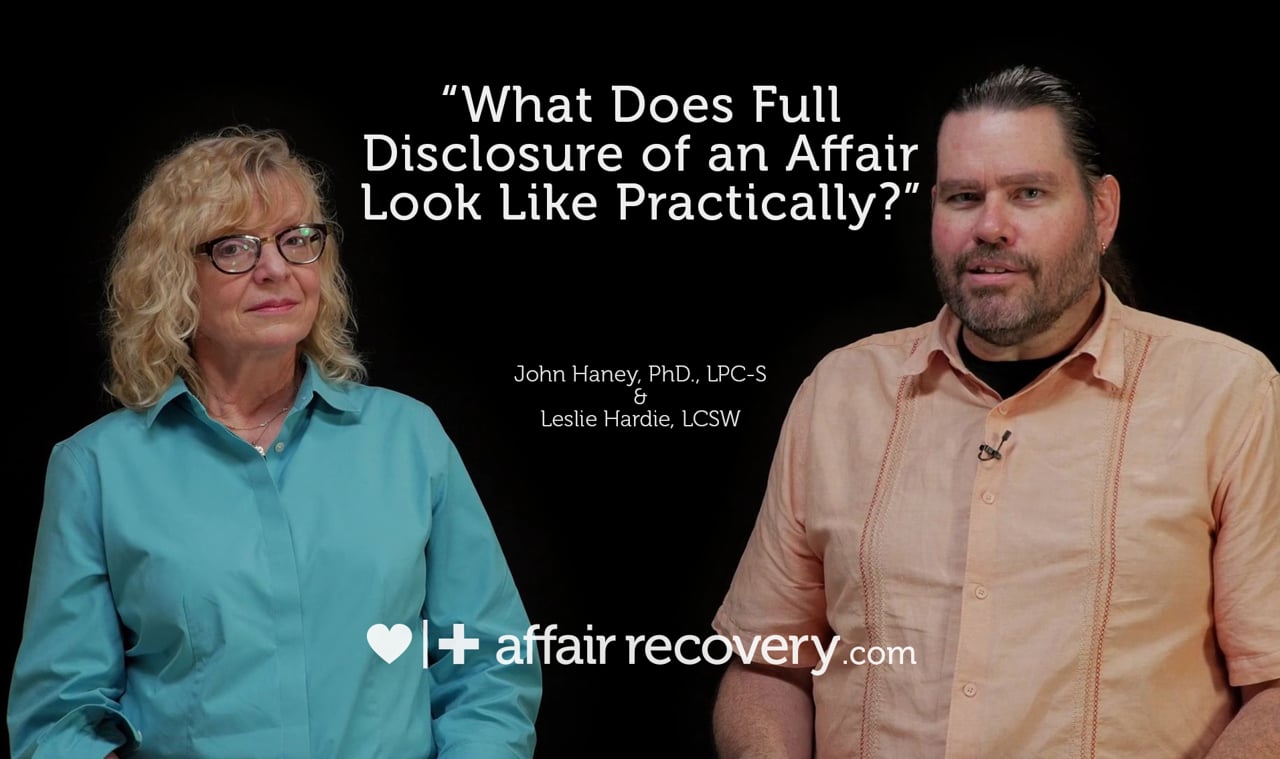
Functioning and participating in everyday life is one of the toughest things for a betrayed spouse to do after discovery of infidelity. The future can seem completely uncertain, reminders and triggers are off the chart, anger continuously stalks them and we feel as if we don't have what it takes to make it. Often times we can also feel alone and painfully desperate, searching for not only answers, but peace of mind. Today I've provided three videos for you to preview from three separate areas of our website: private Harboring Hope Q&A's available only to its participants, Recovery Library members' only Q&A's, and lastly a video from our public video blog.
HH Q&A: What does Full Disclosure of an Affair Look Like Practically?
Recovery Library Q&A: What Are Signs That Someone Might Relapse?
Video Blog: Tools to Stay Focused in Recovery
Despite what your…
Continue reading →
Infidelity and the Midlife Crisis
Samuel discusses a controversial topic: the midlife crisis and infidelity.
Continue reading →
What Happens When the Unfaithful Spouse Tries to Rush Their Spouse to Heal?
Samuel discusses the struggle the betrayed spouse feels internally when rushed to heal or 'get over it.'
Continue reading →
Healing from Infidelity: What Is Recovery Work?
Samuel answers a common question in healing from infidelity.
Continue reading →
One of the Worst Things an Unfaithful Spouse Can Do in Recovery
Samuel shares one of the biggest mistakes an unfaithful spouse can make in recovery.
Continue reading →
Recovery from Infidelity: Unlearning Old Approaches
Samuel discusses ways to break free form old destructive patters in marriage.
Continue reading →
Tools to Stay Focused in Recovery from Infidelity
Samuel shares personal tools he would use in recovery.
Continue reading →
What Story Are You Telling Yourself About Your Spouse?
Samuel shares a significant pitfall couples make in attempting to heal from infidelity.
Continue reading →
A Double Betrayal: My Spouse Cheated with My Best Friend
Samuel shares a particular type of affair called the 'double betrayal' and how to recover from it.
Continue reading →
Forgiving Infidelity: What Forgiveness Is NOT
 Defining forgiveness is difficult at best, especially when it comes to infidelity. I find it more useful to begin by defining what forgiveness is NOT. In recovery, we encourage both individuals and couples to focus on good strong progress, not perfection, even in the area of forgiveness. Each of our courses provide a proven pathway to freeing yourself from bitterness and resentment.
Forgiveness, or forgiving infidelity, is NOT based on the other person’s contrition, sorrow or repentance:
While reconciliation may be based on another’s contrition, sorrow or repentance, forgiveness is a gift you give yourself which sets you free from the hurtful actions of others. It has little to do with the other person because it’s an internal matter. It is an act that releases that person’s hold on you for the wrongs committed against you. To choose not to forgive leaves you forever a victim. Forgiveness takes the power back and creates momentum for your own recovery.
Forgiveness does NOT mean reconciliation:
It is possible to forgive someone and release the resentment and bitterness you have toward them without reconciling. While forgiveness in marriage after infidelity is not based on the other person’s repentance, reconciliation IS most definitely based on their empathy, sorrow, repentance and their ability to be safe. If the person who wounded you does not take personal responsibility for what they’ve done, is not willing to make restitution, and won’t take steps to assure it doesn’t happen again, then reconciliation may not even be wise.
Forgiveness in marriage after betrayal is NOT forgetting:
It would be “Divine” if we were capable of forgetting, but I’m not sure it would be safe. As humans we forgive, but the reminders of what happened remain. To pretend the offense never occurred would minimize the gift of forgiveness. The intrusion of past offenses into our present day reality does not mean we haven’t forgiven. Rather, as humans we tend to forgive and remember. With forgiveness after infidelity there is no longer a need to punish or to extract payment from that person for their offenses against others or us. Forgiveness allows us to leave the wounds of our past and move forward, but we do so with lessons learned from our past.
Forgiveness after an affair is NOT condoning or making light of their behavior:
If it were possible to just excuse what the other person had done, there would be no need for forgiveness. To forgive someone his or her wrongs against you in no way minimizes the magnitude of the offense. The very fact that forgiving infidelity is necessary accentuates the reality that an injury occurred. If the party that injured us fails to see the seriousness of the offense then we feel trivialized and unimportant.
Forgiveness is NOT ignoring what happened:
Far too often people want to skip over the injuries perpetrated against them to avoid looking at the damage. Pretending an offense never occurred places seeds of bitterness in fertile soil. Not until we’ve explored the true and palatable cost can we forgive the debt that is incurred.
Forgiveness is NOT a one-time event, especially when it comes to forgiving infidelity:
Frequently people will think something’s wrong because they continue to struggle with the betrayal committed by their mate. While we may choose to forgive, the consequences of those actions can continue to rock our lives. Each time an additional consequence occurs it also has to be released. Each time you understand more of what happened you still have to deal with the pain of that consequence regardless of whether you forgave them for their actions. Each time an intrusive thought robs your peace it becomes another consequence to deal with and release. The shock waves created by infidelity can continue to roll through time for a number of years, though the amount and intensity will lesson as you heal. Each additional consequence has to be released or resentment and bitterness could take hold. Continuing forgiveness is key to healing after an affair.
Forgiveness does NOT mean permission to go and do the same thing over and over:
If someone were to view forgiveness as permission to repeat the same hurtful actions then that individual isn’t safe for a relationship. They would be someone who takes no responsibility for their actions. Additionally, if a person’s motivation for not repeating an offense is based on your lack of forgiveness, you are put in the place of having to take personal responsibility for their behavior and safety in the relationship for the remainder of the relationship. It's impossible for forgiveness to occur if the extramarital relationship hasn’t ended completely. If you were a merchant and a customer ran up a debt that you chose to write off, it would be impossible to write that debt off if the customer continued to rack up debt despite your efforts. It would be impossible to determine what it would take to write it off.
I hope exploring what forgiveness is NOT, has helped to clarify questions you might have about both what forgiving infidelity is and how to forgive. Betrayal is something others do to you, but bitterness is something you do to yourself. For the sake of healing, I hope that a better understanding of forgiveness allows you the opportunity for personal freedom. It’s important to remember however, that forgiveness is not the same as reconciliation and that it is a process that takes time. While I have a personal bias toward reconciliation I recognize it’s dependent on the actions and attitudes of both parties.
If you're interested in exploring whether reconciliation is even possible, consider attending our in-person EMS Weekend. It will help both of you, better understand what it will take to reconcile and move forward as an individual or as a couple regardless of the state of your marriage. Before you make decisions that will mostly likely change you and your family’s history, please give some thought to finding clarity and peace in your story first.
Defining forgiveness is difficult at best, especially when it comes to infidelity. I find it more useful to begin by defining what forgiveness is NOT. In recovery, we encourage both individuals and couples to focus on good strong progress, not perfection, even in the area of forgiveness. Each of our courses provide a proven pathway to freeing yourself from bitterness and resentment.
Forgiveness, or forgiving infidelity, is NOT based on the other person’s contrition, sorrow or repentance:
While reconciliation may be based on another’s contrition, sorrow or repentance, forgiveness is a gift you give yourself which sets you free from the hurtful actions of others. It has little to do with the other person because it’s an internal matter. It is an act that releases that person’s hold on you for the wrongs committed against you. To choose not to forgive leaves you forever a victim. Forgiveness takes the power back and creates momentum for your own recovery.
Forgiveness does NOT mean reconciliation:
It is possible to forgive someone and release the resentment and bitterness you have toward them without reconciling. While forgiveness in marriage after infidelity is not based on the other person’s repentance, reconciliation IS most definitely based on their empathy, sorrow, repentance and their ability to be safe. If the person who wounded you does not take personal responsibility for what they’ve done, is not willing to make restitution, and won’t take steps to assure it doesn’t happen again, then reconciliation may not even be wise.
Forgiveness in marriage after betrayal is NOT forgetting:
It would be “Divine” if we were capable of forgetting, but I’m not sure it would be safe. As humans we forgive, but the reminders of what happened remain. To pretend the offense never occurred would minimize the gift of forgiveness. The intrusion of past offenses into our present day reality does not mean we haven’t forgiven. Rather, as humans we tend to forgive and remember. With forgiveness after infidelity there is no longer a need to punish or to extract payment from that person for their offenses against others or us. Forgiveness allows us to leave the wounds of our past and move forward, but we do so with lessons learned from our past.
Forgiveness after an affair is NOT condoning or making light of their behavior:
If it were possible to just excuse what the other person had done, there would be no need for forgiveness. To forgive someone his or her wrongs against you in no way minimizes the magnitude of the offense. The very fact that forgiving infidelity is necessary accentuates the reality that an injury occurred. If the party that injured us fails to see the seriousness of the offense then we feel trivialized and unimportant.
Forgiveness is NOT ignoring what happened:
Far too often people want to skip over the injuries perpetrated against them to avoid looking at the damage. Pretending an offense never occurred places seeds of bitterness in fertile soil. Not until we’ve explored the true and palatable cost can we forgive the debt that is incurred.
Forgiveness is NOT a one-time event, especially when it comes to forgiving infidelity:
Frequently people will think something’s wrong because they continue to struggle with the betrayal committed by their mate. While we may choose to forgive, the consequences of those actions can continue to rock our lives. Each time an additional consequence occurs it also has to be released. Each time you understand more of what happened you still have to deal with the pain of that consequence regardless of whether you forgave them for their actions. Each time an intrusive thought robs your peace it becomes another consequence to deal with and release. The shock waves created by infidelity can continue to roll through time for a number of years, though the amount and intensity will lesson as you heal. Each additional consequence has to be released or resentment and bitterness could take hold. Continuing forgiveness is key to healing after an affair.
Forgiveness does NOT mean permission to go and do the same thing over and over:
If someone were to view forgiveness as permission to repeat the same hurtful actions then that individual isn’t safe for a relationship. They would be someone who takes no responsibility for their actions. Additionally, if a person’s motivation for not repeating an offense is based on your lack of forgiveness, you are put in the place of having to take personal responsibility for their behavior and safety in the relationship for the remainder of the relationship. It's impossible for forgiveness to occur if the extramarital relationship hasn’t ended completely. If you were a merchant and a customer ran up a debt that you chose to write off, it would be impossible to write that debt off if the customer continued to rack up debt despite your efforts. It would be impossible to determine what it would take to write it off.
I hope exploring what forgiveness is NOT, has helped to clarify questions you might have about both what forgiving infidelity is and how to forgive. Betrayal is something others do to you, but bitterness is something you do to yourself. For the sake of healing, I hope that a better understanding of forgiveness allows you the opportunity for personal freedom. It’s important to remember however, that forgiveness is not the same as reconciliation and that it is a process that takes time. While I have a personal bias toward reconciliation I recognize it’s dependent on the actions and attitudes of both parties.
If you're interested in exploring whether reconciliation is even possible, consider attending our in-person EMS Weekend. It will help both of you, better understand what it will take to reconcile and move forward as an individual or as a couple regardless of the state of your marriage. Before you make decisions that will mostly likely change you and your family’s history, please give some thought to finding clarity and peace in your story first.
Defining forgiveness is difficult at best, especially when it comes to infidelity. I find it more useful to begin by defining what forgiveness is NOT. In recovery, we encourage both individuals and couples to focus on good strong progress, not perfection, even in the area of forgiveness. Each of our courses provide a proven pathway to freeing yourself from bitterness and resentment.
Forgiveness, or forgiving infidelity, is NOT based on the other person’s contrition, sorrow or repentance:
While reconciliation may be based on another’s contrition, sorrow or repentance, forgiveness is a gift you give yourself which sets you free from the hurtful actions of others. It has little to do with the other person because it’s an internal matter. It is an act that releases that person’s hold on you for the wrongs committed against you. To choose not to forgive leaves you forever a victim…
Continue reading →
Understanding Infidelity and Self Hatred Part 1
Samuel shares poignant information regarding why spouses both cheat and relapse.
Continue reading →
'I Want My Unfaithful Spouse to Suffer': Addressing the Pain of the Betrayed Spouse
Samuel addresses the desire of betrayed spouses to sometimes see their spouse suffer for their choices.
Continue reading →
Is the Pain of the Unfaithful Spouse Valid?
Samuel shares insight into the observations and struggles of the unfaithful spouse.
Continue reading →
Why We Choose Infidelity: A Lack of Self Acceptance
Samuel shares one of the pivotal reasons spouses cheat.
Continue reading →
Don't Fall Prey to the "You-First" Mentality
Today Samuel discusses a major trap unfaithful spouses fall into after disclosure.
Continue reading →