
Getting Outside my Comfort Zone: The Awkward, Beautiful Work of Finding Authentic Friends



After finding some semblance of stabilization and recovery following the revelation of my infidelity, we realized very quickly that we were going to have to leave the bubble we had created to protect ourselves while we healed. We were going to have to enter back into the real world – do tasks, talk to people, maybe even make friends.
Facing the "Yes" Friends and Popping the Bubble
That last one was a doozy for me. First of all, I was never good at making friends to begin with. Second, after D-day, I realized that every single friend I had was what I came to call a “yes” friend. In my pursuit of validation and rationalization (among other things), I had spent my whole teen and adult life surrounding myself with people who thought like I did, saw my problems the way I did, and told me everything I wanted to hear. Immediately after entering into recovery work, I cut ties with all of the friends I had made as an adult, especially all those who knew about my affairs. At the time, I did it because I was desperate to do everything I could to make my husband trust me again, but after a lot of work on myself, I kept those ties severed because I knew by then that they were not the kind of friendships I needed, or even wanted, anymore.
Ending my longest friendship was incredibly difficult, and it took a long time to finally tell her we were going our separate ways. It wasn’t that she was a "yes" friend; rather, I couldn't find a way to become the person I wanted to be while remaining in her life. I had spent years tailoring my identity to be whatever she needed me to be. Developing the sense of self required to break that pattern meant accepting that our connection was no longer healthy for me.
Looking in the Mirror: Who Am I?
As I prepared to step out of my bubble and reenter the world, my mind swirled with questions. Who was this new self? What made a good friend, and how would I find them? More importantly, was I actually showing up as the kind of friend I was looking for? In the past, I wasn’t.
To become a good friend, I had to start with myself. I needed to know who I was so I could be authentic in interactions that went deeper than the weather. Early in recovery, driven to overcome the shame of who I felt I had become, I wrote a list on my bathroom mirror of who God says I am. Looking at it daily, I finally realized that was my true identity. While I might still make choices that deviated from that core, awareness of my motivations would always bring me back to God’s intentional design.
But self-awareness could only take me so far on my own. I had practiced being my true self with my family, but now I had to do it with others. I knew not everyone would be safe, but I needed people who were authentic and brave enough to call me out if they saw me slipping. I didn’t want a lopsided relationship based solely on keeping me in line, though—I wanted an equal partnership of mutual accountability. I wanted to be a friend who could lovingly challenge wrong thinking without judgment, and I needed friends who would reciprocate. They didn't necessarily have to be Christian, but they did need to understand my values so they could tell me when I was falling away from the person I wanted to be.
The Three Dimensions of Community
I once read that a healthy community requires three types of people: those ahead to lift you up, those behind you can lift up, and those beside you to walk the path. I wanted that exact dynamic in my friendships. I looked for someone I admired who could speak into my life from a broader perspective, as well as someone a few steps behind who needed a safe space while they figured things out. Most of all, I craved a peer right beside me—someone to share the trials and victories of deep personal growth as we learned and evolved together. But I knew that equal partner would be the hardest one to find.
Flexing the Relational Muscle
The first place I looked was the environment that felt safest to me: Affair Recovery. Having been through both Hope for Healing and EMS Online, I was deeply familiar with the community. Since few people from my previous groups stayed connected after their courses ended, I figured the best way to anchor myself was to dive into becoming a group leader. I knew it wouldn’t automatically hand me friends, but it tapped perfectly into that "lifting others up" piece. It was a way to continue my own growth and practice authenticity, though I constantly had to remind myself that I wasn’t a savior or a hero. I had to maintain humility and relate to people on a peer level.
And boy, was that the best choice I could have made. It led me to my first real friend—another leader whom I deeply respected and who was further along in her recovery journey. I wanted so badly to be her friend, but I had no idea how to bridge the gap. Asking "Will you be my friend?" like a kindergartener felt way too scary. Fortunately, I had my list of what a healthy friendship required, and top of the list was mutuality. Instead of unloading all my baggage and forcing her into a permanent mentor role, I started intentionally checking in on her. I’d ask how she was doing and if there was anything she wanted to share. I was genuinely interested, but I was also hyper-aware of my own tendencies. Before every interaction, I’d run through my internal checklist of blind spots. My communication was slow, overthought, awkward, and sometimes downright ugly. Yet, she never pushed. I never asked, but I think she knew exactly what I was doing. She had been there; she had the patience to let me figure myself out mid-conversation because she possessed a checklist of her own.
Over time, that relational muscle grew. The internal checks became second nature, and the friendship naturally deepened. Today, she is still my "ahead of me" friend, but we are truly there for each other. Looking back, this was the most pivotal connection of my recovery. It gave me a real-life blueprint for healthy community—teaching me what authenticity looks like, how to call someone out in love, and how to have the bravery to speak up when something feels off. Because of what I learned with her, I finally gained the confidence to reach out to others, build new friendships, and actually keep them healthy.
The Next Frontier: In-Person Friendships
I’d love to tell you I’m a pro now and surrounded by more friends than I can count. That’s not the case. While I now have a few deeply valued friends—women I can truly relate to without fear—the next step is finding local, in-person community. And that is much harder. Learning to navigate friendships with people who aren’t in recovery is a challenge; so many people out there are still hiding behind images and walls, with little desire to be authentic. Ironically, the church is where I want community the most, but it’s also been the hardest place to find it. People are trying so hard to be “good” that they forget to be real. However, I am hopeful. It is a work in progress.
The World Outside the Bubble
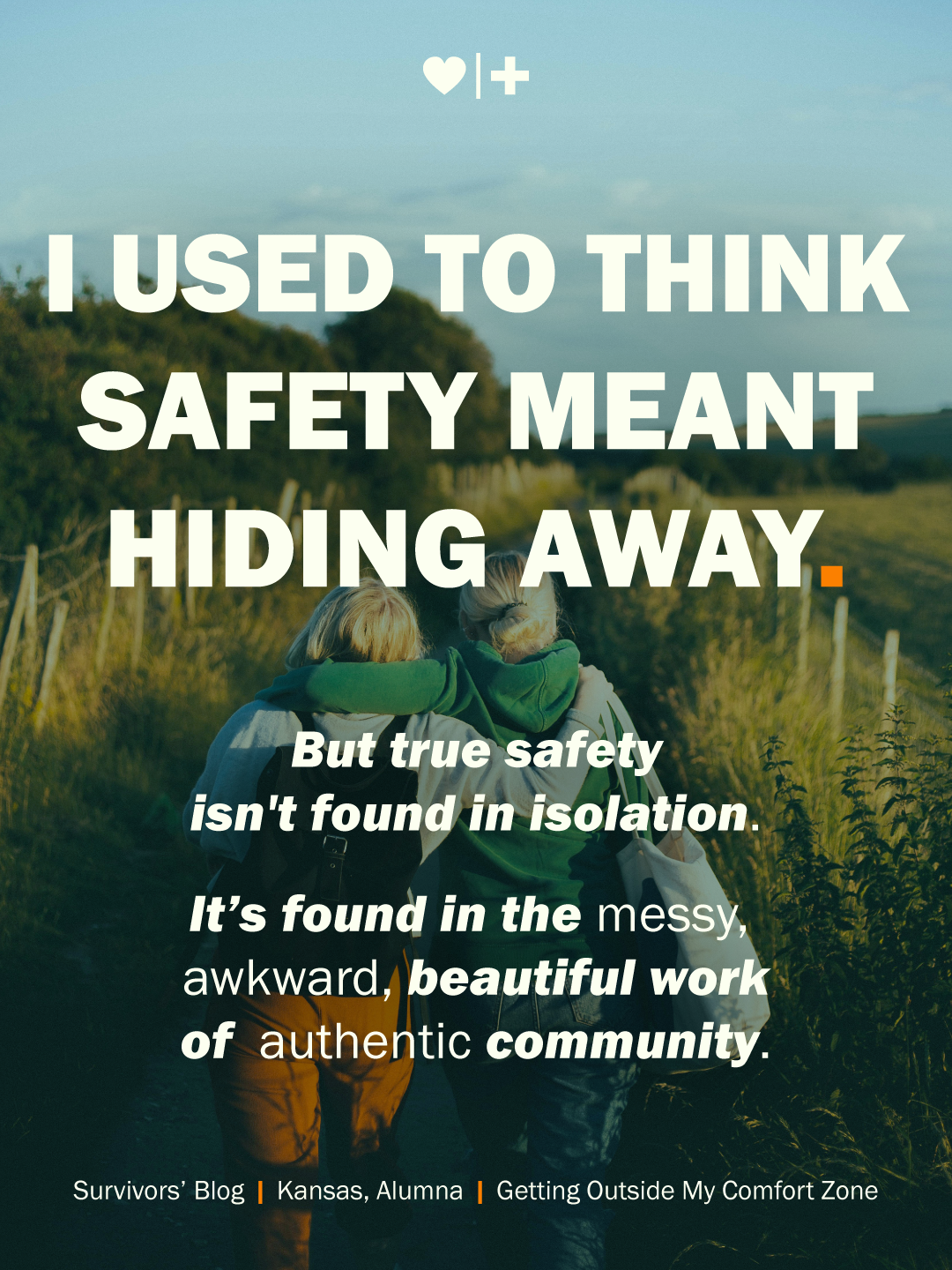
Stepping out of the protective bubble we built after D-day was easily one of the most terrifying things I’ve ever done. I used to think safety meant hiding away, surrounded only by "yes" friends who would never challenge the choices I made. But true safety, I’ve learned, isn't found in isolation—it’s found in the messy, awkward, beautiful work of authentic community.
I am still building my circle, and I am still looking for those peers to walk right beside me in everyday life. But today, I am no longer hiding. I am out in the real world, finally showing up as the friend God intentionally designed me to be, ready for whoever He puts in my path next.
“Sorry to see this [group] ending, but hopefully it is a
new beginning and we can continue in the next phase.
The support of a sisterhood is so valuable.
Thank you for your time and talents, for your
empathy and wisdom, and for your big hearts
for leading this group of women who
want to change for the better.”
- Hope for Healing Participant
What type of affair was it?
Free Surviving Infidelity Bootcamp


Add new comment