Who Are Your Backseat Drivers?
 Most of us who have experienced betrayal have, at least for a season, anger as our front seat driver.
But who is riding in the back seat fueling that angry driver? Fear? Frustration? Betrayal, Sadness? Loneliness?
Once I uncovered loneliness and injustice as two of my backseat driver emotions, I've discovered that loneliness and injustice was part of my childhood when I struggled to be the 'good child' as my parents were trying their best to handle a difficult son, my only sibling.
More damaging than that was my mother's very natural tendency to worry about me. Would I go down the same path as my ne'er-do-well brother? Would I stay out late? Lie and sneak?
Of course, I knew that was not part of my character. Hey—I was the 'good child'. I earned good grades, flew under the radar of the drug culture of my high school. I was not interested. I found those sorts of choices scary, even repugnant. I wanted to live a life of no regrets.
Why didn't my mother know that?
I remember one evening she came after me, already upset, and accused me of planning to do the things my brother did. I went ballistic. So out of character. I NEVER went ballistic. (Good children are seen not heard.) I railed, "How could you possibly think that of me?"
I was shattered. How could my mother, the woman who ostensibly knew me best, accuse me of these things I had not only never done, but would never consider? Why didn't she give me the benefit of the doubt? No…more than that—why didn't she praise me for all the hard work I actually did—all the 'right' choices, all the giving, loving behaviors?
Looking back, I realize she was under tremendous emotional stress with the challenges of parenting my brother. Special classes, principal office and counselor visits, rebelliousness. He was in fact all that. I was not.
My mother was upset about something that had nothing to do with me; just as my husband's choices to betray had nothing to do with me. Both of these human choices, the foibles that led to my personal pain and destruction were about their woundedness. My emotional explosion in that context highlights my sensitivity to unjust criticism. I have a lifelong trigger, if you will, to being accused of intentions I do not have. In my mind, I work too hard at being a good responsible person to be cast in such a negative light. Such aspersions cut me to the core. They break my heart.
And so, the revelation of my husband's years of infidelity–sexual, emotional and financial—quite understandably sunk a dagger into my invested, responsible, loving, giving, hard-working heart. His casting blame on me for not being enough for him–"What did you expect? You didn't have enough sex with me!"—ripped the thin scab off the wound of not-good-enough-ness present from my family of origin. All the criticism poured over me by a mother who felt that that was the way to mold a good citizen (me), was, in an instant, proven 'right'.
At least that is how it felt.
How could a man who had benefitted from all my care, my support, my huge investment in home, children, and him, choose to abandon our marriage? I knew I was more than enough. I knew I was an excellent housekeeper, employee, mother, and wife.
To be told I was not incited volcanic rage (held in check).
This rage did not come out immediately. Oh, no. Good, responsible Christine had to see to the hearts of her adult children who had just been devastated with the news. (Yes, their father told me of his long-term affair in front of them.) It took me many weeks of torrential tears, sleeplessness, agony, and sadness to get to the underlying rage.
I journaled that rage. Pages and pages. I filled notebooks. In moments of isolation at home, I would verbally rage at the imaginary him. I spent months and month venting this powerful, very human reaction to being betrayed. Oh, the injustice of it all!
Until the energy of that injustice lessened.
The sadness is still there. The pain resurfaces sometimes when I am tired, hungry, lonely. The difference is that now I have allowed myself the time to grieve. The anger at the injustice of being betrayed for so long has been vented. Revisiting that anger is less and less powerful.
e-motion= energy in motion
As an adult, I can find healthy ways of coping with, mitigating, and healing my anger. These methods may include, but are not limited to therapy, support groups, 12-step work, safe friends, going to church, prayer, meditation, exercise, gardening, and other fun hobbies such as painting, writing, reading.
These things help me to relieve my loneliness as I heal mostly alone, and thus disarm it from influencing and 'driving' my anger.
I have been put in my own driver's seat toward healing. And I knew I didn't want that seat to be forever occupied by a raging, bitter woman. These four and a half years have been the hardest, most painful of my life. They have also provided opportunity toward the most personal growth.
This life experience has reinforced the truth. I am a good, invested, giving and loving person who has been accused, tried, and treated as someone guilty of something I am not by a person who is wounded by his own life circumstances and has projected them oh-so-painfully onto me.
His inability to see my love in no way diminishes the reality of all the years of caring, giving, support and love that I gave. Hey—I AM that loving person who would no more harm, ignore, or abandon my family than I would fly to the moon using my arms. I gave all I had to give. I lived my life as a loving person.
That is reality.
And the broken accusations and behavior of another—even if that 'other' is my mother or my husband—cannot change that.
Most of us who have experienced betrayal have, at least for a season, anger as our front seat driver.
But who is riding in the back seat fueling that angry driver? Fear? Frustration? Betrayal, Sadness? Loneliness?
Once I uncovered loneliness and injustice as two of my backseat driver emotions, I've discovered that loneliness and injustice was part of my childhood when I struggled to be the 'good child' as my parents were trying their best to handle a difficult son, my only sibling.
More damaging than that was my mother's very natural tendency to worry about me. Would I go down the same path as my ne'er-do-well brother? Would I stay out late? Lie and sneak?
Of course, I knew that was not part of my character. Hey—I was the 'good child'. I earned good grades, flew under the radar of the drug culture of my high school. I was not interested. I found those sorts of choices scary, even repugnant. I wanted to live a life of no regrets.
Why didn't my mother know that?
I remember one evening she came after me, already upset, and accused me of planning to do the things my brother did. I went ballistic. So out of character. I NEVER went ballistic. (Good children are seen not heard.) I railed, "How could you possibly think that of me?"
I was shattered. How could my mother, the woman who ostensibly knew me best, accuse me of these things I had not only never done, but would never consider? Why didn't she give me the benefit of the doubt? No…more than that—why didn't she praise me for all the hard work I actually did—all the 'right' choices, all the giving, loving behaviors?
Looking back, I realize she was under tremendous emotional stress with the challenges of parenting my brother. Special classes, principal office and counselor visits, rebelliousness. He was in fact all that. I was not.
My mother was upset about something that had nothing to do with me; just as my husband's choices to betray had nothing to do with me. Both of these human choices, the foibles that led to my personal pain and destruction were about their woundedness. My emotional explosion in that context highlights my sensitivity to unjust criticism. I have a lifelong trigger, if you will, to being accused of intentions I do not have. In my mind, I work too hard at being a good responsible person to be cast in such a negative light. Such aspersions cut me to the core. They break my heart.
And so, the revelation of my husband's years of infidelity–sexual, emotional and financial—quite understandably sunk a dagger into my invested, responsible, loving, giving, hard-working heart. His casting blame on me for not being enough for him–"What did you expect? You didn't have enough sex with me!"—ripped the thin scab off the wound of not-good-enough-ness present from my family of origin. All the criticism poured over me by a mother who felt that that was the way to mold a good citizen (me), was, in an instant, proven 'right'.
At least that is how it felt.
How could a man who had benefitted from all my care, my support, my huge investment in home, children, and him, choose to abandon our marriage? I knew I was more than enough. I knew I was an excellent housekeeper, employee, mother, and wife.
To be told I was not incited volcanic rage (held in check).
This rage did not come out immediately. Oh, no. Good, responsible Christine had to see to the hearts of her adult children who had just been devastated with the news. (Yes, their father told me of his long-term affair in front of them.) It took me many weeks of torrential tears, sleeplessness, agony, and sadness to get to the underlying rage.
I journaled that rage. Pages and pages. I filled notebooks. In moments of isolation at home, I would verbally rage at the imaginary him. I spent months and month venting this powerful, very human reaction to being betrayed. Oh, the injustice of it all!
Until the energy of that injustice lessened.
The sadness is still there. The pain resurfaces sometimes when I am tired, hungry, lonely. The difference is that now I have allowed myself the time to grieve. The anger at the injustice of being betrayed for so long has been vented. Revisiting that anger is less and less powerful.
e-motion= energy in motion
As an adult, I can find healthy ways of coping with, mitigating, and healing my anger. These methods may include, but are not limited to therapy, support groups, 12-step work, safe friends, going to church, prayer, meditation, exercise, gardening, and other fun hobbies such as painting, writing, reading.
These things help me to relieve my loneliness as I heal mostly alone, and thus disarm it from influencing and 'driving' my anger.
I have been put in my own driver's seat toward healing. And I knew I didn't want that seat to be forever occupied by a raging, bitter woman. These four and a half years have been the hardest, most painful of my life. They have also provided opportunity toward the most personal growth.
This life experience has reinforced the truth. I am a good, invested, giving and loving person who has been accused, tried, and treated as someone guilty of something I am not by a person who is wounded by his own life circumstances and has projected them oh-so-painfully onto me.
His inability to see my love in no way diminishes the reality of all the years of caring, giving, support and love that I gave. Hey—I AM that loving person who would no more harm, ignore, or abandon my family than I would fly to the moon using my arms. I gave all I had to give. I lived my life as a loving person.
That is reality.
And the broken accusations and behavior of another—even if that 'other' is my mother or my husband—cannot change that.
Most of us who have experienced betrayal have, at least for a season, anger as our front seat driver.
But who is riding in the back seat fueling that angry driver? Fear? Frustration? Betrayal, Sadness? Loneliness?
Once I uncovered loneliness and injustice as two of my backseat driver emotions, I've discovered that loneliness and injustice was part of my childhood when I struggled to be the 'good child' as my parents were trying their best to handle a difficult son, my only sibling.
More damaging than that was my mother's very natural tendency to worry about me. Would I go down the same path as my ne'er-do-well brother? Would I stay out late? Lie and sneak?
Of course, I knew that was not part of my character. Hey—I was the 'good child'. I earned good grades, flew under the radar of the drug culture of my high school. I was not interested. I found those sorts of choices…
Continue reading →
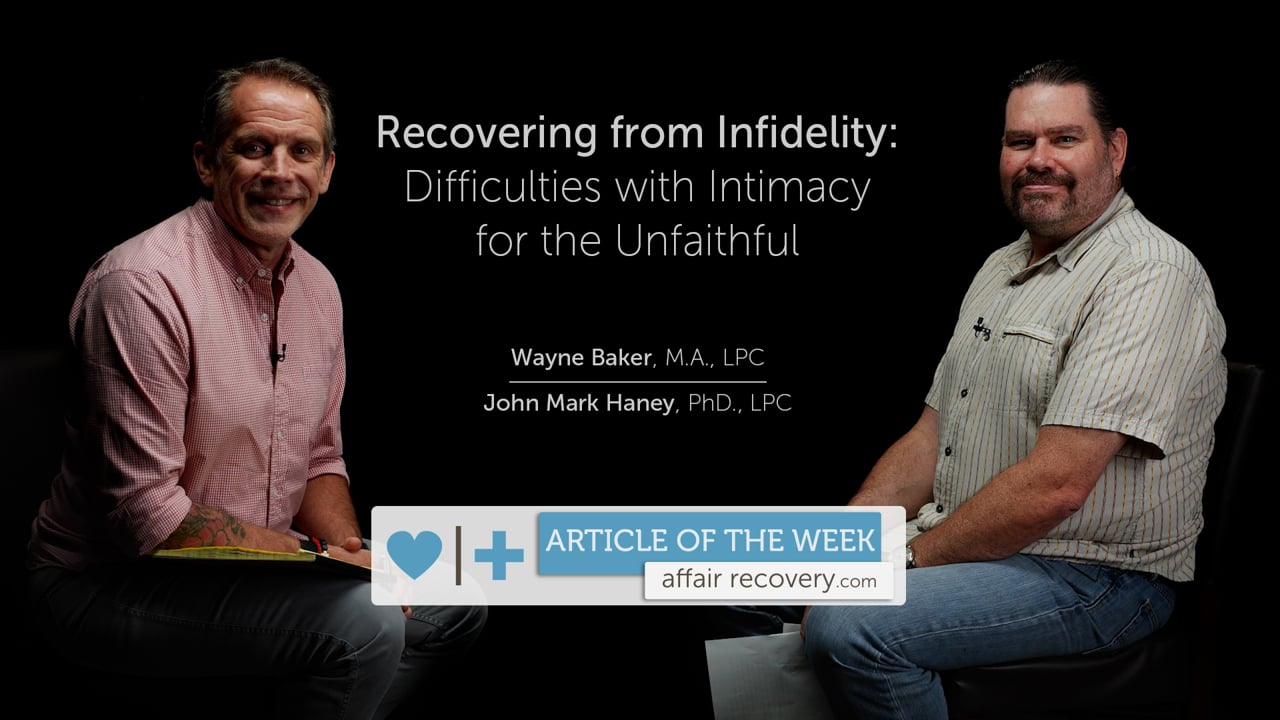
Recovering from Infidelity: Difficulties with Intimacy for the Unfaithful
Recovering from Infidelity: Difficulties with Intimacy
A 3 Part Series
Part 1: Difficulties with Intimacy
Part 2: Difficulties with Intimacy for the Betrayed
Part 3: Difficulties with Intimacy for the Unfaithful
For the couple who is trying to heal from infidelity, the marriage bed can seem like an untouchable desert full of confusion, despair, and uncertainty. The unfaithful spouse can find him or herself guilt-ridden, almost paralyzed by shame and self-hatred, wondering if they should even try to initiate sexual intimacy with their significant other. For several decades, I've walked alongside unfaithful spouses who try to do this right, and I've observed that it often feels chaotic and like they're taking one step forward two steps back.
It doesn't have to be this way. There is a way through,…
Continue reading →
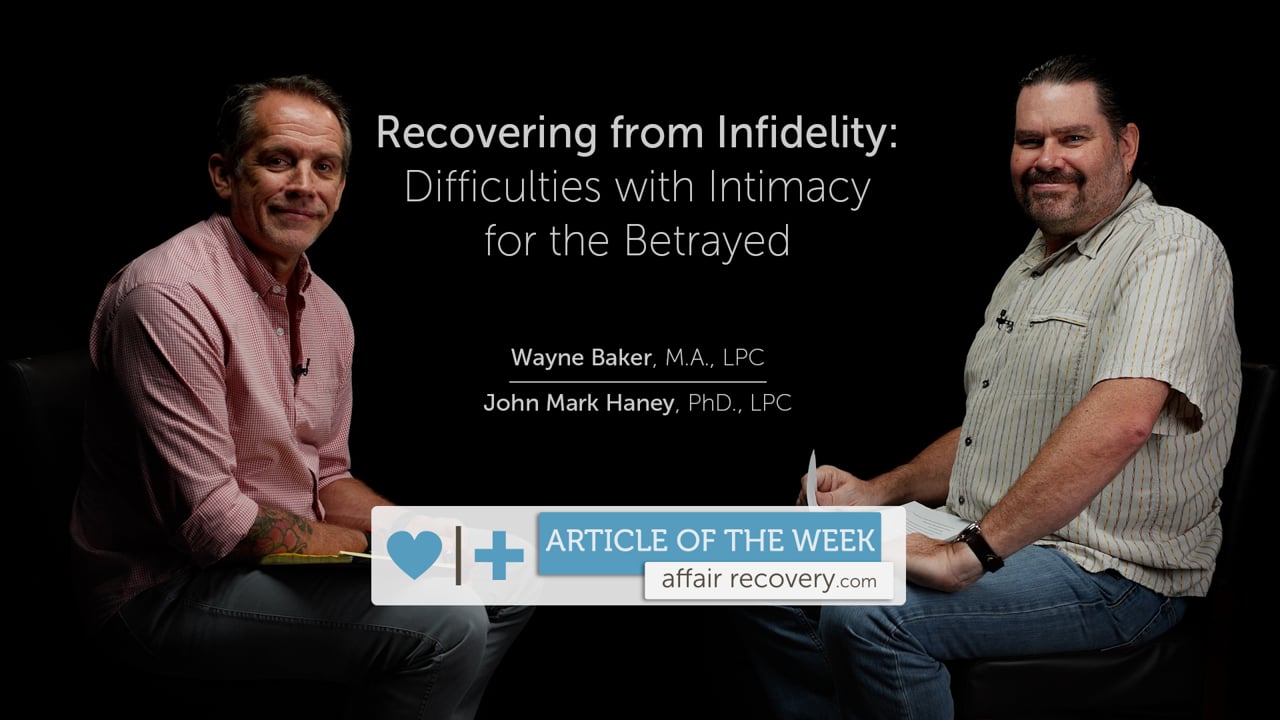
Recovering from Infidelity: Difficulties with Intimacy for the Betrayed
Recovering from Infidelity: Difficulties with Intimacy
A 3 Part Series
Part 1: Difficulties with Intimacy
Part 2: Difficulties with Intimacy for the Betrayed
Part 3: Difficulties with Intimacy for the Unfaithful
For couples devastated by infidelity, the marriage bed can seem like an untouchable subject, if not absolutely taboo. From comparisons to the affair partner to triggers and reminders or unhelpful and incompetent advice, it can seem impossible to find your way through.
Where do you turn when you feel overwhelmed by sadness, grief, and fear as it relates to sexuality and reclaiming the marriage bed? Who can you trust? Whose advice can you seek?
Speaking from experience, I implore you to run to trained professionals who have navigated this road and healed. Run to those who have experienced…
Continue reading →
Hope Rising 2020 Announcement
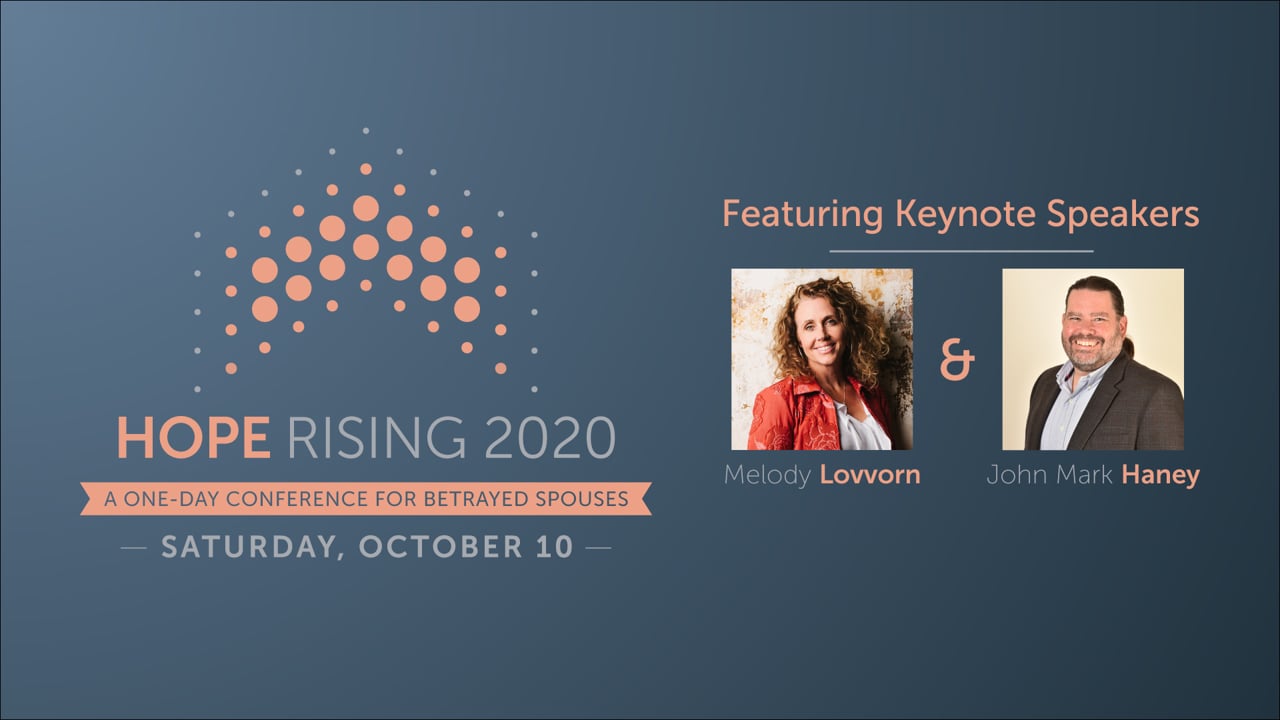
If you're the betrayed spouse, I want to invite you to our 3rd Annual Hope Rising Conference, (now Virtual!) where speakers will speak into your specific situation of infidelity and help guide you through the recovery process. It's not as hopeless as you think.
Sign Up Now!
"It is possible to get to the point where you don't think about this every day. Where you're not triggered, and you can begin to believe the best again."
– Samantha, Hope Rising 2019 Speaker
We are excited to announce that registration is open for our Third Annual Hope Rising Conference! We understand the pain and turmoil that betrayal brings. This one-day, virtual event for betrayed spouses features infidelity experts and survivors who want to share insights, strategies, resources, and hope with YOU.
Here is a special message from our Co…
Continue reading →
Surviving Infidelity Part 2: What Didn’t Work For Unfaithful Spouses
Surviving Infidelity Research: A Two Part Series
Part 1: What Do You Need to Know?
Part 2: Poor Recovery Decisions of Unfaithful Spouses
Hope For Healing provides a supportive non-judgmental environment for unfaithful spouses paired with expert content that can provide life-changing hope, clarity, and healing.
Hope For Healing
In a past survey of Affair Recovery readers, unfaithful spouses identified certain recovery decisions that proved to be unproductive or even harmful.
Here's the question, results and our commentary:
"What was the least productive thing you did after the infidelity came to light?"
27% Withheld information too long from spouse
25% Maintained contact with my affair partner
19% Wanted my spouse to just…
Continue reading →
"Why Do I Do What I Do?" Help for Unfaithful Spouses Who Are Trying to Make Sense out of It All
Samuel interviews author and therapist Eddie Capparucci about sex addiction.
Continue reading →
Loving Your Spouse through the Pain of Infidelity or Addiction
Samuel discusses a necessary tool for those stuck in crisis.
Continue reading →
Surviving Infidelity Part 1: What Do You Need to Know?
Surviving Infidelity Research: A Two Part Series
Part 1: What Do You Need to Know?
Part 2: Poor Recovery Decisions of Unfaithful Spouses
We've seen, time and time again, the important role that discovery plays in recovering from infidelity. Without full disclosure, the betrayed spouse is constantly replaying the story, trying to make sense of everything.
The most common reason for the unfaithful spouse to withhold information is that they fear it will be "too much," that the last detail will be the final straw, or that revealing the whole truth will be too painful. So the unfaithful spouse will deliver "trickle truths," just trickling out information slowly over time.
Unfaithful spouses, hear me when I say that this is absolute torture for your betrayed spouse. Each time they get new information—even a little piece of…
Continue reading →
How We Made It to the Other Side: Overcoming Infidelity
Samuel his friends Hank and Aixa as they share their own story of healing from infidelity.
Continue reading →
Infidelity and Suffering: How to Move Forward in Uncertainty
Samuel discusses suffering, belief systems, and how both partners can heal after disclosure.
Continue reading →
Does Time Heal All Wounds? Healing After An Affair
Have you ever suffered an injury and ignored it? It's embarrassing to admit, but years ago I damaged the soft tissue in my shoulder, and instead of seeking help, I coped, adjusted, and went on with life. I mistakenly believed that if I carefully protected my shoulder, it would heal on its own. Ultimately, I had to accept that my plan didn't work; by the time I sought help, I needed to have surgery.
The old saying "time heals all wounds" isn't necessarily true for shoulder injuries, and it isn’t true for healing after an affair. It's not time that heals all wounds, but rather, it's a matter of how that time is spent.
Postponing Recovery is Costly
While talking to one of our mentor couples, I asked, "In retrospect, what did you not know that you needed to know after the affair was discovered?"
The betrayed spouse…
Continue reading →
Infidelity, Divorce, and the Courage to Keep Going: My Interview with Lisa Arends
Samuel interviews his special guest Lisa Arends to discuss betrayal, divorce, and how to move forward after marital devastation.
Continue reading →
Inconvenienced by the Betrayed's Pain: Help for the Unfaithful Spouse
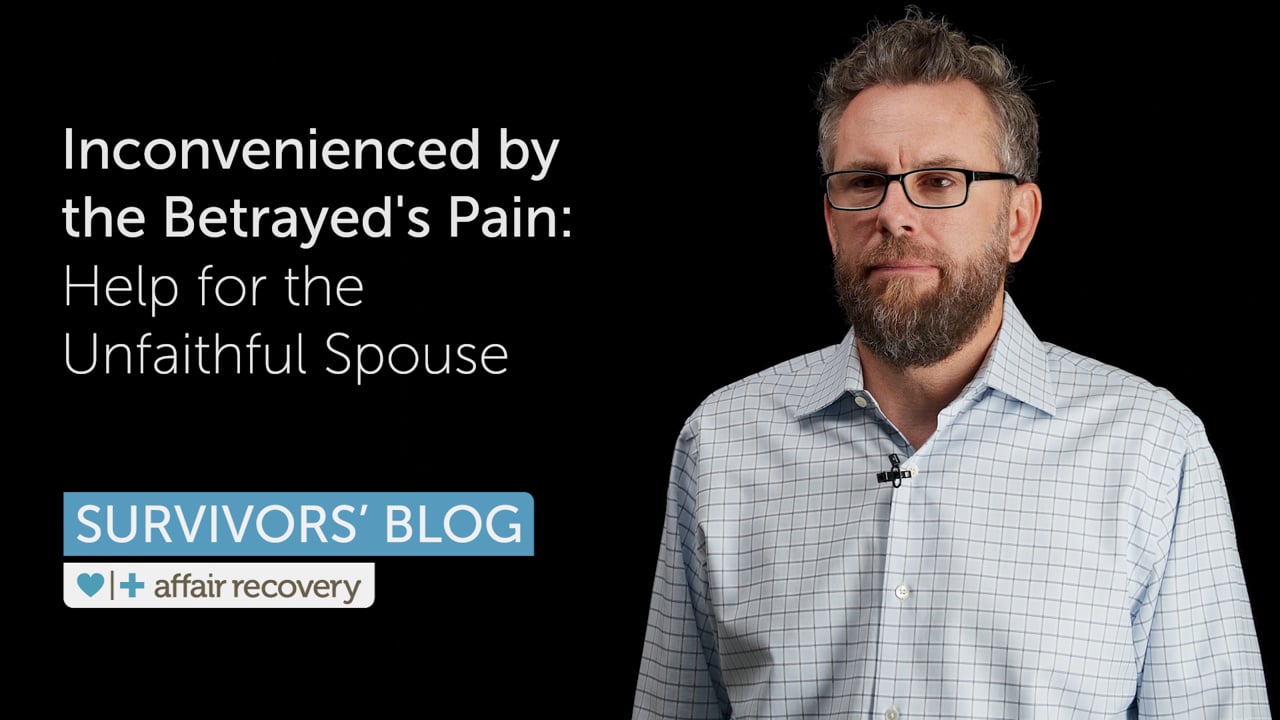
Samuel shares a critical mistake unfaithful spouses make which altogether endanger the marriage.
Continue reading →
Is It Normal?
When clients sit down in my office or at our EMS Weekend Intensives, I know they're looking for someone to make sense of the carnage they are walking through. The hopelessness in their voice is palpable, and their frustration is evident.
Part of why we do what we do is to help those in crisis find some semblance of normalcy, hope, and answers.
The amount of wrong information and bad advice out there for couples in crisis due to infidelity or addiction is not only frustrating but alarming. From inaccurate information to oversimplified steps to heal, a couple or individual can feel as though they are lost in the middle of a barren desert, following a map that leads to nowhere.
Those who participate in any of our Online Courses or EMS Intensives are provided with access to our members-only, private Q&A. Here, our members can post questions that either I or one of our…
Continue reading →
Understanding Why Marriage's Affected by Infidelity Are so Different: Hope for the Future
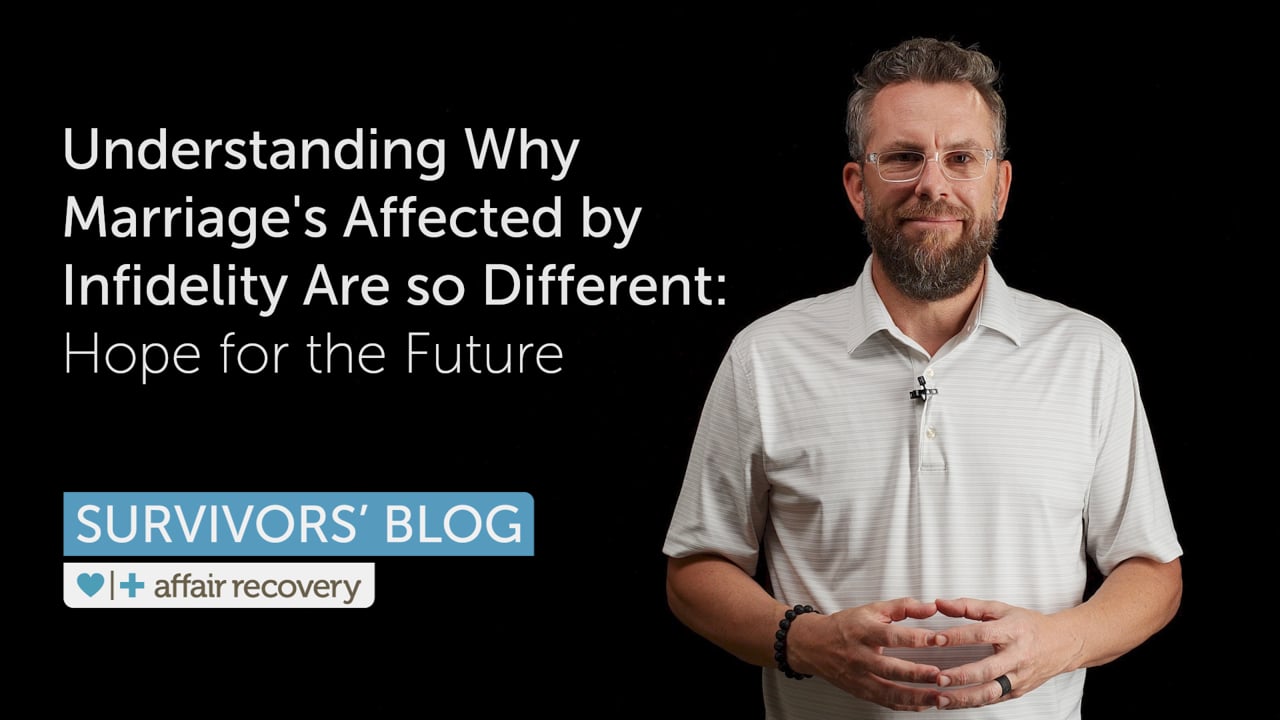
Samuel discusses why a marriage affected by infidelity or addiction can still be fulfilling and rewarding.
Continue reading →
Make Way For Healing
 My friend recently had a terrible burn accident while frying bacon. A stumble and the hot grease splashed across the palm and side of her hand. As an EMT, she knew she must douse the injury in cold water and clean it. And not just clean but rid the area of the skin that was peeled away. The pain was exquisite. A trip to emergency room quickly followed.
"Give me two minutes," the ER doctor pleaded. "You did a good job and the right thing in cleaning your burn, but I have to get the rest of the dead skin and debris so it won't get infected."
My friend knew he was right.
"You've been through childbirth?" He smiled wryly.
He was understating the pain of those two minutes. It seemed more like two years.
What is the metaphor here?
Healing from the worst trauma a person may ever experience–the betrayal of the one person they relied upon to protect them—is painful. It is no more welcome than having a burn deeply cleansed after a horrible accident.
Neither the betrayed nor the unfaithful likely had any notion of the severity of this deep attachment wound. Even the path to healing--the actual experience of dredging up all the ugly details, metabolizing the long-ranging effects on self, relationship and family and then talking it through ad nauseam for months, dealing with the neurologically-based trauma responses, the sleep disturbances–all of it is nothing short of painful. Sometimes very painful. Probably the worst emotional pain most will ever experience.
And it is vital.
To heal, you must make way for the new to grow. Tender, sensitive, unfamiliar new 'skin' will take the place of the damaged. The old marriage is dead, just as sure as those layers of injured skin. In an instant, your world has changed. Without warning you are plunged into deep unrelenting pain. And then to realize that you must attend to the wound through a process that will cause more pain? It is so unfair, so unwanted, never imagined nor courted.
Yet here you are in what has been referred to as hell on earth.
"I wouldn't wish this pain on my worst enemy."
The unfaithful are likely gobsmacked by the intensity of their betrayed spouse's pain, by the depth of their own shame and guilt, by it all.
And now, there is no choice.
If you want to heal. If you want your new life to be strong, it is going to take Herculean courage and tenacity. If you want your marriage to be rebirthed into a new, stronger life, it is going to be painful. Like childbirth, like the scraping of a wound to remove the offending, old, and dangerous.
You can heal. Whether or not you build a new marriage or part ways. Both of you can heal as individuals. If you want the marriage to rise like a phoenix from the ashes, you will have to BOTH come together for what will be a long period of hard discussions. The unfaithful must learn to hold the pain of their betrayed without defensiveness or anger. They must learn to validate their wounded partner's pain, to feel it, to empathize with it, and to repair it by becoming a changed, honest, person of integrity. Without these actions, there will not be relational healing. There will be pretending, limping along, ugly scars and more pain.
The betrayed must learn to open to the unfaithful and gain understanding and compassion for their unhealthy path: choosing what seemed like getting their needs met without the messiness of true intimacy. Infidelity is ultimately an intimacy disorder.
The betrayed must be open to seeing and feeling what it must be like to be so wounded, so lacking in intimacy skills, so unhealthy that everything loved in life is put at risk. This is not easy. It is incredibly painful.
Over and over and over again, both partners, if they want a chance to heal, must make room for entering and feeling the world of their partner. They must acknowledge. They must empathize.
Like my friend's hand, the wound will have to be tended for a long time. There will be pain.
The gauze bandages wound around my friend's hand were cumbersome, unfamiliar, burdensome, time-consuming, and a constant reminder of the burning-hot grease. Even when those bandages came off, that new, tender, pink skin was sensitive. The least brush or bump sent shock waves, triggered her pain receptors.
But the pain can be reduced. How? Empathy.
Slowly, ever so slowly—never fast enough—her body, her self-care, the support and care of her husband and family have brought her through. Slowly, slowly, over time, acknowledgement and care, her wound has healed. Her hand has returned to full function. Because she followed the prescriptive path of healing, her skin is smoother than that of her other hand. Stronger. Even better.
Could she have healed alone? Yes. As a strong, tenacious woman who was willing to take good care of herself, she would have healed. Did the love, support and empathy of her family help? Of course. Is she closer, more intimate with her spouse because of his empathy toward her and his supporting patient love? You bet.
The Unfaithful must choose to move past their shame and guilt and turn toward tending the pain of their wounded Betrayed if they want to heal the relationship. They MUST. It is imperative to relational healing. Both partners have a long path toward healing of self. Like a three-legged stool—self, partner and relationship–without each leg becoming strong, the stool will collapse. There will not be relational healing.
Make way for healing. Do the painful work of scraping away the unhealthy and damaged. Be patient. Healing takes enormous energy, care, and time. However, with these ingredients in place, healing will occur. There will be a stronger, wiser, more resilient 'you' down the road. If BOTH partners do their work and the work of repairing the relational wound, there will be a new "Us," a strong stool that will not topple.
To healing.
My friend recently had a terrible burn accident while frying bacon. A stumble and the hot grease splashed across the palm and side of her hand. As an EMT, she knew she must douse the injury in cold water and clean it. And not just clean but rid the area of the skin that was peeled away. The pain was exquisite. A trip to emergency room quickly followed.
"Give me two minutes," the ER doctor pleaded. "You did a good job and the right thing in cleaning your burn, but I have to get the rest of the dead skin and debris so it won't get infected."
My friend knew he was right.
"You've been through childbirth?" He smiled wryly.
He was understating the pain of those two minutes. It seemed more like two years.
What is the metaphor here?
Healing from the worst trauma a person may ever experience–the betrayal of the one person they relied upon to protect them—is painful. It is no more welcome than having a burn deeply cleansed after a horrible accident.
Neither the betrayed nor the unfaithful likely had any notion of the severity of this deep attachment wound. Even the path to healing--the actual experience of dredging up all the ugly details, metabolizing the long-ranging effects on self, relationship and family and then talking it through ad nauseam for months, dealing with the neurologically-based trauma responses, the sleep disturbances–all of it is nothing short of painful. Sometimes very painful. Probably the worst emotional pain most will ever experience.
And it is vital.
To heal, you must make way for the new to grow. Tender, sensitive, unfamiliar new 'skin' will take the place of the damaged. The old marriage is dead, just as sure as those layers of injured skin. In an instant, your world has changed. Without warning you are plunged into deep unrelenting pain. And then to realize that you must attend to the wound through a process that will cause more pain? It is so unfair, so unwanted, never imagined nor courted.
Yet here you are in what has been referred to as hell on earth.
"I wouldn't wish this pain on my worst enemy."
The unfaithful are likely gobsmacked by the intensity of their betrayed spouse's pain, by the depth of their own shame and guilt, by it all.
And now, there is no choice.
If you want to heal. If you want your new life to be strong, it is going to take Herculean courage and tenacity. If you want your marriage to be rebirthed into a new, stronger life, it is going to be painful. Like childbirth, like the scraping of a wound to remove the offending, old, and dangerous.
You can heal. Whether or not you build a new marriage or part ways. Both of you can heal as individuals. If you want the marriage to rise like a phoenix from the ashes, you will have to BOTH come together for what will be a long period of hard discussions. The unfaithful must learn to hold the pain of their betrayed without defensiveness or anger. They must learn to validate their wounded partner's pain, to feel it, to empathize with it, and to repair it by becoming a changed, honest, person of integrity. Without these actions, there will not be relational healing. There will be pretending, limping along, ugly scars and more pain.
The betrayed must learn to open to the unfaithful and gain understanding and compassion for their unhealthy path: choosing what seemed like getting their needs met without the messiness of true intimacy. Infidelity is ultimately an intimacy disorder.
The betrayed must be open to seeing and feeling what it must be like to be so wounded, so lacking in intimacy skills, so unhealthy that everything loved in life is put at risk. This is not easy. It is incredibly painful.
Over and over and over again, both partners, if they want a chance to heal, must make room for entering and feeling the world of their partner. They must acknowledge. They must empathize.
Like my friend's hand, the wound will have to be tended for a long time. There will be pain.
The gauze bandages wound around my friend's hand were cumbersome, unfamiliar, burdensome, time-consuming, and a constant reminder of the burning-hot grease. Even when those bandages came off, that new, tender, pink skin was sensitive. The least brush or bump sent shock waves, triggered her pain receptors.
But the pain can be reduced. How? Empathy.
Slowly, ever so slowly—never fast enough—her body, her self-care, the support and care of her husband and family have brought her through. Slowly, slowly, over time, acknowledgement and care, her wound has healed. Her hand has returned to full function. Because she followed the prescriptive path of healing, her skin is smoother than that of her other hand. Stronger. Even better.
Could she have healed alone? Yes. As a strong, tenacious woman who was willing to take good care of herself, she would have healed. Did the love, support and empathy of her family help? Of course. Is she closer, more intimate with her spouse because of his empathy toward her and his supporting patient love? You bet.
The Unfaithful must choose to move past their shame and guilt and turn toward tending the pain of their wounded Betrayed if they want to heal the relationship. They MUST. It is imperative to relational healing. Both partners have a long path toward healing of self. Like a three-legged stool—self, partner and relationship–without each leg becoming strong, the stool will collapse. There will not be relational healing.
Make way for healing. Do the painful work of scraping away the unhealthy and damaged. Be patient. Healing takes enormous energy, care, and time. However, with these ingredients in place, healing will occur. There will be a stronger, wiser, more resilient 'you' down the road. If BOTH partners do their work and the work of repairing the relational wound, there will be a new "Us," a strong stool that will not topple.
To healing.
My friend recently had a terrible burn accident while frying bacon. A stumble and the hot grease splashed across the palm and side of her hand. As an EMT, she knew she must douse the injury in cold water and clean it. And not just clean but rid the area of the skin that was peeled away. The pain was exquisite. A trip to emergency room quickly followed.
"Give me two minutes," the ER doctor pleaded. "You did a good job and the right thing in cleaning your burn, but I have to get the rest of the dead skin and debris so it won't get infected."
My friend knew he was right.
"You've been through childbirth?" He smiled wryly.
He was understating the pain of those two minutes. It seemed more like two years.
What is the metaphor here?
Healing from the worst trauma a person may ever experience–the betrayal of the one person they relied upon to protect them—is painful. It is…
Continue reading →
Infidelity or Addiction Requires an Entirely New Playbook: Hope for Those in Crisis Due to Infidelity
Samuel discusses long term vision for couples trying to heal from infidelity and addiction.
Continue reading →
When the Betrayed Finds out What the Unfaithful Has Already Known: The Disclosure Process
Samuel shares insight into a challenging part of the disclosure process.
Continue reading →
Proper Affair Recovery Requires Addressing the Many Layers of Betrayal
Samuel discusses why many mistakes are made in the attempt to heal from infidelity or addiction.
Continue reading →
Interview with an Expert: How Childhood Messages Can Cause Infidelity or Addiction
Samuel interviews best selling author Thomas Gagliano and discusses self sabotage, infidelity and addiction.
Continue reading →
A Pivotal Mistake Couples Make after Disclosure of an Affair: When to Get Help?
Samuel tackles a tough but needed conversation about when to actually get help after infidelity.
Continue reading →
How to Avoid Disconnection after an Affair
Samuel discusses how to build bridges with both unfaithful and betrayed spouses.
Continue reading →
Painting By Number: The Recovery Process
 "You have to trust the process."
I've heard this mantra of sorts from many research-based and well-respected betrayal recovery sources. It is the very backbone and lifeblood of expert help such as what is offered through Affair Recovery's Programs and Courses. It is so hard to do when your heart is shattered into a million fragmented pieces, and all you want, all you need, is to escape the horrendous pain. A pain like no other.
There are many necessary elements of successful recovery. Just as there are many spaces on the canvas of a paint by number. When you look at them up close, they appear to be oddly-shaped islands in a sea of other strange shapes. Or they could be compared to jigsaw puzzle pieces: when observed apart from the others, they are just weird shapes without congruent meaning.
I have found that the road to recovery is much like trying to make sense out of a million little pieces.
"Why do I have to do all this self-care work, reading, therapy, workshops, blogging, podcast listening, etc., etc., etc.? I'm not the one who caused this chaos."
The refrain of every victim of crime or injustice rings down through the eons. We who have been cheated on are, indeed, victims of injustice. We did not ask and do not deserve to be in this position.
But here we are.
We will never have a better past. That leaves the only realistic choice. To move forward. But how?
Acceptance.
Herein lies the wisdom of those who have walked this path before us, those who have dedicated their lives to helping other heal from the same wounds, whose scars remain on their hearts. We who have survived, in this case, intimate betrayal, are the most powerful sources of compassion and empathy. Those who have chosen to make their mess their message and studied the proven process of healing so as to be a guiding light on the pathway forward, are full of supportive hard-earned wisdom and care. Those individuals can help us take each piece of evidence-based wisdom and learn how to fit them into our own situation.
When I am painting by number, I focus on each weirdly-shaped area. I carefully choose the right sized brush as my tool. I follow the directions scrawled on the canvas. I check and recheck to be sure I have the correct color to apply to the correct 'piece'. I carefully apply the paint in patience. I work the canvas like a puzzle. Even when I sit back and look at my progress it can appear distorted. I can get discouraged, especially if I look at the whole too often. It can seem overwhelming, like a weird concoction of colored blobs that will never make sense, let alone create something of beauty.
It has been my experience that if I follow the path—the directions—with patience and persistence, if I suspend judgement, if I am tenacious, careful and committed, I will eventually have a beautiful, painted picture. It has happened every time. Even when the painting still looks odd when viewed up close. Even if the colors were not what I would have chosen or expected. When they come together in the chorus of the finished product, they are surprisingly, rewardingly beautiful. Every time.
So too is this path toward healing from betrayal trauma. If I grow impatient, or cannot see how this mess will ever come together into a semblance of a new beautiful life, I remind myself of my painting. I remind myself of all the thousands of couples who have walked through the valley of the death of their marriage from infidelity. (For, no matter if you remain together or split up, that pre-disclosure marriage is dead. No way to put the genie of innocence back in that bottle. You wouldn't want the disfunction of that marriage anyway. It is gone, done, passed.)
It is up to each of us–unfaithful and betrayed–to commit to the process, work with diligent intention and consummate patience toward that day when we can stand back and look at our new life and smile. We can make something new, something never seen by us before, something we could not have ever imagined—a good, new life. Contentment. Serenity.
Together or apart, we can heal and become whole.
"You have to trust the process."
I've heard this mantra of sorts from many research-based and well-respected betrayal recovery sources. It is the very backbone and lifeblood of expert help such as what is offered through Affair Recovery's Programs and Courses. It is so hard to do when your heart is shattered into a million fragmented pieces, and all you want, all you need, is to escape the horrendous pain. A pain like no other.
There are many necessary elements of successful recovery. Just as there are many spaces on the canvas of a paint by number. When you look at them up close, they appear to be oddly-shaped islands in a sea of other strange shapes. Or they could be compared to jigsaw puzzle pieces: when observed apart from the others, they are just weird shapes without congruent meaning.
I have found that the road to recovery is much like trying to make sense out of a million little pieces.
"Why do I have to do all this self-care work, reading, therapy, workshops, blogging, podcast listening, etc., etc., etc.? I'm not the one who caused this chaos."
The refrain of every victim of crime or injustice rings down through the eons. We who have been cheated on are, indeed, victims of injustice. We did not ask and do not deserve to be in this position.
But here we are.
We will never have a better past. That leaves the only realistic choice. To move forward. But how?
Acceptance.
Herein lies the wisdom of those who have walked this path before us, those who have dedicated their lives to helping other heal from the same wounds, whose scars remain on their hearts. We who have survived, in this case, intimate betrayal, are the most powerful sources of compassion and empathy. Those who have chosen to make their mess their message and studied the proven process of healing so as to be a guiding light on the pathway forward, are full of supportive hard-earned wisdom and care. Those individuals can help us take each piece of evidence-based wisdom and learn how to fit them into our own situation.
When I am painting by number, I focus on each weirdly-shaped area. I carefully choose the right sized brush as my tool. I follow the directions scrawled on the canvas. I check and recheck to be sure I have the correct color to apply to the correct 'piece'. I carefully apply the paint in patience. I work the canvas like a puzzle. Even when I sit back and look at my progress it can appear distorted. I can get discouraged, especially if I look at the whole too often. It can seem overwhelming, like a weird concoction of colored blobs that will never make sense, let alone create something of beauty.
It has been my experience that if I follow the path—the directions—with patience and persistence, if I suspend judgement, if I am tenacious, careful and committed, I will eventually have a beautiful, painted picture. It has happened every time. Even when the painting still looks odd when viewed up close. Even if the colors were not what I would have chosen or expected. When they come together in the chorus of the finished product, they are surprisingly, rewardingly beautiful. Every time.
So too is this path toward healing from betrayal trauma. If I grow impatient, or cannot see how this mess will ever come together into a semblance of a new beautiful life, I remind myself of my painting. I remind myself of all the thousands of couples who have walked through the valley of the death of their marriage from infidelity. (For, no matter if you remain together or split up, that pre-disclosure marriage is dead. No way to put the genie of innocence back in that bottle. You wouldn't want the disfunction of that marriage anyway. It is gone, done, passed.)
It is up to each of us–unfaithful and betrayed–to commit to the process, work with diligent intention and consummate patience toward that day when we can stand back and look at our new life and smile. We can make something new, something never seen by us before, something we could not have ever imagined—a good, new life. Contentment. Serenity.
Together or apart, we can heal and become whole.
"You have to trust the process."
I've heard this mantra of sorts from many research-based and well-respected betrayal recovery sources. It is the very backbone and lifeblood of expert help such as what is offered through Affair Recovery's Programs and Courses. It is so hard to do when your heart is shattered into a million fragmented pieces, and all you want, all you need, is to escape the horrendous pain. A pain like no other.
There are many necessary elements of successful recovery. Just as there are many spaces on the canvas of a paint by number. When you look at them up close, they appear to be oddly-shaped islands in a sea of other strange shapes. Or they could be compared to jigsaw puzzle pieces: when observed apart from the others, they are just weird shapes without congruent meaning.
I have found that the road to recovery is much like trying to make sense out of…
Continue reading →
Minimizing Chaos & Hopelessness: Don't Make Your Own Affair Recovery Worse by Making This Mistake
Samuel discusses one of the worst mistakes he made in his own recovery early on.
Continue reading →
"I Was Living in Denial" - An Interview With a Betrayed Male Spouse
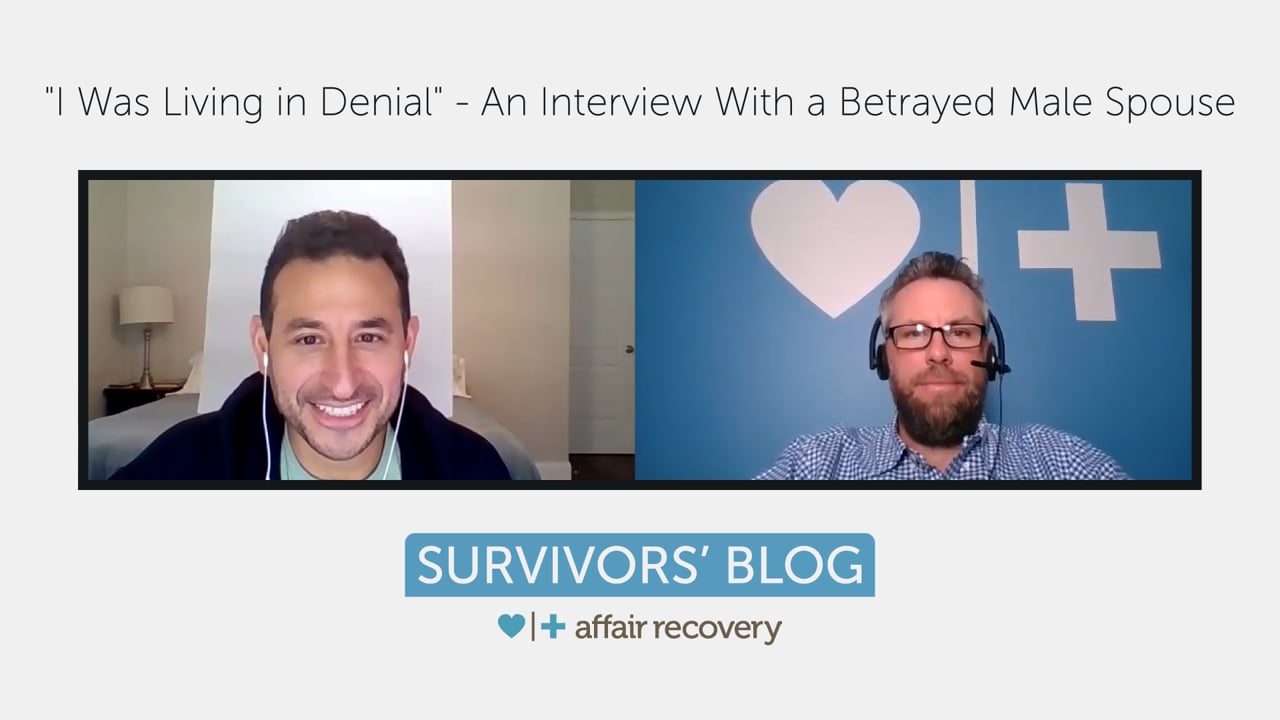
Samuel interviews a betrayed male spouse who shares his journey of overcoming denial and comparison.
Continue reading →
What If Your Betrayed Spouse Is Testing You? Tips on Surviving Infidelity after Disclosure
Samuel provides help for those who feel as though their betrayed spouse is testing them.
Continue reading →
Infidelity and Discovery: Does It Matter If the Unfaithful Spouse Came Clean on Their Own or Was Caught?
Samuel answers a question many betrayed spouse have asked themselves regarding the future of their relationship after infidelity is discovered.
Continue reading →
One of the Main Reasons Betrayed Spouses Can Feel Angry, Isolated, and Hopeless during Counseling
Samuel shares insight into one of the biggest mistakes made when helping betrayed spouses.
Continue reading →