
Is My Spouse a Narcissist?
Is my spouse a narcissist?
It's a valid question.
After a longstanding pattern (sometimes years) of acting-out behavior with affairs, pornography, and sexual encounters, this is a normal question for any betrayed partner to be asking.
On occasion, I have been asked directly from someone who has had an affair, "Am I a narcissist?"
Give yourself the space to heal within a supportive, non-judgmental community with Hope for Healing.
Learn More | Hope For Healing!
Unfortunately, there is no DNA sample or blood test that can give you an answer to this question. Even the most qualified psychologists and therapists can weigh in with their opinions, yet they are not the ones who live the life you live and experience what you do day after day.
Most likely, if you are asking this question,…
Continue reading →
How to Get Your Mate to Cooperate
What does a betrayed spouse do if their wayward spouse is unwilling to take steps toward healing? What if they use intimidation when you try to bring something up?
Whether it's trying to get them to end the affair, to be honest, to talk, to see a therapist, or maybe to attend an EMS Weekend, that refusal to take action, that lack of concern, that unwillingness to take responsibility leaves the betrayed partner feeling insignificant, powerless, helpless, hopeless, out of control, and disrespected.
But there is something that the betrayed spouse can do.
The betrayed spouse needs to tell their partner what they need to feel safe and to begin to recover. They need to set boundaries and let their partner know what's going to happen if they refuse. Remember, the wayward spouse is free to say, "No" when their spouse asks for something, but the…
Continue reading →
A Discussion on Anger, Boundaries and Regrets After Infidelity
Recently, I shared a few of our most dynamic and engaging Expert Q&A videos from our Recovery Library. Personally, I love this feature of our Affair Recovery courses. As current course participants and active Group Leaders work through the weekly curriculum, the Expert Q&A feature allows them to ask Wayne, John, Leslie and myself their unique questions on infidelity. It helps us support and guide you on a deeper, more individual level. Whether you're enrolled in EMS Weekend, EMS Online, Harboring Hope or Hope for Healing, you're invited to send us your questions.
Today, I'd like to share some more of our powerful Expert Q&A videos. In the first two, I share tactics for setting healthy boundaries and releasing regrets. In the third video, Wayne discusses how to process anger and rage. No matter which stage you're at in your recovery, these strategies can be extremely beneficial as…
Continue reading →
Factors Affecting Women’s Sexuality with Laurie Bryson, M.A. & LPC
Transcript:
Rick:
When it comes to sexuality, what do you see as one of the biggest barriers or hurdles women face in knowing and enjoying their sexuality?
Laurie:
I think there's a lot, because it's so complex. Humans are complex. Women are complex.
I think fundamentally, there is a mixed message of who we are and what we are supposed to do. We might face challenges that make it hard to understand that there isn't a "right" or "perfect" way. Rather, we get to just "be." Exploring our self-expression, including our sexuality, can be liberating. But because of either what's happened to us or what's happened in our marriage, there's this damage that's been done and we struggle. We feel guilty. We feel responsible.
I see one of the issues as the battle within the woman. They work really hard. They are…
Continue reading →
What are the 5 simple and proven steps that will protect your marriage?
What's the value of your marriage? You might think it's pretty low right now if you are struggling through the aftermath of infidelity, but give this some legitimate thought. What's the value of your marriage?
I have a friend who says you can always determine what's important to people by looking at their checking account to see how they spend their money. What percentage of your income is allocated to your relationship? What about your energy withdrawals? What would that say about the importance of your marriage?
Another way to assess value is by time invested. Regrettably, most people probably spend more time planning vacations or their financial future than they do planning for and caring for their marital health and longevity.
Yet another way to assess what you value is to consider what you protect. You don't leave…
Continue reading →
Reclaiming Dignity and Worth as a Woman with Laurie Bryson, M.A. & LPC
Transcription:
Laurie:
Many times during EMS Weekend, you and I get to lead groups of women, whether it's wayward or betrayed. You have a way of getting an important message to these women. Men need to hear this too. What is the message that you tell women on one of these weekends?
Cover more ground faster with the life-changing experience of EMS Weekend for couples.
Learn More | EMS Weekend
Rick:
I don't know that I always say it the same, but first, what you did in no way defines you, not in the least. Nothing you did makes you better than anyone else. Nothing you did makes you worse than anyone else. You have immense dignity. You need to begin to see yourself rightly, because as long as you see yourself as someone who's an idiot or a fool, you will be living in a lie. Recovery is beginning to…
Continue reading →
How to Find Answers
Has a lack of knowing what to do ever made things worse? You can bet I've found that to be true. For instance, when I was a kid, a few close friends and I decided to go cliff jumping in the dark of the night. Our plan was birthed from watching Butch Cassidy and the Sundance Kid. For some strange reason, we thought the excitement would be intensified if we leapt off the cliff in the dead of night. Can you imagine the rush from jumping off a 30-foot cliff not knowing when you'd hit the water? As you can guess, we failed to consider the ramifications of our night jump!
Swimming in the Dark
Hitting the water from 30 feet left me totally disoriented. In the dark, I had no way of telling if I was swimming up, down, or sideways, making it hard to find my way back to the surface. I was in a pickle. After…
Continue reading →
The Process of Healing from Infidelity
As a psychotherapist, I've witnessed the devastating impact of infidelity on individuals, couples, families, and extended relationships. The betrayal can shatter relational safety, trust, evoke intense emotional pain, and disrupt the foundation on which a relationship is built. Amidst this turmoil, there is a path to healing and growth. One crucial lesson I've learned in guiding countless individuals and couples through this process is the importance of going slow in recovery. Today, I want to share why embracing patience is not only necessary, but also transformative in the tumultuous journey through infidelity.
Get a plan for healing by joining EMS Online. This course is comprised of expert methodology honed from decades of experience exclusively in the field of infidelity to better serve couples as they address the betrayal, reconnect as…
Continue reading →
Is There Hope After Infidelity?
The only question we hear more often than, "Why?" is, "Now what?" The journey following infidelity can feel unbearable. We know how difficult it is to find a safe place where you can get help with your delicate emotions. The following is a letter I received from a recent EMS Weekend participant. I encourage you to read it all the way through. This letter was written by a betrayed man and shares his journey from disclosure to attending EMS Weekend to what life is like now. I receive letters like this from time to time and I consider them special gifts. I hope you'll draw the same hope and encouragement from the words of this betrayed spouse.
- Rick
Cover more ground faster with the life-changing experience of EMS Weekend for couples.
Learn More | EMS Weekend
A Participant's EMS Weekend Experience:
…
Continue reading →
You Are Not Alone. Please Join Us.
Four years ago, I discovered my husband wasn’t who I thought he was. When he left the house, he didn’t secretly fight crime or possess any cool superpowers. Instead, he had lived a double life for over a decade.
I heard my parent’s generation speak about where they were when they learned that President Kennedy had been shot. Everyone remembers where they were when the news broke about the first plane crashing into the Twin Towers.
When the D-day grenade went off in my life, I was sitting alone in my car in the parking lot of Costco. I could hear everything and nothing all at once. An internal dialogue started to surface within minutes and it wasn’t pretty. I was not only preparing to wage a war against my husband; I waged a war against myself over the rage I felt for not doing everything to prove the infidelity sooner, even though I eventually did.
I remember…
Continue reading →
Affair Partners: Eight Reasons Not to Confront Them
Last week, while I was running an errand, I happened to run into one of our online course group leaders. We began to discuss one of my recent articles. I'm sure the tellers had their antennas tuned all the way up since we were discussing infidelity and different ways to respond to it!
It was a fascinating conversation and one that included, "What do you say to someone who wants to confront the affair partner?"
Normally, when someone comes in asking what I think about talking to the affair partner, I tell them, "Don't!" Rarely have I seen any benefit to it. In fact, I've witnessed a great deal of harm coming out of such conversations.
What is the driving force behind the compulsion to speak to or confront the affair partner? Typically, it's to feel better, to take away a bit of our pain, or to find answers we can't seem…
Continue reading →
Why This Hurts So Much...
Below is information taken directly from our Harboring Hope coursework.1
We hope it provides an example of the type of recovery work betrayed spouses do while they pursue healing.
Our society does not deal well with grief. It is the normal reaction to loss, but because our culture does not handle grief well, you may have never learned to deal with it. You may have unresolved grief from earlier losses that is compounded as you deal with this new tragic situation. It's important to realize that it is normal to feel intense grief after betrayal. Betrayal is loss. As a matter of fact, it is actually a whole list of losses.
Recognizing the losses associated with infidelity and giving yourself permission and ample time to grieve those losses are both critical to a successful recovery. This is true whether there…
Continue reading →
When Anxiety Takes Over: Lessons Learned from Inside Out 2
Melissa here. I wanted to take a second to share a moment I had this week, from watching the new movie Inside Out 2. For those of you who may have missed the first Inside Out movie, it's an animated depiction of a young girl, Riley, and her journey navigating her emotions, Joy, Anger, Sadness, Disgust and Fear.
In this second movie, Riley turns 13, hits the ever painful stage of puberty, and we get introduced to her new emotions: Anxiety, Embarrassment, Envy, Boredom, with an occasional visit by the emotion, Nostalgia, who simply wishes for the good old days. I know many of you wish for that, too. You wish for the good old days before, like me, you either blew up your life by your actions or someone else blew it up for you.
Full disclosure, I've now seen the movie three times. I admit, the first time I just simply wanted to be entertained. It was good to have a…
Continue reading →
What Works in Healing Infidelity?
Start the Survey:
Betrayed
Wayward
On February 26, 2010, Peggy Vaughan changed my life. Her email began with, "You may have seen these pages on my website, but if not, you might like to see that we see the issue very much alike." Peggy's book, The Monogamy Myth: A Personal Handbook for Recovering from Affairs*, was first published in 1989 and rocked the therapy world when she promoted the concept that the secrets of infidelity needed to be brought to light and processed rather than swept under the rug. Initially, that concept was strongly resisted, but as time went on, therapists begin to understand that the damage of holding this kind of secret for a lifetime was massively detrimental.
In 2002, the, "Help for Therapists (and Their Clients) in Dealing with Affairs," survey was conducted and published by…
Continue reading →
Romanticism: Don't Believe the Lie
I don't know if you've ever had the pleasure of watching the movie, The Princess Bride, but it is one of my favorite movies. There is nothing better than watching a movie about "true love." The Princess Bride is a story of how Westley and Buttercup overcome adversity for the sake of "true love" in order to be united in a blissful union. In one of my favorite scenes, Westley heads off to storm the castle to rescue his beloved Buttercup. Miracle Max and his wife, Valerie, yell after him,
"Have fun storming the castle boys!"
She then turns to her husband and asks, "Do you think it will work?"
"It would take a miracle," Miracle Max replies.
And so it seems with recovery after infidelity — our souls resonate with the theme expressed in the movie. We long to experience what Westley and Buttercup portray. We…
Continue reading →
Songs for the Soul | Freeflowing Finale
Join Rodney and Angela for an uncut heartfelt, free-flowing finale of Season 2. In this special episode, they extend their deep gratitude to everyone who made this journey possible: the dedicated crew, the supportive audience, and last but not least, each other. Reflecting on their growth and lessons learned over the past two seasons, they revisit the core of “Songs For The Soul” found in Colossians 3:16.
“Let the message of Christ dwell among you richly as you teach and admonish one another with all wisdom through psalms, hymns, and songs from the Spirit,
singing to God with gratitude in your hearts”
They encourage you to use music as a pathway to experience God’s presence. They highlight the truth and revelation found in His word. Emphasizing how singing His word helps with memorization, meditation, and manifestation, ultimately leading to ministering to others…
Continue reading →
Is Forgiveness Really Possible?
Join other betrayed mates on the path to healing with our life-changing Harboring Hope online course and start a better, brighter chapter.
Learn More | Harboring Hope
Several years ago, my friend, John, told me about a man who was struggling with forgiveness.
This man's wife had taken the two youngest of their four daughters to a friend's birthday party. Halfway through the birthday party, she received a call from their two teenage daughters saying they needed to be picked up from a high-school party that was getting out of hand. Wanting to get them out of a bad situation, she grabbed the two younger girls, loaded them into the car, and hurried over to get her older girls. She didn't waste any time on the road since she knew her teen girls would be standing at the curb, waiting for her to arrive. She was in the…
Continue reading →
You HAVE to Be Kidding!?
Hello, my name is Candace.
I was scrolling through Instagram a few days ago, and I saw this quote that said, “I feel like I’m in Season 5 of my life, and the writers are just making ridiculous stuff up to keep it interesting.” It made me think of a few random things that happened during my first season of recovery that were so poorly timed that it was almost funny.
In this post, I will share some of those “You HAVE TO BE KIDDING!?” moments with you, and then close with a pro tip that continues to help me put my drama and trauma into perspective.
The first one was sooo bad it made me feel like I might be on some Totally Hidden Video or "Punked" type show. Allow me to set the scene: When my husband and I got married in early 1999, digital photography and videography were newly available, but totally out of our budget. We might have been the very last couple to…
Continue reading →
Pimping Tenderness & Grooming Behaviors
Years ago, John entered my office requesting help for his dilemma: "Women are always coming on to me," he began, "and my wife is really upset about it. What can I do?"
Puzzled, I asked him to give me examples. I assured him I was better looking than him and didn't have the same problem. I said, "There must be something more going on."
John said, "Well, one woman came into my office today, kicked off her shoes, came behind my desk and began to give me a back rub."
"Really?" I replied, "Give me another example." "Well at the little league game on Saturday, I was sitting in the stands watching my son play when a woman came up and sat beside me. She gave me a great big hug and said she was counting the hours until she saw me at the game."
"Incredible," I responded, "I've been to a lot of little league games and I've never had that…
Continue reading →
Hope Rising 2024 Live Stream Feed
Times are in Central Time (GMT-5:00)
1-888-527-2367 | [email protected] | #hoperising
LUNCH DETAILS
Women & Men Lunch Small Groups
12:10pm - 1:10pm CT
No spouses please. The Women's Lunch Small Groups are for women only and vice versa for the Men's.
WOMEN'S LUNCH GROUPS
MEN'S LUNCH GROUPS
Lunch Discussion Questions
We recommend that someone volunteer to be the group facilitator and lead the discussion.
Your group may decide to have the facilitator call on individuals to share. You could also go in
alphabetical order. Your group might also choose to spend more or less time on any given
question. This group is for YOU, so make it your own!
Share your first name and how long since discovery/disclosure.
In two minutes or less, share why you are joining the Hope Rising conference this year.
What is something from the morning sessions that inspires you or gives you hope?
What have you done that helped you get through an intrusive thought, trigger, or reminder?
What have you learned about yourself during the recovery process?
What is something you want to start doing that you're not currently doing?
How will you continue to find support and seek healing after this conference?
Important Note: If you would like to share any contact information, you may do so now. In order to maintain confidentiality, Affair Recovery will not be able to give out personal or contact information.
PROGRAM
Presentation Notes, Speaker Bios, and Agenda can all be found here!
View Program
(printable)
AGENDA
8:45 Livestream Starts
9:00am Session One
Leslie Hardie - Managing Intrusive Thoughts, Triggers, & Reminders
Jeremy - The Power of Healing Moments
Break
10:35am Session Two
Job & Julie Lopez - Brain Science and Betrayal
JR - Emotions and Curiosity
Jenn Howie - Help! I've Gone Missing!
Lunch
12:05am Lunch Discussion Groups over Zoom
Break
1:20pm Session Three
Candace - A Lawyer, a Priest, and an Accountant
Matt - The Man's Journey
Brad & Kristen Warren - Overcoming Betrayal from Sexual Addiction
Break
2:50pm Session Four
Rachel - Overcoming Betrayal Trauma's Physical Effects
Leslie Hardie & Dr. John Mark Haney - Live Q&A Session with Harboring Hope Co-Authors
Dr. John Haney - Healing Your Sexual Self After Betrayal
Harboring Hope Online Course
Join The Notification List
Learn About Harboring Hope
This course is a lifeline for betrayed spouses. Authored by Leslie Hardie LCSW and Dr. John Haney PhD LPC-s, it sells out very quickly each month so join the email notification list, so you don't miss out when registration opens!
Learn About Harboring Hope
`
Donate To The Scholarship Program
Help us raise funds for those who can't afford to get help!
Donate Here
SPEAKERS
 Leslie Hardie
Keynote Speaker, LCSW, Co-Author of Harboring Hope
Managing Intrusive Thoughts, Triggers, & Reminders
After discovering your partner's infidelity, the onslaught of triggers and reminders is overwhelming. Unwelcome intrusive thoughts seemingly come out of nowhere and hijack one's mind and emotions. It is hard to live life - sleeping and eating are elusive, and daily functioning feels largely impossible. Learn more about yourself and how to manage some of the biggest mental and emotional challenges on this healing journey.
Jeremy
Alumnus
The Power of Healing Moments
It can be difficult to imagine, in the midst of a fresh betrayal, what life might look like seven years from now. Jeremy shares about his own journey, the marker moments along the way over the last seven years that led to him experiencing a wound eventually healing into a scar. It can be difficult to imagine but there is a new normal available to all of us if we are willing to look inward, do the work and look outward, relying on those around us as we navigate the roller coaster ride of betrayal and healing.
Leslie Hardie
Keynote Speaker, LCSW, Co-Author of Harboring Hope
Managing Intrusive Thoughts, Triggers, & Reminders
After discovering your partner's infidelity, the onslaught of triggers and reminders is overwhelming. Unwelcome intrusive thoughts seemingly come out of nowhere and hijack one's mind and emotions. It is hard to live life - sleeping and eating are elusive, and daily functioning feels largely impossible. Learn more about yourself and how to manage some of the biggest mental and emotional challenges on this healing journey.
Jeremy
Alumnus
The Power of Healing Moments
It can be difficult to imagine, in the midst of a fresh betrayal, what life might look like seven years from now. Jeremy shares about his own journey, the marker moments along the way over the last seven years that led to him experiencing a wound eventually healing into a scar. It can be difficult to imagine but there is a new normal available to all of us if we are willing to look inward, do the work and look outward, relying on those around us as we navigate the roller coaster ride of betrayal and healing.
 Job & Julie Lopez
M.A., LPC, EMS Weekend Specialist
Brain Science and Betrayal
Understanding the impact of betrayal on the brain can give us greater understanding of why discovery of infidelity causes symptoms of trauma. Job and Julie answer some of the most common questions and give insights on how to heal.
JR
Alumnus
Emotions and Curiosity
Job & Julie Lopez
M.A., LPC, EMS Weekend Specialist
Brain Science and Betrayal
Understanding the impact of betrayal on the brain can give us greater understanding of why discovery of infidelity causes symptoms of trauma. Job and Julie answer some of the most common questions and give insights on how to heal.
JR
Alumnus
Emotions and Curiosity
 Jenn Howie
PSAP, ERCEM, Betrayal Recovery Coach
Help! I've Gone Missing!
"I just want the old me back." These words have echoed in my mind and resonate with many healing from betrayal. Together we will delve into the profound interconnectedness of relationships and identity, exploring how betrayal impacts our sense of self. Join me to learn how to reclaim and strengthen your identity after experiencing betrayal.
Jenn Howie
PSAP, ERCEM, Betrayal Recovery Coach
Help! I've Gone Missing!
"I just want the old me back." These words have echoed in my mind and resonate with many healing from betrayal. Together we will delve into the profound interconnectedness of relationships and identity, exploring how betrayal impacts our sense of self. Join me to learn how to reclaim and strengthen your identity after experiencing betrayal.
 Candace
Alumna
A Lawyer, a Priest, and an Accountant
Candace is honored to be a member of the Affair Recovery team, where she serves as a Customer Care & Course Coordinator. In this role, she passionately supports and encourages participants as they embark on their healing journeys. Having begun her own recovery in late 2020, Candace is proud to walk alongside others through the drama and trauma caused by infidelity. As a Vlogger, she combines her personal experiences with a splash of humor, offering relatable and uplifting content to those in need.
Matt
Alumnus
The Man's Journey
Candace
Alumna
A Lawyer, a Priest, and an Accountant
Candace is honored to be a member of the Affair Recovery team, where she serves as a Customer Care & Course Coordinator. In this role, she passionately supports and encourages participants as they embark on their healing journeys. Having begun her own recovery in late 2020, Candace is proud to walk alongside others through the drama and trauma caused by infidelity. As a Vlogger, she combines her personal experiences with a splash of humor, offering relatable and uplifting content to those in need.
Matt
Alumnus
The Man's Journey
 Brad & Kristen Warren
MS, LPC, EMS Weekend Specialist
Overcoming Betrayal from Sexual Addiction
Recovery from your partner's sexual addiction can sometimes seem overwhelming. Join Brad and Kristen as they answer some of the most common questions and provide insight to healing by sharing their own recovery journey.
Brad & Kristen Warren
MS, LPC, EMS Weekend Specialist
Overcoming Betrayal from Sexual Addiction
Recovery from your partner's sexual addiction can sometimes seem overwhelming. Join Brad and Kristen as they answer some of the most common questions and provide insight to healing by sharing their own recovery journey.
 Rachel
NBC-HWC & Alumna
Overcoming Betrayal Trauma’s Physical E ects
Rachel, a survivor of infidelity and Certified Wellness Coach, invites you to explore the intricate relationship between betrayal and our health. This presentation will explore how betrayal trauma affects your nervous system and can manifest in various physical symptoms. We'll delve into practical strategies for managing these reactions, focusing on nervous system regulation and lifestyle medicine that can help you regain your balance and sense of well-being. You're not losing it—you're just human. Discover hope and healing for your physical health.
Rachel
NBC-HWC & Alumna
Overcoming Betrayal Trauma’s Physical E ects
Rachel, a survivor of infidelity and Certified Wellness Coach, invites you to explore the intricate relationship between betrayal and our health. This presentation will explore how betrayal trauma affects your nervous system and can manifest in various physical symptoms. We'll delve into practical strategies for managing these reactions, focusing on nervous system regulation and lifestyle medicine that can help you regain your balance and sense of well-being. You're not losing it—you're just human. Discover hope and healing for your physical health.
 Leslie Hardie & Dr. John Mark Haney
Harboring Hope Co-Authors
Live Q&A Session
Experts John and Leslie answer your questions LIVE!
Leslie Hardie & Dr. John Mark Haney
Harboring Hope Co-Authors
Live Q&A Session
Experts John and Leslie answer your questions LIVE!
 Dr. John Mark Haney
PhD, LPC, Harboring Hope Co-Author, Affair Recovery Expert Panel Member
Healing Your Sexual Self After Betrayal
Let's face it, having a loving and healthy sense of our bodies and sexual selves and a vibrant sex life with our partner can be challenging even when we are not facing the most painful rejection of our lives. Of the many homecomings that we must face post infidelity, claiming and loving our sexual selves, and if we choose, reengaging sexually with our unfaithful partner is perhaps the most difficult and nuanced journey we experience. For many, the foundation was never that strong to begin with, but hidden in the wreckage is a chance to claim more lovingly the God-given gift of our sexuality.
Follow Us!
Twitter
Instagram
YouTube
Facebook
Times are in Central Time (GMT-5:00)
1-888-527-2367 | [email protected] | #hoperising
Dr. John Mark Haney
PhD, LPC, Harboring Hope Co-Author, Affair Recovery Expert Panel Member
Healing Your Sexual Self After Betrayal
Let's face it, having a loving and healthy sense of our bodies and sexual selves and a vibrant sex life with our partner can be challenging even when we are not facing the most painful rejection of our lives. Of the many homecomings that we must face post infidelity, claiming and loving our sexual selves, and if we choose, reengaging sexually with our unfaithful partner is perhaps the most difficult and nuanced journey we experience. For many, the foundation was never that strong to begin with, but hidden in the wreckage is a chance to claim more lovingly the God-given gift of our sexuality.
Follow Us!
Twitter
Instagram
YouTube
Facebook
Times are in Central Time (GMT-5:00)
1-888-527-2367 | [email protected] | #hoperising
Leslie Hardie
Keynote Speaker, LCSW, Co-Author of Harboring Hope
Managing Intrusive Thoughts, Triggers, & Reminders
After discovering your partner's infidelity, the onslaught of triggers and reminders is overwhelming. Unwelcome intrusive thoughts seemingly come out of nowhere and hijack one's mind and emotions. It is hard to live life - sleeping and eating are elusive, and daily functioning feels largely impossible. Learn more about yourself and how to manage some of the biggest mental and emotional challenges on this healing journey.
Jeremy
Alumnus
The Power of Healing Moments
It can be difficult to imagine, in the midst of a fresh betrayal, what life might look like seven years from now. Jeremy shares about his own journey, the marker moments along the way over the last seven years that led to him experiencing a wound eventually healing into a scar. It can be difficult to imagine but there is a new normal available to all of us if we are willing to look inward, do the work and look outward, relying on those around us as we navigate the roller coaster ride of betrayal and healing.
Job & Julie Lopez
M.A., LPC, EMS Weekend Specialist
Brain Science and Betrayal
Understanding the impact of betrayal on the brain can give us greater understanding of why discovery of infidelity causes symptoms of trauma. Job and Julie answer some of the most common questions and give insights on how to heal.
JR
Alumnus
Emotions and Curiosity
Jenn Howie
PSAP, ERCEM, Betrayal Recovery Coach
Help! I've Gone Missing!
"I just want the old me back." These words have echoed in my mind and resonate with many healing from betrayal. Together we will delve into the profound interconnectedness of relationships and identity, exploring how betrayal impacts our sense of self. Join me to learn how to reclaim and strengthen your identity after experiencing betrayal.
Candace
Alumna
A Lawyer, a Priest, and an Accountant
Candace is honored to be a member of the Affair Recovery team, where she serves as a Customer Care & Course Coordinator. In this role, she passionately supports and encourages participants as they embark on their healing journeys. Having begun her own recovery in late 2020, Candace is proud to walk alongside others through the drama and trauma caused by infidelity. As a Vlogger, she combines her personal experiences with a splash of humor, offering relatable and uplifting content to those in need.
Matt
Alumnus
The Man's Journey
Brad & Kristen Warren
MS, LPC, EMS Weekend Specialist
Overcoming Betrayal from Sexual Addiction
Recovery from your partner's sexual addiction can sometimes seem overwhelming. Join Brad and Kristen as they answer some of the most common questions and provide insight to healing by sharing their own recovery journey.
Rachel
NBC-HWC & Alumna
Overcoming Betrayal Trauma’s Physical E ects
Rachel, a survivor of infidelity and Certified Wellness Coach, invites you to explore the intricate relationship between betrayal and our health. This presentation will explore how betrayal trauma affects your nervous system and can manifest in various physical symptoms. We'll delve into practical strategies for managing these reactions, focusing on nervous system regulation and lifestyle medicine that can help you regain your balance and sense of well-being. You're not losing it—you're just human. Discover hope and healing for your physical health.
Leslie Hardie & Dr. John Mark Haney
Harboring Hope Co-Authors
Live Q&A Session
Experts John and Leslie answer your questions LIVE!
Dr. John Mark Haney
PhD, LPC, Harboring Hope Co-Author, Affair Recovery Expert Panel Member
Healing Your Sexual Self After Betrayal
Let's face it, having a loving and healthy sense of our bodies and sexual selves and a vibrant sex life with our partner can be challenging even when we are not facing the most painful rejection of our lives. Of the many homecomings that we must face post infidelity, claiming and loving our sexual selves, and if we choose, reengaging sexually with our unfaithful partner is perhaps the most difficult and nuanced journey we experience. For many, the foundation was never that strong to begin with, but hidden in the wreckage is a chance to claim more lovingly the God-given gift of our sexuality.
Follow Us!
Twitter
Instagram
YouTube
Facebook
Times are in Central Time (GMT-5:00)
1-888-527-2367 | [email protected] | #hoperising
Times are in Central Time (GMT-5:00)
1-888-527-2367 | [email protected] | #hoperising
LUNCH DETAILS
Women & Men Lunch Small Groups
12:10pm - 1:10pm CT
No spouses please. The Women's Lunch Small Groups are for women only and vice versa for the Men's.
WOMEN'S LUNCH GROUPS
MEN'S LUNCH GROUPS
Lunch Discussion Questions
We recommend that someone volunteer to be the group facilitator and lead the discussion.
Your group may decide to have the facilitator call on individuals to share. You could also go in
alphabetical order. Your group might also choose to spend more or less time on any given
question. This group is for YOU, so make it your own!
Share your first name and how long since discovery/disclosure.
In two…
Continue reading →
Really Hard Times Will Not Last
Join other betrayed mates on the path to healing with our life-changing Harboring Hope online course and start a better, brighter chapter.
Learn More | Harboring Hope
In 2019, I had a recurrence of cancer, so I was going through three months of radiation treatment. My wife, Steph, and I needed to run a few errands in Austin before getting back to Houston for my treatment appointment later in the day. We had plenty of time.
But when we got in the car to leave, it wouldn't start. The battery was dead. I put the car in neutral and pushed it out so I could use my tractor to jump start the car. So, I pulled my tractor up next to the car to jump it. It was a great idea except the tractor battery wasn't strong enough to jump the car. We had to wait what seemed like an eternity for the car to finally build up enough charge…
Continue reading →
2 Things You Must Understand About the Disclosure Process
Disclosure.
The disclosure process is usually the most painful and confusing aspect of recovering from infidelity. It can also be the biggest barrier for couples trying to get unstuck.
Get a plan for the disclosure process by joining EMS Online. This course is comprised of expert methodology honed from decades of experience exclusively in the field of infidelity to better serve couples as they address the betrayal, work through disclosure, reconnect as partners and restore their lives.
Learn More | EMS Online
As a concept, it doesn't seem that difficult. Painful, yes, but can't it be easier? Well, yes to both. It is painful, and it can be simpler than most people make it.
Today, we're going to discuss two important aspects of disclosure that can bring clarity and speed to the healing process for both…
Continue reading →
Songs for the Soul | In His Presence
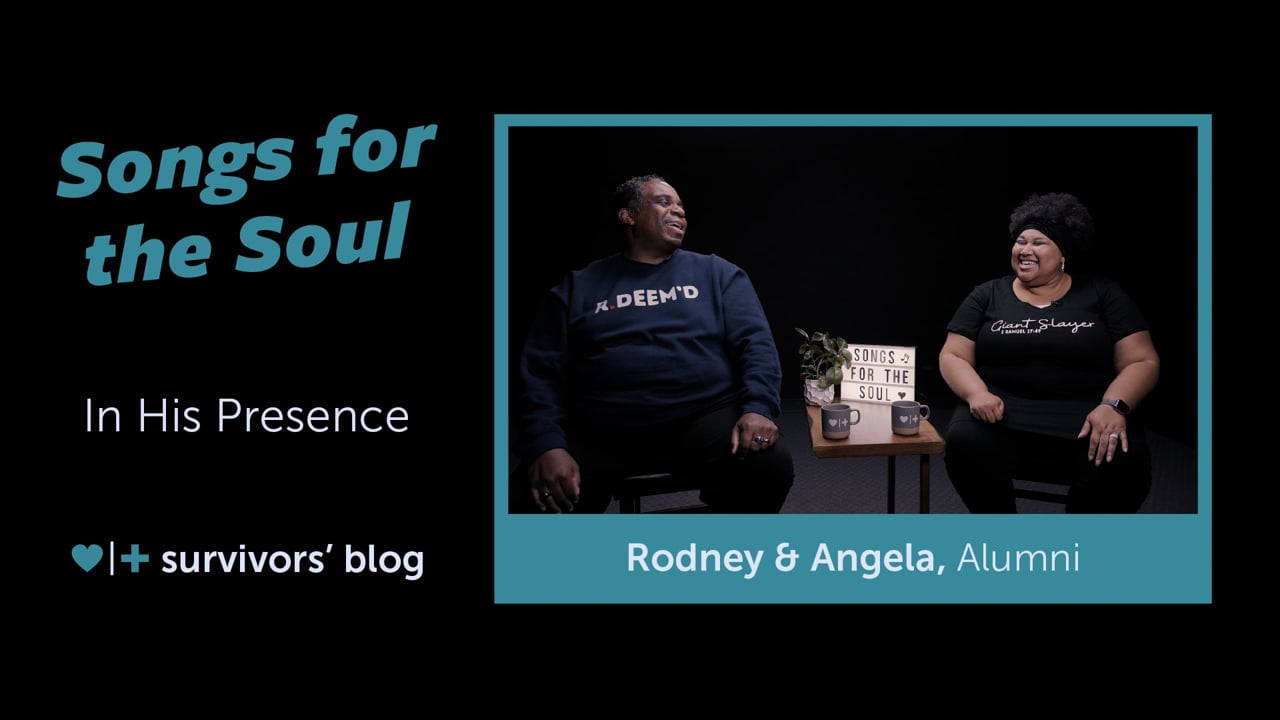
In His presence there is peace, freedom, and comfort. Rodney and Angela remind us that we have the privilege and freedom to bring all of our emotions to God, including the difficult ones. He is a faithful friend, fierce warrior, and compassionate counselor, and though what we face may not seem good, He is always working for our good. His mercies endure forever.
Continue reading →
A Guided Meditation for Cultivating Compassion
Hi. I’m Karen Baker supervised by Rick Reynolds. In this video, I'll lead you through a short, guided meditation on compassion. Opening our hearts and practicing self-compassion and compassion for others can help us accept and give space to our anxieties.
Sometimes, focused and kind attention is all we need to feel more at peace and ease. Experiencing betrayal is a deeply traumatic experience, and your whole being becomes incredibly dysregulated at a moment's notice. Compassion for others and even for ourselves might seem impossible right now. And, of course, it does.
But I encourage you to follow along, take what works for you, and leave what doesn't. And notice without criticism and judgment, all that shows up.
If you can't follow along now, bookmark this video and listen to it at a later time when you need help coming back to the present moment and feeling…
Continue reading →
Betrayal Trauma: Tips for Talking with Your Spouse
If you've ever heard your betrayed mate say, "I would like to trust you again, but I just can't." This is for you.
If you are the wayward spouse and are trying to figure out what it means to become a safe person to repair the damage done by your infidelity, this is for you too.
Wayward spouse, while trying to do everything you can to aid the recovery, have you ever taken the stance or expressed the attitude of, "I'm doing everything I can." With a sigh of frustration, have you ever said something like, "I am taking all the classes and working so hard." Other times, you might have thought, "This whole process is driving me crazy. I can't take these questions anymore," as you shake your head and wonder why your injured spouse may say they still don't feel safe even though the acting out stopped a long time ago.
Laurie, along with…
Continue reading →
Guided Meditation for Compassion, Anxiety, and Self-Kindness
I’m Karen Baker, a graduate counseling intern for Crossroad Counseling Associate, supervised by Rick Reynolds.
In this video, I'll lead you through a short, guided meditation on compassion specifically for anxiety. Opening our hearts by practicing self-compassion and compassion for others can help us accept and give space to our own anxieties. In this meditation, we will extend compassion to a loved one. Let me preface this and say that it can be anyone. It doesn't have to be your partner. It could even be a younger version of yourself.
Experiencing betrayal is deeply traumatic. Your entire being and whole self can become dysregulated at any moment's notice, and amid deep hurt, compassion for others and even for yourself might seem impossible, and of course, it does.
But I encourage you to follow along, take what works for you and leave what doesn't, and just…
Continue reading →
Should I Stay or Should I Go?
Hello. I am Candace. Should you stay, or should you go post D-Day? I'll tell you who tends to have the instant answer to that question- everyone who has never been sucker punched by infidelity firsthand. Whether you are the betrayed or the wayward partner, we know that decision is not as easy as people make it out to be.
There are so many things to consider. I want to begin this post by acknowledging that there are a significant number of betrayed spouses out there who are never given a chance to answer that question because that choice was made for them by their partner. If that happened to you, please know you are not alone. For those of us who find ourselves looking for the “sign” to stay or go, this post is for you, regardless of which side of the infidelity you are on.
When the infidelity grenade went off in my life, my twin daughters had just turned 17 years…
Continue reading →
A Toxic Mix: Gaslighting and Infidelity
Gaslighting coupled with infidelity is extremely toxic.
When talking about gaslighting or infidelity, each on its own can devastate the safety and trust of any relationship. But together, they form an especially dangerous mix. Understanding their dynamics and learning how to navigate the impact can be the first step in healing and preventing even further harm.
Designed specifically for wayward spouses, this 17-week online course is a supportive, nonjudgmental environment for you to heal and develop empathy. Over the years, this course has helped thousands of people find hope, set healthy boundaries and move toward extraordinary lives.
Learn More | Hope For Healing!
The term gaslighting originated from a 1944 film called Gaslight, where a husband manipulates his wife into believing and thinking that she's…
Continue reading →
Healing from Betrayal Trauma: A Guided Meditation on Self-Compassion
My name is Karen Baker, and I'm the graduate counseling intern at Crossroad Counseling and Associates, where I am supervised by Rick Reynolds.
In this video, I will lead you through a short, guided meditation. Experiencing a betrayal is a profoundly traumatic experience. Your whole self can become completely dysregulated and flooded at a moment's notice. If you can't follow along now, bookmark this video to listen to at a later time when you need help coming back to the present moment and feeling more grounded.
I invite you to take a moment to pause this video and adjust your space.
Find a comfortable seated position in which you can relax and where you can move your body a bit if necessary.
I invite you to close your eyes and tune into your breath. Notice its natural cadence and depth of your breath.
Feel the air flowing in and out of your nostrils, down…
Continue reading →
The Wayward’s Work Is Not Yours to Own
One of the hardest lessons to grasp in the journey towards healing from betrayal is realizing your inability to control the path your wayward mate takes. This is particularly counterintuitive for those of us who have dedicated our lives to growing relationships and a family. We have invested our time and energy in paving the way for our loved ones to succeed and be happy. We have cared as deeply for our partner and family as we have for ourselves. Our life has revolved around their safety and growth.
We must be careful not to burn out or overextend ourselves in the service of others and to take good care of ourselves. This is a reality we may not like. However, denial of that reality will not change it, no matter how ardently we wish things to be different. We need to respect our limits to remain healthy. The desire to overextend, however, is very normal when those we love are struggling.
This truth suggests the brilliant work of Dr. Robert Weiss in his seminal book, Prodependence. As he defines it:
“Prodependence is an attachment-based theory of human dependency which, by definition, states that those who partner with an active addict are loving people who may be caught in circumstances beyond their ability to healthfully cope. Moreover, their desire to help the addict and all related actions toward helping the addict demonstrate nothing more than a normal and healthy attempt to remain connected to a failing loved one while facing extraordinarily difficult circumstances.”
He advises that looking at addiction not from a trauma perspective, but from an attachment perspective, illuminates the dark road of betrayal grief. Instead of viewing the loved ones of addicts as the inevitable victims of a traumatic past that has caught up with them and is now repeating itself in their adult lives—"prodependence views them as brave individuals struggling to love another person even in the face of the behavioral choice they have made. With prodependence, there is no shame or blame, no sense of being wrong, no language that pathologizes the caregiving loved one. Instead, there is recognition for effort given, plus hope and valuable instruction for healing."
We, the betrayed, are suffering from possibly the most significant trauma inflicted upon us in our lives. In an instant, with the discovery of betrayal, our history is turned upside down, and our file cabinet of personal past is knocked over, spilling the entire contents across the floor in willy-nilly disarray. What we thought of as the closest, perhaps safest relationship in our life has now become the source of our greatest grief and fear. The attachment rupture is enormous.
I remember the long nights, riddled with deep, lonely grief following my husband’s decision to drop the fifty-megaton bomb and admit to his long affair. I looked up at the stars hoping to hear the voice of my departed mother and dad or maybe my wise old grandmother offering advice. What to do, where to start, how to dig my way out of this mess I never imagined, asked for, or created. Where do I begin? Who am I, if not the person I thought of as “wife?”
And who is this man who has acted as though he was a faithful spouse for years?
What spouse would not be looked upon as valiant if she cut back on volunteer activities, took on a second job, looked drawn and exhausted, all-in support of a spouse that had cancer, Parkinson’s or dementia? Why should there be any less empathy and understanding extended to a partner whose entire life history and security have just blown up via the discovery of a spouse’s betrayal? Why wouldn’t she grasp for any help, any life preserver in the tempest of her now topsy-turvy life? She would naturally look for help for her unsound and disordered partner. How can she help him heal so he might return to be her trusted partner in life?
Deep down inside, she wonders if he will ever be safe again.
She signed up to be a life partner in sickness and health. In this life-shattering betrayal, she longs for the old days of attachment and ‘love.’
Much like her inability to heal the wounds suffered by her spouse from a serious car accident, she is likewise powerless to do the deep emotional healing work she faces to understand what led him to betray all he swore to love and protect. She cannot make the discoveries of his own life’s traumas, the delusion-driven choices he has made, nor can she repair the damage he has left in his wake. That and more are his work to do.
How painful this realization can be. No amount of wishing, hoping, providing healing resources, or explaining her grief to him will build the framework of a healthier life for him. He must be willing. He has to be consistent, determined and committed to walking the long, difficult path toward healing. She cannot give him the gift of willingness.
Oh, the wrenching pain of this reality. The sadness. The helplessness.
Those who deny this reality sentence themselves to disillusionment, disappointment, resentment and needless angry drama.
The answer lies in the ability to choose to care for yourself and tend to the deep wounds suffered. This is similar to the in-flight instruction to put on one’s oxygen mask before attending to anyone else.
It’s not that betrayal is not a huge problem. It is. But it is not the central problem. Surviving and moving back into yourself is paramount before any wise and careful decisions can be made on how to proceed.
What may have seemed central to your life, the care of others, must now take a back seat. If a praying person, pray for his willingness and heart change as if he were undergoing open heart surgery and recovery. Pray. Try to influence his decisions if he is open to listening, but at the end of the day, he must choose and walk the difficult path of change.
One of the hardest lessons to grasp in the journey towards healing from betrayal is realizing your inability to control the path your wayward mate takes. This is particularly counterintuitive for those of us who have dedicated our lives to growing relationships and a family. We have invested our time and energy in paving the way for our loved ones to succeed and be happy. We have cared as deeply for our partner and family as we have for ourselves. Our life has revolved around their safety and growth.
We must be careful not to burn out or overextend ourselves in the service of others and to take good care of ourselves. This is a reality we may not like. However, denial of that reality will not change it, no matter how ardently we wish things to be different. We need to respect our limits to remain healthy. The desire to overextend, however, is very normal when those we love are…
Continue reading →
