
How to Handle Isolation and Abandonment After the Disclosure of Infidelity
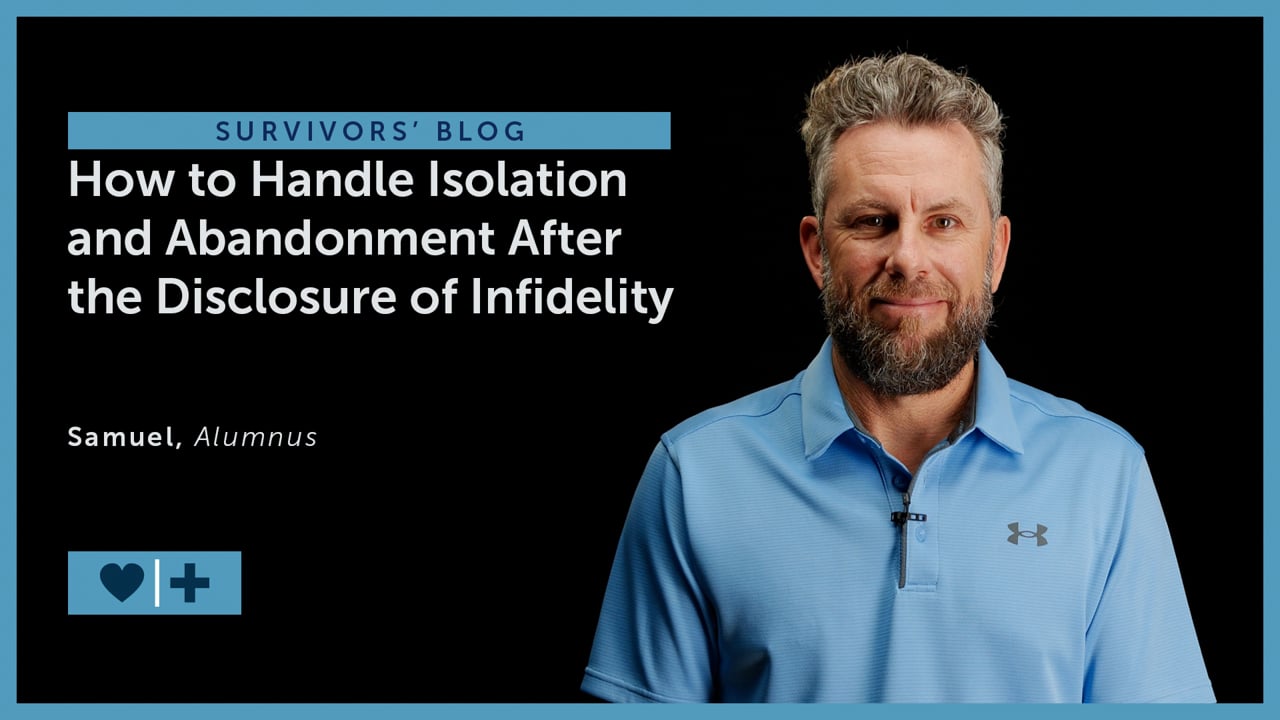
After an affair, we can feel left for dead. It's like we're lepers, and the outside world seemingly refuses to be associated with us. It can happen to the unfaithful, but oddly enough, it can happen to the betrayed as well. Outside observers have no idea what to say to us, so rather than try, they typically will leave us alone out of discomfort, or be instructed to leave us alone by clergy, leadership or even family members. The truth is, those whose lives have been shattered by infidelity need more support after disclosure than ever before. But where do you go? Who can you trust? Samuel says quite often, "the right people will give you the right help and the right outcome." Finding the right community is often frustrating for those whose lives have been rocked by an affair, but if you're reading this, you have found a safe and expert-driven place for…
Continue reading →
The Slow Crawl Back to Life - Part 2
 The Slow Crawl Back to Life: A Two Part Series
Part 1
Part 2
It is both difficult and precarious to measure growth related to something so deeply painful and personal. Even acknowledging progress produces a reflexive twinge, like somehow that diminishes the devastation I experienced. That is definitely not the case, but I think, at least for me, making sure I don't forget how bad it was is a defense mechanism to ensure I don't get hurt this way again. Also, growth is not linear and sometimes is subtle, so it can be hard to recognize.
So, expanding on what I described last time, sometimes we don't notice growth when we are holding on so tightly in an effort to protect ourselves and just get through the day. Recently, I came across an email I had written about a year ago. It was illuminating and made me see very clearly that I have made significant progress since then. I still have a long road ahead of me and feel varying levels of pain every day but the contrast of my present to the words written by my past self was stark. The past version of me writing that email was crawling out of her skin with PTSD symptoms and unable to find a moment's rest. I look back at that and am so sad that I (or anyone else) had to live through something so gut wrenchingly painful for so long.
This is a portion of my email, written to my therapist at the time:
I don't think anyone really understands my desperation. My husband is ready to leave just to stop being a constant trigger. I am so conflicted by looking at him and touching him, with all the triggers created and the chaos in my head, battling between wanting to be near him and needing to pull away from him in pain and fear. I need him very badly but can't let myself be with him even though he is right next to me. It haunts me. It doesn't feel safe. I feel very alone. It consumes me day and night as I don't sleep more than a couple hours. I just can't stand the thought of him with his AP. I feel sick, my heart races, like I will explode. I still vomit at times from the images in my mind. I can't even imagine ever not feeling this crushing sadness. I feel like I am drowning and my sanity is at risk. I want to check in somewhere and just be put into a coma until this is over. There are still times I want to die. More than I care to admit. It is so intense, I feel no hope. I am absolutely terrified that this is my life and I can never escape it. I don't know who I am and I feel like I will be trapped in this new reality forever. I feel like a caged animal desperate to get out of this situation.
Reading that was a reality check. I remember that level of desperation very well as it was my daily existence for a long time. But it isn't my reality now. I really don't think I would have appreciated the significant growth and healing in me without having re-read that. I still feel a whole lot of "stuff" that I wish I didn't, but it isn't with the intensity and desperation portrayed back then. I am calmer. I sleep better. I manage my triggers better - not by white-knuckling it, but because they are just more manageable now (mostly). I still don't appreciate having to deal with them at all, but I can see how over time and with a lot of work, this has improved. Therefore I can only project that it will continue to get better and I have a sense of patience about this process that I did not have before.
Dr. John Haney once told me that fear begets fear. Meaning, if I am fearful that I will never feel any better, that fear feeds on itself to produce more fear, adding to the burden of recovery. Fear is natural of course, but it can take over and be its own battlefront, on top of the necessary work around grief, trauma, trust, forgiveness and potential reconciliation. Along the same lines, I am finding that hope begets hope. I was once hopeless. Completely devoid of hope or even caring that I didn't have any hope. But after finally experiencing some positive shifts within me, I had a tiny ray of hope. I felt if I had experienced any healing at all, even the tiniest bit, then I could draw the conclusion that I could heal some more. So the hope grew a little. That cycle continued, and while I am not where I want to be, I do have hope that I could get there.
In the initial days after D-day, everything was terrible. There was no mix of positive and negative emotions. It was extremely painful, but there was no confusion about how to feel. It was pretty clear cut and straightforward. I felt terrible. I was supposed to feel terrible. I felt like I would feel horrible forever and there was really no struggle in that aspect of it, it was pretty clear.
At some point along the way, I began to feel positive things about my current relationship with my husband, while still in so much pain from his affair. The full truth and subsequent pain had brought us so much closer, and I felt grateful for our new emotional intimacy and vulnerability. These were truly beautiful things that would have been phenomenal if they had happened outside of the devastation. Mixing pain with joy is confusing. In the beginning of this phase, it was easy to dismiss any positive feelings - I am not supposed to feel happy because 'this' happened and therefore this happiness I thought I might have felt for a moment is not justified, and I reject it.
Positive emotions can feel foreign, like they don't apply anymore. It is further confusing to have a brief moment of laughter only to fall back into the abyss a few seconds later. Like - oh yeah, I forgot for a moment how much my life sucks. Everyone's timeline for healing is different but I actually took note of the day I made it through a whole 24 hour period without breaking down and sobbing, as it was so monumental it actually felt foreign. I got used to feeling terrible and forgot what it felt like to be happy or to smile or laugh without it being fake to placate everyone around me. Happiness and peace were just memories of feelings and they were hard to recall.
Sometimes healing feels elusive, like the carrot on a stick that is continually just out of reach. As I mentioned last time, I am now in a place where I am holding pain and gratitude side by side. That is obviously better, but harder for my brain to manage. It is much more complicated and feels unnatural sometimes. Sometimes in this place, my inner thoughts argue with each other about which feeling will be allowed to come out and play, and it can be tiring. But on the days I am discouraged and hopeless about ever getting to true healing, I remind myself that back in my darkest days I also never imagined feeling like I do today. I hope you might find that encouraging. Just because healing takes a long time doesn't mean the entirety of that time will be spent where you are right now.
Hope acknowledges that while what we see and feel may be excruciating right now, it will not always be this way. As the apostle Paul reminds us, "hope that is seen is not hope at all. Who hopes for what he already has? But if we hope for what we do not see, we wait for it with patience." (Romans 8:24-25) The following is an encouraging blog post I came across, and wanted to share it with you all too: Choose Hope — Vaneetha Risner.
"Deep grief sometimes is almost like a specific location, a coordinate on a map of time. When you are standing in that forest of sorrow, you cannot imagine that you could ever find your way to a better place. But if someone can assure you that they themselves have stood in that same place, and now have moved on, sometimes this will bring hope."
— Elizabeth Gilbert
Cover more ground faster with the life-changing experience of EMS Weekend for couples.
This isn't another light-and-fluffy program that only scratches the surface of your pain. The EMS Weekend Experience is a safe space for you and your partner to start putting the pieces of your life back together, transform your trauma and begin healing from infidelity. Skeptical about the effectiveness of this experience? Don't be! Backed by a slew of previous participant testimonials, EMS Weekend delivers results month after month for countless couples.
During EMS Weekend, we won't shame the unfaithful spouse nor blame the betrayed spouse. What we will do is pair you with a small community of other couples and an expert therapist - all of whom have experienced infidelity firsthand - as well as provide comprehensive resources to help you kick-start your healing journey.
Sign Up Now!
The Slow Crawl Back to Life: A Two Part Series
Part 1
Part 2
It is both difficult and precarious to measure growth related to something so deeply painful and personal. Even acknowledging progress produces a reflexive twinge, like somehow that diminishes the devastation I experienced. That is definitely not the case, but I think, at least for me, making sure I don't forget how bad it was is a defense mechanism to ensure I don't get hurt this way again. Also, growth is not linear and sometimes is subtle, so it can be hard to recognize.
So, expanding on what I described last time, sometimes we don't notice growth when we are holding on so tightly in an effort to protect ourselves and just get through the day. Recently, I came across an email I had written about a year ago. It was illuminating and made me see very clearly that I have made significant progress since then. I still have a long road ahead of me and feel varying levels of pain every day but the contrast of my present to the words written by my past self was stark. The past version of me writing that email was crawling out of her skin with PTSD symptoms and unable to find a moment's rest. I look back at that and am so sad that I (or anyone else) had to live through something so gut wrenchingly painful for so long.
This is a portion of my email, written to my therapist at the time:
I don't think anyone really understands my desperation. My husband is ready to leave just to stop being a constant trigger. I am so conflicted by looking at him and touching him, with all the triggers created and the chaos in my head, battling between wanting to be near him and needing to pull away from him in pain and fear. I need him very badly but can't let myself be with him even though he is right next to me. It haunts me. It doesn't feel safe. I feel very alone. It consumes me day and night as I don't sleep more than a couple hours. I just can't stand the thought of him with his AP. I feel sick, my heart races, like I will explode. I still vomit at times from the images in my mind. I can't even imagine ever not feeling this crushing sadness. I feel like I am drowning and my sanity is at risk. I want to check in somewhere and just be put into a coma until this is over. There are still times I want to die. More than I care to admit. It is so intense, I feel no hope. I am absolutely terrified that this is my life and I can never escape it. I don't know who I am and I feel like I will be trapped in this new reality forever. I feel like a caged animal desperate to get out of this situation.
Reading that was a reality check. I remember that level of desperation very well as it was my daily existence for a long time. But it isn't my reality now. I really don't think I would have appreciated the significant growth and healing in me without having re-read that. I still feel a whole lot of "stuff" that I wish I didn't, but it isn't with the intensity and desperation portrayed back then. I am calmer. I sleep better. I manage my triggers better - not by white-knuckling it, but because they are just more manageable now (mostly). I still don't appreciate having to deal with them at all, but I can see how over time and with a lot of work, this has improved. Therefore I can only project that it will continue to get better and I have a sense of patience about this process that I did not have before.
Dr. John Haney once told me that fear begets fear. Meaning, if I am fearful that I will never feel any better, that fear feeds on itself to produce more fear, adding to the burden of recovery. Fear is natural of course, but it can take over and be its own battlefront, on top of the necessary work around grief, trauma, trust, forgiveness and potential reconciliation. Along the same lines, I am finding that hope begets hope. I was once hopeless. Completely devoid of hope or even caring that I didn't have any hope. But after finally experiencing some positive shifts within me, I had a tiny ray of hope. I felt if I had experienced any healing at all, even the tiniest bit, then I could draw the conclusion that I could heal some more. So the hope grew a little. That cycle continued, and while I am not where I want to be, I do have hope that I could get there.
In the initial days after D-day, everything was terrible. There was no mix of positive and negative emotions. It was extremely painful, but there was no confusion about how to feel. It was pretty clear cut and straightforward. I felt terrible. I was supposed to feel terrible. I felt like I would feel horrible forever and there was really no struggle in that aspect of it, it was pretty clear.
At some point along the way, I began to feel positive things about my current relationship with my husband, while still in so much pain from his affair. The full truth and subsequent pain had brought us so much closer, and I felt grateful for our new emotional intimacy and vulnerability. These were truly beautiful things that would have been phenomenal if they had happened outside of the devastation. Mixing pain with joy is confusing. In the beginning of this phase, it was easy to dismiss any positive feelings - I am not supposed to feel happy because 'this' happened and therefore this happiness I thought I might have felt for a moment is not justified, and I reject it.
Positive emotions can feel foreign, like they don't apply anymore. It is further confusing to have a brief moment of laughter only to fall back into the abyss a few seconds later. Like - oh yeah, I forgot for a moment how much my life sucks. Everyone's timeline for healing is different but I actually took note of the day I made it through a whole 24 hour period without breaking down and sobbing, as it was so monumental it actually felt foreign. I got used to feeling terrible and forgot what it felt like to be happy or to smile or laugh without it being fake to placate everyone around me. Happiness and peace were just memories of feelings and they were hard to recall.
Sometimes healing feels elusive, like the carrot on a stick that is continually just out of reach. As I mentioned last time, I am now in a place where I am holding pain and gratitude side by side. That is obviously better, but harder for my brain to manage. It is much more complicated and feels unnatural sometimes. Sometimes in this place, my inner thoughts argue with each other about which feeling will be allowed to come out and play, and it can be tiring. But on the days I am discouraged and hopeless about ever getting to true healing, I remind myself that back in my darkest days I also never imagined feeling like I do today. I hope you might find that encouraging. Just because healing takes a long time doesn't mean the entirety of that time will be spent where you are right now.
Hope acknowledges that while what we see and feel may be excruciating right now, it will not always be this way. As the apostle Paul reminds us, "hope that is seen is not hope at all. Who hopes for what he already has? But if we hope for what we do not see, we wait for it with patience." (Romans 8:24-25) The following is an encouraging blog post I came across, and wanted to share it with you all too: Choose Hope — Vaneetha Risner.
"Deep grief sometimes is almost like a specific location, a coordinate on a map of time. When you are standing in that forest of sorrow, you cannot imagine that you could ever find your way to a better place. But if someone can assure you that they themselves have stood in that same place, and now have moved on, sometimes this will bring hope."
— Elizabeth Gilbert
Cover more ground faster with the life-changing experience of EMS Weekend for couples.
This isn't another light-and-fluffy program that only scratches the surface of your pain. The EMS Weekend Experience is a safe space for you and your partner to start putting the pieces of your life back together, transform your trauma and begin healing from infidelity. Skeptical about the effectiveness of this experience? Don't be! Backed by a slew of previous participant testimonials, EMS Weekend delivers results month after month for countless couples.
During EMS Weekend, we won't shame the unfaithful spouse nor blame the betrayed spouse. What we will do is pair you with a small community of other couples and an expert therapist - all of whom have experienced infidelity firsthand - as well as provide comprehensive resources to help you kick-start your healing journey.
Sign Up Now!
The Slow Crawl Back to Life: A Two Part Series
Part 1
Part 2
It is both difficult and precarious to measure growth related to something so deeply painful and personal. Even acknowledging progress produces a reflexive twinge, like somehow that diminishes the devastation I experienced. That is definitely not the case, but I think, at least for me, making sure I don't forget how bad it was is a defense mechanism to ensure I don't get hurt this way again. Also, growth is not linear and sometimes is subtle, so it can be hard to recognize.
So, expanding on what I described last time, sometimes we don't notice growth when we are holding on so tightly in an effort to protect ourselves and just get through the day. Recently, I came across an email I had written about a year ago. It was illuminating and made me see very clearly that I have…
Continue reading →
Songs for the Soul | But God
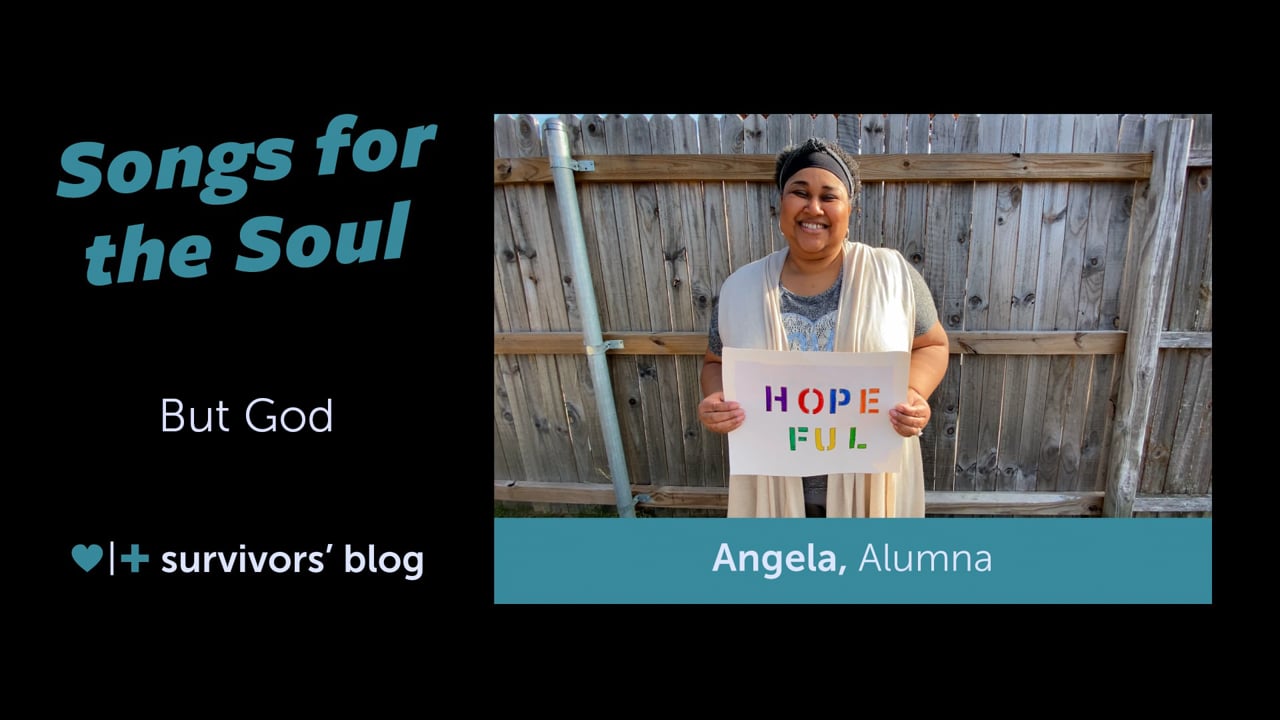
I've always been known by my smile. Well, after D-Day we weren't sure when, or even if, I would ever smile again. So, it was fitting that the verse of hope that God gave me was from Proverbs 31:25 "she shall rejoice in time to come" - another translation says "she laughs without fear of the future." In this episode, I'll share a devotion I wrote about how everything is falling apart, "but God..." filling in the blanks of my uncertainty with God's ability. This sent out an SOS and helped me acknowledge my pain, but gave me hope that although things may be temporarily troubled and tragic in my life, with God, I am eternally safe and secure. Pouring out my heart to God, and exchanging my pain for His promise, would prove to be how I would rejoice in time to come, and smile and laugh again without fear of the future. What a relief! I hope and…
Continue reading →
Lessons From A Traumatic Moment After the Disclosure of My Infidelity
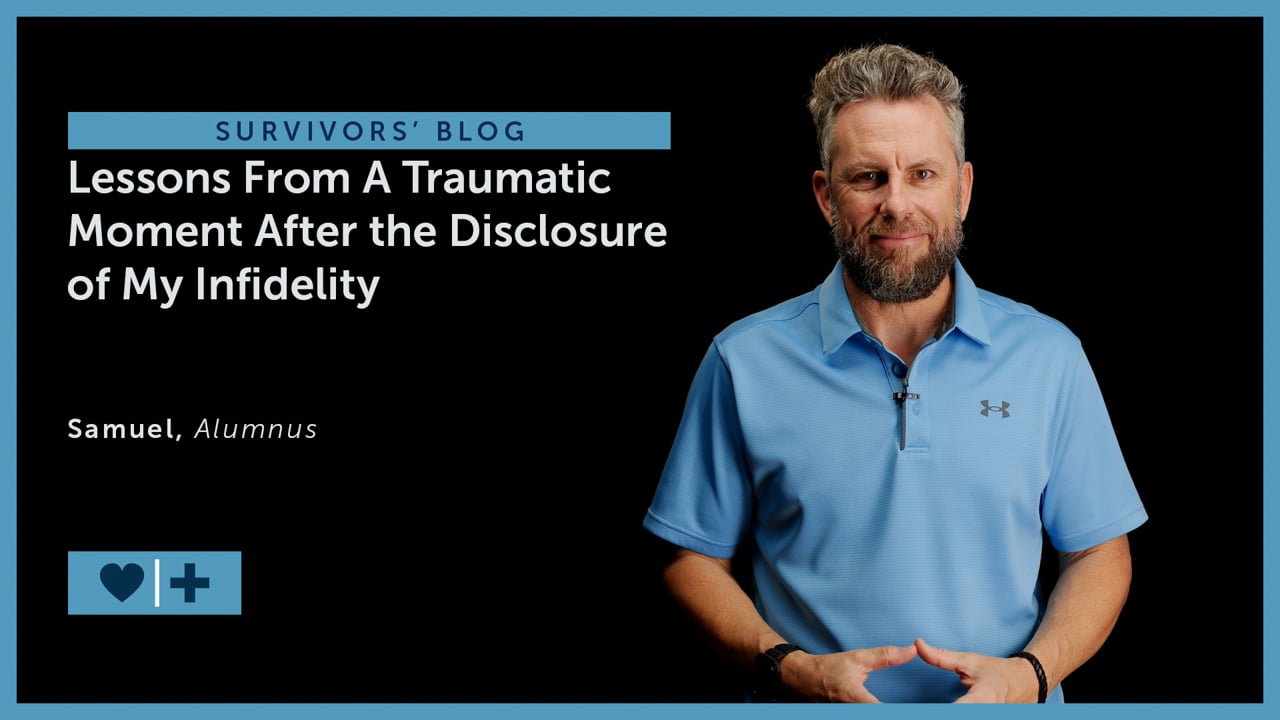
After the disclosure of infidelity or addiction, our futures feel incredibly uncertain. If there is one universal, common emotion or feeling after disclosure, it’s probably raw terror. Both partners experience it, but how do you work through it? How do you process it? Today, Samuel shares his own traumatic event that was filled with not only uncertainty and confusion, but raw panic and terror. In the halls of ‘healing from infidelity’ the word trauma has become somewhat of a buzzword. Trauma isn’t necessarily what happens to us, but what happens inside of us in response to a traumatic event, and I think we can all agree that infidelity or addiction of any sort is a traumatic event. Today you will hear practical and courageous insight from Samuel that you can also utilize in your own recovery timeline. The terror we’ve experienced in our own lives doesn’t…
Continue reading →
Announcing NEW Infidelity Video Blog: Songs for the Soul
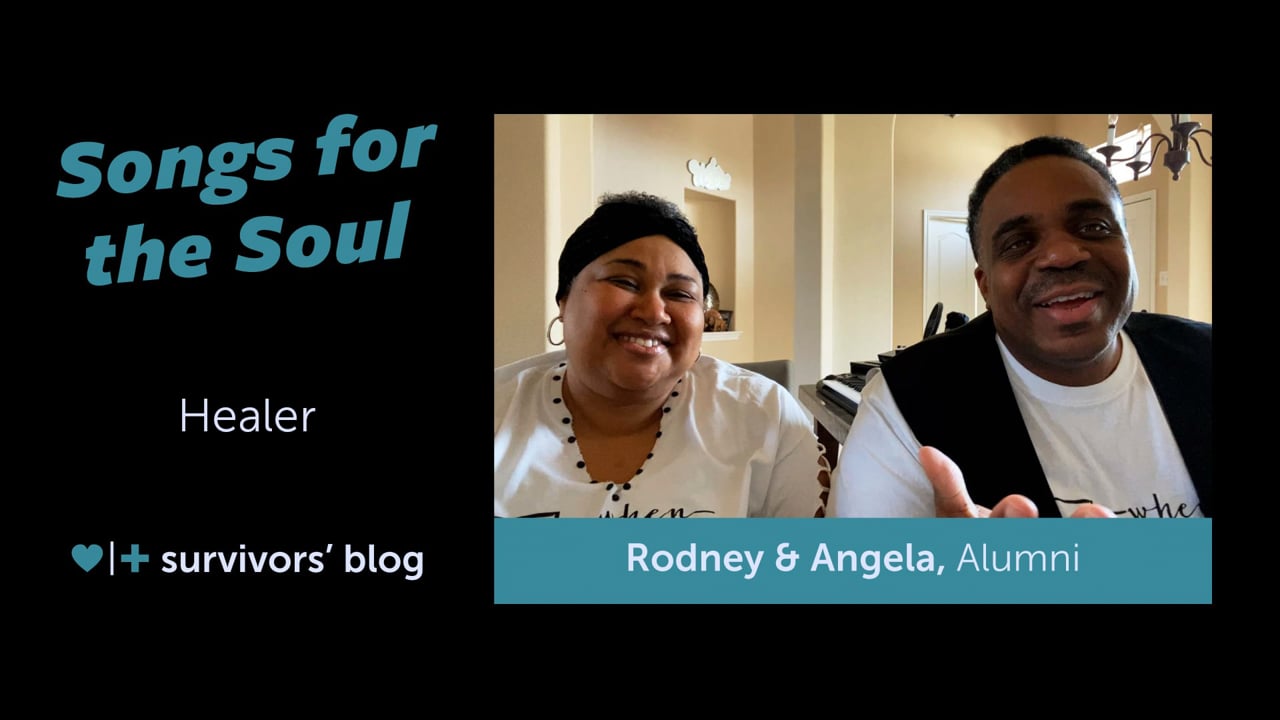
Click the button below to subscribe to our Survivors' Blog and receive notifications when new Songs for the Soul episodes have been published as well as all of our other Survivors' Blog authors.
Subscribe for Future Episodes
In August of 2015, I was invited to Gateway Church for a reunion with past participants of the EMS program. To my delight, a married couple was leading worship together. My heart was deeply touched by their music.
Afterwards, I went up to introduce myself to those gifted musicians. After expressing my gratitude to Rodney and Angela, they shared their dream of using music to help others who are in recovery from infidelity. Five years later, I was thrilled when we were able to hire Rodney to join us at Affair Recovery. Since then, my heart's desire has been to find a way to incorporate their music to…
Continue reading →
The Slow Crawl Back to Life - Part 1
 The Slow Crawl Back to Life: A Two Part Series
Part 1
Part 2
You will either step forward into growth, or you will step backward into safety.
~ Abraham Maslow
I don't know if I have said this yet, but when I talk to you about hope and recovery, I am also talking to myself. I am still on this journey too and I get discouraged, frustrated, angry, and sad, so I am also encouraging myself as I focus my thoughts in these blogs. I hope you don't mind me tagging along for the ride.
I was thinking the other day about all of this, and stopped for just a moment to take a look in the rear view mirror of recovery. Looking into the past is easy. I do that every single day and you probably do too, thinking about the "what ifs," and I wish this or that had never happened, and definitely the "what was real and what wasn't" trips down memory lane. Those are still very real parts of daily life. But that's not what I'm talking about today. I'm talking about looking back to the beginning of this recovery journey and even at where I was just a few months ago. The experts recommend being intentional about assessing progress periodically, but realistically when pain is the predominant emotion of the day that intentional reflection goes out the window as pain management takes all the energy and focus I can muster.
So that's why it was so profound when I found myself thinking about this. I was on a run, listening to one of the bazillion podcasts I have saved on healing or relationships or God or life in general. I was enjoying the sun and a nice breeze and thinking about what I was going to do when I got home.
Did you catch that? I was enjoying it. Actually enjoying something. Not tolerating it, managing it, or gritting my teeth to get through it. It was nice - truly. It made me pause and think. And when I gave it my full attention I could honestly say I was having a good day. Taking a moment to look back, it had been a pretty good few weeks. In hindsight, even the last couple of months had been better. Not rainbows and butterflies - but markedly better. Does that mean I had just figured out how to stop thinking about it? Nope, not at all. I still think about it all the time, pretty much all day long. I don't believe the goal is to stop thinking about it. I do anticipate that after more healing occurs I will naturally think about it less than I do now, but that is not the end goal at all, at least not for me. My goal is to somehow have this integrated into my life where I can think about it and I don't fall apart. Where I can find peace with what has happened and still be ok, and maybe even happy someday, for more than an hour at a time.
It's not that I don't feel pain at the thought of my husband sharing himself with another person in ways that were supposed to be only mine. I most certainly do. That still hurts immensely and I am still on this journey too, so I can't tell you if that will ever truly go away. I guess I'll let you know on that one.
However, what I am noticing is that on my better days (let's be real here, sometimes it's only minutes or maybe hours) when I think about it, it just doesn't matter as much.
Now that I've said that out loud, those words hang in my throat and threaten to choke me, creating fear and confusion that I've even generated that thought. It is so hard to articulate, especially to those of you early on who are still reeling with the shock and overwhelm in the first weeks and months after discovery. For me, I find the more work we do to become closer as a couple - really gut level close - good, bad, and ugly; the more the pain moves into the background. I am not going to lie; it often comes right back to slap me in the face and mock me for what a fool I am to even try to heal from this. I have to remind myself that if I felt hope and momentary glimpses of peace yesterday, then it is possible to feel those things again, and to build on them. It is a battle of the mind, heart, and faith to be sure. I am not a fan of what my friend describes as "mental gymnastics" to trick myself into believing things are better than they are; that's just smoke and mirrors and doesn't actually accomplish anything. But there is a distinction between thought maneuvers intended to distract and sugarcoat, versus actually processing something to the point that the perspective on it is more objective, less hurtful, and overall healthier.
My husband's decision to have an affair will never be ok. I will never try to convince myself it was for our greater good or somehow needed to happen. No. It never should have happened and I never should have been subjected to any of the cruel and destructive things he did, but here we are. He made all of those choices and there is no going back; there is no "undo" button. Trust me, I have tried to press it at least a million times and I just can't change our story that way. But now we can take this and use it to create something. I can be grateful for the opportunities it has provided for us to grow as people, closer to God and to each other. I can be a better person, a stronger person, and a more compassionate and empathetic person than I ever could have imagined. We can be a more connected and intentional couple, in a marriage made up of two people who have walked through fire and fought to stay in this together. We know what it's worth now, with eyes wide open.
So am I still disappointed with my life, knowing my husband willingly and repeatedly chose to betray me? Yes, every day I feel disappointment. I feel it deeply in my chest as I type these words to you. I don't know if that will ever change and I am not going to pretend otherwise. But I also feel immense gratitude. I am grateful for the lessons I have learned about myself, about him, about marriage, about God, and about life. I am grateful that I am a different person in so many ways. I have so much more compassion, empathy and patience than I ever had before. I am much less judgemental and now I often view another person's bad behavior with an eye toward potential hidden trauma in their life. I am deeply grateful for the man my husband is today; I could not build a better husband if I tried. We are deeply connected in ways we may never have reached without this trauma, I don't know. But I still feel pain. I still feel discouragement. Sometimes I still feel resentment and anger too, but those are more easily managed through the lens of compassion than they were in the earlier days now that I know and understand him so well. Some days the disappointment prevails, some days the gratitude does. Most days they are intermingled and I feel them together in a weird twisted bittersweet mix. What I am discovering is that these feelings can coexist, side by side. That felt unnatural at first, as they are seemingly contradictory, but as my mind and heart expand on this journey I am more open to understanding and experiencing things than I would have been previously. This is growth, no matter how the big picture looks on a given day. I even have a recurring calendar notification on my phone that reminds me every morning that "I am healing." Some days I feel it and others not so much, but it reminds me that even when I don't feel progress, it is there. I now have happy moments, even days. I feel like "me" again. Truthfully it's still a sad version of me, but it is the real me, no longer the vacant shell of a person I had been for a long time or the raving madman that took over at times.
Let's face it, it's hard to stay motivated to do all this work only to strive toward a goal of "tolerable." I still have moments when I wonder if I will ever really be OK. I don't know the answer to that and I won't sugarcoat my words and say that I do. But I do know that in the early days of recovery I never thought I would stop crying. I never thought I could sleep more than 2 hours a night. I never thought I would smile again. I definitely never thought I would laugh without faking it. And here I am. I have done all of those things and I do have good days. I never thought any of that would happen; in fact I was absolutely positive none of it would. So is "real" healing possible? I don't know yet but my own journey has shown me that things are possible that I would not have believed, so I am open to the possibility in ways I wasn't before.
"When we are no longer able to change a situation, we are challenged to change ourselves."
Viktor Frankl
The Slow Crawl Back to Life: A Two Part Series
Part 1
Part 2
You will either step forward into growth, or you will step backward into safety.
~ Abraham Maslow
I don't know if I have said this yet, but when I talk to you about hope and recovery, I am also talking to myself. I am still on this journey too and I get discouraged, frustrated, angry, and sad, so I am also encouraging myself as I focus my thoughts in these blogs. I hope you don't mind me tagging along for the ride.
I was thinking the other day about all of this, and stopped for just a moment to take a look in the rear view mirror of recovery. Looking into the past is easy. I do that every single day and you probably do too, thinking about the "what ifs," and I wish this or that had never happened, and definitely the "what was real and what wasn't" trips down memory lane. Those are still very real parts of daily life. But that's not what I'm talking about today. I'm talking about looking back to the beginning of this recovery journey and even at where I was just a few months ago. The experts recommend being intentional about assessing progress periodically, but realistically when pain is the predominant emotion of the day that intentional reflection goes out the window as pain management takes all the energy and focus I can muster.
So that's why it was so profound when I found myself thinking about this. I was on a run, listening to one of the bazillion podcasts I have saved on healing or relationships or God or life in general. I was enjoying the sun and a nice breeze and thinking about what I was going to do when I got home.
Did you catch that? I was enjoying it. Actually enjoying something. Not tolerating it, managing it, or gritting my teeth to get through it. It was nice - truly. It made me pause and think. And when I gave it my full attention I could honestly say I was having a good day. Taking a moment to look back, it had been a pretty good few weeks. In hindsight, even the last couple of months had been better. Not rainbows and butterflies - but markedly better. Does that mean I had just figured out how to stop thinking about it? Nope, not at all. I still think about it all the time, pretty much all day long. I don't believe the goal is to stop thinking about it. I do anticipate that after more healing occurs I will naturally think about it less than I do now, but that is not the end goal at all, at least not for me. My goal is to somehow have this integrated into my life where I can think about it and I don't fall apart. Where I can find peace with what has happened and still be ok, and maybe even happy someday, for more than an hour at a time.
It's not that I don't feel pain at the thought of my husband sharing himself with another person in ways that were supposed to be only mine. I most certainly do. That still hurts immensely and I am still on this journey too, so I can't tell you if that will ever truly go away. I guess I'll let you know on that one.
However, what I am noticing is that on my better days (let's be real here, sometimes it's only minutes or maybe hours) when I think about it, it just doesn't matter as much.
Now that I've said that out loud, those words hang in my throat and threaten to choke me, creating fear and confusion that I've even generated that thought. It is so hard to articulate, especially to those of you early on who are still reeling with the shock and overwhelm in the first weeks and months after discovery. For me, I find the more work we do to become closer as a couple - really gut level close - good, bad, and ugly; the more the pain moves into the background. I am not going to lie; it often comes right back to slap me in the face and mock me for what a fool I am to even try to heal from this. I have to remind myself that if I felt hope and momentary glimpses of peace yesterday, then it is possible to feel those things again, and to build on them. It is a battle of the mind, heart, and faith to be sure. I am not a fan of what my friend describes as "mental gymnastics" to trick myself into believing things are better than they are; that's just smoke and mirrors and doesn't actually accomplish anything. But there is a distinction between thought maneuvers intended to distract and sugarcoat, versus actually processing something to the point that the perspective on it is more objective, less hurtful, and overall healthier.
My husband's decision to have an affair will never be ok. I will never try to convince myself it was for our greater good or somehow needed to happen. No. It never should have happened and I never should have been subjected to any of the cruel and destructive things he did, but here we are. He made all of those choices and there is no going back; there is no "undo" button. Trust me, I have tried to press it at least a million times and I just can't change our story that way. But now we can take this and use it to create something. I can be grateful for the opportunities it has provided for us to grow as people, closer to God and to each other. I can be a better person, a stronger person, and a more compassionate and empathetic person than I ever could have imagined. We can be a more connected and intentional couple, in a marriage made up of two people who have walked through fire and fought to stay in this together. We know what it's worth now, with eyes wide open.
So am I still disappointed with my life, knowing my husband willingly and repeatedly chose to betray me? Yes, every day I feel disappointment. I feel it deeply in my chest as I type these words to you. I don't know if that will ever change and I am not going to pretend otherwise. But I also feel immense gratitude. I am grateful for the lessons I have learned about myself, about him, about marriage, about God, and about life. I am grateful that I am a different person in so many ways. I have so much more compassion, empathy and patience than I ever had before. I am much less judgemental and now I often view another person's bad behavior with an eye toward potential hidden trauma in their life. I am deeply grateful for the man my husband is today; I could not build a better husband if I tried. We are deeply connected in ways we may never have reached without this trauma, I don't know. But I still feel pain. I still feel discouragement. Sometimes I still feel resentment and anger too, but those are more easily managed through the lens of compassion than they were in the earlier days now that I know and understand him so well. Some days the disappointment prevails, some days the gratitude does. Most days they are intermingled and I feel them together in a weird twisted bittersweet mix. What I am discovering is that these feelings can coexist, side by side. That felt unnatural at first, as they are seemingly contradictory, but as my mind and heart expand on this journey I am more open to understanding and experiencing things than I would have been previously. This is growth, no matter how the big picture looks on a given day. I even have a recurring calendar notification on my phone that reminds me every morning that "I am healing." Some days I feel it and others not so much, but it reminds me that even when I don't feel progress, it is there. I now have happy moments, even days. I feel like "me" again. Truthfully it's still a sad version of me, but it is the real me, no longer the vacant shell of a person I had been for a long time or the raving madman that took over at times.
Let's face it, it's hard to stay motivated to do all this work only to strive toward a goal of "tolerable." I still have moments when I wonder if I will ever really be OK. I don't know the answer to that and I won't sugarcoat my words and say that I do. But I do know that in the early days of recovery I never thought I would stop crying. I never thought I could sleep more than 2 hours a night. I never thought I would smile again. I definitely never thought I would laugh without faking it. And here I am. I have done all of those things and I do have good days. I never thought any of that would happen; in fact I was absolutely positive none of it would. So is "real" healing possible? I don't know yet but my own journey has shown me that things are possible that I would not have believed, so I am open to the possibility in ways I wasn't before.
"When we are no longer able to change a situation, we are challenged to change ourselves."
Viktor Frankl
 I want to invite all who have been betrayed to our Annual Hope Rising Conferences - on Demand, and gain momentum, strength, and community on your journey to wholeness.
Watch Now!
I want to invite all who have been betrayed to our Annual Hope Rising Conferences - on Demand, and gain momentum, strength, and community on your journey to wholeness.
Watch Now!
The Slow Crawl Back to Life: A Two Part Series
Part 1
Part 2
You will either step forward into growth, or you will step backward into safety.
~ Abraham Maslow
I don't know if I have said this yet, but when I talk to you about hope and recovery, I am also talking to myself. I am still on this journey too and I get discouraged, frustrated, angry, and sad, so I am also encouraging myself as I focus my thoughts in these blogs. I hope you don't mind me tagging along for the ride.
I was thinking the other day about all of this, and stopped for just a moment to take a look in the rear view mirror of recovery. Looking into the past is easy. I do that every single day and you probably do too, thinking about the "what ifs," and I wish this or that had never happened, and definitely the "what…
Continue reading →
How to Not Lose Yourself When Saving Your Marriage after an Affair
When a spouse or partner has an affair, their next response is essential. Are they willing to do repair work? Are they willing to own what they need to own? Are they open to getting outside, expert help in an effort to see what they cannot see? It can be like walking a tightrope for either partner who is wanting to save the relationship, but isn't sure where the lines should be drawn to protect themselves, but also humble themselves and win back their partner. Unfaithful spouses can feel as though they are locked into a prison of punitive servitude for the remainder of the relationship. Betrayed spouses can feel like they will never measure up to the affair partner, and can feel a sense of anger, bitterness, and hurt for the remainder of the relationship. My friends, I am here to tell you that there is a better way. We can heal our relationships, while also…
Continue reading →
When Mental Health Muddies the Rough Waters of Infidelity
 "Did they make those horrible choices because their addiction or mental illness clouded their judgment?"
"Was I too busy trying to help and support them to notice they'd stepped out of our marriage?"
"Was their emotional detachment due to childhood abandonment issues or are they just unhappy in this relationship?"
Does any of this sound familiar to you? When the wayward spouse has diagnosed or suspected mental health/addiction issues, the betrayed partner can find themselves feeling as though they are the one losing their mind. Even in the absence of infidelity, marriage to a spouse with mental health and/or addiction challenges can strain even the strongest of unions.
Those of us who are highly invested in happily ever after, either in the Disney cultural sense or in the hard-working, dedicated, spouse-valued-as-central, are hit particularly hard after an affair. We have invested greatly in love for months, years or even decades in our marriage, and we are both assaulted and instantly stripped of our happy ending. What we have earned in spades is stolen from us in a moment. What we thought was a mutual dream becomes known as a one-sided endeavor. What we thought to be shared values are discovered to be the direct opposite.
Mental illness muddies the waters of infidelity. So much of the fabric of mental illness and addiction is riddled with distorted thinking and denial of reality. These individuals, by definition, do not see reality clearly. This leaves those around them to wonder:
What part of their behavior is due to the disease?
What part of their behavior is plain old oppositional, self- absorbed, damaging choices?
Reflecting on the 'Why' After Infidelity
When you come right down to it, there is not a whole lot of difference in their "why." Whether they crossed the line once or a thousand times, or their actions stemmed from the skewed thinking inherent in mental illness, a spouse's infidelity devastates and destroys just the same no matter the "why."
So what is the point of pursuing an understanding of the unhealthy thinking of mental illness?
Culpability... and forgiveness.
The death of a marriage is detrimental to the hearts of both spouses, especially that of the betrayed spouse. Many betrayed spouses have voiced that dying would have been easier and less painful than living through betrayal. That said, assigning "degrees" is central to the culpability of the betrayer. Was there malice and forethought, or was the perpetrator mentally unsound?
In the case of mental illness and/or addiction, the wayward spouse is under the influence of distorted thinking. Most unfaithful will readily admit that their choice to betray their loved one required some pretty fancy mental gymnastics - and isn't the very essence of mental illness "distortion in right thinking?"
Whether the wayward spouse is diagnosed with a mental illness or not, the road to betrayal is fraught with justifications, minimizations, distorted judgements, entitlement and the like. As the wife of an addict with a history of mental crises, however, it matters a great deal in my processing to come to terms with the realities of an unhealthy mind. In doing so, I have found it easier to understand how he arrived in a cesspool of his own creation that ultimately destroyed the marriage we had.
Learning Tolerance and Acceptance
As a product of distorted, unhealthy thinking and actions, our marriage was unhealthy too. It is not something I would have chosen, and it certainly is something I would never want to return to. Even in my own state of unawareness of the particulars, I knew the man I was married to was unreliable at best. I knew I shouldered the lion's share of life's responsibilities as a result. I knew this fact made me unhappy and lonely in that marriage. I sensed there was more to aspire to, I simply did not know how to get there.
My spouse has had ADHD all his life. As his wife, I took on the task of learning about ADHD. I learned tolerance and acceptance not only of his behavior, but also of the behavior of my son with ADHD. I became the supportive mama-lioness/advocate for my son and, in doing so, came to understand some of "why" my husband was so unreliable and frustrating. As my counselor so astutely commented, "Seems you've been disappointed in your marriage for a very, very long time."
Bingo. Understatement.
As a love-trooper, I took on more than perhaps I ought to, to demonstrate through actions my love, devotion and commitment. I did everything in my power to advocate for my son in school and socially, as well as accepted my husband's reluctance to do the same. He was, after all, burdened with many of the same challenges of his own. One cannot expect good results when assigning the fox to guard the hen house. I found that to be true in theory as well as in my reality.
When their ADHD progressed and addictions ensued, as well as epilepsy and bipolar symptoms, it became nearly impossible to deal with the disappointment and fear. How was I to ever sift through the causes, the "whys," when their behaviors could fall under the category of "illness?" What kind of a person condemns a sick person, even if their actions brought financial, emotional and marital ruin?
Talk about being placed between the cliché of a "rock and a hard place."
Learning to Count and Observe Your Blessings
How does a betrayed spouse heal when the world is focusing on the illness of the betrayer? It's not an easy place to be, and I am still sorting it out myself and expect to be doing so for the rest of my life. Chronic conditions do not resolve, and, as such, require lifelong attention. The question becomes: Was it first-degree infidelity, or betrayal committed under the influence? How is a betrayed spouse to ever really know? The answer: We're not.
It is impossible to ever know the heart and truth of another's decisions and behavior, especially when they're consumed by mental illness/addiction. In this scenario, we betrayed spouses are robbed of anything even close to a satisfying "why," let alone being able to feel good in allowing ourselves to release the righteous anger that accompanies such deep wounding. Yet, it is vital to do.
Be angry. Grieve. You have been robbed of a dream you worked your tail off to achieve. The universe has dealt you a pretty hard hand. I am eight years in from the discovery of my spouse's financial betrayals, five years in from the sexual infidelity's D-Day, and my son's entire lifetime in from realizing he has many life-altering, life-long challenges. It is not easy. It is not fair. I will never understand it all. But it is reality, a reality I never imagined, nor deserve - and neither did they, neither do they.
I have come to believe this, as Charles Dickens so aptly said:
"In every life, no matter how full or empty one's purse, there is tragedy. It is the one promise life always fulfills. Thus, happiness is a gift, and the trick is not to expect it, but to delight in it when it comes, and to add to other people's store of it."
May you choose to look for the silver lining, the good in each person, and count your blessings, for they are as plentiful as the stars, should you choose to focus on them. Delight in goodness and happiness when it comes, and add to other people's store of it. This is the stuff of the twelfth step of recovery work programs, and it embodies the wisdom of the ages. I have found it to be the lantern that illuminates my path forward, and my wish is that it does the same for you.
Harboring Hope registration opens Wednesday, January 19 at Noon CT.
Harboring Hope is our online course for betrayed spouses to heal after infidelity. It often sells out within a few short hours. Don't miss it! Click the button below to be notified before registration opens.
Subscribe to Registration Notifications!
"Did they make those horrible choices because their addiction or mental illness clouded their judgment?"
"Was I too busy trying to help and support them to notice they'd stepped out of our marriage?"
"Was their emotional detachment due to childhood abandonment issues or are they just unhappy in this relationship?"
Does any of this sound familiar to you? When the wayward spouse has diagnosed or suspected mental health/addiction issues, the betrayed partner can find themselves feeling as though they are the one losing their mind. Even in the absence of infidelity, marriage to a spouse with mental health and/or addiction challenges can strain even the strongest of unions.
Those of us who are highly invested in happily ever after, either in the Disney cultural sense or in the hard-working, dedicated, spouse-valued-as-central, are hit particularly hard after an affair. We have invested greatly in love for months, years or even decades in our marriage, and we are both assaulted and instantly stripped of our happy ending. What we have earned in spades is stolen from us in a moment. What we thought was a mutual dream becomes known as a one-sided endeavor. What we thought to be shared values are discovered to be the direct opposite.
Mental illness muddies the waters of infidelity. So much of the fabric of mental illness and addiction is riddled with distorted thinking and denial of reality. These individuals, by definition, do not see reality clearly. This leaves those around them to wonder:
What part of their behavior is due to the disease?
What part of their behavior is plain old oppositional, self- absorbed, damaging choices?
Reflecting on the 'Why' After Infidelity
When you come right down to it, there is not a whole lot of difference in their "why." Whether they crossed the line once or a thousand times, or their actions stemmed from the skewed thinking inherent in mental illness, a spouse's infidelity devastates and destroys just the same no matter the "why."
So what is the point of pursuing an understanding of the unhealthy thinking of mental illness?
Culpability... and forgiveness.
The death of a marriage is detrimental to the hearts of both spouses, especially that of the betrayed spouse. Many betrayed spouses have voiced that dying would have been easier and less painful than living through betrayal. That said, assigning "degrees" is central to the culpability of the betrayer. Was there malice and forethought, or was the perpetrator mentally unsound?
In the case of mental illness and/or addiction, the wayward spouse is under the influence of distorted thinking. Most unfaithful will readily admit that their choice to betray their loved one required some pretty fancy mental gymnastics - and isn't the very essence of mental illness "distortion in right thinking?"
Whether the wayward spouse is diagnosed with a mental illness or not, the road to betrayal is fraught with justifications, minimizations, distorted judgements, entitlement and the like. As the wife of an addict with a history of mental crises, however, it matters a great deal in my processing to come to terms with the realities of an unhealthy mind. In doing so, I have found it easier to understand how he arrived in a cesspool of his own creation that ultimately destroyed the marriage we had.
Learning Tolerance and Acceptance
As a product of distorted, unhealthy thinking and actions, our marriage was unhealthy too. It is not something I would have chosen, and it certainly is something I would never want to return to. Even in my own state of unawareness of the particulars, I knew the man I was married to was unreliable at best. I knew I shouldered the lion's share of life's responsibilities as a result. I knew this fact made me unhappy and lonely in that marriage. I sensed there was more to aspire to, I simply did not know how to get there.
My spouse has had ADHD all his life. As his wife, I took on the task of learning about ADHD. I learned tolerance and acceptance not only of his behavior, but also of the behavior of my son with ADHD. I became the supportive mama-lioness/advocate for my son and, in doing so, came to understand some of "why" my husband was so unreliable and frustrating. As my counselor so astutely commented, "Seems you've been disappointed in your marriage for a very, very long time."
Bingo. Understatement.
As a love-trooper, I took on more than perhaps I ought to, to demonstrate through actions my love, devotion and commitment. I did everything in my power to advocate for my son in school and socially, as well as accepted my husband's reluctance to do the same. He was, after all, burdened with many of the same challenges of his own. One cannot expect good results when assigning the fox to guard the hen house. I found that to be true in theory as well as in my reality.
When their ADHD progressed and addictions ensued, as well as epilepsy and bipolar symptoms, it became nearly impossible to deal with the disappointment and fear. How was I to ever sift through the causes, the "whys," when their behaviors could fall under the category of "illness?" What kind of a person condemns a sick person, even if their actions brought financial, emotional and marital ruin?
Talk about being placed between the cliché of a "rock and a hard place."
Learning to Count and Observe Your Blessings
How does a betrayed spouse heal when the world is focusing on the illness of the betrayer? It's not an easy place to be, and I am still sorting it out myself and expect to be doing so for the rest of my life. Chronic conditions do not resolve, and, as such, require lifelong attention. The question becomes: Was it first-degree infidelity, or betrayal committed under the influence? How is a betrayed spouse to ever really know? The answer: We're not.
It is impossible to ever know the heart and truth of another's decisions and behavior, especially when they're consumed by mental illness/addiction. In this scenario, we betrayed spouses are robbed of anything even close to a satisfying "why," let alone being able to feel good in allowing ourselves to release the righteous anger that accompanies such deep wounding. Yet, it is vital to do.
Be angry. Grieve. You have been robbed of a dream you worked your tail off to achieve. The universe has dealt you a pretty hard hand. I am eight years in from the discovery of my spouse's financial betrayals, five years in from the sexual infidelity's D-Day, and my son's entire lifetime in from realizing he has many life-altering, life-long challenges. It is not easy. It is not fair. I will never understand it all. But it is reality, a reality I never imagined, nor deserve - and neither did they, neither do they.
I have come to believe this, as Charles Dickens so aptly said:
"In every life, no matter how full or empty one's purse, there is tragedy. It is the one promise life always fulfills. Thus, happiness is a gift, and the trick is not to expect it, but to delight in it when it comes, and to add to other people's store of it."
May you choose to look for the silver lining, the good in each person, and count your blessings, for they are as plentiful as the stars, should you choose to focus on them. Delight in goodness and happiness when it comes, and add to other people's store of it. This is the stuff of the twelfth step of recovery work programs, and it embodies the wisdom of the ages. I have found it to be the lantern that illuminates my path forward, and my wish is that it does the same for you.
Harboring Hope registration opens Wednesday, January 19 at Noon CT.
Harboring Hope is our online course for betrayed spouses to heal after infidelity. It often sells out within a few short hours. Don't miss it! Click the button below to be notified before registration opens.
Subscribe to Registration Notifications!
"Did they make those horrible choices because their addiction or mental illness clouded their judgment?"
"Was I too busy trying to help and support them to notice they'd stepped out of our marriage?"
"Was their emotional detachment due to childhood abandonment issues or are they just unhappy in this relationship?"
Does any of this sound familiar to you? When the wayward spouse has diagnosed or suspected mental health/addiction issues, the betrayed partner can find themselves feeling as though they are the one losing their mind. Even in the absence of infidelity, marriage to a spouse with mental health and/or addiction challenges can strain even the strongest of unions.
Those of us who are highly invested in happily ever after, either in the Disney cultural sense or in the hard-working, dedicated…
Continue reading →
How Can You Fix or Heal Your Relationship after Cheating? Get Active in Your Own Rescue
Infidelity is life-changing, life-altering trauma for ourselves, our partners, and even our kids. We can feel “left for dead” immediately following disclosure, and it would seem almost no one truly knows how to support those of us in crisis due to infidelity or addiction. What’s vital is that we are there for ourselves. While it may seem like a hollow suggestion or a cheesy Hallmark card, it is key that we are able to understand the principle of caring for ourselves, despite the temptation to wallow in self-pity for days. Without an approach of personal healing and restoration, we struggle to see which way is up, and darkness appears to be our only comforting friend. The truth is, we can heal and we can rescue ourselves from the pit of despair and hopelessness. This chapter isn’t the best, or the rest of our lives, but we have the power to make choices to…
Continue reading →
I’m Living in the Solution after My Infidelity... A Sex Addict Shares His Story
While not everyone who has an affair or acts out is a sex addict, there ARE moments we as unfaithful partners attempt to stay in denial to help mitigate our own shame and feelings of discomfort. If we’re not in denial about what we’ve done, maybe we’re in denial about the impact of our choices upon our significant other, or family as a whole? One thing you can count on today: what never brings healing is hiding from the impact of our choices on everyone around us. In fact, a critical piece of the puzzle to healing and personal restoration is admitting our wrongdoing and owning our choices. Mickey’s compelling story of not only moral and marital failure, but also a child from the affair partner, will encourage and uplift you with insight and support for how one can find healing, self-forgiveness and peace of mind, even after horrific personal failure and…
Continue reading →
How Can the Unfaithful Spouse Pursue & Win Back the Betrayed’s Heart after Infidelity or Addiction?
Trying to win back a betrayed partner's heart after shattering them with your infidelity is not an easy task. It's a challenge, but a worthwhile pursuit. While some betrayeds are not willing to allow their hearts to be pursued or won back after infidelity, many are willing and even aching for that reconnection. The struggle is how to do so, when the betrayed barely understands their own pain, trauma and confusing reactions. The unfaithful can misread their cues and find themselves growing more and more frustrated by the hour. There is a better way to heal, a better way to pursue your betrayed partner, without feeling like the proverbial door is being slammed in your face as an unfaithful, time and time again. Today Samuel provides a no-nonsense, straightforward video on how to minimize mistakes, and actually cut through the fog and reach the betrayed's…
Continue reading →
Ambivalence - The Crazy Maker
 Ambivalence - am·biv·a·lence /amˈbivələns/ (noun).
The state of having mixed feelings or contradictory ideas about something or someone, simultaneous and contradictory attitudes or feelings (such as attraction and repulsion) toward an object, person, or action, continual fluctuation (as between one thing and its opposite), or uncertainty as to which approach to follow.
The word ambivalence is often misused to mean apathy or indifference, when in fact, it actually means strong feelings in opposition to each other, not the absence of feelings.
After betrayal, it is normal and expected to have all kinds of feelings. Most of them are pretty terrible as you would expect, but there are surprising feelings of love, connection, desire, bonding, and things along those lines that really can catch us off guard. It does not mean you are crazy, weak, or pathetic. It means you are normal. It is all instinctual and can be really frustrating as we seemingly lose control of ourselves and our rational thinking. "I don't want to love him, it would be easier to hate him after what he did, so why do I still feel this?"
For many of us, we navigate the waters of hysterical bonding (also see this) for a while, which is the most confusing tangle of emotions I have ever experienced. Following disclosure, being angry was easy. Being sad was easy. Very unpleasant, but easy. Simple. No confusion about having those feelings. Enter hysterical bonding - the twisted scenario in which, following the revelation of betrayal, the couple feels so much closer and more connected (since the secret is now shared). The level of relational intimacy is at an all time high, and the desire for physical intimacy often follows, sometimes in an almost primal way. It is an attempt by both parties to connect and heal the wound, even without conscious understanding that is what is going on. Juxtaposed amidst the intense shock, grief, and anger, hysterical bonding with the partner who betrayed you is so confusing and can sometimes feel like a loss of control or even self-betrayal. From a rational standpoint, why would I want to share myself intimately with someone who treated me with such disregard and abuse of my trust? If you have ever experienced this you know what I mean. If you are in this phase now, just know it's ok, it's normal, and there is nothing wrong with you.
Over time, as the hysterical bonding subsided for us and things leveled out a bit, I experienced a phenomenon that was intensely frustrating for both of us, and without explanation or words to process it. Amidst the ongoing pain, we would have experiences of true, deep connection, that were meaningful and rewarding. We were intentional about trying new activities and taking trips to prioritize our relationship, sharing new experiences and creating new memories. In these times, we were focused solely on each other, and by all standards they should have felt safe and exclusive. Sometimes they did, at least for a while, but often, I would become overwhelmed by intrusive thoughts and reminders, escalating my fear to a point where I would spiral and withdraw, physically and emotionally. My husband would be confused and understandably frustrated, asking what happened? We were just having this nice moment and now you are angry at me? I think sometimes he thought I went out of my way to spoil good times. It was confusing and frustrating for me as well, as it made it seem like I could never relax and enjoy anything, and I started to wonder if I was subconsciously self-sabotaging our efforts. This left me feeling hopeless and angry with myself, like I was clearly just not forgiving enough and not cut out for healing. I just assumed I was a failure or not trying hard enough.
And then I learned about attachment ambivalence.
Attachment ambivalence refers to the innate need for relational safety and security from the very person who has taken it from us, in which our survival instinct is at war with itself. The ambivalence created by betrayal can generate unpredictable and confusing feelings and behavior. It's not unusual to vacillate between wanting to be close and wanting to run away. The need to be close is intense, but the fear caused by betrayal and deception can overpower it and cause you to pull away. Without understanding what is going on, betrayed partners can be left confused by their own contradictory thoughts, feelings and behaviors.
It is a very normal response to trauma, instinctually reminding the wounded party of the offense in an effort to protect against future danger. As humans, our brains are wired for safety, sometimes at the expense of growth and healing. Humans can survive as a species without happiness but we can't survive without safety, so safety is instinctually prioritized, whether we realize it or not. As a result, our brains are often more naturally negative than positive, scanning for danger to make sure we are ok, before expanding toward more rewarding processes of connection, growth, and healing. That's why we can't just "get over it" or "put it in the past" if we haven't productively processed the situation enough to feel safe.
Understanding this really helped to articulate things I was experiencing but didn't understand. It also gave me words to help explain it to my husband since we both just thought I was crazy, or being difficult at best. There were times we were having a nice day, even going away for a night or two, when I was trying my best to stay focused on us in the present, to enjoy what we were doing together. Things would be humming along reasonably well and then - boom - I would be hit with a thought that created such pain and fear I would withdraw. This happened in the blink of an eye, leaving my husband wondering what he had missed.
Once I started to understand this was a normal and reflexive response, it allowed me to have some self-compassion about derailing some of our meaningful and connective moments during recovery.
In a nutshell, in relaxed moments of connection, as a betrayed spouse you allow yourself to move close to the person who hurt you, but this puts you at more risk of being hurt again. You take your walls down and allow yourself to be connected. After moments of closeness, there can be an instinctive recoil due to the fear of vulnerability and the real risk of being close and unguarded with the person who betrayed you. I have experienced this many times, and it is so frustrating. Understanding this response stems from trauma and it is normal made me feel less crazy and allowed me to look at it more objectively as it was happening. (I also highly recommend this)
Rick Reynolds depicts the quandary well by using the metaphor of someone reaching over and intentionally and violently breaking your arm. You are confused, shocked and in tremendous pain. How could a person you love do this so callously to hurt you? Then in the next moment the offender reaches out and asks you to trust them, promising to help you if you place your swollen, bruised, and painful broken arm in their hands so they can set the bone. Does that make any logical sense? Of course not. In that scenario, most rational people would say no way am I extending my painful broken arm toward you, you just broke it! But in infidelity recovery, that is exactly what we have to do (at some point) if we are trying to reconcile. It is very counterintuitive, so it is no wonder it does not come naturally and we revert back to guardedness over and over.
This dilemma has often reminded me of that song by Sting - Fortress Around Your Heart
"...It took a day to build the city
We walked through its streets in the afternoon
As I returned across the fields I'd known
I recognized the walls that I'd once laid
Had to stop in my tracks for fear
Of walking on the mines I'd laid
And if I built this fortress around your heart
Encircled you in trenches and barbed wire
Then let me build a bridge
For I cannot fill the chasm
And let me set the battlements on fire..."
Those trenches and barbed wire were constructed around me as a result of the affair. He built them with betrayal and deception and reinforced them with each additional choice to continue to do so. The barriers protected me from allowing him to hurt me again, but now after D-day I was just supposed to take them down and open the gate? As the song references, it only took a day to build the walled city. Betrayal creates this fortress in an instant, but dismantling it is a lengthy labor of love and commitment on the part of both parties. I acknowledge it is frustrating for a truly repentant, formerly unfaithful partner to see the betrayed spouse distancing themselves over and over, but that is a protective response and a natural consequence of having been betrayed. I would never have asked to be in this defensive position, and it is agonizing and frustrating from this vantage point as well. It is not a judgment toward the unfaithful spouse, but is merely reflexive self-protection from the one person who had the singular maximum relational capacity to hurt us, and actually chose to do so.
A friend of mine said the closer she grew toward her husband following his betrayal, the more threatening it felt to her. I felt that too. The closer we became, the more capacity my husband had to hurt me - again. He already demonstrated he was both capable and willing to crush me as though I had no value. So now as I see his genuine remorse and his bids for connection, I have to try to separate the two people - the betrayer and the genuinely remorseful husband. One is very dangerous and the other is comforting. It is very hard to separate when I am trying to protect myself.
This is totally normal, even though it doesn't feel like it should be. It is a self-protective reflex, not a failure on your part. We trusted at some point, and were harmed by it. Rebuilding trust is scary and painstaking. Author Glen Williams wrote, "Trust is only gained when one person risks and doesn't get harmed. It grows as both people increasingly risk and don't get harmed in the process."
For me, it helps to remember the words of Psalm 56:4 "In God, whose word I praise - in God I trust and am not afraid. What can mere mortals do to me?" Even if I am afraid to trust my spouse, I know I can trust God with my spouse. Putting this into practice is hard, but it is the only real guarantee in life we have. As difficult as this has been, I have grown in faith throughout this experience and maybe that was one of my personal lessons to be learned. God did not orchestrate my husband's choices, but He is certainly not going to waste them by failing to provide opportunities for us both to grow. After much work, rigorous honesty, and vulnerability between us, I do trust my husband now. I still have to fight my instinctual response toward guardedness, but I work hard every day to set the battlements on fire.
I want to invite all who have been betrayed to our Annual Hope Rising Conferences - on Demand, and gain momentum, strength, and community on your journey to wholeness.
Watch Now!
Ambivalence - am·biv·a·lence /amˈbivələns/ (noun).
The state of having mixed feelings or contradictory ideas about something or someone, simultaneous and contradictory attitudes or feelings (such as attraction and repulsion) toward an object, person, or action, continual fluctuation (as between one thing and its opposite), or uncertainty as to which approach to follow.
The word ambivalence is often misused to mean apathy or indifference, when in fact, it actually means strong feelings in opposition to each other, not the absence of feelings.
After betrayal, it is normal and expected to have all kinds of feelings. Most of them are pretty terrible as you would expect, but there are surprising feelings of love, connection, desire, bonding, and things along those lines that really can catch us off guard. It does not mean you are crazy, weak, or pathetic. It means you are normal. It is all instinctual and can be really frustrating as we seemingly lose control of ourselves and our rational thinking. "I don't want to love him, it would be easier to hate him after what he did, so why do I still feel this?"
For many of us, we navigate the waters of hysterical bonding (also see this) for a while, which is the most confusing tangle of emotions I have ever experienced. Following disclosure, being angry was easy. Being sad was easy. Very unpleasant, but easy. Simple. No confusion about having those feelings. Enter hysterical bonding - the twisted scenario in which, following the revelation of betrayal, the couple feels so much closer and more connected (since the secret is now shared). The level of relational intimacy is at an all time high, and the desire for physical intimacy often follows, sometimes in an almost primal way. It is an attempt by both parties to connect and heal the wound, even without conscious understanding that is what is going on. Juxtaposed amidst the intense shock, grief, and anger, hysterical bonding with the partner who betrayed you is so confusing and can sometimes feel like a loss of control or even self-betrayal. From a rational standpoint, why would I want to share myself intimately with someone who treated me with such disregard and abuse of my trust? If you have ever experienced this you know what I mean. If you are in this phase now, just know it's ok, it's normal, and there is nothing wrong with you.
Over time, as the hysterical bonding subsided for us and things leveled out a bit, I experienced a phenomenon that was intensely frustrating for both of us, and without explanation or words to process it. Amidst the ongoing pain, we would have experiences of true, deep connection, that were meaningful and rewarding. We were intentional about trying new activities and taking trips to prioritize our relationship, sharing new experiences and creating new memories. In these times, we were focused solely on each other, and by all standards they should have felt safe and exclusive. Sometimes they did, at least for a while, but often, I would become overwhelmed by intrusive thoughts and reminders, escalating my fear to a point where I would spiral and withdraw, physically and emotionally. My husband would be confused and understandably frustrated, asking what happened? We were just having this nice moment and now you are angry at me? I think sometimes he thought I went out of my way to spoil good times. It was confusing and frustrating for me as well, as it made it seem like I could never relax and enjoy anything, and I started to wonder if I was subconsciously self-sabotaging our efforts. This left me feeling hopeless and angry with myself, like I was clearly just not forgiving enough and not cut out for healing. I just assumed I was a failure or not trying hard enough.
And then I learned about attachment ambivalence.
Attachment ambivalence refers to the innate need for relational safety and security from the very person who has taken it from us, in which our survival instinct is at war with itself. The ambivalence created by betrayal can generate unpredictable and confusing feelings and behavior. It's not unusual to vacillate between wanting to be close and wanting to run away. The need to be close is intense, but the fear caused by betrayal and deception can overpower it and cause you to pull away. Without understanding what is going on, betrayed partners can be left confused by their own contradictory thoughts, feelings and behaviors.
It is a very normal response to trauma, instinctually reminding the wounded party of the offense in an effort to protect against future danger. As humans, our brains are wired for safety, sometimes at the expense of growth and healing. Humans can survive as a species without happiness but we can't survive without safety, so safety is instinctually prioritized, whether we realize it or not. As a result, our brains are often more naturally negative than positive, scanning for danger to make sure we are ok, before expanding toward more rewarding processes of connection, growth, and healing. That's why we can't just "get over it" or "put it in the past" if we haven't productively processed the situation enough to feel safe.
Understanding this really helped to articulate things I was experiencing but didn't understand. It also gave me words to help explain it to my husband since we both just thought I was crazy, or being difficult at best. There were times we were having a nice day, even going away for a night or two, when I was trying my best to stay focused on us in the present, to enjoy what we were doing together. Things would be humming along reasonably well and then - boom - I would be hit with a thought that created such pain and fear I would withdraw. This happened in the blink of an eye, leaving my husband wondering what he had missed.
Once I started to understand this was a normal and reflexive response, it allowed me to have some self-compassion about derailing some of our meaningful and connective moments during recovery.
In a nutshell, in relaxed moments of connection, as a betrayed spouse you allow yourself to move close to the person who hurt you, but this puts you at more risk of being hurt again. You take your walls down and allow yourself to be connected. After moments of closeness, there can be an instinctive recoil due to the fear of vulnerability and the real risk of being close and unguarded with the person who betrayed you. I have experienced this many times, and it is so frustrating. Understanding this response stems from trauma and it is normal made me feel less crazy and allowed me to look at it more objectively as it was happening. (I also highly recommend this)
Rick Reynolds depicts the quandary well by using the metaphor of someone reaching over and intentionally and violently breaking your arm. You are confused, shocked and in tremendous pain. How could a person you love do this so callously to hurt you? Then in the next moment the offender reaches out and asks you to trust them, promising to help you if you place your swollen, bruised, and painful broken arm in their hands so they can set the bone. Does that make any logical sense? Of course not. In that scenario, most rational people would say no way am I extending my painful broken arm toward you, you just broke it! But in infidelity recovery, that is exactly what we have to do (at some point) if we are trying to reconcile. It is very counterintuitive, so it is no wonder it does not come naturally and we revert back to guardedness over and over.
This dilemma has often reminded me of that song by Sting - Fortress Around Your Heart
"...It took a day to build the city
We walked through its streets in the afternoon
As I returned across the fields I'd known
I recognized the walls that I'd once laid
Had to stop in my tracks for fear
Of walking on the mines I'd laid
And if I built this fortress around your heart
Encircled you in trenches and barbed wire
Then let me build a bridge
For I cannot fill the chasm
And let me set the battlements on fire..."
Those trenches and barbed wire were constructed around me as a result of the affair. He built them with betrayal and deception and reinforced them with each additional choice to continue to do so. The barriers protected me from allowing him to hurt me again, but now after D-day I was just supposed to take them down and open the gate? As the song references, it only took a day to build the walled city. Betrayal creates this fortress in an instant, but dismantling it is a lengthy labor of love and commitment on the part of both parties. I acknowledge it is frustrating for a truly repentant, formerly unfaithful partner to see the betrayed spouse distancing themselves over and over, but that is a protective response and a natural consequence of having been betrayed. I would never have asked to be in this defensive position, and it is agonizing and frustrating from this vantage point as well. It is not a judgment toward the unfaithful spouse, but is merely reflexive self-protection from the one person who had the singular maximum relational capacity to hurt us, and actually chose to do so.
A friend of mine said the closer she grew toward her husband following his betrayal, the more threatening it felt to her. I felt that too. The closer we became, the more capacity my husband had to hurt me - again. He already demonstrated he was both capable and willing to crush me as though I had no value. So now as I see his genuine remorse and his bids for connection, I have to try to separate the two people - the betrayer and the genuinely remorseful husband. One is very dangerous and the other is comforting. It is very hard to separate when I am trying to protect myself.
This is totally normal, even though it doesn't feel like it should be. It is a self-protective reflex, not a failure on your part. We trusted at some point, and were harmed by it. Rebuilding trust is scary and painstaking. Author Glen Williams wrote, "Trust is only gained when one person risks and doesn't get harmed. It grows as both people increasingly risk and don't get harmed in the process."
For me, it helps to remember the words of Psalm 56:4 "In God, whose word I praise - in God I trust and am not afraid. What can mere mortals do to me?" Even if I am afraid to trust my spouse, I know I can trust God with my spouse. Putting this into practice is hard, but it is the only real guarantee in life we have. As difficult as this has been, I have grown in faith throughout this experience and maybe that was one of my personal lessons to be learned. God did not orchestrate my husband's choices, but He is certainly not going to waste them by failing to provide opportunities for us both to grow. After much work, rigorous honesty, and vulnerability between us, I do trust my husband now. I still have to fight my instinctual response toward guardedness, but I work hard every day to set the battlements on fire.
I want to invite all who have been betrayed to our Annual Hope Rising Conferences - on Demand, and gain momentum, strength, and community on your journey to wholeness.
Watch Now!
Ambivalence - am·biv·a·lence /amˈbivələns/ (noun).
The state of having mixed feelings or contradictory ideas about something or someone, simultaneous and contradictory attitudes or feelings (such as attraction and repulsion) toward an object, person, or action, continual fluctuation (as between one thing and its opposite), or uncertainty as to which approach to follow.
The word ambivalence is often misused to mean apathy or indifference, when in fact, it actually means strong feelings in opposition to each other, not the absence of feelings.
After betrayal, it is normal and expected to have all kinds of feelings. Most of them are pretty terrible as you would expect, but there are surprising feelings of love, connection, desire, bonding, and things along those lines that really can catch us off guard. It does not mean you are crazy,…
Continue reading →
Roadblocks to Healing after an Affair: Why Does My Significant Other Refuse to Get Help?
When a relationship has been devastated by infidelity or addiction, we need answers. We want help, we want solace, and we want our broken hearts to heal. But, not everyone is as eager as we think they should be to seek healing. But why? Is it because of a past wound from a professional? Is it because the unfaithful has new information to share that they refuse to give up? Whatever the reason, refusing to get help after you've cheated or your spouse has cheated causes even more suspicion and confusion in the aftermath of discovery. Samuel often says, "the right people will give you the right process and bring about the right outcome." Today he'll discuss further why some unfaithful and betrayed partners refuse to get help, and how to proceed ahead anyway. While one partner may refuse to get help, it doesn't mean the other party can't take action to heal…
Continue reading →
Social Shame: Four Ways to Stay In It
Social Shame: A Four-Part Series
Part 1: Understanding the Paralysis of it
Part 2: Have you Been Dishonored?
Part 3: Surviving Infidelity Isn't Enough
Part 4: Four Ways to Stay in it
Hope for Healing Registration Opens Soon! Space Is Limited!
Help is here! This online course for unfaithful partners is the resource you’ve been waiting for. Take the first step today. Don’t wait: it typically sells out in a few hours. Click the button below to subscribe and be notified before registration opens!
Subscribe to Registration Notifications!
Untransformed shame leaves you forever tied to the pain, and pain that's not transformed will always be transmitted. The thought of hanging on to our shame and the related pain may seem…
Continue reading →
5 Things to Stop Doing After an Affair
Healing from infidelity is not for the faint of heart. After the disclosure of an affair, both spouses find themselves traumatized, looking for answers, direction and hope. As society has evolved and infidelity has become its own epidemic, there seems to be a wealth of advice being thrown out across the globe. Finding experienced, compassionate survivors and healers has become a necessary component to those who are courageously trying to heal from infidelity or addiction. While lists upon lists of what to do can oftentimes be helpful, have you ever wondered what NOT to do when it comes to healing and restoration? Have you ever wondered what might delay your healing, complicate your recovery, and frustrate the entire process? You’re in luck: today Samuel shares five poignant mistakes couples and individuals make that can significantly delay healing in both…
Continue reading →
Social Shame: Surviving Infidelity Isn’t Enough
Social Shame: A Four-Part Series
Part 1: Understanding the Paralysis of it
Part 2: Have you Been Dishonored?
Part 3: Surviving Infidelity Isn't Enough
Part 4: Part 4: Four Ways to Stay in it
Imagine this: On Super Bowl Sunday, I walk out of my friend's viewing party and fumble drunkenly behind the wheel of my car. On my way home, I hit and kill a pedestrian on his bicycle. I choose to announce my pending jail sentence in this newsletter because I know the news will soon be picked up by national media.
If this scenario were real, how would you feel about your association with Affair Recovery?
Would you feel concern and compassion for my plight, worried that something must be wrong for me to do…
Continue reading →
Playing The Victim Cards
 A winning hand of victim cards would include a royal flush of blame, powerlessness, self-deception, self-pity, and fear. Hanging onto these victim cards has been a key reason that my husband and I have struggled during recovery. In fact, an Affair Recovery video I listened to recently said that the unfaithful playing the victim is the single most intolerable thing we can do in the healing process. But being a victim is an easy way for me to avoid responsibility for my actions. Being accountable is hard, uncomfortable and requires courage and vulnerability. Since I have shame and a false image to uphold, the choice is clear. When I am faced with the backlash of my actions, my go-to moves are to deny, blame, justify, minimize, and protect, protect, protect my fragile sense of self. To take accountability is terrifying, and I would rather not go there. While this way of thinking may seem like a safe win for me, it is actually a destructive, losing hand for my marriage.
I played my hand one evening about 15 months into recovery. My husband and I were having a fun conversation, laughing and reminiscing, when my husband asked a seemingly innocuous question regarding what sex is like for a woman versus a man. Thinking nothing of it, I answered candidly. My answer, however, filled in a missing piece of information my husband had been seeking regarding my affair and triggered him. One moment we were happy, and then suddenly, his emotions were spiraling down. I felt instantly exposed and guilty from my accidental slip of the truth and our loss of connection. I panicked. I backpedaled (you misunderstood), I apologized for saying it wrong (so it wasn't my fault), I managed his emotions (so now you can't be upset). . . I fought the reality of the situation and ended up making it so much worse. I could have accepted that something I said hurt him, that it was no one's fault, and then tended to him in an understanding and caring way. Instead, I felt victimized by his flood of emotions and the fact that my truthful statement could have such dire and unexpected consequences. I railed at the unfairness of it all. I became indignant that he would treat me this way, that he didn't care how I felt. He was victimizing me and he ruined our good evening. What was really happening though, was that he was reliving how I had victimized him with my infidelity, and I missed this opportunity to show him empathy and help him feel safe when he was at the mercy of this unwanted pain.
Find freedom and understanding with Hope for Healing for unfaithful spouses.
Learn More
Later, while still feeling sorry for myself, I posted on my Hope for Healing class wall. I retold the story with an added flourish of how wronged I was for speaking the truth - how being honest did not pay off like everyone says. I wanted sympathy. To cement my role as a victim even further, I continued with the "poor me" act during our next couples' counseling session. It was an award-winning victim portrayal, and our counselor suggested that my husband soften his response and change how he was expressing his pain to make it easier for ME. I really didn't do anything that bad to warrant the emotional distress that I was clearly in. Great advice I thought, but my husband didn't take it, and was even indignant and angry. "What about my feelings?" he said, "I am the wronged party here." He started to pull away in self-protection, and the new safety he had felt up to that point was severely damaged. Afterwards, because I did not take responsibility for how I acted, I was not able to reconcile with him on this topic. I did not realize that the horrible consequences from that conversation were not because I was at the mercy of honesty, but because I did not accept the reality of what was going on, leading me to fail at making it right. It was a selfish attempt to lessen my pain at his expense - a hard lesson in self deception versus the truth.
As an unfaithful spouse, I am no victim. And I am never a victim of the truth. My journey through recovery has opened my eyes to how holding onto the victim cards has made my marriage go bust. I have started to realize how my victim thinking infiltrates many areas of my marriage and how it holds me back as an effective person. I now know that I have to first accept who I am to be able to take full responsibility for my actions. There can be no disconnect between me and my actions. My intentions are not actions. My accumulated actions are my being. I have also learned that for my husband to feel safe and even consider getting and staying close to me, I have to let him see me for who I am - the good and the bad - and then I have to let it go. Let go of my fear that the truth will send him running away. Let go of my perceived right to have my feelings dictate how he should feel and behave. Let go that no matter the intentions, the truth is in the actions. Maybe I couldn't have learned this any earlier in my journey, but I sure wish that I had. I have caused my husband more undue pain and have damaged the progress we have made in recovery by holding onto my victim cards. A victim can't be a healer, and I want to be a healer for my husband and be accountable for myself. I owe him that. For the first time in my life, I, as a victim, will fold.
EMS Online Registration Opens Soon!
Our Emergency Marital Seminar Online, better known as EMSO, isn’t a one-size-fits-all program for couples. Over decades of experience exclusively in the field of infidelity, our methodology has been honed to better serve couples as they address the betrayal, reconnect as partners and restore their lives.
"Affair Recovery's EMS Online course literally saved our marriage from divorce. We had tried other professionals, which only led us to more pain in our marriage. It was a relief to find someone who understood our pain. It was comforting to know that others were feeling and thinking the same thoughts as us. We were not alone on this journey. Our marriage has been enriched by the valuable lessons we have learned through EMS Online." — K., Alabama.
Click the button below and be reminded before registration opens.
Subscribe to Registration Notifications!
A winning hand of victim cards would include a royal flush of blame, powerlessness, self-deception, self-pity, and fear. Hanging onto these victim cards has been a key reason that my husband and I have struggled during recovery. In fact, an Affair Recovery video I listened to recently said that the unfaithful playing the victim is the single most intolerable thing we can do in the healing process. But being a victim is an easy way for me to avoid responsibility for my actions. Being accountable is hard, uncomfortable and requires courage and vulnerability. Since I have shame and a false image to uphold, the choice is clear. When I am faced with the backlash of my actions, my go-to moves are to deny, blame, justify, minimize, and protect, protect, protect my fragile sense of self. To take accountability is terrifying, and I would rather not go there. While this way of thinking may seem like a safe win for me, it is actually a destructive, losing hand for my marriage.
I played my hand one evening about 15 months into recovery. My husband and I were having a fun conversation, laughing and reminiscing, when my husband asked a seemingly innocuous question regarding what sex is like for a woman versus a man. Thinking nothing of it, I answered candidly. My answer, however, filled in a missing piece of information my husband had been seeking regarding my affair and triggered him. One moment we were happy, and then suddenly, his emotions were spiraling down. I felt instantly exposed and guilty from my accidental slip of the truth and our loss of connection. I panicked. I backpedaled (you misunderstood), I apologized for saying it wrong (so it wasn't my fault), I managed his emotions (so now you can't be upset). . . I fought the reality of the situation and ended up making it so much worse. I could have accepted that something I said hurt him, that it was no one's fault, and then tended to him in an understanding and caring way. Instead, I felt victimized by his flood of emotions and the fact that my truthful statement could have such dire and unexpected consequences. I railed at the unfairness of it all. I became indignant that he would treat me this way, that he didn't care how I felt. He was victimizing me and he ruined our good evening. What was really happening though, was that he was reliving how I had victimized him with my infidelity, and I missed this opportunity to show him empathy and help him feel safe when he was at the mercy of this unwanted pain.
Find freedom and understanding with Hope for Healing for unfaithful spouses.
Learn More
Later, while still feeling sorry for myself, I posted on my Hope for Healing class wall. I retold the story with an added flourish of how wronged I was for speaking the truth - how being honest did not pay off like everyone says. I wanted sympathy. To cement my role as a victim even further, I continued with the "poor me" act during our next couples' counseling session. It was an award-winning victim portrayal, and our counselor suggested that my husband soften his response and change how he was expressing his pain to make it easier for ME. I really didn't do anything that bad to warrant the emotional distress that I was clearly in. Great advice I thought, but my husband didn't take it, and was even indignant and angry. "What about my feelings?" he said, "I am the wronged party here." He started to pull away in self-protection, and the new safety he had felt up to that point was severely damaged. Afterwards, because I did not take responsibility for how I acted, I was not able to reconcile with him on this topic. I did not realize that the horrible consequences from that conversation were not because I was at the mercy of honesty, but because I did not accept the reality of what was going on, leading me to fail at making it right. It was a selfish attempt to lessen my pain at his expense - a hard lesson in self deception versus the truth.
As an unfaithful spouse, I am no victim. And I am never a victim of the truth. My journey through recovery has opened my eyes to how holding onto the victim cards has made my marriage go bust. I have started to realize how my victim thinking infiltrates many areas of my marriage and how it holds me back as an effective person. I now know that I have to first accept who I am to be able to take full responsibility for my actions. There can be no disconnect between me and my actions. My intentions are not actions. My accumulated actions are my being. I have also learned that for my husband to feel safe and even consider getting and staying close to me, I have to let him see me for who I am - the good and the bad - and then I have to let it go. Let go of my fear that the truth will send him running away. Let go of my perceived right to have my feelings dictate how he should feel and behave. Let go that no matter the intentions, the truth is in the actions. Maybe I couldn't have learned this any earlier in my journey, but I sure wish that I had. I have caused my husband more undue pain and have damaged the progress we have made in recovery by holding onto my victim cards. A victim can't be a healer, and I want to be a healer for my husband and be accountable for myself. I owe him that. For the first time in my life, I, as a victim, will fold.
EMS Online Registration Opens Soon!
Our Emergency Marital Seminar Online, better known as EMSO, isn’t a one-size-fits-all program for couples. Over decades of experience exclusively in the field of infidelity, our methodology has been honed to better serve couples as they address the betrayal, reconnect as partners and restore their lives.
"Affair Recovery's EMS Online course literally saved our marriage from divorce. We had tried other professionals, which only led us to more pain in our marriage. It was a relief to find someone who understood our pain. It was comforting to know that others were feeling and thinking the same thoughts as us. We were not alone on this journey. Our marriage has been enriched by the valuable lessons we have learned through EMS Online." — K., Alabama.
Click the button below and be reminded before registration opens.
Subscribe to Registration Notifications!
A winning hand of victim cards would include a royal flush of blame, powerlessness, self-deception, self-pity, and fear. Hanging onto these victim cards has been a key reason that my husband and I have struggled during recovery. In fact, an Affair Recovery video I listened to recently said that the unfaithful playing the victim is the single most intolerable thing we can do in the healing process. But being a victim is an easy way for me to avoid responsibility for my actions. Being accountable is hard, uncomfortable and requires courage and vulnerability. Since I have shame and a false image to uphold, the choice is clear. When I am faced with the backlash of my actions, my go-to moves are to deny, blame, justify, minimize, and protect, protect, protect my fragile sense of self. To take accountability is terrifying, and I would rather not go there. While this way of…
Continue reading →
How Do You Deal With Infidelity in Relationship? What Is a Shame Spiral?
The journey of the unfaithful spouse eventually reveals a need to confront shame. Those who feel ashamed often continue to do shameful things, and we know infidelity can be incredibly shameful for all parties involved, even for peripheral family members and close friends. Without a plan to confront and heal shame in the life of the unfaithful, both parties in the relationship or marriage can feel behind schedule, if not altogether stuck. The good news is, shame doesn’t have to be the taskmaster in the relationship, nor does it have to be the ruling force in the life of the unfaithful party. As it’s been said before, “there is a better way.” When an unfaithful spouse can do specific and targeted work to heal their shame, they proceed further and further toward forgiving themselves. When a former unfaithful enters into the process of genuinely forgiving…
Continue reading →
Social Shame: Have You Been Dishonored?
Social Shame: A Four-Part Series
Part 1: Understanding the Paralysis of it
Part 2: Have you Been Dishonored?
Part 3: Surviving Infidelity Isn't Enough
Part 4: Part 4: Four Ways to Stay in it
Two Types of Shame
The feeling of being shameful is something we're all painfully aware of due to our culture's focus on individualism.
My hope with this four-part series on shame is that both betrayed and unfaithful spouses will begin to understand how the social dynamics of honor and shame significantly impact our responses to betrayal and our healing process. A question I have found to be not only defining for couples in crisis but instrumental to their recovery is: how do you go about regaining a sense…
Continue reading →
D-Day Anniversary - A Survivor’s Perspective
 For most of us, whether we are betrayed or unfaithful, thinking back to D-day conjures vivid images of shock and horror, feelings of shame and disbelief, and a period of suspended animation. We recall falling off the edge of the world as we knew it and into a pit of numbness and despair. I remember too. It took the breath right out of me.
As painful as that experience was, looking back I have a different perspective on D-day. I see it as the day my husband finally let me in. Despite shattering my world, he finally gave us a chance to truly know each other and the potential to experience unconditional love. Prior to D-day that was not possible. He had been hiding from me, wearing a mask, keeping his secret and shutting me out. I was married to someone I did not really know. That was not fair to either of us, and would never have allowed us to be real in our marriage and realize our true potential.
My D-day was probably like yours in many ways. In the morning life was normal and safe, and then we had the conversation that changed everything. Nothing was safe after that, and "normal" was a distant memory. It was just the beginning of a long and painful journey that I would never want to relive and wouldn't wish on anyone.
The first anniversary of D-day was hard. All the experts agree it can be triggering and temporarily intensify feelings that make it feel like you are going backwards and are starting all over again. That is common. My goal was just to survive the day and I did, just barely, watching the clock and feeling relieved when it was over.
On our 2 year D-day anniversary I wanted to feel differently. I mentally could rationalize how I wanted it to be different, and how getting the truth on D-day really was a breakthrough, but emotionally, I did not feel it at all. I forced myself to act differently in the hopes my feelings would follow, so I took a different approach and made dinner reservations. It was a genuine gesture on my part and I wanted to feel peace, but I didn’t. I was proud of myself for making the effort, and my husband was appreciative. But I really felt awful and was so disappointed that it didn’t magically change anything.
Now, we are at the 3 year anniversary of D-day, and by the time you read this it will have just passed. I experienced a great deal of trauma as a result of the infidelity and the decade-long cover up that followed. I had proficiently stuffed down my fears and grief about it for a very long time prior to D-day, when my suspicions were finally validated. Once I got the truth, unraveling those years of my own repression was very difficult. I did not effectively address my trauma for most of the first 2 years following D-day, but this process takes however long it takes and I am figuring it out now. So here I am. Again I plan to make dinner reservations, and this time I actually feel it. I want to do it and am looking forward to it, not forcing it. I see it as a new lease on our lives together. This doesn’t mean everything is wonderful and there will be a musical score playing as we enter the restaurant, with flowers and small woodland creatures running about. I am still hurt and disappointed, still cry over this pretty often and deeply wish this was not my reality, but it is. This anniversary is about being real and recognizing our hard work and progress, and seeing the trail of blood, sweat, and tears (buckets of tears) leading us to this point.
In my mind, this day is now a celebration of the day we became 'us'. We are no longer alone like we had been for so long, two people in a marriage but living lives in parallel, floating in and out of intimacy. Sometimes getting close, but not too close, to protect the secret. Only close enough to perceive the gap between us and then feel disappointment again that "this" was all there is.
For too many years we each kept up our respective walls. His walls were to keep his secret hidden, mine to protect me from the unknown. I knew I never wanted to be fully known by him. I already felt a sense of rejection when I was only revealing part of me, so if he knew all of me he certainly would not really love me. Right? It turns out he felt much the same, certain that if I knew the entirety of what he had done, who he really was, that I would not love him and that I would probably leave.
We lost many years to this. He could have lived his whole life and then died without me ever knowing the truth. We have talked about how I would have been left hanging without ever having known how much he loved me and how much he regretted his betrayal. We missed the opportunity to have this level of emotional intimacy for more than half our marriage, due to the duration of the affair and all the years that followed in which he refused to let me into his world. D-day was the day he finally decided to be brave and let me behind the curtain, despite what it could cost him. He wanted to be fully known, to see into my heart and to let me see into his. He wanted to honor me with truth, even in the face of uncertainty, shame, and fear. D-day is the day he finally showed me I mattered.
Amidst the devastation and fear, we were both shocked at what we found behind that curtain. Neither of us had any idea of the deep love the other felt. Now we know.
I still struggle with all that happened and fight against the sadness. Some days I win and others I lose. But I am still here, pressing on. We are planning to renew our vows someday when I am ready. I think we might use the D-day anniversary for the special date as that is the day we became real and he let me in. Despite the pain, that is more valuable and meaningful to me than any other day on the calendar.
Harboring Hope registration opens soon! Subscribe to be notified.
Subscribe to Registration Notifications!
For most of us, whether we are betrayed or unfaithful, thinking back to D-day conjures vivid images of shock and horror, feelings of shame and disbelief, and a period of suspended animation. We recall falling off the edge of the world as we knew it and into a pit of numbness and despair. I remember too. It took the breath right out of me.
As painful as that experience was, looking back I have a different perspective on D-day. I see it as the day my husband finally let me in. Despite shattering my world, he finally gave us a chance to truly know each other and the potential to experience unconditional love. Prior to D-day that was not possible. He had been hiding from me, wearing a mask, keeping his secret and shutting me out. I was married to someone I did not really know. That was not fair to either of us, and would never have allowed us to be real in our marriage and realize our true potential.
My D-day was probably like yours in many ways. In the morning life was normal and safe, and then we had the conversation that changed everything. Nothing was safe after that, and "normal" was a distant memory. It was just the beginning of a long and painful journey that I would never want to relive and wouldn't wish on anyone.
The first anniversary of D-day was hard. All the experts agree it can be triggering and temporarily intensify feelings that make it feel like you are going backwards and are starting all over again. That is common. My goal was just to survive the day and I did, just barely, watching the clock and feeling relieved when it was over.
On our 2 year D-day anniversary I wanted to feel differently. I mentally could rationalize how I wanted it to be different, and how getting the truth on D-day really was a breakthrough, but emotionally, I did not feel it at all. I forced myself to act differently in the hopes my feelings would follow, so I took a different approach and made dinner reservations. It was a genuine gesture on my part and I wanted to feel peace, but I didn’t. I was proud of myself for making the effort, and my husband was appreciative. But I really felt awful and was so disappointed that it didn’t magically change anything.
Now, we are at the 3 year anniversary of D-day, and by the time you read this it will have just passed. I experienced a great deal of trauma as a result of the infidelity and the decade-long cover up that followed. I had proficiently stuffed down my fears and grief about it for a very long time prior to D-day, when my suspicions were finally validated. Once I got the truth, unraveling those years of my own repression was very difficult. I did not effectively address my trauma for most of the first 2 years following D-day, but this process takes however long it takes and I am figuring it out now. So here I am. Again I plan to make dinner reservations, and this time I actually feel it. I want to do it and am looking forward to it, not forcing it. I see it as a new lease on our lives together. This doesn’t mean everything is wonderful and there will be a musical score playing as we enter the restaurant, with flowers and small woodland creatures running about. I am still hurt and disappointed, still cry over this pretty often and deeply wish this was not my reality, but it is. This anniversary is about being real and recognizing our hard work and progress, and seeing the trail of blood, sweat, and tears (buckets of tears) leading us to this point.
In my mind, this day is now a celebration of the day we became 'us'. We are no longer alone like we had been for so long, two people in a marriage but living lives in parallel, floating in and out of intimacy. Sometimes getting close, but not too close, to protect the secret. Only close enough to perceive the gap between us and then feel disappointment again that "this" was all there is.
For too many years we each kept up our respective walls. His walls were to keep his secret hidden, mine to protect me from the unknown. I knew I never wanted to be fully known by him. I already felt a sense of rejection when I was only revealing part of me, so if he knew all of me he certainly would not really love me. Right? It turns out he felt much the same, certain that if I knew the entirety of what he had done, who he really was, that I would not love him and that I would probably leave.
We lost many years to this. He could have lived his whole life and then died without me ever knowing the truth. We have talked about how I would have been left hanging without ever having known how much he loved me and how much he regretted his betrayal. We missed the opportunity to have this level of emotional intimacy for more than half our marriage, due to the duration of the affair and all the years that followed in which he refused to let me into his world. D-day was the day he finally decided to be brave and let me behind the curtain, despite what it could cost him. He wanted to be fully known, to see into my heart and to let me see into his. He wanted to honor me with truth, even in the face of uncertainty, shame, and fear. D-day is the day he finally showed me I mattered.
Amidst the devastation and fear, we were both shocked at what we found behind that curtain. Neither of us had any idea of the deep love the other felt. Now we know.
I still struggle with all that happened and fight against the sadness. Some days I win and others I lose. But I am still here, pressing on. We are planning to renew our vows someday when I am ready. I think we might use the D-day anniversary for the special date as that is the day we became real and he let me in. Despite the pain, that is more valuable and meaningful to me than any other day on the calendar.
Harboring Hope registration opens soon! Subscribe to be notified.
Subscribe to Registration Notifications!
For most of us, whether we are betrayed or unfaithful, thinking back to D-day conjures vivid images of shock and horror, feelings of shame and disbelief, and a period of suspended animation. We recall falling off the edge of the world as we knew it and into a pit of numbness and despair. I remember too. It took the breath right out of me.
As painful as that experience was, looking back I have a different perspective on D-day. I see it as the day my husband finally let me in. Despite shattering my world, he finally gave us a chance to truly know each other and the potential to experience unconditional love. Prior to D-day that was not possible. He had been hiding from me, wearing a mask, keeping his secret and shutting me out. I was married to someone I did not really know. That was not fair to either of us, and would never have allowed us to be real in our…
Continue reading →
Social Shame: Understanding the Paralysis of it
Social Shame: A Four-Part Series
Part 1: Understanding the Paralysis of it
Part 2:
Have you Been Dishonored?
Part 3: Surviving Infidelity Isn't Enough
Part 4: Four Ways to Stay in it
This week I'd like to take a closer look at a common obstacle to recovery: Shame. If you've been unfaithful, the appropriate question probably isn't, "Are you dealing with shame," but more aptly, "How are you handling the shame of it all?" If you've been betrayed and your spouse seems extremely uncooperative or ambivalent, your spouse may be feeling imprisoned by shame and not even realize it.
What Is Shame?
Shame says "I am bad" rather than "I've done something bad".
It's easy to confuse guilt with shame. Guilt is that rock in…
Continue reading →
Necessary Ingredients to Recover from an Affair: A Sense of Urgency
4th Annual Hope Rising Conference
Watch On Demand!
All Hope Rising Conferences On Demand
A clumsy work ethic by the unfaithful provides little hope, stability or evidence that the unfaithful really wants the relationship. It provides even less hope and motivation for the betrayed to do the work necessary to try and reconcile. Interviewing and talking to betrayed spouses over decades has revealed that one significant, almost universal desire of the betrayed partner is for the unfaithful to have a sense of urgency in their own recovery work. It's not about rushing either partner to make decisions or 'get it' or 'move on.' But…
Continue reading →
Should I Stay or Go After Infidelity?
The absolute last thing anyone needs after the personal discovery or experience of infidelity is more shame and isolation. However, two of the most commonly experienced emotions after infidelity has been discovered are both paralyzing shame and decimating isolation. At affairrecovery.com, we use this phrase quite often: “everyone says what they will do when infidelity happens... until it actually happens.” It’s just not that easy to make a decision. After all, you could be giving your unfaithful partner a chance to wreck your heart and life all over again. Conversely, you could be missing out on a potentially wonderful miracle of restoration that changes your lives, and the lives of witnesses to your marital reconciliation, forever. These decisions cannot be made in a vacuum of inexperience, primitive coping mechanisms, and outright ignorance. Healing…
Continue reading →
Why Do We Cheat? Understanding Intimacy Avoidance Before and After Infidelity
Intimacy avoidance remains one of the most challenging aspects of both short-term and long-term recovery from an affair. Whether four months into repair work or four years in, the couple that remains impinged by intimacy avoidance struggles to gain any lasting momentum at all. Without a strategic, infidelity-specific plan to address both the infidelity and the intimacy avoidance, ultimate failure remains a potential and quite tangible outcome for the relationship. The good news is, intimacy avoidance can be addressed, managed, and healed while the overall cause for infidelity in the relationship can be additionally treated. For many, understanding the cause of infidelity remains a unicorn that is seldom found, discussed or remedied. With expert help from both survivors and multi-certified experts, these challenges no longer present the relationship with…
Continue reading →
Despair, Self-harm, and Hopelessness in the Pit of Betrayal Trauma Part 2: Finding My Way Out Of The Dark
Despair, Self-harm, and Hopelessness in the Pit of Betrayal Trauma
Part 1: The Darkness that Nearly Swallowed Me Up
Part 2: Finding My Way Out Of The Dark
 Warning - this post is about self-harm and suicidal thoughts and may be intense or triggering. If you need help, please call the National Suicide Prevention Lifeline, available 24 hours, at 800-273-8255 or https://suicidepreventionlifeline.org/.
If you are reading this, you fully understand there is nothing quite like the feeling of unravelling after D-day. I felt that too. After the numbness and disorientation subsided, the searing pain was constant. There was no reprieve. Day and night, this obliterating pain and confusion was derailing every thought, making the simplest of tasks feel like walking through wet cement. Even the small amounts of sleep I actually managed were haunted; there was no relief. My mind was uncooperative, only allowing me to see the betrayal, and nothing else. I saw betrayal everywhere and in everything: brushing my teeth, washing dishes, taking a shower, and driving to work. There was nothing in my life left unscathed from this bomb so carelessly dropped in my lap.
Over the months to follow, the hopelessness set in to the point that I just didn't want to be me anymore. I would have traded places with just about anyone to be someone else who was not so damaged, someone who had been "enough." I could no longer see any value in being me or in living my life. I even fantasized about getting cancer, as that would provide a relief from the life I had. It became clearer that this situation was irrevocable, and I believed there was no point in living. I could not see even a sliver of light at the end of the tunnel and I didn't have the energy to care anymore. I started to believe that my kids and family would be better off without me, and could readily find someone to take my place who would be "more" than I had been. If my husband could replace me that easily, my kids could too. Clearly, the problem was me.
The self-loathing was constant and intense. My negative self-talk told me I was worthless and ugly, and no wonder he didn't want me. I constantly compared myself to "her," and always lost. The urges began to increase and became harder to ignore. I wanted to - no, needed to - punish myself for being such a loser, and I hated myself for not being good enough. My body had failed me in this competition with the affair partner, so I took out my rage on it. In a variety of ways that surprised me in my creativity, I harmed my own body, again and again. I felt the compulsion to do this, and then the act of self-harm would provide some initial measure of relief, taking the edge off the pent-up pressure, soon to be followed by guilt and shame, then confusion and disgust for being so weak, and such a pathetic loser. I could not inflict this violence and rage on my husband or the affair partner, so I took it all out on myself. It was a vicious cycle and my husband was terrified. I did not want to live, and I thought about it constantly. I obsessed about it. I mentally crafted detailed plans which would ensure a lethal outcome. I thought about one plan in particular so often, I was secretly worried I would compulsively carry it out before I could even finish the thought, but I was conflicted. I did not tell anyone about the specific plans I made, and felt like I was looking in from the outside, and losing my mind.
I began to make plans to ensure things were organized for my family in the event of my death, and wondered how my kids would feel. My reality was so distorted that I was really not sure it would impact anyone all that much. After all, since my husband chose someone else I must not have ever mattered, so would anyone really miss me? Wasn't I easily replaceable? I could not think clearly, but was also aware of that fact, which scared me and increased the self-loathing toward myself and my weakness. I prayed and prayed, and felt totally abandoned. I stopped caring if it would ever get better. I just accepted that this darkness was the sum total of my life. I gave up and no longer hoped for anything more.
One day at work, my desire to die was so intense, I did not know if I could get home safely without carrying out my plan. While googling lethal doses of over the counter medications I had at home, the information for the suicide hotline came up on my phone. I called, alone in my office, sobbing on my desk. I hung up. I really didn't know what to do and did not want to talk to anyone. I did not see how they could help me.
The following day, after a tumultuous series of events, I was taken from my office to the hospital in the back of a police car under a mandatory mental health arrest. It was humiliating, frightening, and a total loss of control. I had a very real fear that my husband would not come to pick me up, as this was his opportunity to finally dispense with me and move on from his crazy, broken wife and all the stress and drama we had endured since D-day a year earlier. He did come, however, and tearfully struggled to decide whether he could keep me safe enough to be discharged. It was a series of events I will never forget, and I now have a deeper understanding and appreciation for people in any situation who are so incredibly lost that they feel there is no hope. I know now that God was with me. He kept me safe. I did not feel Him but I know He was there, weeping alongside me.
Warning - this post is about self-harm and suicidal thoughts and may be intense or triggering. If you need help, please call the National Suicide Prevention Lifeline, available 24 hours, at 800-273-8255 or https://suicidepreventionlifeline.org/.
If you are reading this, you fully understand there is nothing quite like the feeling of unravelling after D-day. I felt that too. After the numbness and disorientation subsided, the searing pain was constant. There was no reprieve. Day and night, this obliterating pain and confusion was derailing every thought, making the simplest of tasks feel like walking through wet cement. Even the small amounts of sleep I actually managed were haunted; there was no relief. My mind was uncooperative, only allowing me to see the betrayal, and nothing else. I saw betrayal everywhere and in everything: brushing my teeth, washing dishes, taking a shower, and driving to work. There was nothing in my life left unscathed from this bomb so carelessly dropped in my lap.
Over the months to follow, the hopelessness set in to the point that I just didn't want to be me anymore. I would have traded places with just about anyone to be someone else who was not so damaged, someone who had been "enough." I could no longer see any value in being me or in living my life. I even fantasized about getting cancer, as that would provide a relief from the life I had. It became clearer that this situation was irrevocable, and I believed there was no point in living. I could not see even a sliver of light at the end of the tunnel and I didn't have the energy to care anymore. I started to believe that my kids and family would be better off without me, and could readily find someone to take my place who would be "more" than I had been. If my husband could replace me that easily, my kids could too. Clearly, the problem was me.
The self-loathing was constant and intense. My negative self-talk told me I was worthless and ugly, and no wonder he didn't want me. I constantly compared myself to "her," and always lost. The urges began to increase and became harder to ignore. I wanted to - no, needed to - punish myself for being such a loser, and I hated myself for not being good enough. My body had failed me in this competition with the affair partner, so I took out my rage on it. In a variety of ways that surprised me in my creativity, I harmed my own body, again and again. I felt the compulsion to do this, and then the act of self-harm would provide some initial measure of relief, taking the edge off the pent-up pressure, soon to be followed by guilt and shame, then confusion and disgust for being so weak, and such a pathetic loser. I could not inflict this violence and rage on my husband or the affair partner, so I took it all out on myself. It was a vicious cycle and my husband was terrified. I did not want to live, and I thought about it constantly. I obsessed about it. I mentally crafted detailed plans which would ensure a lethal outcome. I thought about one plan in particular so often, I was secretly worried I would compulsively carry it out before I could even finish the thought, but I was conflicted. I did not tell anyone about the specific plans I made, and felt like I was looking in from the outside, and losing my mind.
I began to make plans to ensure things were organized for my family in the event of my death, and wondered how my kids would feel. My reality was so distorted that I was really not sure it would impact anyone all that much. After all, since my husband chose someone else I must not have ever mattered, so would anyone really miss me? Wasn't I easily replaceable? I could not think clearly, but was also aware of that fact, which scared me and increased the self-loathing toward myself and my weakness. I prayed and prayed, and felt totally abandoned. I stopped caring if it would ever get better. I just accepted that this darkness was the sum total of my life. I gave up and no longer hoped for anything more.
One day at work, my desire to die was so intense, I did not know if I could get home safely without carrying out my plan. While googling lethal doses of over the counter medications I had at home, the information for the suicide hotline came up on my phone. I called, alone in my office, sobbing on my desk. I hung up. I really didn't know what to do and did not want to talk to anyone. I did not see how they could help me.
The following day, after a tumultuous series of events, I was taken from my office to the hospital in the back of a police car under a mandatory mental health arrest. It was humiliating, frightening, and a total loss of control. I had a very real fear that my husband would not come to pick me up, as this was his opportunity to finally dispense with me and move on from his crazy, broken wife and all the stress and drama we had endured since D-day a year earlier. He did come, however, and tearfully struggled to decide whether he could keep me safe enough to be discharged. It was a series of events I will never forget, and I now have a deeper understanding and appreciation for people in any situation who are so incredibly lost that they feel there is no hope. I know now that God was with me. He kept me safe. I did not feel Him but I know He was there, weeping alongside me.
 4th Annual Hope Rising Conference
Watch On Demand!
All Hope Rising Conferences On Demand
Today, I don't feel all of those things. In fact, I was pondering my progress recently, and it struck me that I have not felt those urges in a while. That is not to say life is now all butterflies and rainbows, but I no longer want to die. I no longer want to take out my aggression, anxiety, and desperation on my body through self-harm. That may not sound significant to people who have not walked in my shoes, but to those who have, I want to encourage you that it does get better. These intense feelings do diminish. I am still battling trauma and depression, but the feelings are calmer and more manageable. I can think clearly now. I thank God every day that I am still alive to love those around me, and that I have another day to try again to move toward healing and wholeness.
The physical scars from my self-harm have faded. I shudder to think of a different outcome in which my family potentially wondered why they weren't enough for me, and the damage it would have caused to all the people I love. I came closer to ending my life than I would like to admit. I will never forget this season, and the extremes to which the pain from infidelity has taken me. Now I have empathy for those who walk this way. I know they are not weak. I know the strength it takes to keep going. I know how out of control it feels and how the light is totally eclipsed when you are in the darkness, and you no longer even believe light ever existed. I understand that now.
I hope I can use this to reach out a hand to someone still in the blackness, and gently encourage you to hold on just a little longer. Just wait. It will get better, but you have to be patient, take courage, and look for the light. Let people help you. You DO matter and people DO care about you. No matter what your spouse did, or what he or she is doing now, you still matter. You always mattered. Your spouse can't take that away from you, and if you hold on long enough, you will be here with me to reach out your hand to someone else who just can't see any light yet either.
Luke 12:7 Indeed, the very hairs of your head are all numbered. Don't be afraid; you are worth more than many sparrows.
EMS Online Registration Opens Wednesday at Noon Central!
Our Emergency Marital Seminar Online, better known as EMSO, isn't a one-size-fits-all program for couples. Over decades of experience exclusively in the field of infidelity, our methodology has been honed to better serve couples as they address the betrayal, reconnect as partners and restore their lives.
"Affair Recovery's EMS Online course literally saved our marriage from divorce. We had tried other professionals, which only led us to more pain in our marriage. It was a relief to find someone who understood our pain. It was comforting to know that others were feeling and thinking the same thoughts as us. We were not alone on this journey. Our marriage has been enriched by the valuable lessons we have learned through EMS Online." — K., Alabama.
Spots fill up quickly, so don't wait to register! Learn more and register for EMSO using the button below.
Register For EMS Online!
4th Annual Hope Rising Conference
Watch On Demand!
All Hope Rising Conferences On Demand
Today, I don't feel all of those things. In fact, I was pondering my progress recently, and it struck me that I have not felt those urges in a while. That is not to say life is now all butterflies and rainbows, but I no longer want to die. I no longer want to take out my aggression, anxiety, and desperation on my body through self-harm. That may not sound significant to people who have not walked in my shoes, but to those who have, I want to encourage you that it does get better. These intense feelings do diminish. I am still battling trauma and depression, but the feelings are calmer and more manageable. I can think clearly now. I thank God every day that I am still alive to love those around me, and that I have another day to try again to move toward healing and wholeness.
The physical scars from my self-harm have faded. I shudder to think of a different outcome in which my family potentially wondered why they weren't enough for me, and the damage it would have caused to all the people I love. I came closer to ending my life than I would like to admit. I will never forget this season, and the extremes to which the pain from infidelity has taken me. Now I have empathy for those who walk this way. I know they are not weak. I know the strength it takes to keep going. I know how out of control it feels and how the light is totally eclipsed when you are in the darkness, and you no longer even believe light ever existed. I understand that now.
I hope I can use this to reach out a hand to someone still in the blackness, and gently encourage you to hold on just a little longer. Just wait. It will get better, but you have to be patient, take courage, and look for the light. Let people help you. You DO matter and people DO care about you. No matter what your spouse did, or what he or she is doing now, you still matter. You always mattered. Your spouse can't take that away from you, and if you hold on long enough, you will be here with me to reach out your hand to someone else who just can't see any light yet either.
Luke 12:7 Indeed, the very hairs of your head are all numbered. Don't be afraid; you are worth more than many sparrows.
EMS Online Registration Opens Wednesday at Noon Central!
Our Emergency Marital Seminar Online, better known as EMSO, isn't a one-size-fits-all program for couples. Over decades of experience exclusively in the field of infidelity, our methodology has been honed to better serve couples as they address the betrayal, reconnect as partners and restore their lives.
"Affair Recovery's EMS Online course literally saved our marriage from divorce. We had tried other professionals, which only led us to more pain in our marriage. It was a relief to find someone who understood our pain. It was comforting to know that others were feeling and thinking the same thoughts as us. We were not alone on this journey. Our marriage has been enriched by the valuable lessons we have learned through EMS Online." — K., Alabama.
Spots fill up quickly, so don't wait to register! Learn more and register for EMSO using the button below.
Register For EMS Online!
Warning - this post is about self-harm and suicidal thoughts and may be intense or triggering. If you need help, please call the National Suicide Prevention Lifeline, available 24 hours, at 800-273-8255 or https://suicidepreventionlifeline.org/.
If you are reading this, you fully understand there is nothing quite like the feeling of unravelling after D-day. I felt that too. After the numbness and disorientation subsided, the searing pain was constant. There was no reprieve. Day and night, this obliterating pain and confusion was derailing every thought, making the simplest of tasks feel like walking through wet cement. Even the small amounts of sleep I actually managed were haunted; there was no relief. My mind was uncooperative, only allowing me to see the betrayal, and nothing else. I saw betrayal everywhere and in everything: brushing my teeth, washing dishes, taking a shower, and driving to work. There was nothing in my life left unscathed from this bomb so carelessly dropped in my lap.
Over the months to follow, the hopelessness set in to the point that I just didn't want to be me anymore. I would have traded places with just about anyone to be someone else who was not so damaged, someone who had been "enough." I could no longer see any value in being me or in living my life. I even fantasized about getting cancer, as that would provide a relief from the life I had. It became clearer that this situation was irrevocable, and I believed there was no point in living. I could not see even a sliver of light at the end of the tunnel and I didn't have the energy to care anymore. I started to believe that my kids and family would be better off without me, and could readily find someone to take my place who would be "more" than I had been. If my husband could replace me that easily, my kids could too. Clearly, the problem was me.
The self-loathing was constant and intense. My negative self-talk told me I was worthless and ugly, and no wonder he didn't want me. I constantly compared myself to "her," and always lost. The urges began to increase and became harder to ignore. I wanted to - no, needed to - punish myself for being such a loser, and I hated myself for not being good enough. My body had failed me in this competition with the affair partner, so I took out my rage on it. In a variety of ways that surprised me in my creativity, I harmed my own body, again and again. I felt the compulsion to do this, and then the act of self-harm would provide some initial measure of relief, taking the edge off the pent-up pressure, soon to be followed by guilt and shame, then confusion and disgust for being so weak, and such a pathetic loser. I could not inflict this violence and rage on my husband or the affair partner, so I took it all out on myself. It was a vicious cycle and my husband was terrified. I did not want to live, and I thought about it constantly. I obsessed about it. I mentally crafted detailed plans which would ensure a lethal outcome. I thought about one plan in particular so often, I was secretly worried I would compulsively carry it out before I could even finish the thought, but I was conflicted. I did not tell anyone about the specific plans I made, and felt like I was looking in from the outside, and losing my mind.
I began to make plans to ensure things were organized for my family in the event of my death, and wondered how my kids would feel. My reality was so distorted that I was really not sure it would impact anyone all that much. After all, since my husband chose someone else I must not have ever mattered, so would anyone really miss me? Wasn't I easily replaceable? I could not think clearly, but was also aware of that fact, which scared me and increased the self-loathing toward myself and my weakness. I prayed and prayed, and felt totally abandoned. I stopped caring if it would ever get better. I just accepted that this darkness was the sum total of my life. I gave up and no longer hoped for anything more.
One day at work, my desire to die was so intense, I did not know if I could get home safely without carrying out my plan. While googling lethal doses of over the counter medications I had at home, the information for the suicide hotline came up on my phone. I called, alone in my office, sobbing on my desk. I hung up. I really didn't know what to do and did not want to talk to anyone. I did not see how they could help me.
The following day, after a tumultuous series of events, I was taken from my office to the hospital in the back of a police car under a mandatory mental health arrest. It was humiliating, frightening, and a total loss of control. I had a very real fear that my husband would not come to pick me up, as this was his opportunity to finally dispense with me and move on from his crazy, broken wife and all the stress and drama we had endured since D-day a year earlier. He did come, however, and tearfully struggled to decide whether he could keep me safe enough to be discharged. It was a series of events I will never forget, and I now have a deeper understanding and appreciation for people in any situation who are so incredibly lost that they feel there is no hope. I know now that God was with me. He kept me safe. I did not feel Him but I know He was there, weeping alongside me.
4th Annual Hope Rising Conference
Watch On Demand!
All Hope Rising Conferences On Demand
Today, I don't feel all of those things. In fact, I was pondering my progress recently, and it struck me that I have not felt those urges in a while. That is not to say life is now all butterflies and rainbows, but I no longer want to die. I no longer want to take out my aggression, anxiety, and desperation on my body through self-harm. That may not sound significant to people who have not walked in my shoes, but to those who have, I want to encourage you that it does get better. These intense feelings do diminish. I am still battling trauma and depression, but the feelings are calmer and more manageable. I can think clearly now. I thank God every day that I am still alive to love those around me, and that I have another day to try again to move toward healing and wholeness.
The physical scars from my self-harm have faded. I shudder to think of a different outcome in which my family potentially wondered why they weren't enough for me, and the damage it would have caused to all the people I love. I came closer to ending my life than I would like to admit. I will never forget this season, and the extremes to which the pain from infidelity has taken me. Now I have empathy for those who walk this way. I know they are not weak. I know the strength it takes to keep going. I know how out of control it feels and how the light is totally eclipsed when you are in the darkness, and you no longer even believe light ever existed. I understand that now.
I hope I can use this to reach out a hand to someone still in the blackness, and gently encourage you to hold on just a little longer. Just wait. It will get better, but you have to be patient, take courage, and look for the light. Let people help you. You DO matter and people DO care about you. No matter what your spouse did, or what he or she is doing now, you still matter. You always mattered. Your spouse can't take that away from you, and if you hold on long enough, you will be here with me to reach out your hand to someone else who just can't see any light yet either.
Luke 12:7 Indeed, the very hairs of your head are all numbered. Don't be afraid; you are worth more than many sparrows.
EMS Online Registration Opens Wednesday at Noon Central!
Our Emergency Marital Seminar Online, better known as EMSO, isn't a one-size-fits-all program for couples. Over decades of experience exclusively in the field of infidelity, our methodology has been honed to better serve couples as they address the betrayal, reconnect as partners and restore their lives.
"Affair Recovery's EMS Online course literally saved our marriage from divorce. We had tried other professionals, which only led us to more pain in our marriage. It was a relief to find someone who understood our pain. It was comforting to know that others were feeling and thinking the same thoughts as us. We were not alone on this journey. Our marriage has been enriched by the valuable lessons we have learned through EMS Online." — K., Alabama.
Spots fill up quickly, so don't wait to register! Learn more and register for EMSO using the button below.
Register For EMS Online!
Despair, Self-harm, and Hopelessness in the Pit of Betrayal Trauma
Part 1: The Darkness that Nearly Swallowed Me Up
Part 2: Finding My Way Out Of The Dark
Warning - this post is about self-harm and suicidal thoughts and may be intense or triggering. If you need help, please call the National Suicide Prevention Lifeline, available 24 hours, at 800-273-8255 or https://suicidepreventionlifeline.org/.
If you are reading this, you fully understand there is nothing quite like the feeling of unravelling after D-day. I felt that too. After the numbness and disorientation subsided, the searing pain was constant. There was no reprieve. Day and night, this obliterating pain and confusion was derailing every thought, making the simplest of tasks feel like walking through wet…
Continue reading →
Surviving Infidelity: Will I Ever Be the Same Again and Can I Heal from This Awful Uncertainty?
"Will my marriage or relationship ever be the same again?" This is one of the most common questions when a couple enters a therapist's office, wondering if they can actually survive infidelity. There are no easy answers, but there is tangible hope when the right guidance and pathways are provided to couples in crisis. While infidelity is extremely traumatic for a marriage, it doesn't have to be the end, or figuratively cremate the relationship while the couple makes mistake after mistake wondering why nothing is working. It is vital that both partners are willing to do the work to heal, from either their own mistakes, or the mistakes of their spouse. "This is your problem... so you are going to do the work and I'm not doing anything" speaks to the pain of the betrayed, but does not remedy the palatable trauma lurking in the heart and mind of the betrayed…
Continue reading →
Why Did They Cheat? Part 4: The Problem With Addictions
Why Did They Cheat? A Four Part Series
The Role of Oxytocin
Entrapped or Enchanted?
Do They Have an Addiction?
The Problem With Addictions
Harboring Hope Registration Opens Soon!
The wait is over at last. This online course for the betrayed spouse is the healing protocol you've been looking for. Please note: groups can sell out in 1-2 hours.
Subscribe to Registration Notifications!
In the fall of 1980, I took a course on problem solving at the University of Denver. At the time, I found it difficult to believe there was enough material to teach about this subject to warrant a three-hour course. In hindsight, however, it was one of the best graduate courses I've ever taken. It taught me to stop…
Continue reading →
Despair, Self-harm, and Hopelessness in the Pit of Betrayal Trauma Part 1: The Darkness that Nearly Swallowed Me Up
Despair, Self-harm, and Hopelessness in the Pit of Betrayal Trauma
Part 1: The Darkness that Nearly Swallowed Me Up
Part 2: Finding My Way Out Of The Dark
 Warning - this post is about self-harm and suicidal thoughts and may be intense or triggering. If you need help, please call the National Suicide Prevention Lifeline, available 24 hours, at 800-273-8255 or https://suicidepreventionlifeline.org/.
Psalm 139:14 I will praise You, for I am fearfully and wonderfully made; Marvelous are Your works, And that my soul knows very well.
I have always considered myself a fairly even-keeled person. I am normally logical and practical. My kids (all boys) commented over the years that they thought it was weird to see other moms cry, since they never saw that in me. I really didn’t get it either. I just wasn’t wired to be so emotional.
I am not a mental health professional, but I work peripherally with youth in crisis. I often read cases in which teenagers are cutting themselves, having violent episodes, or expressing suicidal thoughts. I always felt great sympathy, but couldn't relate to them. I never understood it on a deep level other than what needed to be done to mitigate the situation: therapy, medication, support, or hospital admission. Self-harm and suicidal thoughts made no sense to me - I can recall saying to my kids that suicide was a permanent solution to a temporary situation. It seemed so clear and so obvious. I felt sorry for people who did not see this and I am ashamed to admit, I felt they must have a weakness of character or significant mental illness. I honestly felt irritation toward a person who would be so selfish to leave their loved ones to deal with the confusion and aftermath of suicide.
In my personal life, my husband expressed anger in unhealthy ways for most of our marriage. I always hated it. No amount of conversation, reflection, or requests made any difference. I learned to stay quiet and stuff down my feelings in these moments to maintain stability. That required me to stay quiet and in control as much as I could, regardless of my actual feelings. This was a very unhealthy pattern to which I contributed, but I became proficient. I should have done many things differently, but each time I did what I thought was best, buried my head, and hoped it was the last time. The point of describing this is that I got really good at burying my emotions. In fact, sometimes I would not even acknowledge to myself that I even had any emotions. Over time, I built up intense resentment, but tried to ignore that too.
Enter infidelity. I strongly suspected my husband was cheating and directly asked him. He denied. Over and over. For a very, very, very long time - over a decade, in fact. So, what did I do? Stuffed it down, of course - again. I couldn’t get any answers, so I felt like I was blindfolded and gagged while my world was collapsing, and I did not know what to do with the fear, the pain, the anxiety, and the utter powerlessness. I told no one of my suspicions, and since my husband wouldn’t admit it, I was alone with my feelings. That was not going to work for me, so I just wouldn’t accept having any feelings at all. They had to go. I tried not to think about it and just moved on. I lived “pretend normal” as it is called. It kept creeping back in, but he kept denying, so I kept shoving it back in the box deep within myself and pretending it wasn’t there.
Then, after waaaayyyyy too many years, D-day happened. Suddenly, this normally even-keeled, rather stoic person (as I have been called) fell off a cliff, and I haven’t seen her since. (That isn’t completely a bad thing - but we’ll talk about that some other time). I turned into someone I did not know and there were too many feelings to manage: old pent-up feelings mixed with fresh and unfamiliar ones. It was terrifying and surreal and I truly and intensely wanted to die.
Suicidal thoughts and feelings of self-harm are not uncommon following the revelation of intimate betrayal. In fact, some sources cite that roughly 30% of those suffering from betrayal trauma report having considered hurting themselves. This podcast by Dr. Kevin Skinner was interesting and helped make me feel more “normal” for feeling this way.
If this even remotely describes you, I would encourage you to tell someone how you are feeling. You need support and understanding. You deserve it. If you don’t have anyone you can trust, then find a group online, talk to a professional, or call the National Suicide Prevention Lifeline. You must expose this darkness to light to be able to see your path forward. If you can’t see the light, let someone else hold the flashlight for a while, but regardless of your situation, you deserve to be understood, supported, and sustained until you can walk on your own. It will get better, even if you don’t know how yet. But it is a very rough road and it is not one you should walk alone.
More to come on this topic next time. Until then, please know that you are valuable and you are not alone. It can be hard to see clearly through the pain and confusion of betrayal trauma, but please trust me, and others who have been there, and are still here to talk about it. Don’t give up. You will see things differently as time goes on, and you are worth every effort to keep going. You just have to hang in there a while longer.
Psalms 27:14 Wait for the Lord; be strong and take heart and wait for the Lord.
Harboring Hope Registration Opens Wednesday at Noon Central!
The wait is over at last. This online course for the betrayed spouse is the healing protocol you've been looking for. Please note: groups can sell out in 1-2 hours.
"I just completed the Harboring Hope program. My husband was unfaithful to me emotionally, physically and sexually with a co-worker. What I wished I would've known is that forgiveness and reconciliation are two different things. People who refuse to forgive can never live their own lives, they are too busy obsessing about the life of the one who hurt them. They are stuck. They are unable to enjoy friends, family or even their children. They imprison themselves in a bondage of their own making. I definitely recommend the Harboring Hope program as a support for healing. To be in a safe community with other women who know what you're going through and how you're feeling is comforting. Whether you're able to reconcile or not, there is hope." — M., Michigan | HH Participant, April 2021.
Space is limited! Use the button below to learn more about Harboring Hope and enroll in this restorative course.
Register For Harboring Hope!
Warning - this post is about self-harm and suicidal thoughts and may be intense or triggering. If you need help, please call the National Suicide Prevention Lifeline, available 24 hours, at 800-273-8255 or https://suicidepreventionlifeline.org/.
Psalm 139:14 I will praise You, for I am fearfully and wonderfully made; Marvelous are Your works, And that my soul knows very well.
I have always considered myself a fairly even-keeled person. I am normally logical and practical. My kids (all boys) commented over the years that they thought it was weird to see other moms cry, since they never saw that in me. I really didn’t get it either. I just wasn’t wired to be so emotional.
I am not a mental health professional, but I work peripherally with youth in crisis. I often read cases in which teenagers are cutting themselves, having violent episodes, or expressing suicidal thoughts. I always felt great sympathy, but couldn't relate to them. I never understood it on a deep level other than what needed to be done to mitigate the situation: therapy, medication, support, or hospital admission. Self-harm and suicidal thoughts made no sense to me - I can recall saying to my kids that suicide was a permanent solution to a temporary situation. It seemed so clear and so obvious. I felt sorry for people who did not see this and I am ashamed to admit, I felt they must have a weakness of character or significant mental illness. I honestly felt irritation toward a person who would be so selfish to leave their loved ones to deal with the confusion and aftermath of suicide.
In my personal life, my husband expressed anger in unhealthy ways for most of our marriage. I always hated it. No amount of conversation, reflection, or requests made any difference. I learned to stay quiet and stuff down my feelings in these moments to maintain stability. That required me to stay quiet and in control as much as I could, regardless of my actual feelings. This was a very unhealthy pattern to which I contributed, but I became proficient. I should have done many things differently, but each time I did what I thought was best, buried my head, and hoped it was the last time. The point of describing this is that I got really good at burying my emotions. In fact, sometimes I would not even acknowledge to myself that I even had any emotions. Over time, I built up intense resentment, but tried to ignore that too.
Enter infidelity. I strongly suspected my husband was cheating and directly asked him. He denied. Over and over. For a very, very, very long time - over a decade, in fact. So, what did I do? Stuffed it down, of course - again. I couldn’t get any answers, so I felt like I was blindfolded and gagged while my world was collapsing, and I did not know what to do with the fear, the pain, the anxiety, and the utter powerlessness. I told no one of my suspicions, and since my husband wouldn’t admit it, I was alone with my feelings. That was not going to work for me, so I just wouldn’t accept having any feelings at all. They had to go. I tried not to think about it and just moved on. I lived “pretend normal” as it is called. It kept creeping back in, but he kept denying, so I kept shoving it back in the box deep within myself and pretending it wasn’t there.
Then, after waaaayyyyy too many years, D-day happened. Suddenly, this normally even-keeled, rather stoic person (as I have been called) fell off a cliff, and I haven’t seen her since. (That isn’t completely a bad thing - but we’ll talk about that some other time). I turned into someone I did not know and there were too many feelings to manage: old pent-up feelings mixed with fresh and unfamiliar ones. It was terrifying and surreal and I truly and intensely wanted to die.
Suicidal thoughts and feelings of self-harm are not uncommon following the revelation of intimate betrayal. In fact, some sources cite that roughly 30% of those suffering from betrayal trauma report having considered hurting themselves. This podcast by Dr. Kevin Skinner was interesting and helped make me feel more “normal” for feeling this way.
If this even remotely describes you, I would encourage you to tell someone how you are feeling. You need support and understanding. You deserve it. If you don’t have anyone you can trust, then find a group online, talk to a professional, or call the National Suicide Prevention Lifeline. You must expose this darkness to light to be able to see your path forward. If you can’t see the light, let someone else hold the flashlight for a while, but regardless of your situation, you deserve to be understood, supported, and sustained until you can walk on your own. It will get better, even if you don’t know how yet. But it is a very rough road and it is not one you should walk alone.
More to come on this topic next time. Until then, please know that you are valuable and you are not alone. It can be hard to see clearly through the pain and confusion of betrayal trauma, but please trust me, and others who have been there, and are still here to talk about it. Don’t give up. You will see things differently as time goes on, and you are worth every effort to keep going. You just have to hang in there a while longer.
Psalms 27:14 Wait for the Lord; be strong and take heart and wait for the Lord.
Harboring Hope Registration Opens Wednesday at Noon Central!
The wait is over at last. This online course for the betrayed spouse is the healing protocol you've been looking for. Please note: groups can sell out in 1-2 hours.
"I just completed the Harboring Hope program. My husband was unfaithful to me emotionally, physically and sexually with a co-worker. What I wished I would've known is that forgiveness and reconciliation are two different things. People who refuse to forgive can never live their own lives, they are too busy obsessing about the life of the one who hurt them. They are stuck. They are unable to enjoy friends, family or even their children. They imprison themselves in a bondage of their own making. I definitely recommend the Harboring Hope program as a support for healing. To be in a safe community with other women who know what you're going through and how you're feeling is comforting. Whether you're able to reconcile or not, there is hope." — M., Michigan | HH Participant, April 2021.
Space is limited! Use the button below to learn more about Harboring Hope and enroll in this restorative course.
Register For Harboring Hope!
Warning - this post is about self-harm and suicidal thoughts and may be intense or triggering. If you need help, please call the National Suicide Prevention Lifeline, available 24 hours, at 800-273-8255 or https://suicidepreventionlifeline.org/.
Psalm 139:14 I will praise You, for I am fearfully and wonderfully made; Marvelous are Your works, And that my soul knows very well.
I have always considered myself a fairly even-keeled person. I am normally logical and practical. My kids (all boys) commented over the years that they thought it was weird to see other moms cry, since they never saw that in me. I really didn’t get it either. I just wasn’t wired to be so emotional.
I am not a mental health professional, but I work peripherally with youth in crisis. I often read cases in which teenagers are cutting themselves, having violent episodes, or expressing suicidal thoughts. I always felt great sympathy, but couldn't relate to them. I never understood it on a deep level other than what needed to be done to mitigate the situation: therapy, medication, support, or hospital admission. Self-harm and suicidal thoughts made no sense to me - I can recall saying to my kids that suicide was a permanent solution to a temporary situation. It seemed so clear and so obvious. I felt sorry for people who did not see this and I am ashamed to admit, I felt they must have a weakness of character or significant mental illness. I honestly felt irritation toward a person who would be so selfish to leave their loved ones to deal with the confusion and aftermath of suicide.
In my personal life, my husband expressed anger in unhealthy ways for most of our marriage. I always hated it. No amount of conversation, reflection, or requests made any difference. I learned to stay quiet and stuff down my feelings in these moments to maintain stability. That required me to stay quiet and in control as much as I could, regardless of my actual feelings. This was a very unhealthy pattern to which I contributed, but I became proficient. I should have done many things differently, but each time I did what I thought was best, buried my head, and hoped it was the last time. The point of describing this is that I got really good at burying my emotions. In fact, sometimes I would not even acknowledge to myself that I even had any emotions. Over time, I built up intense resentment, but tried to ignore that too.
Enter infidelity. I strongly suspected my husband was cheating and directly asked him. He denied. Over and over. For a very, very, very long time - over a decade, in fact. So, what did I do? Stuffed it down, of course - again. I couldn’t get any answers, so I felt like I was blindfolded and gagged while my world was collapsing, and I did not know what to do with the fear, the pain, the anxiety, and the utter powerlessness. I told no one of my suspicions, and since my husband wouldn’t admit it, I was alone with my feelings. That was not going to work for me, so I just wouldn’t accept having any feelings at all. They had to go. I tried not to think about it and just moved on. I lived “pretend normal” as it is called. It kept creeping back in, but he kept denying, so I kept shoving it back in the box deep within myself and pretending it wasn’t there.
Then, after waaaayyyyy too many years, D-day happened. Suddenly, this normally even-keeled, rather stoic person (as I have been called) fell off a cliff, and I haven’t seen her since. (That isn’t completely a bad thing - but we’ll talk about that some other time). I turned into someone I did not know and there were too many feelings to manage: old pent-up feelings mixed with fresh and unfamiliar ones. It was terrifying and surreal and I truly and intensely wanted to die.
Suicidal thoughts and feelings of self-harm are not uncommon following the revelation of intimate betrayal. In fact, some sources cite that roughly 30% of those suffering from betrayal trauma report having considered hurting themselves. This podcast by Dr. Kevin Skinner was interesting and helped make me feel more “normal” for feeling this way.
If this even remotely describes you, I would encourage you to tell someone how you are feeling. You need support and understanding. You deserve it. If you don’t have anyone you can trust, then find a group online, talk to a professional, or call the National Suicide Prevention Lifeline. You must expose this darkness to light to be able to see your path forward. If you can’t see the light, let someone else hold the flashlight for a while, but regardless of your situation, you deserve to be understood, supported, and sustained until you can walk on your own. It will get better, even if you don’t know how yet. But it is a very rough road and it is not one you should walk alone.
More to come on this topic next time. Until then, please know that you are valuable and you are not alone. It can be hard to see clearly through the pain and confusion of betrayal trauma, but please trust me, and others who have been there, and are still here to talk about it. Don’t give up. You will see things differently as time goes on, and you are worth every effort to keep going. You just have to hang in there a while longer.
Psalms 27:14 Wait for the Lord; be strong and take heart and wait for the Lord.
Harboring Hope Registration Opens Wednesday at Noon Central!
The wait is over at last. This online course for the betrayed spouse is the healing protocol you've been looking for. Please note: groups can sell out in 1-2 hours.
"I just completed the Harboring Hope program. My husband was unfaithful to me emotionally, physically and sexually with a co-worker. What I wished I would've known is that forgiveness and reconciliation are two different things. People who refuse to forgive can never live their own lives, they are too busy obsessing about the life of the one who hurt them. They are stuck. They are unable to enjoy friends, family or even their children. They imprison themselves in a bondage of their own making. I definitely recommend the Harboring Hope program as a support for healing. To be in a safe community with other women who know what you're going through and how you're feeling is comforting. Whether you're able to reconcile or not, there is hope." — M., Michigan | HH Participant, April 2021.
Space is limited! Use the button below to learn more about Harboring Hope and enroll in this restorative course.
Register For Harboring Hope!
Despair, Self-harm, and Hopelessness in the Pit of Betrayal Trauma
Part 1: The Darkness that Nearly Swallowed Me Up
Part 2: Finding My Way Out Of The Dark
Warning - this post is about self-harm and suicidal thoughts and may be intense or triggering. If you need help, please call the National Suicide Prevention Lifeline, available 24 hours, at 800-273-8255 or https://suicidepreventionlifeline.org/.
Psalm 139:14 I will praise You, for I am fearfully and wonderfully made; Marvelous are Your works, And that my soul knows very well.
I have always considered myself a fairly even-keeled person. I am normally logical and practical. My kids (all boys) commented over the years that they thought it was weird to see other moms cry, since they never saw that in me. I really…
Continue reading →
How Do I Fix My Relationship after Cheating: Marital Remodeling after an Affair
"Can a marriage recover from an affair" is one of the most popular questions we are asked at affairrecovery.com. The answer is a resounding YES, if both parties are willing to do the work and commit to the process. Today, Alumnus Samuel shares practical and refreshing insight into answering that question, and how to do it. Rebuilding a marriage that has been ransacked by infidelity or addiction is no easy task, but it IS possible, when both parties have a proven blueprint for their own individual work, as well as that of the relationship. Upon early repair efforts, couples can become frustrated, angry and slip into a tangible hopelessness. Enter outside advisors who've never been through infidelity before, or well-meaning friends and family who often give unsolicited, unproved advice, and it's a recipe for disaster. After an affair, couples need proven…
Continue reading →
Why Did They Cheat? Part 3: Do They Have an Addiction?
Series: Why Did they Cheat?
The Role of Oxytocin
Entrapped or Enchanted?
Do They Have an Addiction?
The Problem With Addictions
How did They Get Here?
The call came at 2:13 in the morning,
"Can you come get me?" It was one of my best friends.
"Where are you?"
He gave me the address, which was in one of the most dangerous parts of Austin.
"Where's your car?" I asked.
"I've been out using and ran out of the money so I loaned my car to my dealer, but he didn't bring it back. I'm stranded. Please come get me."
"Are you nuts?"
"These guys have guns," I could hear the fear in his voice and wanted to go get him, but I knew Stephanie would kill me.
"Are you serious?…
Continue reading →
